Last updated: February 20, 2026
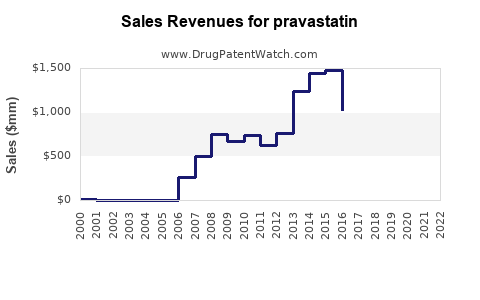
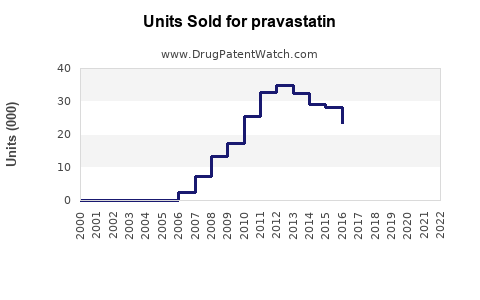
Pravastatin, a statin medication used primarily to lower cholesterol and reduce cardiovascular risk, has maintained steady use since its approval in 1991. The market for pravastatin faces competition from newer, often more potent statins, but it remains a relevant option due to safety profiles and cost considerations.
Market Overview
Global Market Size
The global statin market was valued at approximately USD 12.4 billion in 2021. Pravastatin accounted for an estimated 10-12% of the market share in 2022, translating to roughly USD 1.2–1.5 billion.
Geographic Distribution
- North America: Largest market, significant penetration due to established healthcare infrastructure.
- Europe: Second largest, with high adoption rates but slower growth.
- Asia-Pacific: Fastest-growing segment, driven by increasing cardiovascular disease prevalence and expanding healthcare access.
Market Dynamics
-
Demand Drivers:
- Rising prevalence of hyperlipidemia and cardiovascular diseases.
- Growing awareness of cholesterol management.
- Prescribing practices favoring older, well-established drugs.
-
Challenges:
- Competition from generic versions of atorvastatin, rosuvastatin, and simvastatin.
- Patent expirations of key statins reducing pricing power.
- Evolving clinical guidelines favoring more potent or combination therapies.
Competitive Landscape
-
Major Manufacturers:
- Teva Pharmaceuticals
- Mylan (now part of Viatris)
- Ranbaxy (Sun Pharma)
- Cipla
-
Market Strategies:
- Focus on cost reduction through generics.
- Expanding global distribution channels.
- Clinical studies emphasizing safety profile, especially in elderly populations.
Sales Projections
Baseline Scenario (2023–2027)
Assuming annual sales growth of approximately 3%, grounded in steady demand but moderated by market saturation and competition.
| Year |
Estimated Sales (USD billions) |
| 2023 |
1.42 |
| 2024 |
1.46 |
| 2025 |
1.50 |
| 2026 |
1.55 |
| 2027 |
1.59 |
Key Variables Influencing Sales
- Pricing: As generic competition intensifies, pricing will decline 2–4% annually.
- Market Penetration: Opportunities exist in emerging markets where statins are less entrenched.
- Regulatory Changes: Potential approval of new formulations or dosing regimens could impact sales.
Worst-Case Scenario
If a new, more effective statin with fewer side effects displaces pravastatin faster than expected, sales could decline by 5–8% per year after 2024.
Best-Case Scenario
Increased aging populations and increased cardiovascular screening could lead to a 5% annual growth, offsetting declines from generics.
Regulatory and Patent Considerations
- Patent status: Unlikely to impact in major markets, as pravastatin's patents expired decades ago.
- Regulatory environment: Continued approval based on safety and efficacy profiles supports sustained sales.
- New formulations: Limited pipeline options, but biosimilars or fixed-dose combinations could influence future markets.
Conclusion
Pravastatin maintains a moderate but stable market position. Growth prospects depend heavily on generic competition and pricing strategies. In emerging markets, gaining market share could accelerate growth. Overall, sales are projected to grow modestly at approximately 3% annually through 2027.
Key Takeaways
- Pravastatin constitutes roughly 10–12% of the global statin market.
- The global market was valued at USD 12.4 billion in 2021.
- Sales are projected to increase from about USD 1.42 billion in 2023 to USD 1.59 billion in 2027.
- Competition from newer statins and generics will be primary market drivers and challenges.
- Market growth depends on geographic expansion and pricing strategies amid patent expiries.
FAQs
1. How does pravastatin compare to other statins in terms of safety?
Pravastatin is often associated with a lower risk of drug interactions and side effects, making it suitable for elderly and polypharmacy patients.
2. Are there specific markets where pravastatin sales are increasing faster?
Yes, emerging markets in Asia-Pacific and Latin America are experiencing faster growth due to increasing cardiovascular disease awareness and expanding healthcare infrastructure.
3. Will patent expirations impact pravastatin sales significantly?
Since pravastatin's patents expired long ago, major pricing pressures are already reflected, and most sales are driven by generic versions.
4. Are fixed-dose combination therapies involving pravastatin available?
Limited options exist; most combinations involve other statins. Development of new fixed-dose combinations might influence future sales.
5. What are the main factors that could disrupt pravastatin’s market position?
Introduction of highly potent statins with fewer side effects or new, non-statin lipid-lowering agents could reduce pravastatin demand.
References
[1] Grand View Research. (2022). Statins Market Size, Share, Trends Analysis Report.
[2] IQVIA. (2022). Global Pharmaceutical Market Reports.
[3] U.S. Food and Drug Administration. (2022). Drug Approvals and Market Status.