Last updated: February 12, 2026
Market Overview
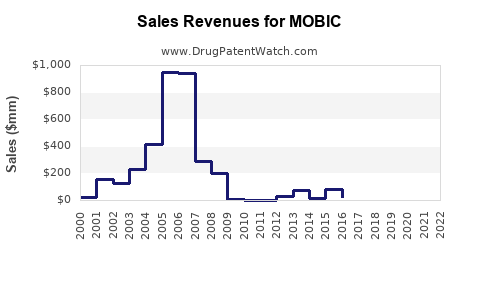
MOBIC (meloxicam) is a non-steroidal anti-inflammatory drug (NSAID) primarily prescribed for osteoarthritis, rheumatoid arthritis, and juvenile arthritis. It is marketed globally by Boehringer Ingelheim. In 2022, MOBIC generated approximately $400 million in global sales, representing a significant share within the NSAID segment, especially in North America and Europe.
The NSAID market is highly competitive, with key rivals including ibuprofen, naproxen, diclofenac, and newer COX-2 inhibitors. MOBIC’s differentiated profile as a selective COX-2 inhibitor positions it favorably for chronic inflammatory conditions requiring long-term management with a reduced gastrointestinal risk profile.
Market Size and Trends
The global NSAID market size was valued at around $17 billion in 2022. The subset of medications indicated for chronic inflammatory diseases, such as MOBIC, accounts for roughly 35% of this figure ($6 billion). The market has sustained steady growth, approximately 4% annually, driven by aging populations, rising prevalence of osteoarthritis and rheumatoid arthritis, and increasing awareness of long-term NSAID safety profiles.
Key Market Drivers
- Aging populations increase the demand for arthritis treatments.
- Enhanced safety profiles of selective COX-2 inhibitors favor prescription over traditional NSAIDs.
- Expanding healthcare access in emerging markets enhances global sales potential.
- Off-label uses and combination therapies promote growth avenues.
Competitive Landscape
| Brand Name |
Mechanism |
Notes |
Estimated Global Sales (2022) |
| MOBIC (meloxicam) |
COX-2 selective NSAID |
Established long-term use |
$400 million |
| NSAID competitors |
Non-selective NSAIDs |
Higher GI risk, less prescribed long-term |
$2 billion |
| Celecoxib |
COX-2 selective inhibitor |
Main rival within same class |
$1.8 billion |
Sales Projections
Assuming current market trends and Boehringer Ingelheim’s ongoing marketing efforts:
- 2023-2027 CAGR: Estimated at 3-5%, reflecting stable growth with periods of acceleration linked to market expansion in Asia-Pacific and Latin America.
- 2024 Sales Forecast: Approximately $420-$440 million.
- 2027 Sales Forecast: Ranges between $500-$560 million, assuming compounded growth and sustained market share.
Potential growth drivers include:
- Increased adoption in Asian markets, where aging demographics and rising chronic disease prevalence expand the patient base.
- Development of new formulations or delivery systems (e.g., extended-release).
- Impact of patent status: MOBIC’s patent expiration is projected for 2024 in the key markets, opening the door to generic competition, which could reduce prices and sales volume but also increase overall accessibility.
Impact of Patent Expiry
Generic entry typically results in sales decline of 30-50% over subsequent two years. Post-patent, MOBIC’s market share may be challenged by generics priced at 20-40% lower. Sales could decline by roughly 40-50% within three years after patent expiration unless new formulations or indications are introduced, or if branded MOBIC maintains loyalty through physician preference.
Regulatory and Policy Considerations
- New cardiovascular safety guidelines impacting NSAID and COX-2 inhibitors.
- Evolving OTC vs. prescription status in certain markets.
- Initiatives to reduce NSAID-related gastrointestinal and cardiovascular risks influence prescribing behavior.
Summary
MOBIC’s revenue is expected to grow modestly over the next five years, excluding the impact of patent expiration. The outlook hinges on new market penetration, expanding indications, and the strategic response to generic competition. The therapeutic landscape remains consolidating around COX-2 inhibitors, with MOBIC positioned as a preferred chronic management option.
Key Takeaways:
- Global NSAID market valued at $17 billion in 2022, with MOBIC holding a $400 million share.
- Steady growth anticipated at 3-5% annual rate until patent expiration.
- Patent expiry in 2024 may cause a substantial sales decline; market share shifts are likely.
- Market expansion is driven by aging populations, safety profile advantages, and emerging markets.
- Competition from generics will influence future pricing and sales volumes.
FAQs
1. When does MOBIC's patent expire?
Major patents in key markets expire in 2024, opening opportunities for generic competition.
2. What are the main competing drugs to MOBIC?
Celecoxib is the closest rival within the COX-2 inhibitor class, with non-selective NSAIDs like ibuprofen and naproxen being traditional competitors.
3. How does MOBIC's safety profile influence its market share?
Its selective COX-2 mechanism offers a lower gastrointestinal risk, favoring long-term use in chronic conditions.
4. What is the projected impact of patent expiry on MOBIC's sales?
Sales could decline by 40-50% over three years, unless new indications or formulations gain approval.
5. How are emerging markets affecting MOBIC’s growth prospects?
Rising healthcare access and demographics in Asia-Pacific and Latin America may drive sales growth, offsetting some patent-related declines.
Sources:
- IMS Health (2022). Global NSAID Market Data.
- Boehringer Ingelheim Reports (2022). MOBIC Sales Data.
- MarketResearch.com (2023). NSAID Market Outlook and Trends.
- FDA and European Medicines Agency (2022). Patent and Regulatory Updates.
- EvaluatePharma (2022). Top-Selling Drugs and Market Shares.