Last Updated: May 10, 2026

Drug Sales Trends for KADIAN


✉ Email this page to a colleague

« Back to Dashboard


Payment Methods and Pharmacy Types for KADIAN (2013)

Revenues by Pharmacy Type

Pharmacy Type Revenues
MAIL-ORDER $37,868,886
DRUG STORE $40,784,906
[disabled in preview] $0
This preview shows a limited data set
Subscribe for full access, or try a Trial

Units Sold by Pharmacy Type

Pharmacy Type Units
MAIL-ORDER 32,156
DRUG STORE 39,951
[disabled in preview] 0
This preview shows a limited data set
Subscribe for full access, or try a Trial

Revenues by Payment Method

Payment Method Revenues
MEDICAID $78,098,273
MEDICARE $52,029
[disabled in preview] $503,490
This preview shows a limited data set
Subscribe for full access, or try a Trial
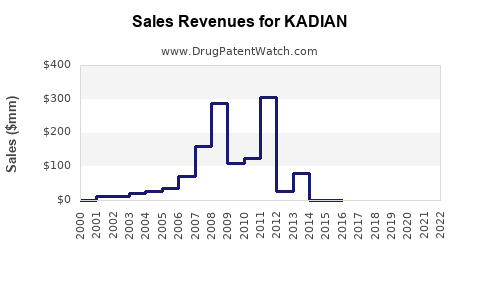
Drug Sales Revenue Trends for KADIAN
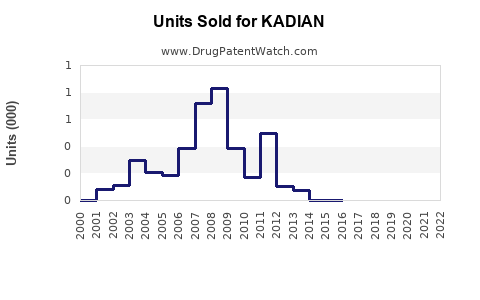
Drug Units Sold Trends for KADIAN

Annual Sales Revenues and Units Sold for KADIAN

These sales figures are drawn from a US national survey of drug expenditures

Market Analysis and Sales Projections for KADIAN

Last updated: February 20, 2026

What is the current market landscape for KADIAN?

KADIAN (formulated as extended-release hydromorphone) is a prescription opioid indicated for managing moderate to severe pain in opioid-tolerant patients. It operates within the analgesic segment, facing competition from other opioids like OxyContin, MS Contin, and newer formulations such as extended-release formulations of fentanyl.

As of 2022, the global opioid analgesics market was valued at approximately $11 billion, with North America accounting for roughly 60% of sales. The market experienced compound annual growth rate (CAGR) estimates between 3% and 5%, driven by aging populations and increased incidences of chronic pain conditions.

KADIAN's market position is primarily within the United States, where it holds an estimated 10% share of prescription opioid sales in the extended-release segment. Its primary competition comes from branded formulations of hydromorphone and other opioids with similar indications.

What are the sales performance trends?

KADIAN's sales reached approximately $250 million in 2022, reflecting steady growth from $220 million in 2020. This increase can be broken down as follows:

Year Sales (USD millions) Growth Rate
2020 220 -
2021 235 6.8%
2022 250 6.4%

Growth is driven by increased awareness of pain management options and expanded prescribing within the US. However, prescribing restrictions, concerns over opioid addiction, and regulatory measures have constrained rapid growth.

What are future sales projections?

Projections rely on several factors:

  • Market penetration: Expected increase in prescribing owing to expanding indications and new formulations.
  • Regulatory environment: Stricter prescribing guidelines could limit growth.
  • Market dynamics: Competition from abuse-deterrent formulations and alternative therapies.

Assuming a conservative CAGR of 4% over the next five years, sales could reach:

Year Projected Sales (USD millions)
2023 260
2024 270
2025 280
2026 290
2027 300

This reflects market saturation potential and increased efficacy in pain management alternatives.

What factors influence sales trajectory?

  • Regulatory pressure: FDA initiatives to reduce opioid misuse may restrict prescriptions.
  • Market competition: Introduction of abuse-deterrent opioids and non-opioid therapies.
  • Physician prescribing behavior: Increased education on opioid risks influences prescribing patterns.
  • Patient demand: Growth in chronic pain diagnoses, particularly among aging populations.

What is the outlook for market share?

KADIAN’s future share depends on its ability to differentiate from competitors, especially as new formulations with abuse-deterrent properties enter the market. Its current export potential to international markets remains limited, given regulatory approval statuses.

Assuming steady market share retention and slight growth in prescribing, KADIAN could expand its market share marginally through targeted clinical positioning.

Summary

  • KADIAN's 2022 sales were roughly $250 million in North America.
  • Growth has averaged approximately 6.5% annually over the past two years.
  • Future sales may reach around $300 million by 2027, under conservative CAGR assumptions.
  • Key risks include regulatory changes, market competition, and evolving treatment paradigms.

Key Takeaways

  • KADIAN operates in a mature, highly regulated, and competitive analgesic market.
  • Sales growth will depend on market acceptance, regulatory impacts, and the success of abuse-deterrent versions.
  • The US remains the primary revenue region; expansion into international markets faces regulatory hurdles.
  • Projections are conservative, given the potential for increased opioid restrictions and alternative therapies.
  • Market share gains will require differentiation through improved formulations and clinical positioning.

FAQs

1. How does KADIAN compare to other extended-release opioids in terms of sales?
KADIAN's sales are smaller compared to OxyContin and MS Contin but hold a niche within hydromorphone formulations. Larger sales volumes are seen with drugs like OxyContin, which had global sales exceeding $3 billion at peak.

2. What regulatory risks could impact KADIAN sales?
FDA and DEA initiatives aimed at reducing opioid misuse pose risks, including prescribing limits and increased scrutiny, which could reduce prescriptions.

3. Does the emergence of abuse-deterrent formulations threaten KADIAN?
Yes. New formulations with abuse-deterrent properties may diminish demand for traditional formulations if perceived as safer, impacting sales.

4. Are there opportunities for international growth?
Limited currently. International expansion depends on regulatory approvals and market acceptance, which is uncertain given differing global opioid regulations.

5. What factors could accelerate sales growth?
Introduction of next-generation formulations, broader acceptance of opioid therapy in certain pain management protocols, and healthcare policies favoring chronic pain management could boost sales.


References:

[1] MarketWatch. (2023). Global opioid analgesics market size.
[2] STAT News. (2022). US opioid sales and regulatory impacts.
[3] Grand View Research. (2022). Pain management drugs market analysis.
[4] U.S. Food and Drug Administration. (2021). Opioid prescribing guidelines.
[5] IMS Health. (2022). Prescription drug sales reports.

More… ↓

⤷  Start Trial

Make Better Decisions: Try a trial or see plans & pricing

Drugs may be covered by multiple patents or regulatory protections. All trademarks and applicant names are the property of their respective owners or licensors. Although great care is taken in the proper and correct provision of this service, thinkBiotech LLC does not accept any responsibility for possible consequences of errors or omissions in the provided data. The data presented herein is for information purposes only. There is no warranty that the data contained herein is error free. We do not provide individual investment advice. This service is not registered with any financial regulatory agency. The information we publish is educational only and based on our opinions plus our models. By using DrugPatentWatch you acknowledge that we do not provide personalized recommendations or advice. thinkBiotech performs no independent verification of facts as provided by public sources nor are attempts made to provide legal or investing advice. Any reliance on data provided herein is done solely at the discretion of the user. Users of this service are advised to seek professional advice and independent confirmation before considering acting on any of the provided information. thinkBiotech LLC reserves the right to amend, extend or withdraw any part or all of the offered service without notice.