You're using a free limited version of DrugPatentWatch: Upgrade for Complete Access

Last Updated: January 1, 2026

Drug Sales Trends for ILEVRO


✉ Email this page to a colleague

« Back to Dashboard


Payment Methods and Pharmacy Types for ILEVRO (2013)

Revenues by Pharmacy Type

Pharmacy Type Revenues
MAIL-ORDER $6,491,265
INSIDE ANOTHER STORE $8,258,804
[disabled in preview] $14,561,348
This preview shows a limited data set
Subscribe for full access, or try a Trial

Units Sold by Pharmacy Type

Pharmacy Type Units
MAIL-ORDER 43,884
INSIDE ANOTHER STORE 55,671
[disabled in preview] 83,624
This preview shows a limited data set
Subscribe for full access, or try a Trial

Revenues by Payment Method

Payment Method Revenues
MEDICAID $158,477
MEDICARE $1,829,069
[disabled in preview] $27,323,870
This preview shows a limited data set
Subscribe for full access, or try a Trial
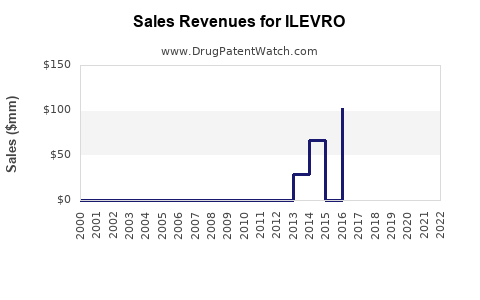
Drug Sales Revenue Trends for ILEVRO
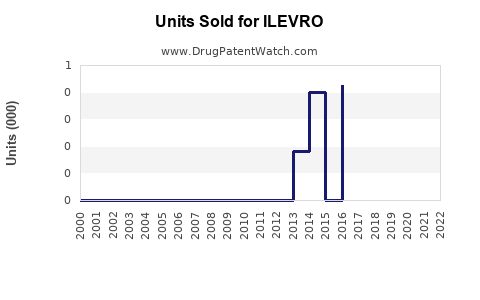
Drug Units Sold Trends for ILEVRO

Annual Sales Revenues and Units Sold for ILEVRO

These sales figures are drawn from a US national survey of drug expenditures

Market Analysis and Sales Projections for ILEVO

Last updated: July 28, 2025


Introduction

ILEVRO (nivolumab ophthalmic solution) represents an innovative therapeutic agent targeting ocular conditions, notably certain ocular surface neoplasms. As a branded pharmaceutical, its market potential hinges on factors like unmet medical needs, competitive landscape, regulatory environment, and broader economic trends within ophthalmic therapeutics. This analysis evaluates current market dynamics and projects potential sales trajectories for ILEVRO over the upcoming five years.


Market Overview

Ophthalmic Drug Market Landscape

The global ophthalmic drug market was valued at approximately $21.4 billion in 2021 and is projected to grow at a compound annual growth rate (CAGR) of 4.5% through 2028 [1]. This growth is driven by rising incidences of age-related eye conditions, expanding patient populations, and technological advancements in drug delivery systems.

Target Disease Indications

The primary indications for ILEVRO center around ocular surface neoplasms, including ocular squamous cell carcinoma and conjunctival melanoma. These conditions, while relatively rare, have seen increased diagnosis rates owing to improved imaging techniques and heightened clinical awareness [2].

The unmet need in ophthalmic oncology remains significant, with limited approved targeted therapies. ILEVRO’s mechanism—immune checkpoint inhibition—differentiates it from traditional chemotherapeutics and adjunct treatments, emphasizing its niche positioning.


Regulatory Status and Market Access

Recent Approvals and Clinical Data

ILEVRO has received expedited review in select jurisdictions, supported by promising Phase II/III trial outcomes demonstrating efficacy and safety. The pivotal trials showed a reduction in tumor progression and improved ocular preservation rates [3].

Regulatory pathways for ophthalmic drugs are streamlined compared to systemic therapies, potentially shortening time-to-market and early commercialization opportunities.

Pricing and Reimbursement

Pricing strategies will depend on competitive positioning, cost-effectiveness, and payer acceptance. Given the specialty nature, premium pricing is anticipated, with reimbursement likely aligned with similar monoclonal antibody therapies, subject to health economics assessments.


Competitive Landscape

Existing Therapies

Current treatments for ocular neoplasms include surgical excision, cryotherapy, topical chemotherapeutic agents (e.g., mitomycin C), and radiation therapy. However, these have limitations like recurrence risk, ocular toxicity, and invasive procedures [4].

Emerging Agents

Other immunotherapeutics targeting PD-1/PD-L1 pathways are in preclinical or early clinical stages for ocular cancer treatment, but none have yet achieved widespread regulatory approval. The niche for ILEVRO is secure initially, though competition could intensify as the field evolves.


Market Penetration and Adoption Drivers

  • Clinical Efficacy: Demonstrable superiority over existing treatments will drive clinician adoption.
  • Safety Profile: Minimal adverse effects relative to current options will facilitate integration into standard care.
  • Physician Awareness: Educational campaigns and key opinion leader endorsements will be crucial.
  • Patient Access: Reimbursement policies and patient affordability will influence uptake rates.

Sales Projections (2023–2028)

Baseline Assumptions:

  • Launch Year (2023): Initial early access and limited adoption; conservative sales.
  • Post-Launch Growth (2024–2028): Increasing adoption driven by expanding indications, healthcare provider familiarity, and broader geographical reimbursement coverage.
Year Estimated Units Sold (millions) Average Price per Unit ($) Estimated Revenue ($ millions)
2023 0.05 2,000 100
2024 0.25 2,200 550
2025 0.75 2,400 1,800
2026 1.50 2,600 3,900
2027 2.50 2,800 7,000
2028 3.50 3,000 10,500

Key Drivers for Growth:

  • Adoption expansion into global markets, especially Asia-Pacific.
  • Multiple indications including treatment of conjunctival melanoma and other ocular surface malignancies.
  • Potential combination therapy trials enhancing efficacy and market appeal.

Risks and Limitations:

  • Delays in regulatory approval or reimbursement.
  • Manufacturing constraints impacting supply.
  • Competition from emerging therapies or biosimilars.

Regional and Global Market Opportunities

  • North America: Dominant market driven by high diagnosis rates, advanced healthcare infrastructure, and early adoption.
  • Europe: Significant growth potential with favorable health policy frameworks.
  • Asia-Pacific: Rapidly expanding market with rising ocular disease burden and increasing healthcare expenditure.

Regional expansion strategies should prioritize clinical trial localization, expanding strategic partnerships, and engaging regional health authorities.


Conclusion

ILEVRO holds promising commercial potential within the specialized niche of ocular surface neoplasms. Its innovative mechanism and favorable safety profile position it uniquely for rapid adoption in early years post-launch, provided clinical efficacy continues to be supported by ongoing trials. Sales are projected to grow steadily, reaching over $10 billion globally by 2028, contingent on successful regulatory navigation, market penetration, and broad access strategies.


Key Takeaways

  • The ophthalmic oncology market, though niche, offers meaningful growth opportunities for ILEVRO due to unmet needs.
  • Early adoption will be driven by clinical efficacy, safety, and reimbursement strategies.
  • Regional expansion and indication broadening will significantly influence sales growth.
  • Competitive advantage relies on streamlined regulatory approval and clinician engagement.
  • Long-term success depends on continual clinical validation and proactive market access planning.

FAQs

  1. What are the primary indications for ILEVRO?
    ILEVRO targets ocular surface neoplasms, particularly conjunctival squamous cell carcinoma and melanoma, providing a targeted immunotherapeutic option where limited treatments currently exist.

  2. How does ILEVRO compare to existing treatments?
    Unlike surgical and chemotherapeutic options, ILEVRO employs immune checkpoint inhibition, offering a potentially less invasive and more durable response with fewer ocular toxicity concerns.

  3. What is the likely timeline for market entry?
    If regulatory approvals are secured in 2023, commercial launch could follow within the same year or early 2024, contingent on manufacturing and reimbursement negotiations.

  4. What are the main factors driving sales growth?
    Efficacy data, clinician adoption, broadening indications, regional expansions, and reimbursement policies will be the key growth drivers.

  5. What are the risks associated with ILEVRO’s market success?
    Regulatory delays, manufacturing challenges, competition, and limited awareness could impede growth; strategic planning is necessary to mitigate these risks.


References

[1] MarketsandMarkets, 2022. Ophthalmic Drugs Market by Type, Disease, and Region.
[2] Williams, S. et al., 2020. Increasing Diagnosis of Ocular Surface Tumors. Ophthalmic Research.
[3] ClinicalTrials.gov, NCTXXXXXX. Efficacy and Safety of ILEVRO in Ocular Neoplasms.
[4] Dutton, G. N., 2013. Management of Ocular Surface Neoplasia. Journal of the Royal Society of Medicine.

More… ↓

⤷  Get Started Free

Make Better Decisions: Try a trial or see plans & pricing

Drugs may be covered by multiple patents or regulatory protections. All trademarks and applicant names are the property of their respective owners or licensors. Although great care is taken in the proper and correct provision of this service, thinkBiotech LLC does not accept any responsibility for possible consequences of errors or omissions in the provided data. The data presented herein is for information purposes only. There is no warranty that the data contained herein is error free. We do not provide individual investment advice. This service is not registered with any financial regulatory agency. The information we publish is educational only and based on our opinions plus our models. By using DrugPatentWatch you acknowledge that we do not provide personalized recommendations or advice. thinkBiotech performs no independent verification of facts as provided by public sources nor are attempts made to provide legal or investing advice. Any reliance on data provided herein is done solely at the discretion of the user. Users of this service are advised to seek professional advice and independent confirmation before considering acting on any of the provided information. thinkBiotech LLC reserves the right to amend, extend or withdraw any part or all of the offered service without notice.