Last updated: February 13, 2026
Market Overview
Capsaicin, a bioactive compound found primarily in chili peppers, is used in pharmaceutical, dermatological, and nutraceutical applications. Its primary therapeutic indications include pain relief, weight management, and certain dermatological conditions.
Key Drivers
- Growing demand for natural pain management solutions.
- Expansion of dermatological products utilizing capsaicin.
- Increasing interest in functional foods and dietary supplements.
Regulatory Landscape
- Approved by FDA for treating postherpetic neuralgia (category: topical analgesic).
- Approved in the EU for specific pain indications.
- Regulatory approvals influence market accessibility and product innovation.
Market Size and Growth Trends
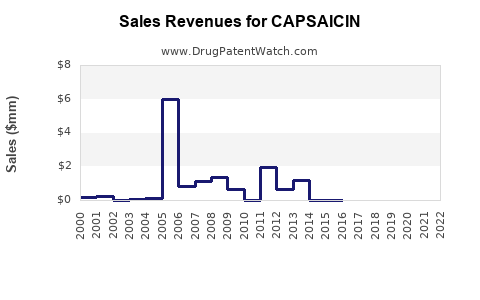
- The global capsaicin market was valued at approximately $180 million in 2022.
- Compound annual growth rate (CAGR): estimated at 7% through 2030.
- Growth categories: pharmaceutical formulations (topical creams, patches), dietary supplements, and food products.
Regional Market Dynamics
| Region |
Market Size (2022, USD million) |
CAGR (2023-2030) |
Key Drivers |
| North America |
70 |
6.5% |
Aging population, natural pain remedies |
| Europe |
50 |
7.2% |
Regulatory approvals, consumer focus |
| Asia-Pacific |
45 |
8.5% |
Traditional medicine integration |
| Rest of World |
15 |
7% |
Urbanization, rising disposable income |
Sales Projections
Forecast assumptions:
- Continued approval for existing and new indications.
- Integration into over-the-counter (OTC) and prescription products.
- Entry into emerging markets via strategic partnerships.
Based on the CAGR of 7%, the revenue trajectory from 2023 to 2030 follows:
- 2023: ~$193 million
- 2025: ~$229 million
- 2027: ~$272 million
- 2030: ~$332 million
Key Market Segments
- Pharmaceuticals
- Topical creams and patches for neuralgia, arthritis.
- Projected to account for roughly 60% of market revenue.
- Dietary Supplements and Nutraceuticals
- Capsaicin-based capsules, powders for weight management and digestion.
- Expected to grow at a higher CAGR (~8.5%) due to rising health consciousness.
- Food Industry
- Use as flavoring, functional foods, and beverages.
- Slow but steady expansion, accounting for small but growing share.
Competitive Landscape
- Key players: McCormick & Company, NutraScience Labs, Scitech Bio, and local pharmaceutical companies.
- Patent landscape: Several patents for formulation methods and delivery systems, with patents expiring in the next 5-8 years.
- Innovation focuses on transdermal delivery, sustained-release formulations, and combination therapies.
Challenges and Risks
- Standardization of extracts.
- Allergic reactions and side effects in sensitive populations.
- Regional regulatory barriers.
- Volatility in raw material supply (chili pepper cultivation variability).
Opportunities
- Development of novel delivery systems.
- Expansion into untapped markets like Latin America and Africa.
- Formulation of combination products with other analgesics or bioactives.
Key Takeaways
- The global capsaicin market is expected to grow at around 7% CAGR through 2030.
- North America and Europe dominate the market, but Asia-Pacific exhibits the highest growth rate (8.5%).
- Demand in pharmaceuticals drives nearly 60% of total revenue, with dietary supplements gaining rapid traction.
- Patent expirations in key formulations open opportunities for generic and innovative entrants.
- Challenges include regulatory compliance, supply chain security, and adverse reaction management.
FAQs
1. What are the main therapeutic applications of capsaicin?
Capsaicin is mainly used for pain relief in conditions like postherpetic neuralgia, arthritis, and neuropathic pain. It is also incorporated into dietary supplements for weight management and metabolic health.
2. What are the primary regulatory hurdles facing capsaicin products?
Regulatory approvals depend on regional standards. In the U.S., FDA approval is required for medicinal claims, and safety data must support over-the-counter or prescription formulations. Similar regulations apply in the EU and other markets.
3. Who are the leading companies in the capsaicin market?
Companies include McCormick & Company, NutraScience Labs, and Scitech Bio. Many regional pharmaceutical and nutraceutical firms also participate.
4. How does the patent landscape influence market entry?
Patents for formulation methods and delivery systems restrict unapproved players initially. Expiry of patents creates opportunities for generics and innovative formulations.
5. What future trends will impact capsaicin sales?
Growth in transdermal delivery systems, combination therapies, and expansion into emerging markets will influence sales trajectories. Consumer preference for natural solutions also enhances growth prospects.
Citations
[1] MarketsandMarkets, "Capsaicin Market by Application," 2023.
[2] IBISWorld, "Global Pain Management Market," 2022.
[3] European Medicines Agency, "Capsaicin Dermal Products," 2022.