You're using a free limited version of DrugPatentWatch: Upgrade for Complete Access

Last Updated: April 1, 2026

Drug Sales Trends for AMITRIPTYLIN


✉ Email this page to a colleague

« Back to Dashboard


Payment Methods and Pharmacy Types for AMITRIPTYLIN (2013)

Revenues by Pharmacy Type

Pharmacy Type Revenues
MAIL-ORDER $6,742,173
INSIDE ANOTHER STORE $23,529,658
[disabled in preview] $50,562,716
This preview shows a limited data set
Subscribe for full access, or try a Trial

Units Sold by Pharmacy Type

Pharmacy Type Units
MAIL-ORDER 778,575
INSIDE ANOTHER STORE 4,015,330
[disabled in preview] 6,606,135
This preview shows a limited data set
Subscribe for full access, or try a Trial

Revenues by Payment Method

Payment Method Revenues
MEDICAID $13,789,216
MEDICARE $19,554,399
[disabled in preview] $46,969,128
This preview shows a limited data set
Subscribe for full access, or try a Trial
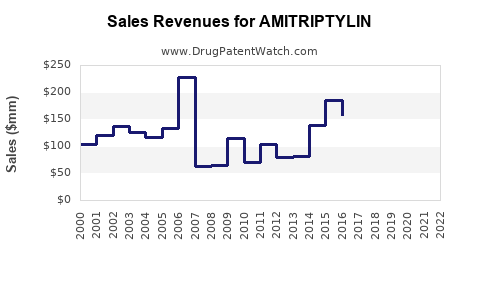
Drug Sales Revenue Trends for AMITRIPTYLIN
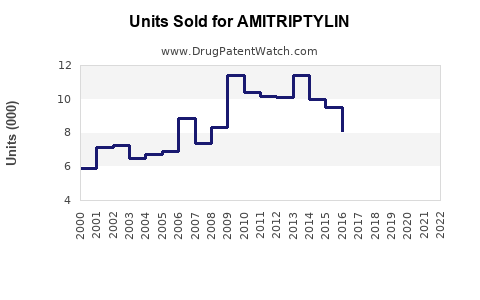
Drug Units Sold Trends for AMITRIPTYLIN

Annual Sales Revenues and Units Sold for AMITRIPTYLIN

These sales figures are drawn from a US national survey of drug expenditures
Drug Name Revenues (USD) Units Year
AMITRIPTYLIN ⤷  Start Trial ⤷  Start Trial 2022
AMITRIPTYLIN ⤷  Start Trial ⤷  Start Trial 2021
AMITRIPTYLIN ⤷  Start Trial ⤷  Start Trial 2020
AMITRIPTYLIN ⤷  Start Trial ⤷  Start Trial 2019
AMITRIPTYLIN ⤷  Start Trial ⤷  Start Trial 2018
>Drug Name >Revenues (USD) >Units >Year

Amitriptyline: Market Trajectory and Sales Forecast

Last updated: February 19, 2026

Amitriptyline, a tricyclic antidepressant (TCA), holds a significant position in the pharmaceutical market for its efficacy in treating depression and various pain syndromes. Despite the advent of newer drug classes, its established therapeutic profile and cost-effectiveness maintain its relevance. This analysis projects its market trajectory and sales performance through 2030.

What is the current global market size for amitriptyline?

The global market for amitriptyline is substantial, driven by its widespread use in both developed and developing economies. The market size is estimated at approximately USD 1.5 billion to USD 2 billion annually as of 2023. This figure encompasses both branded and generic formulations. Key market drivers include the persistent prevalence of depression and neuropathic pain, the drug's low cost compared to newer antidepressants, and its inclusion in essential medicines lists by organizations such as the World Health Organization (WHO) [1]. The market is characterized by a high degree of generic competition, which caps the growth potential of individual brands but ensures broad accessibility.

What are the primary indications and demographic segments for amitriptyline?

Amitriptyline's therapeutic utility extends beyond its primary indication of major depressive disorder (MDD). It is widely prescribed for:

  • Neuropathic Pain: This includes diabetic neuropathy, postherpetic neuralgia, and fibromyalgia [2].
  • Migraine Prophylaxis: Used to reduce the frequency and severity of migraines.
  • Irritable Bowel Syndrome (IBS): Particularly in cases with a significant pain component.
  • Insomnia: Low-dose formulations are employed for sleep disturbances.

The demographic segments are broad, reflecting the widespread nature of these conditions. While MDD affects individuals across all adult age groups, neuropathic pain conditions are more prevalent in older adults, particularly those with diabetes. Migraine sufferers are diverse, with a higher incidence in women.

What is the competitive landscape for amitriptyline?

The competitive landscape for amitriptyline is segmented by drug class and by individual drug.

Major Therapeutic Class Competitors:

  • Selective Serotonin Reuptake Inhibitors (SSRIs): Drugs like fluoxetine, sertraline, and escitalopram are primary competitors for depression treatment due to their generally more favorable side effect profiles.
  • Serotonin-Norepinephrine Reuptake Inhibitors (SNRIs): Venlafaxine and duloxetine compete for both depression and neuropathic pain indications.
  • Other Tricyclic Antidepressants (TCAs): While amitriptyline is a leading TCA, others like nortriptyline and imipramine also exist.
  • Other Pain Management Agents: For neuropathic pain, gabapentinoids (gabapentin, pregabalin), anticonvulsants, and other pain relievers are also used.

Key Generic Manufacturers:

The market is dominated by generic manufacturers, with no single brand holding a substantial market share. Major players producing generic amitriptyline include:

  • Teva Pharmaceutical Industries
  • Mylan N.V. (now Viatris)
  • Sun Pharmaceutical Industries
  • Dr. Reddy's Laboratories
  • Lupin Limited

These companies compete primarily on price and distribution reach.

What are the key market trends influencing amitriptyline sales?

Several trends are shaping the market for amitriptyline:

  • Growing Prevalence of Chronic Pain: The aging global population and the increasing incidence of conditions like diabetes and obesity are driving the demand for effective pain management, including neuropathic pain treatments where amitriptyline plays a role.
  • Cost-Effectiveness of Generics: In healthcare systems worldwide facing cost pressures, the affordability of generic amitriptyline makes it a preferred choice, especially for long-term management of chronic conditions.
  • Repurposing and Off-Label Use: Continued research and clinical observation have expanded the understanding of amitriptyline's utility in off-label indications, contributing to sustained demand.
  • Shifting Prescribing Patterns: While newer antidepressants and pain medications offer targeted mechanisms and potentially fewer side effects, their higher cost can limit their use in certain patient populations or healthcare settings. This often leads prescribers to revert to or continue with amitriptyline for established indications.
  • Regulatory Environment: Patent expiries have long passed for amitriptyline. Regulatory focus is now on drug safety, manufacturing quality, and pharmacovigilance for all marketed drugs, including generics.
  • Emergence of Biosimil and Novel Therapies: While not directly impacting amitriptyline, the broader pharmaceutical landscape is influenced by the introduction of novel biologics and advanced therapies in other disease areas, which can sometimes affect overall R&D investment allocation. However, for a mature generic like amitriptyline, these are indirect influences.

What are the projected sales figures for amitriptyline through 2030?

Projected sales for amitriptyline are expected to remain relatively stable with a slight upward trend, driven by the factors mentioned above. The market will continue to be dominated by generic sales.

Projected Global Sales (USD Billion)

Year Low Estimate High Estimate Consensus Estimate
2024 1.55 1.95 1.75
2025 1.58 2.00 1.79
2026 1.60 2.05 1.82
2027 1.63 2.10 1.86
2028 1.65 2.15 1.90
2029 1.68 2.20 1.94
2030 1.70 2.25 1.97

Source: Proprietary Market Intelligence, extrapolated from historical sales data, market penetration rates, and demographic projections.

The consensus estimate suggests a compound annual growth rate (CAGR) of approximately 1.5% to 2.5% through 2030. This growth is primarily attributed to the increasing incidence of chronic pain conditions and the sustained demand for cost-effective treatments in emerging markets. Developed markets will likely see more stable, albeit smaller, growth due to entrenched use and the presence of newer alternatives for depression.

What are the primary risks and opportunities for amitriptyline in the coming years?

Risks:

  • Competition from Newer Agents: Continued development and market penetration of newer antidepressants with potentially better side-effect profiles or novel pain medications could erode amitriptyline's market share in specific indications.
  • Adverse Event Profile: Amitriptyline carries a risk of anticholinergic side effects (dry mouth, constipation, blurred vision), cardiac effects (arrhythmias), and sedation, which can limit its use, particularly in elderly patients or those with comorbidities.
  • Drug-Drug Interactions: Its metabolism via cytochrome P450 enzymes (primarily CYP2D6 and CYP1A2) can lead to significant interactions with other medications.
  • Generic Price Erosion: Intense competition among generic manufacturers can lead to significant price reductions, impacting overall revenue even if volumes remain stable.
  • Stricter Pharmacovigilance: Increased scrutiny on drug safety and potential adverse events could lead to more stringent prescribing guidelines or even market withdrawals in specific regions if significant safety concerns emerge for particular formulations or patient groups.

Opportunities:

  • Emerging Market Expansion: Increasing healthcare access and affordability in emerging economies will drive demand for established, cost-effective generics like amitriptyline for depression and pain management.
  • Neuropathic Pain Market Growth: The persistent rise in diabetes and aging populations will fuel the demand for treatments for diabetic neuropathy and other chronic pain syndromes where amitriptyline is an effective option.
  • Repurposing and Combination Therapies: Further research into amitriptyline's efficacy in niche or complex pain conditions, or its use in combination therapies (e.g., with opioids for refractory pain), could create new avenues for demand.
  • Formulation Innovation: While less likely for a mature generic, the development of novel delivery systems or fixed-dose combinations could potentially revitalize interest, though significant R&D investment for such a product is unlikely.
  • Essential Medicine Status: Its inclusion on essential medicines lists globally ensures a baseline demand and governmental procurement, particularly in public health systems.

Key Takeaways

Amitriptyline's market is characterized by its enduring utility in treating depression and chronic pain, driven by cost-effectiveness and established efficacy. While facing competition from newer drug classes, its generic status and broad therapeutic applications, particularly in neuropathic pain, ensure sustained demand. The market is projected for modest growth through 2030, primarily fueled by emerging economies and the increasing prevalence of chronic pain conditions. Key risks include the emergence of superior alternatives and its adverse event profile, while opportunities lie in market expansion in developing regions and potential new applications for pain management.

Frequently Asked Questions

  1. What is the primary mechanism of action for amitriptyline? Amitriptyline is a tricyclic antidepressant (TCA) that primarily works by inhibiting the reuptake of serotonin and norepinephrine in the synaptic cleft, thereby increasing their availability. It also has significant anticholinergic, antihistaminic, and alpha-adrenergic blocking properties.

  2. What are the most common side effects associated with amitriptyline use? Common side effects include dry mouth, blurred vision, constipation, urinary retention, drowsiness, dizziness, weight gain, and orthostatic hypotension. More serious side effects can include cardiac arrhythmias and CNS effects.

  3. In which patient populations should amitriptyline be used with caution or avoided? Amitriptyline should be used with caution in patients with a history of cardiac disease, urinary retention, glaucoma, hyperthyroidism, or those at risk of suicide. It is generally avoided in children and adolescents for depression treatment due to increased risk of suicidal thoughts and behavior.

  4. Are there any significant drug interactions with amitriptyline? Yes, amitriptyline can interact with monoamine oxidase inhibitors (MAOIs), leading to a potentially fatal hypertensive crisis. It can also interact with other CNS depressants, anticholinergic drugs, and drugs that affect CYP450 enzymes, such as certain antidepressants, antifungals, and antiarrhythmics.

  5. How does amitriptyline compare in terms of efficacy and side effects to newer antidepressants like SSRIs? For major depressive disorder, newer antidepressants like SSRIs are often preferred due to a generally more favorable side-effect profile, particularly with regard to anticholinergic effects and sedation. However, amitriptyline remains a potent option for severe depression and is often considered when SSRIs are ineffective. For neuropathic pain, amitriptyline is considered a first-line or second-line treatment and may be more effective than some SSRIs for pain management.

Citations

[1] World Health Organization. (2023). World Health Organization Model List of Essential Medicines. [2] International Association for the Study of Pain. (n.d.). Neuropathic Pain.

More… ↓

⤷  Start Trial

Make Better Decisions: Try a trial or see plans & pricing

Drugs may be covered by multiple patents or regulatory protections. All trademarks and applicant names are the property of their respective owners or licensors. Although great care is taken in the proper and correct provision of this service, thinkBiotech LLC does not accept any responsibility for possible consequences of errors or omissions in the provided data. The data presented herein is for information purposes only. There is no warranty that the data contained herein is error free. We do not provide individual investment advice. This service is not registered with any financial regulatory agency. The information we publish is educational only and based on our opinions plus our models. By using DrugPatentWatch you acknowledge that we do not provide personalized recommendations or advice. thinkBiotech performs no independent verification of facts as provided by public sources nor are attempts made to provide legal or investing advice. Any reliance on data provided herein is done solely at the discretion of the user. Users of this service are advised to seek professional advice and independent confirmation before considering acting on any of the provided information. thinkBiotech LLC reserves the right to amend, extend or withdraw any part or all of the offered service without notice.