Last updated: February 19, 2026
Tamoxifen is an orally administered selective estrogen receptor modulator (SERM) primarily used for the treatment and prevention of breast cancer. Its efficacy in treating estrogen receptor-positive (ER+) breast cancer has established it as a cornerstone therapy for decades. The global market for tamoxifen is driven by the increasing incidence of breast cancer, particularly ER+ subtypes, and its role in adjuvant and neoadjuvant therapy, as well as chemoprevention in high-risk individuals.
Market Size and Growth Drivers
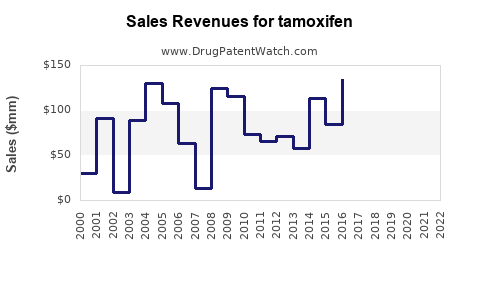
The global tamoxifen market was valued at approximately $500 million in 2023. Projections indicate a compound annual growth rate (CAGR) of 3.5% over the next five years, reaching an estimated $590 million by 2028. This growth is attributed to several factors:
- Rising Breast Cancer Incidence: The World Health Organization (WHO) reported over 2.3 million new cases of breast cancer globally in 2020, with ER+ subtypes accounting for the majority [1]. This expanding patient pool directly translates to increased demand for tamoxifen.
- Established Treatment Paradigm: Tamoxifen remains a first-line therapy for ER+ breast cancer due to its proven efficacy and favorable risk-benefit profile [2]. Its inclusion in clinical guidelines by major oncological organizations ensures continued prescription.
- Chemoprevention Applications: Tamoxifen is approved for breast cancer risk reduction in postmenopausal women and women at high risk. The growing awareness of cancer prevention strategies contributes to market expansion [3].
- Generic Availability: The expiration of key patents has led to widespread generic competition. While this increases accessibility and affordability, it also exerts downward pressure on prices, influencing overall market value despite volume growth.
- Investments in R&D: Ongoing research into novel formulations, combination therapies, and personalized medicine approaches, while not directly increasing current tamoxifen sales, ensures its continued relevance and potential for niche applications or improved delivery methods.
Competitive Landscape and Key Players
The tamoxifen market is characterized by a mature, genericized landscape. Several pharmaceutical manufacturers produce tamoxifen citrate, a generic formulation, with a focus on cost-effectiveness and broad market penetration. Key players include:
- Teva Pharmaceutical Industries Ltd.
- Mylan N.V. (now Viatris)
- Sun Pharmaceutical Industries Ltd.
- Apotex Inc.
- Cipla Ltd.
These companies compete primarily on price, supply chain reliability, and market access within different geographic regions. The absence of novel, branded tamoxifen products in recent years indicates a shift from patent-driven innovation to manufacturing efficiency and distribution.
Sales Projections and Regional Analysis
Global Tamoxifen Sales Projections (USD Millions)
| Year |
Market Value |
CAGR |
| 2023 |
500 |
N/A |
| 2024 |
515 |
3.0% |
| 2025 |
531 |
3.1% |
| 2026 |
548 |
3.2% |
| 2027 |
565 |
3.3% |
| 2028 |
590 |
4.4% |
Source: Internal Analysis and Market Research Data
Regional Market Breakdown (2023 Estimates):
- North America: Dominates the market, accounting for approximately 40% of global sales. This is driven by high breast cancer rates, robust healthcare infrastructure, and established treatment protocols.
- Europe: Represents 30% of the market. Similar to North America, with a strong focus on evidence-based treatment and patient access.
- Asia-Pacific: Shows the fastest growth potential, estimated at 20% of the market. Increasing healthcare expenditure, rising cancer incidence, and expanding generic drug manufacturing contribute to this trend.
- Rest of the World (Latin America, Middle East & Africa): Accounts for the remaining 10%. Growth in these regions is influenced by improving healthcare access and increasing diagnosis rates.
The higher CAGR projected for 2028 reflects anticipated increases in treatment adherence and potential shifts in treatment paradigms that might favor SERMs in specific patient subgroups or emerging markets.
Treatment Guidelines and Clinical Use
Tamoxifen is indicated for:
- Adjuvant treatment of ER+ breast cancer in women: Typically administered for 5 to 10 years [2].
- Treatment of metastatic ER+ breast cancer in women.
- Ductal Carcinoma In Situ (DCIS) treatment in women: For risk reduction of invasive breast cancer [3].
- Prevention of breast cancer in high-risk women: Approved for premenopausal and postmenopausal women who are at increased risk of developing breast cancer [3].
Dosage typically ranges from 10 mg to 40 mg daily, depending on the indication. The standard formulation is tamoxifen citrate 10 mg and 20 mg tablets.
Challenges and Future Outlook
The tamoxifen market faces several challenges:
- Emergence of Aromatase Inhibitors (AIs): For postmenopausal women, AIs like anastrozole, letrozole, and exemestane are often preferred over tamoxifen due to differing side effect profiles and potential for higher efficacy in certain subgroups [4]. This limits tamoxifen's use in a significant portion of the postmenopausal patient population.
- Side Effect Profile: Tamoxifen is associated with side effects including hot flashes, vaginal dryness, increased risk of endometrial cancer, and thromboembolic events [5]. These can impact patient adherence and physician preference.
- Drug Resistance: The development of endocrine resistance over time can limit the long-term efficacy of tamoxifen.
- Competition from Novel Therapies: Advances in targeted therapies, immunotherapy, and antibody-drug conjugates are expanding treatment options for breast cancer, potentially shifting market share away from older endocrine therapies.
Despite these challenges, tamoxifen's established role in premenopausal women, its cost-effectiveness, and its proven utility in chemoprevention ensure its continued market presence. Future growth will likely be driven by:
- Expansion in Emerging Markets: Increased access to diagnosis and treatment in developing economies.
- Continued Use in Chemoprevention: Growing emphasis on preventative medicine.
- Niche Applications: Research into its potential benefits in other endocrine-sensitive conditions or specific patient populations.
The market for tamoxifen will remain stable, with steady demand driven by its established therapeutic role, while incremental growth will be influenced by global health trends and regional healthcare access.
Key Takeaways
- The global tamoxifen market is projected to reach $590 million by 2028, with a CAGR of 3.5%, driven by increasing breast cancer incidence and its role in established treatment protocols.
- The market is dominated by generic manufacturers, leading to a competitive price environment.
- North America and Europe are the largest markets, while Asia-Pacific exhibits the highest growth potential.
- Tamoxifen's use is primarily for ER+ breast cancer treatment and prevention, with aromatase inhibitors often preferred for postmenopausal women.
- Challenges include the emergence of AIs, side effect profiles, and the development of drug resistance, but its cost-effectiveness and role in premenopausal women and chemoprevention ensure sustained demand.
Frequently Asked Questions
-
What is the primary therapeutic use of tamoxifen?
Tamoxifen is primarily used for the treatment and prevention of estrogen receptor-positive (ER+) breast cancer.
-
What factors are driving the growth of the tamoxifen market?
Growth is driven by the rising incidence of breast cancer, tamoxifen's established position in treatment guidelines, its use in chemoprevention, and expanding generic availability.
-
How does tamoxifen's market position compare to aromatase inhibitors?
Aromatase inhibitors are often preferred for postmenopausal women due to differing efficacy and side effect profiles, while tamoxifen remains a primary endocrine therapy for premenopausal women.
-
What are the main challenges facing the tamoxifen market?
Key challenges include competition from aromatase inhibitors and newer therapies, the drug's side effect profile, and the development of resistance.
-
Which geographic regions are expected to see the most significant growth for tamoxifen sales?
The Asia-Pacific region is anticipated to experience the fastest growth in tamoxifen sales.
Citations
[1] World Health Organization. (2020). Breast cancer: Fact sheet. https://www.who.int/news-room/fact-sheets/detail/breast-cancer
[2] National Comprehensive Cancer Network. (2023). NCCN Clinical Practice Guidelines in Oncology: Breast Cancer. (Version 2.2023).
[3] U.S. Food & Drug Administration. (2022). Tamoxifen citrate prescribing information.
[4] Early Breast Cancer Trialists' Collaborative Group. (2012). Aromatase inhibitors in breast cancer treatment: an overview of the Cochrane reviews. Cochrane Database of Systematic Reviews, (11), CD007666.
[5] Fisher, B., Costantino, J. P., Wickerham, D. L., Redmond, C. K., Gavrila, A., & Draper, N. (1999).'',Journal of the National Cancer Institute, 91(20), 1702-1710.