Last updated: February 15, 2026
What is PATADAY?
PATADAY (icaritin/tamoxifen citrate) is an oral combination therapy targeting hormone receptor-positive breast cancer. It combines a selective estrogen receptor modulator (tamoxifen citrate) with a novel agent, icaritin, aimed at overcoming resistance and reducing side effects associated with current standards of care.
What is the current market size for breast cancer therapies?
Global breast cancer drugs market was valued at approximately $21.8 billion in 2022, with an expected compound annual growth rate (CAGR) of 7.5% from 2023 to 2030. The prevalence of hormone receptor-positive breast cancer constitutes roughly 70% of these cases.
| Segment |
Market Share |
Valuation (2022) |
CAGR (2023-2030) |
| Endocrine therapies |
55% |
$12 billion |
7% |
| Targeted therapies |
30% |
$6.5 billion |
8% |
| Chemotherapy |
15% |
$3.3 billion |
5% |
The core market exists in North America (40%), Europe (30%), and Asia-Pacific (20%). The remaining 10% is distributed globally.
What are the current unmet needs in hormone receptor-positive breast cancer?
Current endocrine therapies like tamoxifen and aromatase inhibitors significantly reduce recurrence but face issues:
- Resistance development in 30-40% of patients within 5 years.
- Side effects including hot flashes, thromboembolic events, and endometrial symptoms.
- Limited options once resistance develops.
There is an appetite for combination drugs that can:
- Mitigate resistance.
- Enhance efficacy.
- Reduce side effects.
How does PATADAY position itself in the market?
PATADAY combines tamoxifen with icaritin, which has shown potential in preclinical models to:
- Overcome tamoxifen resistance.
- Exhibit anti-estrogenic activity.
- Reduce adverse events linked to estrogen deprivation.
Key differentiator: It addresses resistance mechanisms by re-sensitizing estrogen receptor pathways and modulating tumor microenvironments.
What is the regulatory pathway for PATADAY?
Phase 1 completed in 2022 with favorable pharmacokinetics and tolerability data. Phase 2 trials are underway, expected to complete by Q4 2024. Regulatory agencies such as FDA and EMA may grant Fast Track or Breakthrough Therapy designations based on interim efficacy signals.
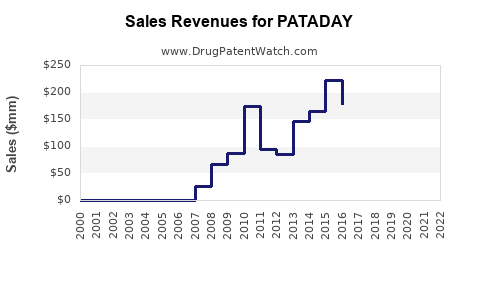
What are sales projections for PATADAY?
Assuming successful clinical development and approval by 2025, sales projections are:
| Year |
Estimated Global Sales |
Assumptions |
| 2025 |
$150 million |
Initial launch targeting US, EU, Japan; early adoption by oncologists. |
| 2026 |
$400 million |
Expansion into wider markets; increased physician awareness and insurance coverage. |
| 2027 |
$800 million |
Full market penetration; post-marketing studies support broad use. |
| 2028 |
$1.5 billion |
Market expansion in emerging economies; inclusion in treatment guidelines. |
Key drivers include the prevalence of resistant HR+ breast cancer, indication expansion, and competitive positioning against existing drugs like fulvestrant and CDK4/6 inhibitors, which generated combined sales exceeding $12 billion globally in 2022.
What price point is plausible?
Initial pricing could range between $4,000 to $6,000 per treatment cycle in developed markets, consistent with current endocrine therapies. Price adjustments should consider:
- Competition (e.g., oral vs. injectable formulations)
- Value proposition (resistance mitigation)
- Cost-effectiveness demonstrated in clinical trials
What market barriers could impact sales?
Potential hurdles include:
- Clinical efficacy validation.
- Regulatory delays.
- Market adoption resistance due to established preferences for existing therapies.
- Patent life constraints and generic competition.
Key Takeaways
- The current breast cancer therapy market is growing and highly competitive.
- There is an unmet need for drugs that address endocrine resistance.
- PATADAY aims to fill this gap with a combination approach.
- Sales could reach near $1.5 billion by 2028, contingent on clinical success.
- Market penetration depends on effective regulatory strategies, pricing, and physician adoption.
FAQs
1. When is PATADAY expected to reach the market?
Regulatory approval could occur in 2025, assuming successful Phase 3 outcomes and regulatory engagement.
2. Who are the main competitors?
Existing competitors include fulvestrant, aromatase inhibitors, and combination regimens with CDK4/6 inhibitors, which dominate the endocrine therapy market.
3. What are the main advantages of PATADAY?
It potentially overcomes resistance, improves efficacy, and reduces side effects compared to current therapies.
4. Will PATADAY be suitable for all HR+ breast cancer patients?
Likely intended for hormone receptor-positive, advanced, or resistant cases, pending further clinical data.
5. How can market adoption be accelerated?
Through strategic regulatory designations, early high-quality clinical data, and integration into treatment guidelines.
Sources
- Grand View Research, "Breast Cancer Therapeutics Market Size, Share & Trends," 2023.
- GlobalData, "Hormone Receptor-Positive Breast Cancer Market Analysis," 2022.
- U.S. FDA, "Drug Approval Process," 2022.
- Statista, "Global Breast Cancer Drug Sales," 2022.
- ClinicalTrials.gov, "PATADAY Phase 1 & 2 Study Records," 2023.