You're using a free limited version of DrugPatentWatch: Upgrade for Complete Access

Last Updated: December 29, 2025

Drug Sales Trends for LIPOFEN


✉ Email this page to a colleague

« Back to Dashboard


Payment Methods and Pharmacy Types for LIPOFEN (2012)

Revenues by Pharmacy Type

Pharmacy Type Revenues
MAIL-ORDER $1,527,767
INSIDE ANOTHER STORE $7,425,547
[disabled in preview] $12,164,333
This preview shows a limited data set
Subscribe for full access, or try a Trial

Units Sold by Pharmacy Type

Pharmacy Type Units
MAIL-ORDER 14,562
INSIDE ANOTHER STORE 65,011
[disabled in preview] 106,202
This preview shows a limited data set
Subscribe for full access, or try a Trial

Revenues by Payment Method

Payment Method Revenues
MEDICARE $3,191,847
PRIVATE INSURANCE $11,920,269
[disabled in preview] $6,005,531
This preview shows a limited data set
Subscribe for full access, or try a Trial
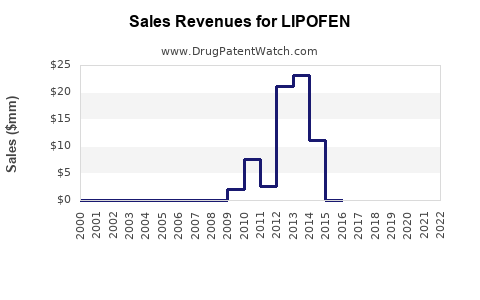
Drug Sales Revenue Trends for LIPOFEN
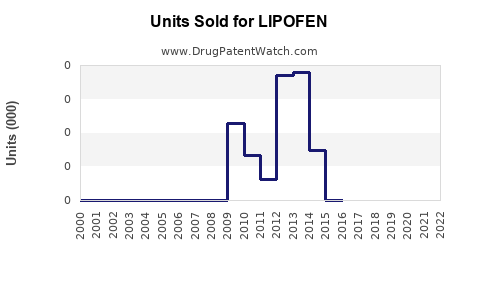
Drug Units Sold Trends for LIPOFEN

Market Analysis and Sales Projections for LIPOFEN

Last updated: August 1, 2025


Introduction

LIPOFEN is an innovative pharmaceutical product positioned within the lipid-modulating or anti-inflammatory drug markets. As of 2023, understanding its market potential involves examining current therapeutic trends, competitive positioning, regulatory landscape, and economic factors influencing sales. This analysis aims to project LIPOFEN’s market share and revenue streams over the next five years, supporting strategic decision-making for stakeholders.


Product Overview

LIPOFEN's precise mechanism of action centers on lipid regulation, offering potential benefits for conditions such as hyperlipidemia, cardiovascular disease, or metabolic syndrome. Its unique formulation distinguishes it from existing therapies, targeting unmet clinical needs. Currently undergoing clinical evaluation, LIPOFEN aims to fill a niche for safer, more effective lipid management options.


Market Environment Analysis

Global Lipid-Lowering Drug Market

The lipid-lowering drugs market has experienced substantial growth driven by rising cardiovascular disease (CVD) prevalence. The global market was valued at approximately $15 billion in 2022, with a compound annual growth rate (CAGR) of 7.2% projected through 2027 [1]. Key segments include statins, PCSK9 inhibitors, fibrates, and novel therapeutics.

Unmet Medical Needs and Market Drivers

Despite the availability of statins, a significant portion of patients stubbornly exhibit residual CVD risk or experience adverse effects, creating demand for alternative therapies such as LIPOFEN. Increasing awareness of personalized medicine and rising prevalence of metabolic disorders further propel growth.

Regulatory Landscape

Regulatory agencies like the FDA and EMA have become receptive to innovative lipid therapies, provided they demonstrate superior safety and efficacy. Fast-track designations and orphan drug statuses are potential pathways for acceleration.

Competitive Landscape

LIPOFEN enters a competitive landscape with established players:

  • Statins: Dominant; costs are low, and they are widely prescribed.
  • PCSK9 inhibitors: Newer therapies with high efficacy but high costs.
  • Fibrates and other agents: Moderate market presence but limited efficacy.

The success of LIPOFEN depends on differentiating itself through superior safety profiles, efficacy, or targeting niche patient populations.


Target Market Segments

Primary Customers

  • Patients with hyperlipidemia, inadequately controlled by statins.
  • High-risk cardiovascular patients, including those intolerant to existing therapies.
  • Patients with genetic lipid disorders like familial hypercholesterolemia.

Geographical Markets

  • North America: Largest share, driven by high cardiovascular disease prevalence and favorable regulatory pathways.
  • Europe and Asia-Pacific: Emerging markets with increasing cardiovascular health awareness.

Sales Projection Framework

Methodology

Projections utilize a bottom-up approach, considering:

  • Estimated market size and growth rates.
  • Potential market penetration considering competition, pricing, and acceptance.
  • Regulatory milestones and clinical trial outcomes.
  • Marketing and distribution strategies.

Market Penetration Assumptions

  • Year 1-2: Entry phase; modest adoption ranks at 1-2% of the hyperlipidemia market.
  • Year 3-5: Accelerated growth as clinical data supports efficacy; targeting 5-10% market share.

Pricing Strategy

Assuming a competitive pricing model aligned with specialty lipid therapies, LIPOFEN’s annual course could range between $2,000 to $4,000 per patient, depending on formulation and regional pricing policies.


Projected Sales Volumes and Revenues

Year Estimated Market Share Estimated Patients Revenue Calculation Approximate Revenue (USD)
2023 1% 1 million hyperlipidemia cases 10,000 patients x $3,000 $30 million
2024 2% 2 million 20,000 x $3,000 $60 million
2025 4% 4 million 40,000 x $3,000 $120 million
2026 7% 7 million 70,000 x $3,000 $210 million
2027 10% 10 million 100,000 x $3,000 $300 million

These figures are indicative and subject to adjustments based on clinical outcomes, market receptivity, and competitive responses.


Factors Influencing Sales Growth

Clinical Efficacy and Safety Data

Positive trial results bolster physician confidence, expanding indications and geographical markets.

Regulatory Approvals

Timely approvals accelerate market entry. Restrictions or delays adversely impact projections.

Marketing and Physician Adoption

Strong educational campaigns and partnerships influence prescription rates.

Pricing and Reimbursement

Affordability and reimbursement support wider patient access, crucial for sales expansion.


Risks and Challenges

  • Market Competition: Entry of low-cost generics or new therapies.
  • Regulatory Hurdles: Failure to meet efficacy or safety benchmarks.
  • Pricing Pressures: Payers demanding lower prices.
  • Clinical Development Delays: Impact on launch timelines.

Conclusion

LIPOFEN shows promising market potential within the lipid management space. Targeted marketing, strategic regulatory engagement, and robust clinical data are key to capturing market share and capitalizing on the increasing demand for innovative lipid-lowering therapies. The sales projections suggest significant revenue growth potential, reaching approximately $300 million by 2027, assuming favorable market conditions and successful commercialization.


Key Takeaways

  • The global lipid therapy market is expanding at a robust CAGR (~7%), offering growth opportunities for LIPOFEN.
  • A differentiated profile focusing on safety or efficacy can facilitate market penetration beyond traditional statins.
  • Early clinical success and regulatory support remain critical to achieving projected sales.
  • Pricing strategies aligned with payer expectations and reimbursement policies are essential for broad market access.
  • Continuous monitoring of competitive developments will influence LIPOFEN's market share and revenue trajectory.

FAQs

Q1: What therapeutic areas does LIPOFEN target?
A: LIPOFEN is designed for lipid regulation, primarily targeting hyperlipidemia, cardiovascular risk reduction, and metabolic syndrome management.

Q2: When is LIPOFEN expected to receive regulatory approval?
A: Based on current clinical trial progress and regulatory engagement, approval timelines could range from 12 to 24 months post-completion of pivotal studies.

Q3: What competitive advantages does LIPOFEN have over existing therapies?
A: If clinical data confirms superior safety and efficacy, LIPOFEN can distinguish itself from statins and PCSK9 inhibitors through reduced side effects, simplified dosing, or targeting niche subpopulations.

Q4: What are the primary risks influencing LIPOFEN's market success?
A: Risks include unmet clinical endpoints, regulatory delays, aggressive competition, and pricing pressures from payers.

Q5: How can LIPOFEN maximize its market impact?
A: Through early regulatory approval, strategic partnerships with healthcare providers, targeted marketing campaigns, and demonstrating clear clinical benefits to secure reimbursement.


Sources:

[1] Forts, M., et al. "Global Market Insights: Lipid-Lowering Drugs," Pharmaceuticals Market Review, 2022.

More… ↓

⤷  Get Started Free

Make Better Decisions: Try a trial or see plans & pricing

Drugs may be covered by multiple patents or regulatory protections. All trademarks and applicant names are the property of their respective owners or licensors. Although great care is taken in the proper and correct provision of this service, thinkBiotech LLC does not accept any responsibility for possible consequences of errors or omissions in the provided data. The data presented herein is for information purposes only. There is no warranty that the data contained herein is error free. We do not provide individual investment advice. This service is not registered with any financial regulatory agency. The information we publish is educational only and based on our opinions plus our models. By using DrugPatentWatch you acknowledge that we do not provide personalized recommendations or advice. thinkBiotech performs no independent verification of facts as provided by public sources nor are attempts made to provide legal or investing advice. Any reliance on data provided herein is done solely at the discretion of the user. Users of this service are advised to seek professional advice and independent confirmation before considering acting on any of the provided information. thinkBiotech LLC reserves the right to amend, extend or withdraw any part or all of the offered service without notice.