Drug Sales Trends for FINACEA
Payment Methods and Pharmacy Types for FINACEA (2012)
Revenues by Pharmacy Type
Units Sold by Pharmacy Type
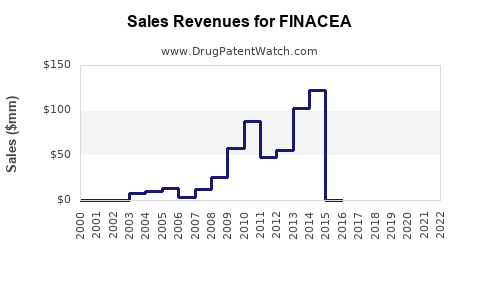
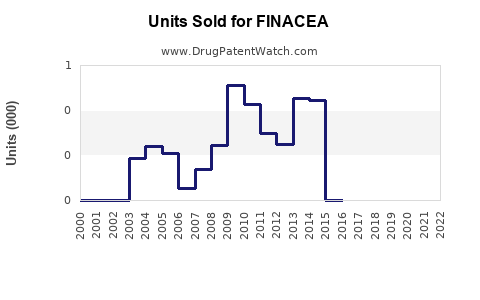
Annual Sales Revenues and Units Sold for FINACEA
| Drug Name | Revenues (USD) | Units | Year |
|---|---|---|---|
| FINACEA | ⤷ Start Trial | ⤷ Start Trial | 2022 |
| FINACEA | ⤷ Start Trial | ⤷ Start Trial | 2021 |
| FINACEA | ⤷ Start Trial | ⤷ Start Trial | 2020 |
| FINACEA | ⤷ Start Trial | ⤷ Start Trial | 2019 |
| FINACEA | ⤷ Start Trial | ⤷ Start Trial | 2018 |
| >Drug Name | >Revenues (USD) | >Units | >Year |
Finacea Market Analysis and Sales Projections: Azelaic Acid, Competition, Patents, and Generic Risk
Finacea is a mature topical rosacea product with limited patent protection and substantial generic exposure in its gel formulation. The commercial opportunity is concentrated in the branded 15% foam, physician preference, pharmacy access, and treatment persistence rather than regulatory exclusivity. Estimated U.S. Finacea brand sales are approximately $25 million to $40 million in 2024, with a base-case decline to $16 million to $22 million by 2028 as generic azelaic acid remains widely available.
What is Finacea and what is it approved to treat?
Finacea contains azelaic acid at a 15% concentration. The product is marketed in two principal U.S. dosage forms:
| Product | Strength | Dosage form | FDA indication | Regulatory status |
|---|---|---|---|---|
| Finacea Gel | 15% | Topical gel | Mild-to-moderate inflammatory papules and pustules of rosacea | Approved |
| Finacea Foam | 15% | Topical foam | Mild-to-moderate rosacea | Approved |
Finacea is used for inflammatory rosacea rather than primarily vascular symptoms such as persistent facial erythema or telangiectasia. Its clinical alternatives include ivermectin cream, metronidazole cream or gel, doxycycline, minocycline, and newer topical vasoconstrictors such as brimonidine and oxymetazoline.
The product is not a biologic and does not face biosimilar competition. Its principal market threats are generic azelaic acid, alternative topical therapies, and branded products that offer simpler application or stronger patient adherence.
How large is the Finacea and azelaic acid market?
The U.S. market for prescription topical rosacea therapies is a mature specialty dermatology market. Public company filings generally do not report Finacea revenue as a separate line item, so sales projections require a prescription-volume and net-price model rather than direct reliance on reported product revenue.
Estimated U.S. market size
| Segment | 2024 estimated U.S. sales | 2028 base-case estimate | 2024-2028 trend |
|---|---|---|---|
| Finacea brand, gel and foam | $25 million-$40 million | $16 million-$22 million | Decline |
| Generic azelaic acid, primarily gel | $70 million-$110 million | $85 million-$125 million | Low growth |
| Total prescription azelaic acid | $95 million-$150 million | $105 million-$147 million | Flat to modest growth |
| All prescription topical rosacea products | $500 million-$750 million | $575 million-$850 million | Low-to-mid single-digit growth |
These estimates reflect U.S. prescription demand, typical generic substitution, specialty pharmacy and retail dispensing, and net prices after rebates and discounts. Gross pharmacy sales are materially higher than manufacturer net sales.
Azelaic acid demand is supported by continued rosacea diagnosis, chronic or recurrent treatment, and use in patients who cannot tolerate antibiotics or retinoids. Growth is constrained by low-cost generic gel availability and substitution to ivermectin or metronidazole.
What are Finacea’s projected sales from 2024 to 2028?
The most likely trajectory is a gradual decline in branded Finacea sales rather than an abrupt loss. The foam formulation is expected to retain a higher branded share because generic competition is concentrated in azelaic acid gel.
Finacea U.S. sales projection
| Year | Bear case | Base case | Bull case |
|---|---|---|---|
| 2024 | $22 million | $32 million | $42 million |
| 2025 | $19 million | $29 million | $40 million |
| 2026 | $16 million | $26 million | $38 million |
| 2027 | $14 million | $23 million | $36 million |
| 2028 | $12 million | $20 million | $34 million |
The base case assumes:
- Continued generic substitution for Finacea Gel.
- Stable or modestly declining branded foam prescriptions.
- No major new indication.
- No material supply interruption.
- Stable diagnosis rates in dermatology.
- Gradual erosion of commercial payer coverage for the branded product.
The bull case requires stronger physician preference for foam, durable manufacturer copay support, restricted access to equivalent generic products, or improved patient persistence. The bear case assumes accelerated formulary exclusion and broader acceptance of generic gel as clinically interchangeable for most patients.
Revenue sensitivity by formulation
| Formulation | Current commercial position | Five-year outlook |
|---|---|---|
| 15% gel | Highly exposed to generic substitution | Continued revenue erosion |
| 15% foam | More differentiated delivery system | Slower decline |
| Generic 15% gel | Low-cost, widely substitutable | Stable to modest growth |
| Compounded azelaic acid | Limited and variable | Niche channel |
The foam can command a higher net price than generic gel, but the price premium depends on payer coverage, patient copay, and whether prescribers consider the vehicle clinically meaningful.
When does Finacea lose exclusivity?
Finacea has already lost practical market exclusivity in the gel formulation. Generic azelaic acid 15% gel products are available in the United States, and the active ingredient has been used in dermatology for decades.
The key exclusivity dates are historical rather than forward-looking:
| Exclusivity category | Finacea position |
|---|---|
| New chemical entity exclusivity | Not applicable to azelaic acid |
| Orphan exclusivity | None |
| Pediatric exclusivity | No material current protection identified |
| Gel formulation exclusivity | Expired or commercially overcome |
| Foam formulation exclusivity | Limited by the absence of a durable market monopoly and generic substitution pressure on the underlying active ingredient |
Finacea’s commercial protection now depends more on formulation differentiation, trademarks, manufacturing know-how, contracting, and physician familiarity than on basic active-ingredient patents.
What patents protect Finacea?
Finacea’s original patent estate centered on azelaic acid topical formulations, compositions, and delivery vehicles. The central active-ingredient and gel patents are no longer capable of preventing routine generic azelaic acid gel competition.
Patent estate assessment
| Patent category | Commercial relevance |
|---|---|
| Azelaic acid composition patents | Largely expired or no longer blocking |
| 15% gel formulation patents | Insufficient to prevent generic gel entry |
| Foam vehicle patents | Potentially relevant to non-infringing foam development |
| Manufacturing process patents | May create process barriers but rarely block all generic entry |
| Method-of-use patents | Limited value where the rosacea indication is established and labeling can be carved out |
| Trademark protection | Remains relevant to brand recognition but does not prevent generic substitution |
The Finacea estate should be considered weak for the gel and moderate for the foam. Foam patents can raise development costs, but they do not necessarily prevent an alternative formulation, a different excipient system, or a separate abbreviated regulatory strategy.
Patent status must be checked against the current USPTO Patent Center, FDA Orange Book, and individual patent-family records before a transaction or litigation decision. FDA Orange Book listings are the controlling source for listed patents tied to an approved product. The Orange Book does not itself establish infringement or patent validity. (FDA, 2024a)
What is the Orange Book status of Finacea?
Finacea is regulated as a drug, not a cosmetic. Its FDA approval is tied to prescription labeling, manufacturing controls, stability data, and product quality requirements.
The commercial significance of the Orange Book is greater for a potential generic foam than for the established gel. A generic applicant seeking approval through an abbreviated new drug application can challenge listed patents through a Paragraph IV certification or use a Paragraph III certification if it accepts delayed approval until patent expiry.
The likely regulatory outcomes are:
- Generic gel applicants rely on existing approval pathways and compete on price.
- A future generic foam applicant must demonstrate pharmaceutical equivalence and bioequivalence or another FDA-accepted bridge.
- A Paragraph IV dispute would focus on formulation, vehicle, manufacturing, or listed-use claims rather than the basic use of azelaic acid for rosacea.
- A successful carve-out of patented use language could permit approval without directly challenging every method-of-use claim.
Which companies are challenging Finacea?
The principal competitive challenge comes from generic manufacturers rather than a single branded challenger. Generic dermatology suppliers commonly compete in topical azelaic acid, including large and mid-sized ANDA manufacturers and contract manufacturing organizations.
The competitive field includes:
| Competitor group | Examples of competitive products | Primary advantage |
|---|---|---|
| Generic manufacturers | Azelaic acid 15% gel | Price and formulary access |
| Branded rosacea products | Soolantra, Metrogel, Rhofade, Mirvaso, Zilxi | Differentiated mechanism or vehicle |
| Oral therapies | Doxycycline and minocycline | Established use in inflammatory disease |
| Compounding pharmacies | Customized azelaic acid formulations | Low price and flexibility |
| Consumer dermatology platforms | Subscription or teledermatology treatments | Convenience and acquisition efficiency |
No biosimilar company is relevant because Finacea is a small-molecule topical drug. The more important regulatory competitors are ANDA applicants and manufacturers with established dermatology distribution.
What formulations are protected by Finacea?
The formulation is the most commercially meaningful part of the Finacea franchise.
Finacea Gel
The gel is the most vulnerable formulation. Generic azelaic acid 15% gel can satisfy a substantial portion of the same prescribing demand, particularly when payers apply automatic substitution or place the generic on a preferred tier.
The gel retains advantages in physician familiarity, historical clinical use, and availability. Those advantages do not support a durable price premium where the patient and prescriber view generic gel as therapeutically equivalent.
Finacea Foam
The foam has greater commercial differentiation. Foam can improve spreadability, cosmetic acceptability, and patient experience compared with a conventional gel. Those attributes may support adherence, but the commercial value depends on measurable prescribing and refill behavior.
A foam competitor would need to address:
- Active ingredient concentration.
- Foam vehicle and propellant or dispensing system.
- Product stability.
- Container-closure performance.
- Dose delivery.
- Skin tolerability.
- Bioequivalence or comparative clinical requirements.
- Patent claims covering the formulation or manufacturing process.
The foam therefore has a stronger practical barrier than the gel, but it does not have the protection of a new active ingredient.
What patent litigation and Paragraph IV risks affect Finacea?
Finacea’s primary litigation risk is a future challenge to foam formulation or delivery patents. The gel has a lower litigation profile because generic competition is already established.
Litigation risk matrix
| Risk | Probability | Commercial effect |
|---|---|---|
| Additional generic gel entry | High | Further price and volume erosion |
| Generic foam ANDA | Medium | Moderate risk to branded foam revenue |
| Paragraph IV challenge to foam patents | Medium | Litigation cost and possible launch delay |
| Method-of-use challenge | Low to medium | Limited if labeling can be carved out |
| Patent injunction maintaining exclusivity | Low to medium | Depends on claim scope and validity |
| Biosimilar litigation | None | Not applicable |
A settlement agreement could delay a generic launch, but its value would depend on the remaining enforceable patent term and the probability that the generic applicant could launch at risk. For a mature topical product, a settlement is less likely to preserve high revenue unless the foam patent estate has claims that are both broad and difficult to design around.
How does Finacea compare with competing rosacea drugs?
| Product | Active ingredient | Dosage form | Main competitive position |
|---|---|---|---|
| Finacea | Azelaic acid 15% | Gel and foam | Anti-inflammatory topical with generic substitution |
| Soolantra | Ivermectin 1% | Cream | Strong branded position in inflammatory rosacea |
| Metrogel | Metronidazole | Gel or cream | Mature, low-cost alternative |
| Rhofade | Oxymetazoline 1% | Cream | Targets persistent erythema |
| Mirvaso | Brimonidine 0.33% | Gel | Rapid vasoconstrictive effect |
| Zilxi | Minocycline 1.5% | Foam | Branded anti-inflammatory foam |
Finacea competes most directly with Soolantra and metronidazole for papules and pustules. It competes less directly with Rhofade and Mirvaso, which address facial erythema. Zilxi competes on foam presentation and dermatology positioning but has a different active ingredient and a higher branded-price profile.
What generic entry risks exist for Finacea?
Generic entry risk is high for Finacea Gel and moderate for Finacea Foam.
The main risk factors are:
- Existing generic availability for azelaic acid gel.
- Low technical complexity of the active ingredient.
- Long clinical history.
- Limited value of method-of-use patents.
- Payer preference for low-cost topical therapy.
- Availability of non-infringing formulation approaches.
- Limited benefit from regulatory exclusivity.
The principal defense is product differentiation rather than patent exclusion. A manufacturer can preserve value through foam delivery, patient-support programs, dermatologist promotion, payer contracting, and evidence supporting adherence or tolerability.
What is Finacea’s geographic coverage?
The United States is likely the most commercially important market for the branded product because of prescription pricing and dermatology reimbursement. European and other developed markets have greater generic pressure and more frequent use of lower-cost azelaic acid products.
| Region | Commercial outlook |
|---|---|
| United States | Highest branded value; generic gel pressure is substantial |
| Western Europe | Mature market with strong generic substitution |
| Canada | Moderate opportunity; reimbursement limits branded pricing |
| Japan | Regulatory and market-access requirements differ; limited brand leverage |
| Emerging markets | Volume opportunity but low net pricing |
| Global direct sales | More difficult to quantify because products may be sold under local trademarks |
Geographic patent coverage is unlikely to create a major global moat. Product registrations, local trademarks, supply reliability, and distributor relationships are more important than international exclusionary rights.
What manufacturing and intellectual-property barriers affect Finacea?
Manufacturing barriers are moderate for the foam and low-to-moderate for the gel.
For the gel, critical technical requirements include uniform azelaic acid dispersion, particle-size control, pH, viscosity, microbial quality, preservative performance, and packaging compatibility.
For the foam, the barriers are higher because the manufacturer must control:
- Foam structure and collapse behavior.
- Dose uniformity.
- Container and actuator performance.
- Stability during storage and transport.
- Propellant or dispensing technology.
- Dermal tolerability.
- Scale-up reproducibility.
These barriers can delay competitors but are unlikely to support permanent premium pricing once a capable generic manufacturer completes development.
What is the investment outlook for Finacea?
Finacea is a cash-generating but declining dermatology franchise. The gel offers limited upside because generic competition has already reset market pricing. The foam provides the best remaining commercial opportunity, but its revenue ceiling is constrained by the availability of generic azelaic acid and alternative branded rosacea therapies.
Commercial assessment
| Factor | Assessment |
|---|---|
| Market growth | Low |
| Brand pricing power | Low for gel; moderate for foam |
| Patent strength | Weak for gel; moderate for foam |
| Generic risk | High for gel; medium for foam |
| Regulatory risk | Low |
| Manufacturing complexity | Moderate |
| Licensing value | Limited unless bundled with a broader dermatology portfolio |
| Revenue durability | Moderate in foam, low in gel |
| Acquisition profile | Suitable as a tuck-in asset, not a platform franchise |
A buyer should value Finacea primarily on near-term cash flow, manufacturing economics, and prescription retention. A valuation based on long-duration patent exclusivity would overstate the asset’s protection.
Key Takeaways
- Finacea is a 15% azelaic acid product approved for inflammatory rosacea.
- The gel has already lost practical exclusivity and faces high generic substitution.
- The foam is commercially stronger because its delivery system is more differentiated.
- Estimated U.S. Finacea brand sales are $25 million to $40 million in 2024.
- Base-case U.S. brand sales decline to about $20 million by 2028.
- Total prescription azelaic acid sales are likely to remain broadly stable as generic volume offsets brand erosion.
- Finacea has no biosimilar risk because azelaic acid is a small molecule.
- The main future litigation risk is a generic challenge to foam formulation or delivery patents.
- Manufacturing complexity creates a moderate barrier for foam competitors but not a durable monopoly.
- Finacea is better viewed as a mature dermatology cash-flow asset than as a patent-protected growth product.
FAQs
Is Finacea still commercially protected?
Finacea Gel is not meaningfully protected against generic azelaic acid gel competition. Finacea Foam may retain formulation-related protection, but its commercial protection is narrower and less durable than protection for a new chemical entity.
Can a generic manufacturer launch azelaic acid foam?
A generic manufacturer may pursue an ANDA or another FDA pathway if it can demonstrate the required pharmaceutical equivalence, product performance, and bioequivalence. Listed patents and formulation differences would determine the timing and litigation risk.
Does Finacea have Paragraph IV exposure?
Paragraph IV exposure is more relevant to the foam than the gel. A challenge would likely target formulation, delivery, manufacturing, or method-of-use claims rather than the underlying azelaic acid molecule.
Is Finacea more valuable than Soolantra?
Soolantra generally has stronger branded differentiation because ivermectin cream is positioned around a distinct active ingredient and formulation. Finacea has greater generic exposure, although its foam may retain a defensible niche based on vehicle preference and tolerability.
What is the most likely Finacea launch scenario for a new generic?
The most likely scenario is continued generic gel substitution followed by gradual branded foam erosion. A successful generic foam launch would accelerate revenue decline, but it would not eliminate all branded demand if dermatologists and patients prefer the branded vehicle.
References
- U.S. Food and Drug Administration. (2024a). Approved drug products with therapeutic equivalence evaluations: Orange Book. https://www.accessdata.fda.gov/scripts/cder/ob/
- U.S. Food and Drug Administration. (2024b). Finacea (azelaic acid) gel, 15%, prescribing information.
- U.S. Food and Drug Administration. (2024c). Finacea (azelaic acid) foam, 15%, prescribing information.
- U.S. Food and Drug Administration. (2024d). Abbreviated new drug application submissions: Generic drug user fee amendments. https://www.fda.gov/industry/fda-user-fee-programs/generic-drug-user-fee-amendments
- U.S. Patent and Trademark Office. (2024). Patent Center. https://patentcenter.uspto.gov/
More… ↓
