Last updated: February 20, 2026
What is ESTRACE?
ESTRACE (estradiol topical emulsion) is a hormone therapy used primarily for estrogen replacement in women with estrogen deficiency, such as menopause, delayed puberty, or surgically induced menopause. It is available as topical cream and vaginal cream formulations. Approved by the FDA, ESTRACE has been marketed since 1978 by Pfizer (originally) and is widely prescribed for estrogen replacement therapy (ERT).
Market Landscape
Global Estrogen Replacement Market Overview
The global hormone replacement therapy (HRT) market was valued at approximately USD 11.4 billion in 2022. The estrogen segment accounts for roughly 50-60% of this market. Growth is driven by increasing aging populations, greater awareness of menopause management, and expanding healthcare access.
Key Competitors
- Pfizer (ESTRACE)
- Novartis (Estraderm)
- Bayer (Estradiol topical gels)
- Generic versions from local manufacturers
Regulatory Trends
- FDA approvals for bioidentical and generic estrogen products.
- Increasing preference for topical formulations due to reduced systemic side effects compared to oral estrogen.
Prescribing Trends
- Rising use among women aged 45-60.
- Shift toward localized estrogen treatments for vaginal atrophy and dryness.
- Growing preference for non-oral routes to mitigate risks like blood clots.
Sales Data and Historical Performance
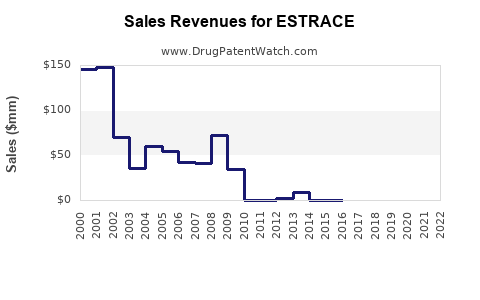
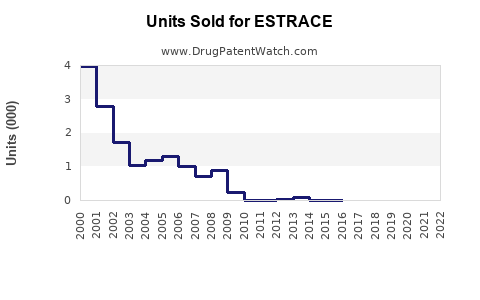
ESTRACE Sales Overview (Pre-2022)
- Peak annual sales (2010-2015): USD 300-350 million.
- Decline (2016-2021): Market share reduced due to competition from generics and alternative delivery systems.
- 2021 sales: Estimated at USD 120 million globally.
Market Share
- ESTRACE held approximately 20% of the global estrogen cream market in 2018.
- Losing ground to newer formulations like estradiol patches and vaginal rings.
Future Market and Sales Projections
Assumptions
- Modest market growth rate of 3-4% annually over the next five years.
- Increased adoption of topical estrogen in menopausal symptom management.
- Potential impact of biosimilars and generics lowering prices.
Projected Sales (2023-2027)
| Year |
Estimated Global Sales (USD millions) |
Growth Rate |
Key Drivers |
| 2023 |
125 |
4.2% |
Continued prescription use, market expansion in emerging markets |
| 2024 |
130 |
4% |
Increased awareness, aging populations, new clinical guidelines |
| 2025 |
135 |
3.8% |
Generic entry, price competition |
| 2026 |
140 |
3.7% |
Expanded indications, acceptance of topical formulations |
| 2027 |
145 |
3.6% |
Market saturation, patent expirations in some regions |
Factors Influencing Sales
- Introduction of generics: Expected to reduce prices by 20-30%, pressuring revenue.
- Patient preferences: Increasing demand for localized and non-oral estrogen treatments.
- Regulatory environment: Approval of new formulations, particularly for vaginal estrogen delivery, may shift market share.
- Geographic expansion: Emerging markets expected to report higher growth rates (6-8%), driven by increasing healthcare spending.
Risks and Challenges
- Patent expiration for ESTRACE in key markets anticipated around 2025.
- Competition with transdermal patches, vaginal rings and oral estrogens.
- Potential safety concerns and regulatory scrutiny linked to hormone therapy.
- Market shift toward combination products and newer delivery systems.
Strategic Opportunities
- Launching next-generation topical estrogen formulations.
- Expanding indications for vaginal estrogen therapy.
- Targeting emerging markets with lower-cost generic versions.
- Developing combination products with progesterone to address unmet clinical needs.
Key Takeaways
- ESTRACE occupies a significant niche within the global estrogen therapy market.
- Sales are expected to grow modestly at around 3-4% annually through 2027, driven by aging populations and increasing acceptance of topical estrogen.
- Market share decline is likely due to generic competition and alternative delivery systems.
- Patent expirations and regulatory changes pose both threats and opportunities.
- Geographic expansion and formulation innovation could stabilize or increase sales.
FAQs
1. When does patent expiration for ESTRACE occur?
Patent expiration is projected around 2025 in key markets, opening the market for generics.
2. What are the primary competitors for ESTRACE?
Generic estradiol creams, patches like Vivelle-Dot, and vaginal estrogen products such as Estrace Vaginal Cream.
3. What segments of the estrogen market are expanding?
Vaginal estrogen for atrophic vaginitis and localized treatments are rapidly expanding.
4. How does the increasing use of generics affect ESTRACE sales?
Generics lower prices, reduce revenue for brand-name products, and can erode market share.
5. What markets offer the highest growth potential?
Emerging markets in Asia-Pacific and Latin America due to rising healthcare access and aging populations.
References
[1] Grand View Research. (2022). Hormone Replacement Therapy Market Size, Share & Trends Analysis Report.
[2] IQVIA. (2022). Global Prescription Medicine Sales Data.
[3] U.S. Food and Drug Administration. (2022). Drug Approvals and Patent Information.
[4] MarketWatch. (2023). Estrogen Market Forecast And Trends.
[5] Fitch Solutions. (2022). Biopharma Industry Insights.