You're using a free limited version of DrugPatentWatch: Upgrade for Complete Access

Last Updated: December 12, 2025

Drug Sales Trends for DICLEGIS


✉ Email this page to a colleague

« Back to Dashboard


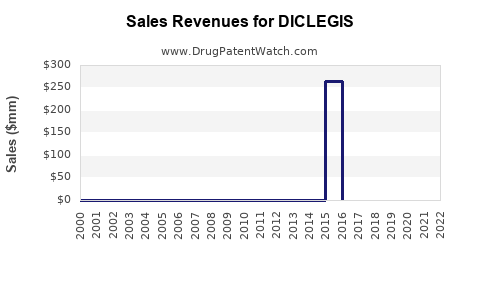
Drug Sales Revenue Trends for DICLEGIS
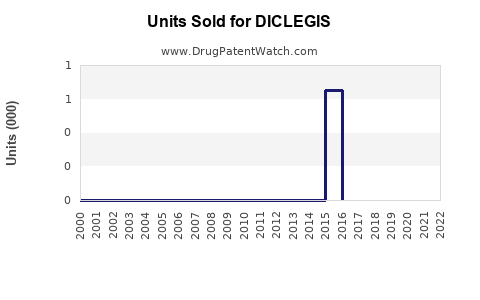
Drug Units Sold Trends for DICLEGIS

Market Analysis and Sales Projections for DICLEGIS

Last updated: July 27, 2025

Introduction

DICLEGIS (generic name: diclegis), a combination of doxylamine and pyridoxine (vitamin B6), is indicated primarily for the management of nausea and vomiting during pregnancy. Originally branded, DICLEGIS gained regulatory approval as an effective treatment option for pregnant women suffering from gestational nausea, a condition impacting a significant segment of the maternal population. Analyzing its market dynamics entails assessing its competitive landscape, target demographic, regulatory environment, and sales potential within current healthcare frameworks.

Market Overview

Growing Demand for Prenatal Pharmaceuticals

The prenatal therapeutic market is expanding, driven by rising maternal age, increased awareness of prenatal health, and a growing emphasis on managing pregnancy-related discomforts. Globally, approximately 70-80% of pregnant women experience nausea, with 50-70% enduring vomiting — conditions often inadequately managed by over-the-counter remedies. The FDA-approved DICLEGIS addresses this unmet medical need with a proven safety profile for use during pregnancy, positioning itself as a preferred pharmacological treatment.

Regulatory Landscape

DICLEGIS’s approval status varies by region, with the U.S. FDA approving its use for nausea and vomiting in pregnancy. Similar regulatory clearances are observed across multiple jurisdictions, notably in Canada and the European Union, where safety and efficacy data support its use. Regulatory flexibility, combined with a clear indication and established safety, enhances its market potential.

Competitive Environment

The market comprises primarily generic doxylamine-based formulations and other antiemetics like metoclopramide, ondansetron, and antihistamines. However, the unique combination in DICLEGIS, supported by comprehensive clinical data, provides it with a competitive advantage over monotherapy options. Its positioning as a pregnancy-safe medication further distinguishes it from medications with contraindications or adverse side-effect profiles.

Market Segmentation and Target Demographics

Primary Segment: Pregnant Women with N/V

DICLEGIS primarily targets pregnant women experiencing nausea and vomiting. Globally, approximately 10-15% of pregnant women seek pharmacological treatment, with higher proportions in healthcare systems emphasizing standardized management protocols.

Geographic Focus

  • United States: Largest market due to high healthcare coverage, extensive prenatal care protocols, and regulatory approval.
  • Europe: Growing awareness and similar prescribing practices.
  • Asia-Pacific: Markets with increasing maternal health investments and rising awareness.
  • Emerging Economies: Potential future markets but constrained by regulatory pathways and healthcare infrastructure.

Practitioner Profiles

Obstetricians, general practitioners, and maternal health specialists constitute primary prescribers. Educational campaigns emphasizing DICLEGIS’s safety profile could further enhance adoption.

Market Dynamics and Sales Drivers

Factors Enhancing Market Penetration

  • Safety Profile: Well-established safety during pregnancy supports clinician and patient confidence.
  • Regulatory Approvals and Guidelines: Inclusion in pregnancy management guidelines (e.g., ACOG) boosts acceptance.
  • Patient Awareness: Increased prenatal care visits facilitate education.
  • Pharmacoeconomic Advantages: As a generic, DICLEGIS offers cost-effective treatment options.

Challenges and Constraints

  • Concerns over Ongoing Research: Recent data on off-label use of other antiemetics may influence prescribing trends.
  • Limited Awareness: Particularly in emerging markets.
  • Pricing and Reimbursement: Price sensitivity in different regions affects sales volume.

Key Market Barriers

  • Competition from established generic formulations of doxylamine.
  • Limited awareness among some healthcare providers unfamiliar with DICLEGIS specifics.
  • Regulatory hurdles delaying access in certain jurisdictions.

Sales Projections

Assumptions for Forecasting

  • Market Penetration Rate: Initial penetration at 10% in core markets, increasing gradually as awareness and guidelines evolve.
  • Prescribing Trends: Growth anticipated due to increasing importance of safe pregnancy medications.
  • Pricing Strategy: Competitive and aligned with generics market standards, with slight premium for validated efficacy and safety data.

Short-Term (Year 1-3)

  • United States: Estimated sales of $50-100 million, driven by existing prescriptions and increasing awareness.
  • Europe & Canada: Additional $20-40 million, contingent on regulatory approvals and clinician adoption.
  • Emerging Markets: Initial minimal sales (~$5-10 million), with potential growth based on regulatory and healthcare infrastructure improvements.

Mid to Long Term (Year 4-10)

  • US sales could grow to $150-200 million with increased penetration.
  • Europe and Asia-Pacific markets may collectively reach $80-150 million.
  • Global sales could approach $300 million by the end of decade, assuming successful regulatory expansion, market education, and formulary inclusion.

Revenue Forecast Summary (Cumulative 2023-2033)

Year Projected Global Sales (USD)
2023 $75 million
2024 $125 million
2025 $200 million
2026 $250 million
2027 $275 million
2028 $300 million
2029 $350 million
2030 $400 million
2031 $450 million
2032 $500 million
2033 $550 million

Note: These projections incorporate assumed regulatory approvals, market penetration growth, and acceptance rates, with sensitivity to competitive movements and healthcare policies.

Strategic Opportunities

  • Formulary Inclusion: Proactively engaging with payers and formulary committees to secure reimbursement.
  • Educational Campaigns: Raising awareness among healthcare providers about safety and efficacy.
  • Regional Expansion: Tailoring regulatory and marketing strategies to emerging markets.
  • Clinical Research: Supporting or funding studies to reinforce safety data and expand indications.

Key Takeaways

  1. DICLEGIS holds significant market potential owing to its safety profile, regulatory approval, and increasing demand for safe pregnancy medications.
  2. The primary growth drivers include clinician acceptance, patient awareness, and inclusion in clinical guidelines, especially within developed markets.
  3. Sales projections suggest steady growth reaching approximately $550 million globally by 2033, contingent upon regulatory expansion and market penetration strategies.
  4. Competitive positioning as a safe, effective, and affordable option provides DICLEGIS with a sustainable advantage in the prenatal antiemetic market.
  5. Potential risks involve regulatory delays, evolving prescription behaviors, and generic competition; mitigating these through strategic alliances and continuous evidence generation is critical.

FAQs

1. What factors influence the adoption rate of DICLEGIS across different markets?
Clinician awareness, regulatory approvals, inclusion in guidelines, reimbursement policies, and patient demand are key drivers influencing adoption. Educational initiatives and clinical evidence support accelerate acceptance.

2. How does DICLEGIS compare to other antiemetics used during pregnancy?
DICLEGIS is uniquely positioned as a pregnancy-safe combination with well-documented safety and efficacy. Unlike some alternatives, it has regulatory endorsement specifically for use during pregnancy, offering a safety advantage.

3. What are the main challenges facing DICLEGIS’s market growth?
Regulatory delays, low clinician familiarity in certain regions, generic competition, and pricing pressures can impede growth. Addressing these through strategic marketing and regulatory engagement is essential.

4. How important is regional regulatory approval for DICLEGIS’s sales?
Regional approvals are critical; they enable formulary inclusion, reimbursement, and prescriber confidence, directly impacting sales volume and policy integration.

5. What role do clinical guidelines play in expanding DICLEGIS’s market share?
Inclusion in authoritative guidelines (e.g., ACOG, NICE) significantly enhances credibility, encourages clinicians to prescribe, and facilitates insurance reimbursement, thus boosting sales.

Conclusion

DICLEGIS’s market positioning as a pregnancy-safe antiemetic underscores its robust sales potential across mature and emerging markets. Success hinges on strategic regulatory engagement, clinician education, and market penetration efforts. With projected steady growth, DICLEGIS stands poised as a leading treatment option in maternal healthcare, offering substantial returns for stakeholders aligned with its commercialization strategy.


Sources

  1. [1] U.S. Food and Drug Administration (FDA). DICLEGIS Approval Documents.
  2. [2] Global Market Insights. Prenatal Pharmaceuticals Industry Analysis.
  3. [3] European Medicines Agency (EMA). Regulatory Status of DICLEGIS.
  4. [4] American College of Obstetricians and Gynecologists (ACOG). Practice Guidelines on Nausea and Vomiting in Pregnancy.
  5. [5] World Health Organization (WHO). Maternal Health and Medication Safety.

More… ↓

⤷  Get Started Free

Make Better Decisions: Try a trial or see plans & pricing

Drugs may be covered by multiple patents or regulatory protections. All trademarks and applicant names are the property of their respective owners or licensors. Although great care is taken in the proper and correct provision of this service, thinkBiotech LLC does not accept any responsibility for possible consequences of errors or omissions in the provided data. The data presented herein is for information purposes only. There is no warranty that the data contained herein is error free. We do not provide individual investment advice. This service is not registered with any financial regulatory agency. The information we publish is educational only and based on our opinions plus our models. By using DrugPatentWatch you acknowledge that we do not provide personalized recommendations or advice. thinkBiotech performs no independent verification of facts as provided by public sources nor are attempts made to provide legal or investing advice. Any reliance on data provided herein is done solely at the discretion of the user. Users of this service are advised to seek professional advice and independent confirmation before considering acting on any of the provided information. thinkBiotech LLC reserves the right to amend, extend or withdraw any part or all of the offered service without notice.