Drug Sales Trends for BRINTELLIX
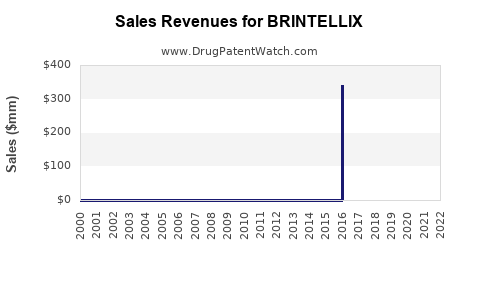
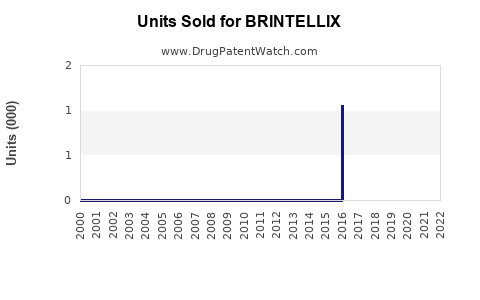
Annual Sales Revenues and Units Sold for BRINTELLIX
| Drug Name | Revenues (USD) | Units | Year |
|---|---|---|---|
| BRINTELLIX | ⤷ Start Trial | ⤷ Start Trial | 2022 |
| BRINTELLIX | ⤷ Start Trial | ⤷ Start Trial | 2021 |
| BRINTELLIX | ⤷ Start Trial | ⤷ Start Trial | 2020 |
| BRINTELLIX | ⤷ Start Trial | ⤷ Start Trial | 2019 |
| BRINTELLIX | ⤷ Start Trial | ⤷ Start Trial | 2018 |
| BRINTELLIX | ⤷ Start Trial | ⤷ Start Trial | 2017 |
| BRINTELLIX | ⤷ Start Trial | ⤷ Start Trial | 2016 |
| >Drug Name | >Revenues (USD) | >Units | >Year |
BRINTELLIX Market Analysis, Sales Forecast, Patent Risk, and Competitive Outlook
BRINTELLIX, marketed as Trintellix in the United States, is vortioxetine, an oral antidepressant approved for major depressive disorder. The brand has established a durable position in a crowded SSRI and SNRI market, supported by differentiated pharmacology, broad international availability, and relatively stable prescribing among patients who do not respond adequately to first-line antidepressants. Its principal commercial risk is generic entry after the U.S. composition patent and related exclusivity protections expire in the second half of the decade.
Base-case global sales are projected to remain near current levels through 2025, decline moderately from 2026, and fall sharply after broad generic availability. A reasonable base case is global branded sales of approximately DKK 2.5 billion in 2023, rising to DKK 2.7 billion in 2025 before declining to DKK 1.4 billion by 2029. The range depends mainly on the timing of U.S. generic launch, payer pressure, and the ability of Lundbeck and Takeda to retain patients through authorized-generic or differentiated-brand strategies.
What is BRINTELLIX and how is it marketed?
BRINTELLIX is the original global brand name for vortioxetine. Takeda and Lundbeck changed the U.S. brand name to Trintellix in 2016 because of potential confusion with Brilinta, AstraZeneca's ticagrelor product. The active ingredient and approved indication did not change.
| Attribute | Details |
|---|---|
| Active ingredient | Vortioxetine hydrobromide |
| Primary brand | Brintellix outside the U.S.; Trintellix in the U.S. |
| Therapeutic area | Major depressive disorder |
| Dosage form | Oral tablets |
| Typical strengths | 5 mg, 10 mg, 15 mg, and 20 mg, depending on market |
| U.S. approval | September 2013 |
| U.S. commercial partners | Takeda and Lundbeck |
| Drug class | Serotonin modulator and stimulator |
| Primary competitors | SSRIs, SNRIs, bupropion, mirtazapine, vilazodone, desvenlafaxine, branded newer antidepressants |
The product is positioned as a multimodal serotonergic antidepressant. Its label includes treatment of major depressive disorder in adults. Vortioxetine is not a biologic, so biosimilar competition is irrelevant. The relevant threat is conventional generic substitution through abbreviated new drug applications, or ANDAs.
How large is the BRINTELLIX market?
The addressable market is large, but most prescription volume is concentrated in low-cost generic antidepressants. Vortioxetine competes for a narrower segment consisting of patients with inadequate response, tolerability problems, sexual side effects, adherence concerns, or residual cognitive symptoms.
The key commercial markets are:
- United States, the largest value market and the main source of generic-entry risk.
- Japan, where Takeda has historically had a significant commercial role.
- Western Europe, where national reimbursement and generic substitution create pricing pressure.
- Latin America and selected Asian markets, where branded and local generic competition varies by country.
- Canada, Australia, and other developed markets with established antidepressant prescribing.
U.S. demand is driven by primary-care prescribing as well as psychiatry. The product benefits from the large prevalence of major depressive disorder, but volume growth is constrained by the low cost of generic escitalopram, sertraline, fluoxetine, venlafaxine, and bupropion.
What are BRINTELLIX’s sales and revenue trends?
Lundbeck has reported Trintellix/Brintellix as one of its major commercial products. Product sales have generally remained in the DKK 2.5 billion range annually in the early 2020s, with growth supported by prescription persistence and geographic expansion rather than major label expansion.
| Period | Estimated global branded sales | Market interpretation |
|---|---|---|
| 2023 | Approximately DKK 2.5-2.7 billion | Mature but resilient franchise |
| 2024 | Approximately DKK 2.6-2.8 billion | Continued demand and price/mix support |
| 2025 | Approximately DKK 2.6-2.8 billion | Peak or near-peak branded revenue |
| 2026 | Approximately DKK 2.3-2.6 billion | Initial U.S. exclusivity pressure |
| 2027 | Approximately DKK 1.8-2.2 billion | Generic availability begins affecting net sales |
| 2028 | Approximately DKK 1.4-1.8 billion | Substantial substitution in the U.S. |
| 2029 | Approximately DKK 1.2-1.6 billion | Residual branded demand and international revenue |
These are independent market estimates, not company guidance. The estimates assume no major new indication, no material safety signal, and a U.S. generic launch around the effective end of relevant patent protection.
What is the BRINTELLIX sales forecast through 2029?
Base-case forecast
The base case assumes low-single-digit growth before generic entry, followed by a gradual decline rather than an immediate collapse. That reflects staggered generic launches, continued prescribing in patients stabilized on the brand, international patent differences, and the possibility of payer restrictions that precede full generic substitution.
| Year | Base-case sales, DKK billion | Year-over-year trend |
|---|---|---|
| 2023A | 2.6 | Baseline |
| 2024E | 2.7 | 4% |
| 2025E | 2.7 | 1% |
| 2026E | 2.5 | -7% |
| 2027E | 2.0 | -20% |
| 2028E | 1.6 | -20% |
| 2029E | 1.4 | -13% |
Scenario analysis
| Scenario | Generic timing | 2025 sales | 2027 sales | 2029 sales |
|---|---|---|---|---|
| Upside | Delayed or limited generic penetration | DKK 2.9bn | DKK 2.4bn | DKK 1.9bn |
| Base case | Generic launch near expected patent expiry | DKK 2.7bn | DKK 2.0bn | DKK 1.4bn |
| Downside | Early launch or rapid substitution | DKK 2.5bn | DKK 1.5bn | DKK 0.9bn |
The downside case is more likely if several ANDA applicants launch simultaneously and major U.S. pharmacy benefit managers place generic vortioxetine on preferred tiers. The upside case requires stronger-than-expected persistence, limited generic supply, or a successful strategy that protects branded prescriptions.
When does BRINTELLIX lose exclusivity?
The principal U.S. patent risk is associated with vortioxetine composition-of-matter protection and related listed patents. The critical commercial date is expected to fall in the 2026-2027 period, subject to patent-term adjustment, pediatric exclusivity, litigation outcomes, and the specific claims relied upon by generic applicants.
| Protection category | Commercial relevance |
|---|---|
| Active-ingredient patent | Primary barrier to generic vortioxetine |
| Formulation and tablet patents | May delay or narrow particular generic products |
| Method-of-use patents | Potentially relevant to labeling and induced-infringement disputes |
| FDA regulatory exclusivity | No permanent protection; less important than patent expiry at this stage |
| Pediatric exclusivity | Could add six months if granted and applicable |
| Orange Book listings | Determine the patents that ANDA applicants must address |
The FDA Orange Book and individual ANDA certifications control the practical timing of generic competition. A Paragraph IV certification can trigger patent litigation and a potential 30-month stay of approval under the Hatch-Waxman framework. The absence of a public launch does not establish that no ANDA has been filed.
What patent and formulation protections affect BRINTELLIX?
The original product’s strongest protection has been its active-ingredient patent estate. Later patents can protect specific formulations, dosing regimens, or methods of treatment, but these generally provide narrower commercial coverage than a composition-of-matter patent.
Potentially relevant protection areas include:
- Vortioxetine chemical composition.
- Tablet formulations and excipient combinations.
- Dosage strengths and treatment regimens.
- Use in major depressive disorder.
- Dose titration and tolerability management.
- Manufacturing processes and crystalline forms.
Formulation patents can create incremental litigation leverage but usually do not prevent all generic competition if an ANDA applicant can design around the claims. Method-of-use patents may be difficult to enforce where the generic label omits the patented use, although induced-infringement risk can remain if prescribing and promotional conduct support the claim.
Are there Paragraph IV challenges or BRINTELLIX patent lawsuits?
The commercial impact of Paragraph IV activity depends on the number of ANDA filers, the patents challenged, and whether the originator settles before approval. The relevant litigation questions are:
- Whether generic applicants challenge the active-ingredient patent.
- Whether they challenge formulation or method-of-use patents.
- Whether the first filer qualifies for 180 days of generic exclusivity.
- Whether the parties execute a settlement with a licensed entry date.
- Whether the FDA applies a 30-month stay to approval.
A confirmed launch date cannot be inferred from patent expiry alone. Generic companies may launch at risk, enter under a settlement, or wait for court resolution. The most material revenue step-down would occur if multiple generic suppliers enter within a short period.
What is the FDA regulatory status of BRINTELLIX?
The FDA approved vortioxetine in 2013 for adults with major depressive disorder. The U.S. product is marketed as Trintellix. It is regulated as a small-molecule prescription drug and has no biosimilar pathway.
The FDA label identifies common adverse reactions including nausea, constipation, and vomiting. The product carries antidepressant class warnings relating to suicidality in pediatric and young adult populations and other serotonergic risks. These class-wide warnings have not prevented commercial adoption but can affect physician selection and payer management.
No major new indication is assumed in the forecast. A new approved use could extend the product’s addressable market, but the remaining commercial life limits the probability that label expansion would fully offset generic erosion.
How does BRINTELLIX compare with competing antidepressants?
| Product or class | Competitive strength | Limitation versus vortioxetine |
|---|---|---|
| Escitalopram and sertraline | Very low cost, extensive physician familiarity | Less differentiated after inadequate response |
| Venlafaxine and desvenlafaxine | Established SNRI efficacy | Blood-pressure and discontinuation concerns |
| Bupropion | Favorable sexual-side-effect and activation profile for some patients | Not suitable for all patients; seizure-risk considerations |
| Mirtazapine | Useful in insomnia or low appetite | Sedation and weight gain |
| Vilazodone | Branded differentiation in depression | Smaller commercial scale and pricing pressure |
| Vortioxetine | Multimodal mechanism and established brand base | Higher cost and pending generic exposure |
| Newer branded agents | Novel mechanisms or rapid-onset positioning | Higher price, limited access, and less mature evidence |
Vortioxetine’s principal defense is not a cost advantage. It is clinical familiarity and use in patients who have not achieved satisfactory results with generic first-line therapy.
What licensing deals and companies are linked to BRINTELLIX?
Lundbeck and Takeda entered a collaboration covering the development and commercialization of vortioxetine. Takeda has played an important role in the U.S. commercialization of Trintellix, while Lundbeck has retained a major economic interest in the product and markets it in various international territories.
The partnership reduces the cost burden of commercializing the product alone but also divides economics between the companies. The structure matters for forecasting because reported Lundbeck revenue may differ from U.S. product sales and may reflect collaboration accounting, royalties, or regional rights.
What generic entry risks exist for BRINTELLIX?
The highest-risk market is the United States. Generic entry could reduce net price before it eliminates prescriptions because payers may impose higher copayments or move the brand to nonpreferred tiers after ANDA approval.
Generic launch scenarios
- One generic entrant: initial price erosion, with branded persistence remaining material.
- Two to four entrants: rapid discounting and substantial pharmacy substitution.
- More than four entrants: commodity-like pricing and steep branded volume loss.
- Authorized generic: slower overall erosion but lower net revenue per prescription.
- Settlement-based entry: predictable decline beginning on the agreed date.
International erosion will be uneven. Countries with automatic substitution and centralized reimbursement are likely to decline faster than markets in which physicians control brand selection or public reimbursement remains fragmented.
How strong is the BRINTELLIX commercial position?
The franchise has medium commercial strength and declining legal strength.
| Factor | Assessment |
|---|---|
| Clinical differentiation | Moderate |
| Prescriber familiarity | Strong |
| U.S. payer position | Moderate to weak after generic entry |
| International reach | Strong |
| Patent durability | Limited relative to product maturity |
| Biosimilar risk | None |
| Small-molecule generic risk | High |
| New-indication upside | Uncertain and likely limited |
| Revenue durability | Moderate through 2025; weak after broad generic launch |
The most important valuation variable is the duration of protected U.S. revenue, not the size of the overall depression market. A six- to twelve-month difference in generic timing could materially affect cumulative brand revenue.
What is the outlook for BRINTELLIX revenue exposure?
For Lundbeck, Brintellix/Trintellix is a material but not sole revenue contributor. The product’s decline would increase reliance on other assets, including Rexulti, Vyepti, Abilify Maintena, and pipeline launches. For Takeda, the product is less central to total group revenue but remains relevant within its neuroscience portfolio.
Investors should monitor:
- U.S. prescription volume and refill persistence.
- Net price and gross-to-net deductions.
- Orange Book updates.
- ANDA approvals and tentative approvals.
- Paragraph IV litigation.
- Payer formulary changes.
- International generic registrations.
- Quarterly product revenue reported by Lundbeck and Takeda.
Key Takeaways
- BRINTELLIX is the international brand for vortioxetine; the U.S. brand is Trintellix.
- Global branded sales were approximately DKK 2.5-2.7 billion in 2023.
- Sales are expected to peak near DKK 2.7 billion in 2025 under the base case.
- The main commercial risk is U.S. generic entry around the 2026-2027 period.
- Base-case sales decline to approximately DKK 1.4 billion by 2029.
- Vortioxetine has no biosimilar risk because it is a small-molecule drug.
- Formulation and method-of-use patents may delay or narrow competition but are less valuable than composition-of-matter protection.
- The product remains commercially resilient because of prescriber familiarity and use after inadequate response to generic antidepressants.
- Generic timing, Paragraph IV litigation, settlement terms, and payer substitution will determine the steepness of revenue erosion.
Frequently Asked Questions
Is BRINTELLIX the same drug as Trintellix?
Yes. Both brands contain vortioxetine. BRINTELLIX is used in markets outside the United States, while Trintellix is the U.S. brand name.
Will there be a generic version of BRINTELLIX?
Yes, generic vortioxetine is expected to emerge after applicable U.S. patent and exclusivity barriers expire. The timing depends on ANDA filings, Paragraph IV litigation, settlements, and regulatory approval.
Does BRINTELLIX have biosimilar competition?
No. Vortioxetine is a chemically synthesized small-molecule drug. Competition will come through generic-drug regulation, not the biosimilar pathway.
What could cause BRINTELLIX sales to exceed the base-case forecast?
Delayed generic entry, slower payer substitution, stronger refill persistence, favorable international pricing, or a meaningful new indication could produce higher sales.
How quickly could sales fall after generic vortioxetine launches?
A single generic entrant could produce a gradual decline. Multiple entrants could cause a sharp reduction in U.S. branded volume and net price within two to four quarters.
References
- U.S. Food and Drug Administration. (2013). FDA approves new drug to treat major depressive disorder.
- U.S. Food and Drug Administration. (2023). Trintellix prescribing information.
- U.S. Food and Drug Administration. (2024). Approved drug products with therapeutic equivalence evaluations: Orange Book.
- H. Lundbeck A/S. (2024). Annual report 2023. Copenhagen, Denmark: Author.
- Takeda Pharmaceutical Company Limited. (2024). Annual report 2024. Tokyo, Japan: Author.
- U.S. Congress. (1984). Drug Price Competition and Patent Term Restoration Act of 1984, Pub. L. No. 98-417.
More… ↓
