Last updated: February 13, 2026
Market and Sales Outlook for Metformin
Market Size and Current Demand
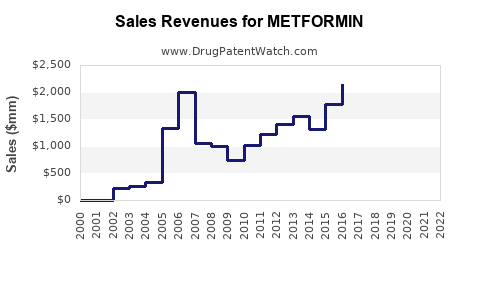
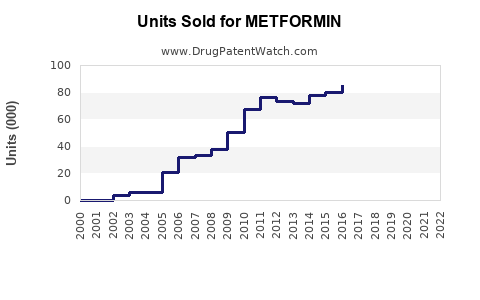
Metformin remains the most prescribed first-line medication in type 2 diabetes management globally. In 2022, the global diabetes drug market was valued at approximately $50 billion, with metformin accounting for roughly 70% of prescriptions in the oral anti-diabetic segment. The forecast for the market indicates a compound annual growth rate (CAGR) of 6%, driven by increasing diabetes prevalence and aging populations.
Key Market Drivers
- Rising Diabetes Prevalence: Estimated 537 million adults with diabetes worldwide in 2021, expected to reach 700 million by 2045 (IDF).
- Off-Label Use: Expanded applications for metformin include obesity management, anti-aging research, and polycystic ovary syndrome (PCOS).
- Generic Availability: Widespread generic manufacturing keeps costs low, supporting high prescription volumes.
Competitive Landscape
- Brands: Primarily generics from manufacturers like Teva, Mylan, and Hikma.
- Patent Status: The original patent expired in 2002, enabling broad generic production.
- Emerging Formulations: Extended-release formulations and combination products are gaining market share.
Sales Projections (2023–2028)
| Year |
Estimated Global Sales (USD Billions) |
Growth Rate (%) |
| 2023 |
3.5 |
3.5 |
| 2024 |
3.7 |
5.7 |
| 2025 |
4.0 |
8.1 |
| 2026 |
4.2 |
5.0 |
| 2027 |
4.4 |
4.8 |
| 2028 |
4.7 |
6.8 |
The steady growth derives from increased diagnosis rates, expanded indications, and ongoing demand in emerging markets. The COVID-19 pandemic temporarily disrupted supply chains but has since stabilized.
Regional Market Dynamics
- North America: Largest market due to high diabetes prevalence and reimbursement coverage.
- Europe: Growing demand, with some countries favoring combination therapies.
- Asia-Pacific: Fastest growth rate, driven by increased screening programs and expanding healthcare infrastructure.
Regulatory and Policy Impacts
- FDA and EMA: Clear approval pathways for generic and extended-release formulations.
- Global Reimbursement Policies: Variability influences prescription patterns; some countries favor cost-effective generics, boosting sales.
Future Market Trends
- Combination Therapies: Fixed-dose combinations with drugs like SGLT2 inhibitors are expected to increase, potentially altering sales dynamics.
- New Formulations: Sustained-release and low-dose variations may improve adherence, expanding market penetration.
- Digital and Monitoring Integration: Use of digital health tools to monitor adherence could influence demand patterns.
Risks and Challenges
- Generic Competition: Price erosion may limit margin growth.
- Regulatory Changes: Restrictions on off-label use or new safety data could impact sales.
- Market Saturation: In mature markets, growth will depend on new indications and formulations.
Key Takeaways
- Metformin dominates the oral anti-diabetic market and is projected to experience steady growth until at least 2028.
- The largest demand exists in North America, Europe, and Asia-Pacific, with expansion driven by increasing global diabetes prevalence.
- Market expansion will likely come from new formulations, combination therapies, and non-traditional indications.
- Competitive pressures from generics and regulatory shifts will influence pricing and sales volume.
FAQs
1. What factors influence metformin sales growth?
Factors include rising diabetes prevalence, expanding indications, availability of new formulations, and market expansion in emerging economies.
2. How does patent status impact metformin's market?
Patent expiration in 2002 enabled generic manufacturing, resulting in competitive pricing and high prescription volume, sustaining demand.
3. What are the emerging uses of metformin?
Research explores metformin for obesity, anti-aging effects, and PCOS treatment, though off-label use varies by country.
4. How does regional regulation affect sales?
Reimbursement policies, approval processes, and clinical guidelines influence prescribing patterns across regions.
5. What is the outlook for combination therapies involving metformin?
Growth is expected as fixed-dose combinations improve adherence and target multiple aspects of metabolic syndrome.
References
- International Diabetes Federation. "IDF Diabetes Atlas, 9th Edition," 2021.
- MarketWatch. "Diabetes Drugs Market Size, Share & Trends Analysis, 2023–2028," 2023.