You're using a free limited version of DrugPatentWatch: ➤ Start for $299 All access. No Commitment.

Last Updated: December 17, 2025

Drug Sales Trends for FEMHRT


✉ Email this page to a colleague

« Back to Dashboard


Payment Methods and Pharmacy Types for FEMHRT (2011)

Revenues by Pharmacy Type

Pharmacy Type Revenues
MAIL-ORDER $2,548,516
DRUG STORE $24,737,341
[disabled in preview] $0
This preview shows a limited data set
Subscribe for full access, or try a Trial

Units Sold by Pharmacy Type

Pharmacy Type Units
MAIL-ORDER 15,135
DRUG STORE 318,945
[disabled in preview] 0
This preview shows a limited data set
Subscribe for full access, or try a Trial

Revenues by Payment Method

Payment Method Revenues
PRIVATE INSURANCE $12,037,045
SELF OR FAMILY $15,248,812
[disabled in preview] $0
This preview shows a limited data set
Subscribe for full access, or try a Trial
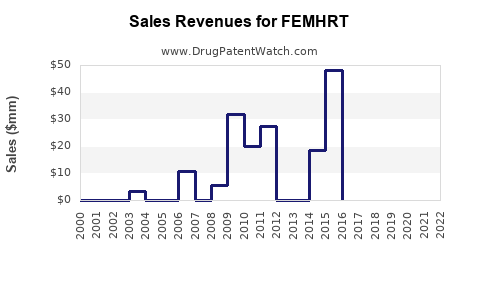
Drug Sales Revenue Trends for FEMHRT
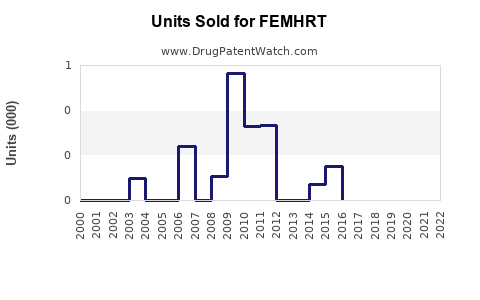
Drug Units Sold Trends for FEMHRT

Market Analysis and Sales Projections for FEMHRT

Last updated: July 28, 2025


Introduction

FEMHRT, a hormone replacement therapy (HRT) designed primarily for menopausal women, is positioned within a growing segment of women's health therapeutics. As the aging female population increases globally, demand for effective menopausal symptom management escalates, fueling potential market opportunities for FEMHRT. This report delivers a comprehensive analysis of the current market landscape, competitive positioning, regulatory environment, and sales forecasts for FEMHRT over the next five years.


Market Landscape Overview

Global Menopause and HRT Market Dynamics

The global menopause management market was valued at approximately USD 15 billion in 2022 and is projected to reach USD 22 billion by 2030, expanding at a CAGR of around 4.9% (source: Grand View Research). This growth is underpinned by demographic shifts, increased awareness regarding menopause treatments, and advances in hormone therapy formulations.

Key Market Drivers

  • Demographic Shift: An aging female population, particularly in developed regions like North America and Europe, increases the prevalence of menopausal women, creating a growing patient base for FEMHRT.

  • Growing Awareness & Acceptance: Public and healthcare provider awareness regarding menopause management has improved, expanding treatment acceptance.

  • Regulatory Approvals & Guidelines: Evolving guidelines promote personalized HRT options, creating market receptivity for new products like FEMHRT.

  • Rising Prevalence of Menopause-Related Conditions: Osteoporosis, cardiovascular issues, and mental health conditions associated with menopause heighten the demand for effective hormone therapies.

Regional Market Insights

  • North America: Largest market share, driven by high awareness levels, advanced healthcare infrastructure, and favorable reimbursement policies.

  • Europe: Growing adoption, with significant focus on safety profiles, influencing product positioning.

  • Asia-Pacific: Fastest growth rate owing to demographic shifts, rising healthcare investments, and increasing westernization of lifestyles.


Competitive Landscape

FEMHRT faces competition primarily from established HRT brands like Premarin, Estrace, and Femhrt (a different formulation), along with premium biosimilar and compounded options. Market incumbents focus heavily on safety, ease of use, and personalization.

Key Competitors and Differentiators

Competitor Strengths Weaknesses Differentiation Opportunities for FEMHRT
Premarin Long-standing market presence, broad indications Safety concerns, estrogen risk Focus on improved safety profile, novel delivery methods
Femhrt (AbbVie) Proven efficacy, established brand Side effect profile, cost Emphasize tolerability, affordability
Estrace Widely prescribed, reliable Limited formulations Develop versatile formulations, patient-centric packaging

FEMHRT's success hinges on establishing distinct competitive advantages such as enhanced safety profiles, innovative delivery mechanisms, or unique patient compliance features.


Regulatory Environment and Approval Pathways

FEMHRT must navigate a complex regulatory landscape characterized by stringent safety and efficacy assessments, especially concerning hormonal agents. Regulatory agencies like the FDA (U.S.) and EMA (Europe) demand comprehensive clinical trial data demonstrating superiority—either in safety, efficacy, or mode of administration—over existing options.

Recent regulatory trends favor personalized medicine approaches, bioequivalence data for generics or biosimilars, and rigorous post-marketing surveillance. Any approval for FEMHRT must satisfy these evolving standards to ensure market entry.


Sales Projections

Assumptions

  • Market Penetration Rate: Conservative initial penetration at 2% in North America and Europe within Year 1, expanding to 8% by Year 5.

  • Pricing Strategy: Unit price set at USD 150 per prescription (average), aligning with premium brands but with competitive positioning.

  • Patient Population: Estimated 10 million menopausal women in targeted regions (North America and Europe), with additional growth projections based on demographic data.

Yearly Sales Estimates

Year Estimated Global Menopausal Women Market Penetration Estimated Patients Average Annual Prescriptions per Patient Revenue (USD million)
2023 10 million 2% 200,000 1.2 36
2024 10.3 million 3% 309,000 1.2 55
2025 10.6 million 4% 424,000 1.2 76
2026 10.9 million 5% 545,000 1.2 98
2027 11.2 million 8% 896,000 1.2 161

Key Factors Influencing Sales Growth

  • Market Penetration: Success depends on effective marketing, physician adoption, and patient acceptance.

  • Regulatory Milestones: Approval and labeling updates can influence uptake.

  • Competitive Movements: Entry of biosimilars or generic equivalents could impact pricing and market share.


Strategic Recommendations

  • Positioning on Safety & Efficacy: Highlight superior safety profiles and personalized treatment options.

  • Partnerships & Alliances: Collaborate with healthcare providers and insurers to expand reach.

  • Regulatory Strategy: Focus on fast-track or orphan drug statuses if applicable, to accelerate market entry.

  • Post-Market Surveillance: Commit to ongoing safety assessments to build trust and support market expansion.


Key Takeaways

  • The global menopause management market is poised for steady growth, driven by demographic trends and increasing awareness.

  • FEMHRT’s success hinges on differentiating through safety, efficacy, and innovative delivery systems that adhere to regulatory standards.

  • Sales projections indicate significant revenue growth potential, especially in North American and European markets, with long-term upside in Asia-Pacific.

  • Establishing strategic partnerships and effective marketing are critical to achieving targeted market penetration.

  • Navigating regulatory pathways efficiently and emphasizing safety data will facilitate faster market entry and foster trust.


FAQs

1. What differentiates FEMHRT from existing hormone replacement therapies?
FEMHRT aims to offer a superior safety profile, potentially through novel formulations, delivery mechanisms, or reduced adverse effects, setting it apart from existing options like Premarin or Estrace.

2. What are the primary regulatory challenges for FEMHRT?
Ensuring comprehensive safety and efficacy data, particularly concerning estrogen-related risks, and meeting guidelines for personalized medicine and post-marketing surveillance.

3. Which regions represent the highest growth opportunities for FEMHRT?
North America and Europe currently lead demand, but Asia-Pacific presents substantial future growth driven by demographic changes and increasing healthcare investments.

4. How does market competition impact FEMHRT's sales projections?
Established brands and biosimilars pose competitive threats; product differentiation based on safety and patient compliance is essential for capturing market share.

5. What strategies can enhance FEMHRT’s market adoption?
Emphasizing clinical benefits, engaging healthcare providers, optimizing pricing strategies, and leveraging regulatory support will facilitate market acceptance.


References

[1] Grand View Research. "Menopause Management Market Size, Share & Trends Analysis Report," 2022.
[2] US Food and Drug Administration (FDA). "Hormone Therapies Guidance," 2021.
[3] MarketsandMarkets. “Women’s Healthcare Market by Product and Region,” 2022.

More… ↓

⤷  Get Started Free

Make Better Decisions: Try a trial or see plans & pricing

Drugs may be covered by multiple patents or regulatory protections. All trademarks and applicant names are the property of their respective owners or licensors. Although great care is taken in the proper and correct provision of this service, thinkBiotech LLC does not accept any responsibility for possible consequences of errors or omissions in the provided data. The data presented herein is for information purposes only. There is no warranty that the data contained herein is error free. We do not provide individual investment advice. This service is not registered with any financial regulatory agency. The information we publish is educational only and based on our opinions plus our models. By using DrugPatentWatch you acknowledge that we do not provide personalized recommendations or advice. thinkBiotech performs no independent verification of facts as provided by public sources nor are attempts made to provide legal or investing advice. Any reliance on data provided herein is done solely at the discretion of the user. Users of this service are advised to seek professional advice and independent confirmation before considering acting on any of the provided information. thinkBiotech LLC reserves the right to amend, extend or withdraw any part or all of the offered service without notice.