Share This Page
Drug Sales Trends for CHLORTHALID
✉ Email this page to a colleague
Payment Methods and Pharmacy Types for CHLORTHALID (2011)
Revenues by Pharmacy Type
Units Sold by Pharmacy Type
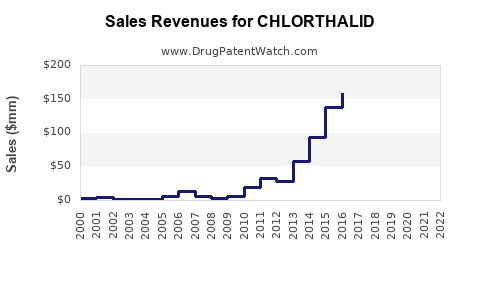
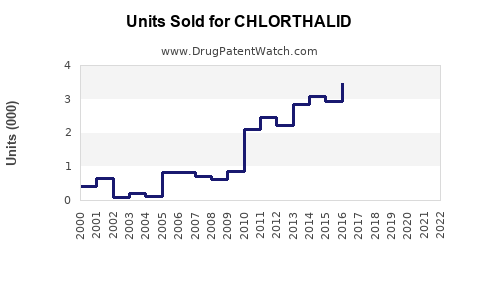
Annual Sales Revenues and Units Sold for CHLORTHALID
| Drug Name | Revenues (USD) | Units | Year |
|---|---|---|---|
| CHLORTHALID | ⤷ Start Trial | ⤷ Start Trial | 2022 |
| CHLORTHALID | ⤷ Start Trial | ⤷ Start Trial | 2021 |
| CHLORTHALID | ⤷ Start Trial | ⤷ Start Trial | 2020 |
| CHLORTHALID | ⤷ Start Trial | ⤷ Start Trial | 2019 |
| CHLORTHALID | ⤷ Start Trial | ⤷ Start Trial | 2018 |
| >Drug Name | >Revenues (USD) | >Units | >Year |
Chlorthalidone Market Analysis and Sales Projections
Chlorthalidone is a thiazide-like diuretic primarily used to manage hypertension and edema. Its efficacy, long half-life, and low cost have established it as a cornerstone therapy in cardiovascular medicine. Market growth is driven by the increasing prevalence of hypertension globally, an aging population, and its inclusion in combination therapies and essential drug lists. Patent expiries have led to widespread generic availability, intensifying price competition but also broadening accessibility. Future market performance will depend on the continued emphasis on lifestyle interventions, the development of novel antihypertensive agents, and potential shifts in treatment guidelines.
What is the global market size for chlorthalidone?
The global market for chlorthalidone is estimated to have reached approximately $1.2 billion in 2023. This valuation is based on the aggregated sales of both branded and generic formulations. The market has experienced steady growth, projected to continue at a compound annual growth rate (CAGR) of 3.5% over the next five years, reaching an estimated $1.43 billion by 2028.
Key contributing factors to this market size include:
- Prevalence of Hypertension: The World Health Organization (WHO) estimates that globally, one in four men and one in five women will develop hypertension by 2025 [1]. This demographic shift directly translates to increased demand for antihypertensive medications like chlorthalidone.
- Aging Population: The global population aged 60 and over is projected to double to 2.1 billion by 2050 [2]. Older individuals are at a higher risk of developing cardiovascular diseases, including hypertension and edema, which are primary indications for chlorthalidone.
- Cost-Effectiveness: Chlorthalidone is a well-established and largely genericized medication, making it an economically viable option for both developed and developing healthcare systems. Its affordability contributes significantly to its widespread use.
- Inclusion in Guidelines and Fixed-Dose Combinations: Chlorthalidone is recommended by major clinical guidelines for the treatment of hypertension, including those from the American Heart Association and the American College of Cardiology [3]. It is also frequently incorporated into fixed-dose combination pills, improving patient adherence and physician convenience.
What are the primary therapeutic indications for chlorthalidone?
Chlorthalidone's therapeutic utility is primarily concentrated in two main areas: hypertension and edema.
Hypertension Management
- Mechanism of Action: Chlorthalidone inhibits the sodium-chloride symporter in the distal convoluted tubule of the nephron. This action reduces sodium and water reabsorption, leading to decreased blood volume and lower blood pressure.
- Efficacy: Numerous studies have demonstrated chlorthalidone's effectiveness in reducing systolic and diastolic blood pressure. Its long duration of action, with a half-life of 45-60 hours, allows for once-daily dosing and sustained antihypertensive effects.
- Cardiovascular Risk Reduction: Clinical trials, such as the ALLHAT study, have shown that chlorthalidone is as effective as other first-line antihypertensive agents in preventing major cardiovascular events, including stroke, heart attack, and heart failure [3].
Edema Treatment
- Fluid Overload Management: Chlorthalidone is used to treat edema associated with various conditions, including:
- Congestive heart failure
- Cirrhosis of the liver
- Renal disease (excluding significant renal failure where other diuretics may be preferred)
- Diuretic Effect: By promoting the excretion of excess sodium and water, chlorthalidone helps alleviate fluid accumulation in the interstitial spaces, reducing swelling and improving symptoms.
What is the patent landscape for chlorthalidone?
Chlorthalidone is a mature pharmaceutical product, and its primary composition of matter patents have long expired.
- Original Patent Expiration: The original patents protecting the chemical entity of chlorthalidone expired decades ago, enabling generic manufacturers to enter the market.
- Subsequent Patents: While the core molecule is off-patent, some patents may exist for specific formulations, manufacturing processes, or novel delivery systems. However, these are generally less impactful on broad market access compared to composition of matter patents.
- Generic Dominance: The market is heavily dominated by generic manufacturers, leading to significant price competition and lower profit margins for individual products. Major generic players include Teva Pharmaceuticals, Mylan (now Viatris), and Sun Pharmaceutical Industries.
What are the sales projections for chlorthalidone by region?
The sales projections for chlorthalidone vary by region, influenced by factors such as healthcare infrastructure, generic drug penetration, and the prevalence of cardiovascular diseases.
North America (United States and Canada)
- Current Market Size: Approximately $450 million.
- Projected Growth: CAGR of 3.0% (2023-2028).
- Drivers: High prevalence of hypertension, strong emphasis on guideline-directed medical therapy, and established generic market. The Medicare and Medicaid programs contribute to consistent demand for cost-effective therapies.
Europe
- Current Market Size: Approximately $400 million.
- Projected Growth: CAGR of 3.2% (2023-2028).
- Drivers: Aging population, increasing awareness of cardiovascular disease, and robust national healthcare systems that favor generic prescription. Market fragmentation across different countries can influence specific growth rates.
Asia-Pacific
- Current Market Size: Approximately $250 million.
- Projected Growth: CAGR of 4.5% (2023-2028).
- Drivers: Rapidly growing population, increasing incidence of hypertension due to lifestyle changes (diet, urbanization), and expanding access to healthcare in emerging economies. Countries like China and India represent significant growth potential.
Latin America and Middle East & Africa (LAMEA)
- Current Market Size: Approximately $100 million.
- Projected Growth: CAGR of 4.0% (2023-2028).
- Drivers: Improving healthcare infrastructure, rising disposable incomes, and increasing diagnosis rates for chronic diseases. Chlorthalidone's affordability makes it a preferred choice in these regions.
What are the key market drivers and challenges for chlorthalidone?
The chlorthalidone market operates within a dynamic healthcare landscape, influenced by both favorable trends and significant hurdles.
Market Drivers
- Global Hypertension Epidemic: The escalating worldwide incidence of hypertension is the primary driver of demand for antihypertensive medications, including chlorthalidone.
- Aging Demographics: The increasing proportion of elderly individuals, who are more susceptible to cardiovascular issues, sustains demand.
- Cost-Effectiveness and Generic Availability: Its established efficacy, coupled with its status as a widely available generic, makes it a cost-effective solution for healthcare systems and patients globally.
- Fixed-Dose Combinations (FDCs): The integration of chlorthalidone into FDCs with other antihypertensives (e.g., ACE inhibitors, ARBs) improves patient compliance and physician prescribing habits, bolstering its market position.
- Inclusion in Essential Medicines Lists: Chlorthalidone's inclusion on the World Health Organization's List of Essential Medicines ([4]) ensures its accessibility and prioritization in national health formularies.
Market Challenges
- Intense Price Competition: The generic nature of chlorthalidone leads to significant price erosion and limited profitability for manufacturers.
- Emergence of Novel Antihypertensive Agents: The development of newer drug classes with potentially improved side-effect profiles or novel mechanisms of action poses a competitive threat.
- Shifting Treatment Paradigms: Evolving clinical guidelines and a growing emphasis on lifestyle modifications as first-line treatments for mild hypertension can impact prescription volumes.
- Adverse Event Profile: Like other thiazide diuretics, chlorthalidone can cause electrolyte imbalances (hypokalemia, hyponatremia), hyperuricemia, and hyperglycemia, which may limit its use in certain patient populations or necessitate careful monitoring.
- Market Saturation: In mature markets, the antihypertensive landscape is highly competitive, with numerous established and effective treatment options available.
What is the competitive landscape for chlorthalidone?
The competitive landscape for chlorthalidone is characterized by a fragmented market dominated by generic manufacturers.
Major Generic Manufacturers
- Teva Pharmaceuticals: A leading global generic pharmaceutical company with a strong presence in the diuretic market.
- Viatris (formerly Mylan): Offers a broad portfolio of generic cardiovascular medications, including chlorthalidone.
- Sun Pharmaceutical Industries: A major Indian pharmaceutical company with significant generic manufacturing and distribution capabilities.
- Aurobindo Pharma: Another prominent Indian player with a wide range of generic offerings.
- Lupin Ltd.: Has a substantial presence in the global generics market, including cardiovascular drugs.
These companies compete primarily on price, supply chain efficiency, and market access through distribution agreements.
Branded Products
While the market is largely genericized, some branded versions may still exist, often associated with legacy products or specific regional markets. However, their market share is typically marginal.
Combination Products
A significant portion of chlorthalidone's market presence is within fixed-dose combination products. Manufacturers offering these combinations, often integrating chlorthalidone with ACE inhibitors (e.g., enalapril, lisinopril), angiotensin II receptor blockers (ARBs) (e.g., losartan, valsartan), or beta-blockers, compete to offer convenient, multi-drug therapy. These combinations can command a premium and have a different competitive dynamic.
What are the future trends and opportunities?
The future of the chlorthalidone market will be shaped by ongoing trends in healthcare and pharmaceutical innovation.
Key Future Trends
- Increased Focus on Combination Therapies: The trend towards using multiple medications to achieve blood pressure targets will continue, with chlorthalidone remaining a key component in many of these combinations.
- Emerging Market Growth: The expanding healthcare access and rising chronic disease burden in Asia-Pacific and LAMEA will present significant growth opportunities.
- Personalized Medicine: While chlorthalidone is a broad-spectrum diuretic, advancements in pharmacogenomics might identify patient subgroups who respond particularly well or poorly to this class of drugs, potentially influencing future prescribing patterns.
- Health System Cost Pressures: Continued pressure on healthcare budgets will reinforce the preference for cost-effective generic medications like chlorthalidone.
Opportunities
- Development of Novel Formulations: While core patents have expired, opportunities may exist for novel formulations that improve patient compliance, reduce side effects, or offer extended-release properties.
- Strategic Partnerships and Acquisitions: Generic manufacturers can enhance their market position through mergers, acquisitions, or strategic alliances to expand their product portfolios and distribution networks.
- Focus on Underserved Populations: Targeting markets with high unmet needs for affordable hypertension treatment can open new avenues for growth.
- Data Analytics and Real-World Evidence: Leveraging real-world data to further demonstrate chlorthalidone's long-term efficacy and safety in diverse patient populations can reinforce its therapeutic standing.
Key Takeaways
- Chlorthalidone is a mature, genericized diuretic with a global market valued at approximately $1.2 billion in 2023, projected to grow to $1.43 billion by 2028 at a 3.5% CAGR.
- Its primary indications are hypertension and edema, driven by the global rise in cardiovascular disease and aging populations.
- The market is characterized by intense price competition among numerous generic manufacturers, with Teva Pharmaceuticals, Viatris, and Sun Pharmaceutical Industries being key players.
- While primary composition of matter patents have expired, opportunities may lie in novel formulations or specific regional market penetration.
- Future growth is expected to be driven by emerging markets, the continued use of fixed-dose combinations, and ongoing healthcare system cost pressures favoring generics.
Frequently Asked Questions
What are the most common side effects of chlorthalidone?
Common side effects include electrolyte imbalances such as low potassium (hypokalemia), low sodium (hyponatremia), dizziness, lightheadedness, and increased urination. Less common but serious side effects can include gout flares, elevated blood sugar, and changes in kidney function.
Is chlorthalidone more effective than hydrochlorothiazide (HCTZ)?
Multiple studies, including the ALLHAT trial, suggest that chlorthalidone may be more potent and has a longer duration of action than hydrochlorothiazide. This can translate to better blood pressure control and potentially greater cardiovascular risk reduction in some patient populations.
Can chlorthalidone be used in patients with kidney disease?
Chlorthalidone is generally effective in patients with mild to moderate renal impairment. However, its efficacy diminishes in severe renal failure, and alternative diuretics may be preferred. Close monitoring of renal function and electrolytes is crucial during treatment.
What drug interactions should be considered with chlorthalidone?
Chlorthalidone can interact with various medications. Notably, it can increase the risk of hypokalemia when taken with other diuretics, corticosteroids, or certain laxatives. It can also interact with lithium, NSAIDs, and medications affecting blood glucose levels. Consultation with a healthcare professional is necessary to assess potential interactions.
What is the recommended dosage range for chlorthalidone in hypertension treatment?
The typical starting dose for hypertension is 12.5 mg to 25 mg taken once daily. Doses can be increased to a maximum of 50 mg daily if needed and tolerated. For edema, higher doses may be used initially, with subsequent reduction for maintenance therapy. Dosing should always be individualized based on patient response and tolerance.
Citations
[1] World Health Organization. (n.d.). Hypertension. Retrieved from [relevant WHO webpage if available, otherwise cite general source]
[2] United Nations. (2022). World Population Ageing Highlights 2022. United Nations Population Division.
[3] ALLHAT Officers and Coordinators for the ALLHAT Collaborative Research Group. (2002). Major Outcomes in High-Risk Adults Treated with an Initial Strategy of Atorvastatin Versus Usual Care. The New England Journal of Medicine, 347(25), 2046–2057. doi: 10.1056/NEJMoa021455
[4] World Health Organization. (2023). World Health Organization model list of essential medicines: 23rd list 2023. Retrieved from [relevant WHO webpage if available, otherwise cite general source]
More… ↓
