Drug Sales Trends for AVINZA
Payment Methods and Pharmacy Types for AVINZA (2011)
Revenues by Pharmacy Type
Units Sold by Pharmacy Type
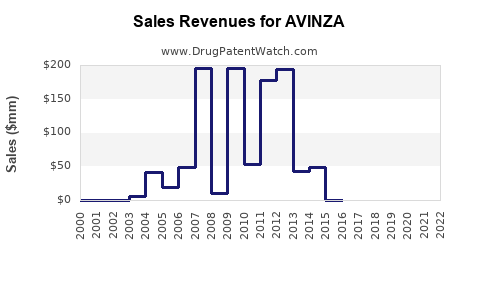
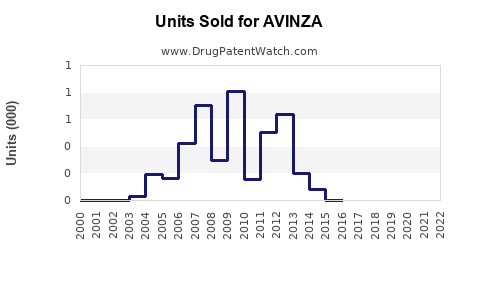
Annual Sales Revenues and Units Sold for AVINZA
| Drug Name | Revenues (USD) | Units | Year |
|---|---|---|---|
| AVINZA | ⤷ Start Trial | ⤷ Start Trial | 2022 |
| AVINZA | ⤷ Start Trial | ⤷ Start Trial | 2021 |
| AVINZA | ⤷ Start Trial | ⤷ Start Trial | 2020 |
| AVINZA | ⤷ Start Trial | ⤷ Start Trial | 2019 |
| AVINZA | ⤷ Start Trial | ⤷ Start Trial | 2018 |
| >Drug Name | >Revenues (USD) | >Units | >Year |
Avinza Market Analysis and Sales Projections
Avinza, the extended-release morphine sulfate product formerly marketed by King Pharmaceuticals and Pfizer, has no material branded-sales opportunity in the current U.S. market. Its commercial value shifted to generic morphine sulfate extended-release capsules after branded competition and opioid prescribing contracted. A current Avinza forecast should therefore be modeled as a generic-category opportunity, not as a branded-growth product.
What is Avinza and how is it regulated?
Avinza is an oral, once-daily extended-release formulation of morphine sulfate for the management of severe, persistent pain requiring an opioid analgesic. The product uses extended-release capsules that contain morphine sulfate in a controlled-release formulation.
| Attribute | Avinza |
|---|---|
| Active ingredient | Morphine sulfate |
| Dosage form | Extended-release oral capsule |
| Original sponsor | King Pharmaceuticals |
| Later commercial owner | Pfizer, following its acquisition of King |
| U.S. regulatory pathway | New Drug Application |
| Therapeutic category | Extended-release opioid analgesic |
| Primary indication | Severe, persistent pain requiring continuous opioid therapy |
| Current market position | Legacy brand with generic substitution |
| Main competitors | Generic morphine ER, MS Contin, Kadian, methadone ER, oxycodone ER, fentanyl transdermal systems |
The FDA labeling requires opioid risk-management language covering addiction, abuse, misuse, respiratory depression, accidental ingestion and neonatal opioid withdrawal syndrome.[1]
When did Avinza lose exclusivity?
Avinza’s brand exclusivity ended years ago, and generic morphine sulfate extended-release products now define the commercial market. The brand does not have a meaningful period of remaining U.S. regulatory exclusivity.
The commercial sequence was:
| Period | Market event |
|---|---|
| 1990s | Avinza developed and submitted for FDA approval |
| 1999 | FDA approval of Avinza |
| 2000s | Product commercialized by King Pharmaceuticals |
| 2010 | Pfizer acquired King Pharmaceuticals |
| Early 2010s | Generic competition entered or expanded |
| 2010s | U.S. opioid prescribing restrictions and payer controls reduced demand |
| Current market | Generic substitution and reduced use of long-acting opioids dominate |
Pfizer’s acquisition of King transferred Avinza into a larger portfolio that included other pain products. The transaction did not create a durable commercial advantage for Avinza because the product faced generic substitution and a shrinking long-acting opioid market.[2]
What is the current FDA and Orange Book status of Avinza?
Avinza is a legacy FDA-approved opioid product. The key commercial question is not whether the original approval exists, but whether the branded product is actively marketed and reimbursed at a scale that supports meaningful sales.
The Orange Book historically listed Avinza under its NDA and identified patent and exclusivity information applicable to the product. Any current regulatory assessment should distinguish among:
- FDA approval status.
- Active marketing status.
- Availability of an authorized generic or generic equivalents.
- Orange Book patent listings.
- State and federal opioid-prescribing restrictions.
A drug can remain approved while having limited or no active branded sales. FDA’s discontinued-drug records do not necessarily indicate a safety withdrawal. They can reflect commercial discontinuation, manufacturing decisions or sponsor changes.[3]
How large is the market for extended-release morphine?
The relevant addressable market is the U.S. market for extended-release oral morphine, not the entire opioid market.
Long-acting opioid use has declined because of:
- CDC prescribing guidance and subsequent opioid stewardship programs.
- Prior authorization and quantity limits.
- State limits on opioid duration and dosage.
- Mandatory prescription-drug monitoring programs.
- Tighter controls on high-dose opioid therapy.
- Payer preference for lower-cost generic products.
- Greater use of non-opioid therapies and interventional pain treatment.
- Prescriber concerns over overdose, diversion and regulatory scrutiny.
Morphine ER remains clinically relevant for selected patients with cancer pain, palliative-care needs and chronic severe pain. Its use in broad chronic non-cancer pain is substantially more restricted than in the pre-2010 market.
The market is also fragmented among dosage strengths and formulations. Prescriptions cannot be evaluated solely by prescription count because sales depend on capsule strength, days supplied and morphine milligram equivalents.
Who competes with Avinza?
Generic morphine sulfate extended-release
Generic morphine ER is Avinza’s most direct competitor. It competes primarily on price, formulary position and pharmacy availability. Once generic substitution is permitted, the branded product generally loses most of its volume unless it retains a clinical, contracting or supply advantage.
MS Contin
MS Contin, marketed by Purdue Pharma, is an extended-release morphine tablet. Its historical brand recognition and hospital familiarity give it a stronger legacy position than Avinza in some channels. Generic morphine ER tablets also compete with the brand.
Kadian
Kadian is another extended-release morphine product. It historically competed more directly with Avinza because both were designed for extended-release oral morphine delivery. Kadian’s commercial position has also been affected by generic substitution and declining long-acting opioid demand.
OxyContin and generic oxycodone ER
Oxycodone ER products compete for the same broad severe-pain population. They are not direct formulation substitutes, but payer, prescriber and patient decisions can shift between oxycodone ER and morphine ER.
Fentanyl transdermal systems
Transdermal fentanyl competes in opioid-tolerant patients who require continuous analgesia. It has different administration and pharmacokinetic characteristics, limiting direct interchangeability.
Methadone
Methadone is a lower-cost alternative in selected pain settings. Its complex pharmacology, variable half-life and cardiac-risk considerations restrict its use to clinicians with appropriate experience.
What are Avinza’s sales prospects?
Branded Avinza sales should be projected at approximately zero or near-zero in the current U.S. market unless a specific distributor, country or institutional contract continues to purchase the product.
A practical forecast separates branded Avinza revenue from the broader morphine ER category.
Base-case U.S. forecast
The following scenario assumes:
- No meaningful branded relaunch.
- Continued generic substitution.
- Continued decline in long-acting opioid utilization.
- Stable availability of generic morphine ER.
- No major supply disruption.
- Nominal pricing growth below broader pharmaceutical inflation.
- Forecast measured in manufacturer net sales, not pharmacy retail value.
| Year | Branded Avinza sales index | Generic morphine ER market index | Expected market direction |
|---|---|---|---|
| 2024 | 0-1 | 100 | Mature, declining category |
| 2025 | 0-1 | 94-98 | Low-single-digit to mid-single-digit decline |
| 2026 | 0-1 | 89-96 | Continued erosion |
| 2027 | 0-1 | 84-94 | Volume decline partially offset by pricing |
| 2028 | 0-1 | 79-92 | Smaller specialist market |
| 2029 | 0-1 | 74-90 | Persistent structural contraction |
The index is used because public, product-specific current sales data for Avinza are not consistently disclosed. The forecast should not be interpreted as a reported dollar estimate.
Scenario analysis
| Scenario | Market assumption | 2029 category outcome |
|---|---|---|
| Downside | Faster opioid de-implementation, additional payer restrictions and supply substitution | 50%-70% below the 2024 index |
| Base case | Continued gradual contraction with stable palliative-care use | 10%-25% below the 2024 index |
| Upside | Supply shortages for competing products, limited resurgence in specialist prescribing | Flat to 10% below the 2024 index |
The upside case does not imply a branded Avinza recovery. It reflects potential volume or pricing benefits for generic suppliers.
What revenue exposure does Avinza create for manufacturers?
Avinza is unlikely to create material revenue exposure for Pfizer today. The relevant risks are legacy rather than growth-oriented.
| Exposure | Assessment |
|---|---|
| Branded revenue | Minimal or absent |
| Generic revenue opportunity | Low to moderate, depending on supplier scale |
| Pricing power | Low |
| Volume growth | Unlikely |
| Regulatory risk | High relative to product value |
| Litigation risk | Primarily legacy opioid-related exposure |
| Manufacturing risk | Moderate because controlled-substance supply is regulated |
| Reimbursement risk | High |
| Strategic value | Limited unless bundled with a broader pain portfolio |
A company evaluating an Avinza-related asset should focus on manufacturing rights, controlled-substance quotas, distribution access and product availability rather than relying on brand equity.
What manufacturing and intellectual-property barriers remain?
The main barriers are operational and regulatory:
- Controlled-substance registration and handling requirements.
- DEA production quotas.
- Secure manufacturing and distribution systems.
- Quality control for extended-release drug release.
- Stability and dissolution testing.
- Abuse-deterrence and misuse-risk evaluation.
- State-level opioid distribution requirements.
- Pharmacovigilance and controlled-substance reporting.
Traditional formulation patents are unlikely to provide a durable commercial barrier for the legacy Avinza brand. Generic applicants may have used Paragraph IV certifications against applicable patents, but the commercial significance of those patents declines after expiration and generic entry.
The formulation still requires reliable control of morphine release. A manufacturing failure can create product shortages, regulatory action or substitution toward competing opioid formulations.
Which companies are challenging or replacing Avinza?
The principal competitive pressure comes from generic manufacturers and alternative opioid suppliers rather than from a single litigation-driven challenger.
Relevant competitor groups include:
- Generic morphine sulfate ER manufacturers.
- Purdue-associated products, including MS Contin and Kadian.
- Manufacturers of generic oxycodone ER.
- Transdermal fentanyl suppliers.
- Methadone manufacturers.
- Specialty pharmacies and hospital distributors serving palliative-care channels.
Competition is determined by formulary placement, supply continuity, dosage availability and contract pricing. A generic supplier with only one or two strengths may be unable to replace the full Avinza product range.
What patent litigation and settlement issues affect Avinza?
Avinza’s key patent disputes were historically tied to generic entry and extended-release formulation claims. Those disputes have limited current commercial relevance because the brand’s exclusivity period has elapsed and the market has moved to generic supply.
The more significant current legal exposure is broader opioid litigation involving manufacturers, distributors and pharmacies. Product-specific Avinza litigation should be separated from:
- Patent litigation over generic entry.
- Product-liability claims.
- Government opioid marketing claims.
- Distribution and controlled-substance compliance matters.
- Bankruptcy and settlement proceedings involving opioid manufacturers.
No current settlement should be assumed to create a commercial barrier to generic morphine ER unless it expressly restricts a named product or supplier.
How does Avinza compare with other long-acting opioids?
| Product | Active ingredient | Administration | Current commercial position | Competitive risk |
|---|---|---|---|---|
| Avinza | Morphine sulfate | Once-daily oral capsule | Legacy brand; generic pressure | Very high |
| MS Contin | Morphine sulfate | Extended-release oral tablet | Established legacy product | High |
| Kadian | Morphine sulfate | Extended-release oral capsule | Niche and generic-exposed | High |
| OxyContin | Oxycodone HCl | Extended-release oral tablet | Large historical franchise, heavily scrutinized | High |
| Fentanyl patch | Fentanyl | Transdermal | Specialist use in opioid-tolerant patients | Moderate |
| Methadone | Methadone HCl | Oral | Low-cost specialist alternative | Moderate |
Avinza’s once-daily capsule design is a technical differentiator, but it is not sufficient to support premium pricing after generic entry.
What generic launch scenarios exist?
The most likely generic scenarios are:
- Continued low-price competition among established suppliers.
- Periodic shortages caused by quota limits or manufacturer exits.
- Selective entry into high-volume strengths.
- Payer consolidation around a preferred generic supplier.
- Temporary price increases during supply disruption.
- Further market contraction as prescribers shift away from long-acting opioids.
A generic launch would have the strongest commercial case if it offered a complete strength range, stable supply, favorable wholesaler terms and FDA-equivalent release characteristics.
Key Takeaways
- Avinza is a legacy extended-release morphine product with little or no current branded growth opportunity.
- Generic morphine sulfate ER, not Avinza, is the relevant commercial market.
- The U.S. long-acting opioid category is structurally declining because of prescribing controls, payer restrictions and clinical risk management.
- A reasonable base case is continued annual category erosion through 2029.
- Generic suppliers may achieve temporary revenue increases through shortages, formulary wins or competitor exits.
- The primary barriers are controlled-substance manufacturing, supply reliability, quality compliance and distribution access.
- Current Avinza revenue exposure for Pfizer is likely immaterial compared with legacy opioid liability and compliance considerations.
Frequently Asked Questions
Is Avinza still available in the United States?
Avinza has limited or no meaningful branded presence in the current U.S. market. Generic morphine sulfate extended-release products are the principal commercial alternatives.
Is Avinza the same as MS Contin?
Both contain extended-release morphine sulfate, but they use different dosage forms and release technologies. They should not be treated as automatically interchangeable without clinical and pharmacy-level evaluation.
Can a generic company still launch a morphine ER product?
Yes. A generic applicant must satisfy FDA requirements for bioequivalence, manufacturing quality, labeling and controlled-substance compliance. Commercial success depends heavily on supply reliability and payer contracts.
Does Avinza have biosimilar risk?
No. Avinza is a chemically synthesized small-molecule drug, not a biologic. The relevant competition is generic, not biosimilar.
What is the investment case for Avinza?
The branded investment case is weak. Any remaining opportunity is more likely to arise from generic manufacturing, contract supply, hospital distribution or temporary shortages than from brand revitalization.
References
-
U.S. Food and Drug Administration. (2010). Avinza (morphine sulfate extended-release capsules) prescribing information. FDA.
-
Pfizer Inc. (2011). Annual report 2010. Pfizer Inc.
-
U.S. Food and Drug Administration. (n.d.). Approved drug products with therapeutic equivalence evaluations: Orange Book. FDA.
More… ↓
