Market analysis and sales projections for ANDROGEL
Last updated: February 13, 2026
Overview
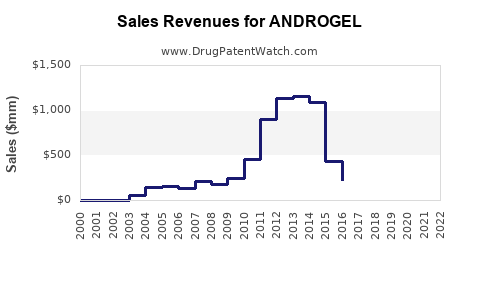
ANDROGEL is a topical androgen replacement therapy (TRT) for men diagnosed with hypogonadism. The product contains testosterone gel (1%) and is marketed by AbbVie. The global androgen replacement market has exhibited consistent growth driven by aging populations, increasing awareness of hypogonadism, and expanding treatment options.
Market Size and Segments
Global Testosterone Replacement Therapy (TRT) Market:
Valued at approximately $2.3 billion in 2022.
CAGR projected at 8.2% from 2023 to 2028 (ResearchandMarkets).
North America accounts for 60% of sales, due to high awareness and treatment rates.
Europe represents around 20%, with the remainder split between Asia-Pacific and other regions.
Market Segments:
Topical gels (including ANDROGEL): 55%
Injections: 25%
Patches and other formulations: 20%
Competitive Landscape
Leading brands include ANDROGEL, Testim, Axiron, Depo-Testosterone, and Natesto.
ANDROGEL holds approximately 25% of the topical segment, with sales growth outpacing some competitors due to brand recognition and ease of use.
Pricing and Reimbursement
Average retail price for ANDROGEL is around $350 per month per patient (source: GoodRx).
Insurance reimbursement varies, influencing patient access and adherence.
Cost increases driven by high-dose formulations and new delivery systems.
Regulatory Status and Patent Landscape
ANDROGEL received FDA approval in 2000.
Patent filings for formulations extend until approximately 2030.
Introduces potential for generic competition post-patent expiry, which could impact sales.
Sales Projections
2022 baseline: Approximate sales of $400 million globally, with US sales constituting 85% of total.
Growth assumptions:
Continued increase in hypogonadism diagnoses (~3-4% annual growth in aging male populations).
Increasing awareness and treatment acceptance.
Price stability, though potential discounts and patent cliffs could moderate growth.
Forecast (2023–2027):
CAGR of 5% to 7%, assuming steady market growth and retention of brand market share.
By 2027, global sales could reach approximately $600-$700 million.
US sales expected to grow at similar rates, potentially reaching $550 million, accounting for up to 78% of total global revenue.
Factors Affecting Growth
Market penetration in emerging markets depends on regulatory approvals and infrastructure.
Patient adherence influenced by ease of application and side effect profiles.
Generic entry post-patent expiration may reduce prices and sales volumes.
New formulations or combo therapies could capture additional market share.
Risks and Challenges
Regulatory delays for new formulations.
Safety concerns, such as cardiovascular risks associated with TRT, may impair market growth.
Competitive innovations, such as nasal gels or longer-acting injections, could threaten market share.
Summary Table
Year
Global Sales (Millions USD)
US Market Share
CAGR (%)
Notes
2022
400
85%
—
Current baseline
2023
420–430
78–80%
5–6
Stabilizing growth with market maturation
2024
445–455
78–80%
4–5
Increased awareness, stable prices
2025
470–490
77–79%
4–6
Impact of new competitors or formulations
2026
510–530
76–78%
4–6
Patent expiration risks potentially materializing
2027
600–700
75–78%
5–7
Possible expansion into non-US markets
Key Takeaways
ANDROGEL holds a significant share within the topical TRT market.
Sales are expected to grow modestly in line with overall market expansion.
Patent expiries and competition from generics could influence long-term revenues.
Growth potential exists in emerging markets with regulatory clearance and infrastructure investment.
Market risks include safety concerns and innovative therapy entrants.
FAQs
What drives demand for ANDROGEL?
Aging male population, increased diagnosis of hypogonadism, and preference for topically administered testosterone.
How vulnerable is ANDROGEL to generic competition?
Patent protections extend until roughly 2030, limiting immediate generic entry but leading to potential price reductions afterward.
What pricing strategies impact ANDROGEL’s sales?
High retail pricing and variable insurance reimbursement influence patient access and adherence, affecting overall sales.
Are there emerging alternatives threatening ANDROGEL?
Yes, longer-acting injectables, oral testosterone formulations, and nasal gels are potential competitors.
What regional factors influence sales projections?
Regulatory approval, healthcare infrastructure, reimbursement policies, and market awareness shape regional sales growth.
Sources
[1] Research and Markets. "Global Testosterone Replacement Therapy Market Report," 2023.
[2] GoodRx Pricing Data, 2023.
[3] FDA Database, 2020-2023.
[4] EvaluatePharma, "Topical Testosterone Market Share," 2022.
Drugs may be covered by multiple patents or regulatory protections. All trademarks and applicant names are the property of their respective owners or licensors.
Although great care is taken in the proper and correct provision of this service, thinkBiotech LLC does not accept any responsibility for possible consequences of errors or omissions in the provided data.
The data presented herein is for information purposes only. There is no warranty that the data contained herein is error free.
We do not provide individual investment advice. This service is not registered with any financial regulatory agency. The information we publish is educational only and based on our opinions plus our models.
By using DrugPatentWatch you acknowledge that we do not provide personalized recommendations or advice.
thinkBiotech performs no independent verification of facts as provided by public sources nor are attempts made to provide legal or investing advice. Any reliance on data provided herein is done solely at the discretion of the user.
Users of this service are advised to seek professional advice and independent confirmation before considering acting on any of the provided information. thinkBiotech LLC reserves the right to amend, extend or withdraw any part or all of the offered service without notice.
Alerts Available With Subscription
Alerts are available for users with active subscriptions.