Share This Page
Drug Sales Trends for PLAQUENIL
✉ Email this page to a colleague
Payment Methods and Pharmacy Types for PLAQUENIL (2010)
Revenues by Pharmacy Type
Units Sold by Pharmacy Type
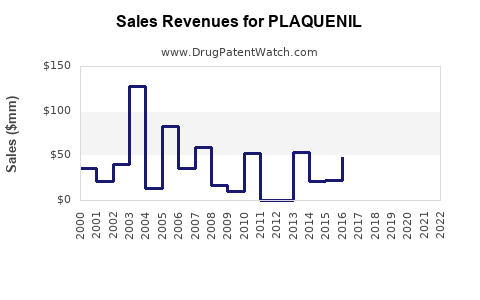
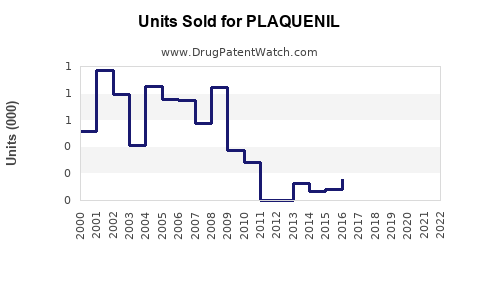
Annual Sales Revenues and Units Sold for PLAQUENIL
| Drug Name | Revenues (USD) | Units | Year |
|---|---|---|---|
| PLAQUENIL | ⤷ Start Trial | ⤷ Start Trial | 2022 |
| PLAQUENIL | ⤷ Start Trial | ⤷ Start Trial | 2021 |
| PLAQUENIL | ⤷ Start Trial | ⤷ Start Trial | 2020 |
| PLAQUENIL | ⤷ Start Trial | ⤷ Start Trial | 2019 |
| PLAQUENIL | ⤷ Start Trial | ⤷ Start Trial | 2018 |
| PLAQUENIL | ⤷ Start Trial | ⤷ Start Trial | 2017 |
| >Drug Name | >Revenues (USD) | >Units | >Year |
Plaquenil Market Analysis, Sales Forecast, Patent Status, and Generic Competition
Plaquenil, the branded hydroxychloroquine sulfate product, is a mature small-molecule medicine with limited branded growth potential. Its commercial market is driven by generic hydroxychloroquine, not by the Plaquenil brand. Demand is anchored in systemic lupus erythematosus, rheumatoid arthritis, and malaria prevention or treatment. The brand has no meaningful exclusivity advantage in the United States, and biosimilar risk is not applicable.
An analyst-built base case places the global hydroxychloroquine market at approximately $0.9 billion to $1.1 billion in 2024, with low- to mid-single-digit annual growth through 2029. Plaquenil-branded sales are estimated at roughly $100 million to $170 million globally in 2024, declining toward $70 million to $130 million by 2029 as generic substitution continues.
What is Plaquenil used for and how large is its market?
Plaquenil contains hydroxychloroquine sulfate, an aminoquinoline antimalarial with immunomodulatory activity. The U.S. label includes treatment of uncomplicated malaria caused by susceptible species of Plasmodium and treatment of rheumatoid arthritis and systemic lupus erythematosus in adults. The label also covers discoid and systemic lupus erythematosus manifestations in specified circumstances (U.S. Food and Drug Administration [FDA], 2023).
| Market characteristic | Assessment |
|---|---|
| Active ingredient | Hydroxychloroquine sulfate |
| Main therapeutic areas | Lupus, rheumatoid arthritis, malaria |
| U.S. product | Plaquenil tablets, 200 mg |
| Product type | Small-molecule oral tablet |
| Prescription status | Prescription medicine |
| Generic availability | Extensive |
| Biosimilar exposure | Not applicable |
| Branded growth outlook | Declining to stable |
| Ingredient-market growth outlook | Low single digits |
Lupus is the most commercially important chronic-use segment in developed markets. Patients with systemic lupus erythematosus commonly use hydroxychloroquine over long periods, supporting recurring prescription volume. Rheumatoid arthritis demand is less differentiated because physicians have access to numerous disease-modifying antirheumatic drugs, including methotrexate, biologics, and targeted synthetic agents.
Malaria contributes volume in endemic countries and to travel medicine in developed markets. Its revenue contribution is generally lower than the chronic autoimmune segment because pricing is weaker and procurement is often institutional or public-sector based.
How much are Plaquenil and hydroxychloroquine sales?
Public company reporting does not consistently disclose Plaquenil revenue as a separate global line item. The product is generally reported within broader established-product or specialty-pharmaceutical categories. As a result, brand revenue requires triangulation from prescription volume, generic substitution, regional pricing, and manufacturer disclosures.
Historical commercial pattern
Hydroxychloroquine demand rose sharply in early 2020 after unsupported claims that the drug could prevent or treat COVID-19. That demand surge produced temporary stockpiling, prescription increases, and supply disruptions. Regulatory agencies subsequently concluded that hydroxychloroquine did not provide a clinical benefit for COVID-19 treatment or prevention. The FDA revoked its emergency use authorization in 2020 and warned against use outside clinical trials or approved indications (FDA, 2020a, 2020b).
The 2020 increase was not a durable market expansion. Chronic autoimmune demand returned as the main volume base, while COVID-related demand largely disappeared.
Estimated 2024 revenue split
| Segment | Estimated 2024 global revenue | Commercial condition |
|---|---|---|
| Generic hydroxychloroquine | $750 million-$950 million | Largest segment; price competition |
| Plaquenil brand | $100 million-$170 million | Mature, declining share |
| Other branded or regional products | $50 million-$100 million | Country-specific |
| Total hydroxychloroquine market | $900 million-$1.1 billion | Stable to modest growth |
These figures are market-model estimates rather than reported consolidated revenue. They reflect the large generic base, chronic autoimmune use, malaria demand, and the absence of meaningful current COVID-related demand.
What are the sales projections for Plaquenil through 2029?
The base case assumes that chronic autoimmune prevalence grows modestly, generic substitution increases, and no new high-value indication is approved. It also assumes that manufacturers do not obtain a commercially important new formulation or delivery patent.
Base-case global sales forecast
| Year | Total hydroxychloroquine market | Plaquenil brand sales | Brand share |
|---|---|---|---|
| 2024 | $0.90B-$1.10B | $0.10B-$0.17B | 10%-15% |
| 2025 | $0.92B-$1.13B | $0.095B-$0.16B | 8%-14% |
| 2026 | $0.94B-$1.17B | $0.09B-$0.15B | 8%-13% |
| 2027 | $0.96B-$1.21B | $0.085B-$0.14B | 7%-12% |
| 2028 | $0.98B-$1.26B | $0.075B-$0.135B | 6%-11% |
| 2029 | $1.00B-$1.32B | $0.07B-$0.13B | 5%-10% |
Scenario analysis
| Scenario | Market assumption | 2029 total market | 2029 Plaquenil sales |
|---|---|---|---|
| Downside | Increased generic substitution, lower pricing, reduced malaria procurement | $0.85B-$1.05B | $40M-$80M |
| Base case | Stable autoimmune demand and modest volume growth | $1.00B-$1.32B | $70M-$130M |
| Upside | Higher lupus diagnosis, improved treatment persistence, stronger emerging-market access | $1.25B-$1.55B | $110M-$190M |
The total ingredient market can grow while Plaquenil sales decline. That outcome is the most likely because volume growth accrues primarily to generic manufacturers.
When does Plaquenil lose exclusivity?
Plaquenil lost practical U.S. market exclusivity many years ago. Hydroxychloroquine sulfate is an established active ingredient, and generic tablets are widely marketed.
| Exclusivity category | Plaquenil position |
|---|---|
| New chemical entity exclusivity | Expired |
| U.S. basic compound patent | Expired |
| U.S. formulation exclusivity | No material current barrier identified |
| Orphan-drug exclusivity | Not applicable to the core product |
| Pediatric exclusivity | Not a current commercial barrier |
| Market exclusivity | Expired |
| Generic entry | Established |
The product’s commercial protection is therefore based on brand recognition, physician familiarity, supply reliability, and patient continuity rather than patent rights.
What is the Orange Book status of Plaquenil?
Plaquenil is listed in the FDA’s Approved Drug Products with Therapeutic Equivalence Evaluations, commonly called the Orange Book, under NDA 006872. The reference product is hydroxychloroquine sulfate tablets, including the 200 mg strength (FDA, 2024).
The relevant commercial conclusion is that the Orange Book does not create a meaningful current patent barrier to generic hydroxychloroquine tablet competition. Generic manufacturers can compete through abbreviated new drug applications, subject to FDA quality, bioequivalence, manufacturing, and labeling requirements.
Because Plaquenil is an old small-molecule tablet, the main regulatory risk is not a Paragraph IV patent challenge. It is routine generic competition, including price erosion, wholesaler substitution, and contracting pressure.
Which companies are challenging Plaquenil?
Plaquenil has already been challenged commercially by multiple generic manufacturers. The relevant competitors are companies that market hydroxychloroquine sulfate tablets under abbreviated new drug applications rather than firms pursuing a new molecular entity challenge.
Generic competitors have included large and mid-sized U.S. manufacturers and international suppliers. The competitive set can change by dosage strength, manufacturing site, supply status, and FDA approval status. Common sources of competition in this category include manufacturers such as Teva, Prasco, Rising Pharmaceuticals, Zydus, Hikma, and other regional or contract suppliers.
The principal competitive mechanisms are:
- Lower generic acquisition cost.
- Pharmacy-level substitution.
- Medicaid and commercial formulary preference.
- Hospital and government procurement.
- Multi-source supply contracts.
Are there Paragraph IV challenges against Plaquenil?
Paragraph IV litigation is not the principal current risk for Plaquenil. Paragraph IV certifications apply when a generic applicant asserts that a listed patent is invalid, unenforceable, or will not be infringed. Hydroxychloroquine sulfate tablets are sufficiently old and genericized that the commercial market is not dependent on a new, enforceable Orange Book patent.
A new Paragraph IV dispute could arise if a sponsor obtained and listed a qualifying patent covering a new formulation, dosage regimen, or delivery system. Such a patent would need to satisfy FDA listing rules and would face validity and infringement challenges. No such development is central to the current Plaquenil market model.
What formulations are protected by Plaquenil patents?
The core Plaquenil tablet is not protected by a commercially meaningful unexpired composition patent. The main product is a conventional immediate-release oral tablet containing hydroxychloroquine sulfate.
Potential future protection could involve:
- Modified-release tablets.
- Improved taste or swallowability.
- Pediatric liquid formulations.
- Fixed-dose combinations.
- Gastrointestinal tolerability improvements.
- Patient-specific dosing systems.
- Novel salts or polymorphs.
- Digital adherence or dispensing systems.
These concepts would not automatically protect conventional Plaquenil tablets. A formulation patent would need technical differentiation, enforceable claims, and sufficient clinical or commercial value to justify a premium over inexpensive generic tablets.
What method-of-use patents protect hydroxychloroquine?
The established FDA-approved uses are malaria, rheumatoid arthritis, and lupus-related indications. Older therapeutic-use patents covering these indications are not expected to provide meaningful current exclusivity.
A new method-of-use patent could cover a specific patient subgroup, biomarker-defined population, dosing schedule, or combination regimen. Such protection would be narrow and could be difficult to enforce because generic labels may omit the patented use while continuing to sell the product for nonprotected indications.
The main limitation is strategic: hydroxychloroquine is inexpensive, widely used, and clinically familiar. A new use would need strong clinical evidence and a reimbursement pathway to generate material incremental value.
How strong is the Plaquenil patent estate?
The Plaquenil patent estate is weak for conventional tablets and established indications.
| Patent-estate factor | Rating | Commercial implication |
|---|---|---|
| Core composition protection | Very weak | Long expired |
| Conventional tablet protection | Very weak | Generic substitution |
| Approved-use protection | Weak | Established indications are mature |
| New formulation protection | Limited opportunity | Requires technical differentiation |
| Manufacturing know-how | Moderate | Can affect quality and supply |
| Regulatory switching costs | Low | ANDA pathway is established |
| Brand equity | Moderate | Supports residual prescribing |
| Overall exclusivity strength | Low | No durable barrier to generic entry |
Manufacturing know-how may still have value. Hydroxychloroquine production requires compliant active pharmaceutical ingredient sourcing, validated processes, quality testing, and reliable supply. These factors can affect shortages and procurement awards, but they generally do not create patent-like pricing power.
What generic launch risks exist for Plaquenil?
Generic launch risk is already realized rather than prospective. The relevant risk is continued erosion of branded share and net price.
Base generic-entry outlook
| Risk | Probability | Impact |
|---|---|---|
| Further pharmacy substitution | High | High |
| Additional low-cost generic suppliers | Medium-high | Medium-high |
| Brand price reductions | Medium-high | Medium |
| Supply disruption from concentrated API sourcing | Medium | Medium-high |
| New branded formulation launch | Low | Potentially high |
| New indication approval | Low | Potentially high |
A generic manufacturer does not need to overcome a major patent barrier. Its main hurdles are FDA approval, manufacturing readiness, active pharmaceutical ingredient sourcing, and commercial distribution.
What is the FDA regulatory status of Plaquenil?
Plaquenil remains FDA-approved for labeled malaria and autoimmune indications. The FDA has not approved hydroxychloroquine for COVID-19 treatment or prevention. The agency revoked the emergency use authorization for certain hydroxychloroquine products in June 2020 and warned that use outside authorized settings could cause serious cardiac adverse events (FDA, 2020a, 2020b).
Key regulatory risks include:
- Retinal toxicity from long-term exposure.
- Cardiac conduction effects and QT prolongation.
- Drug interactions.
- Hypoglycemia.
- Neuropsychiatric reactions.
- Dosing errors caused by tablet-strength or weight-based confusion.
The American Academy of Ophthalmology recommends baseline and ongoing retinal monitoring for patients receiving long-term hydroxychloroquine, with screening intervals determined by treatment duration and risk factors (American Academy of Ophthalmology, 2016).
What patent litigation affects Plaquenil?
No major current patent litigation is central to the commercial outlook for conventional Plaquenil tablets. The product is a mature genericized medicine, and competition is governed primarily by FDA approval, manufacturing compliance, procurement, and pricing.
Any future litigation would more likely involve:
- A novel formulation.
- A new dosage regimen.
- A combination product.
- Manufacturing-process claims.
- Trademark or trade-dress disputes.
- Product liability rather than patent infringement.
Patent litigation is therefore a low-probability driver of the base-case forecast.
How does Plaquenil compare with competing lupus treatments?
Plaquenil occupies a low-cost foundational position in lupus treatment, but its commercial value is limited by generic pricing.
| Therapy class | Examples | Role in lupus | Commercial effect on Plaquenil |
|---|---|---|---|
| Antimalarial | Hydroxychloroquine | Background disease control | Core demand |
| Corticosteroids | Prednisone | Flare control | Complementary |
| Conventional immunosuppressants | Mycophenolate, azathioprine | Organ involvement and maintenance | Competitive in selected patients |
| Biologics | Belimumab, anifrolumab | Moderate to severe disease | Reduce reliance in selected cases |
| Calcineurin inhibitors | Voclosporin, tacrolimus | Lupus nephritis | Segment-specific competition |
Hydroxychloroquine remains difficult to displace entirely because of low cost, long clinical experience, and use across disease stages. The threat is more relevant to premium therapies that compete for specialized lupus treatment budgets than to the total prescription volume of hydroxychloroquine.
What licensing deals and commercial partnerships affect Plaquenil?
Plaquenil’s market is unlikely to depend on a major new licensing transaction. The product is mature, genericized, and distributed through established pharmaceutical and wholesale channels.
Potential transaction value is more likely to involve:
- Regional brand rights.
- Generic supply agreements.
- Contract manufacturing.
- API sourcing.
- Government or institutional procurement.
- Portfolio acquisitions involving established medicines.
A licensing deal for conventional Plaquenil tablets would likely have limited strategic value unless it included a differentiated formulation, a new indication, or a protected geographic market.
What is the geographic market outlook for hydroxychloroquine?
| Region | Outlook | Main commercial driver |
|---|---|---|
| United States | Stable volume, declining brand share | Lupus and rheumatoid arthritis |
| Europe | Mature, price-regulated market | Autoimmune maintenance therapy |
| Japan | Stable specialty demand | Rheumatology and lupus |
| Latin America | Moderate growth | Generic access and autoimmune diagnosis |
| Asia-Pacific | Volume growth potential | Population scale and malaria demand |
| Africa | Procurement-driven | Malaria control and public health programs |
| Middle East | Mixed | Autoimmune care and private-sector access |
Developed markets generate higher revenue per prescription, while emerging markets offer greater volume potential. Country-level growth is constrained by regulatory registration, reimbursement, supply reliability, and local generic competition.
What is the investment case for Plaquenil?
Plaquenil is a defensive, low-growth pharmaceutical asset rather than a high-upside exclusivity asset. Its value rests on recurring chronic-use demand and established supply channels.
The investment profile is:
- Low patent risk.
- Low probability of major regulatory exclusivity.
- Moderate recurring demand.
- High generic price pressure.
- Limited ability to increase price.
- Low probability of material revenue growth without a new formulation or indication.
- Moderate manufacturing and supply-chain value.
For a rights holder, the strongest strategy is cost leadership, reliable distribution, regulatory compliance, and selective regional commercialization. R&D investment in conventional Plaquenil tablets is unlikely to produce attractive returns without differentiated clinical or formulation claims.
Key Takeaways
- Plaquenil is a mature hydroxychloroquine sulfate brand with extensive generic competition.
- The global hydroxychloroquine market is estimated at $0.9 billion to $1.1 billion in 2024.
- Plaquenil-branded sales are estimated at $100 million to $170 million in 2024.
- Base-case brand sales decline to $70 million to $130 million by 2029.
- The product has no meaningful current U.S. patent or exclusivity barrier.
- Paragraph IV litigation is not a material current commercial risk.
- Biosimilar competition does not apply because hydroxychloroquine is a small molecule.
- Lupus and rheumatoid arthritis provide the most durable demand.
- Malaria contributes volume but generally lower-priced revenue.
- Growth in the active-ingredient market will primarily benefit generic manufacturers.
- A new formulation, method of use, or combination product would be required to change the brand’s long-term trajectory.
FAQs
Is Plaquenil still profitable after generic entry?
Yes, but profitability depends on manufacturing cost, regional pricing, distribution efficiency, and residual brand demand. Generic entry materially limits pricing power and branded share.
Is hydroxychloroquine a growing pharmaceutical market?
The active-ingredient market is likely to grow slowly, supported by autoimmune disease prevalence, diagnosis, treatment persistence, and malaria demand. Growth is expected to be low single digit rather than specialty-pharmaceutical levels.
Can Plaquenil receive new patent protection?
A new patent could cover a genuinely novel formulation, dosage regimen, combination, or patient-specific use. It would not restore exclusivity for conventional hydroxychloroquine tablets.
Did COVID-19 permanently increase Plaquenil sales?
No. COVID-19 generated a temporary demand spike, but it did not establish an FDA-approved COVID indication or create durable long-term demand.
What would increase the value of the Plaquenil franchise?
The most material value drivers would be a clinically differentiated formulation, a validated new indication, improved pediatric delivery, an approved combination product, or exclusive access to a large geographic market.
References
-
American Academy of Ophthalmology. (2016). Recommendations on screening for chloroquine and hydroxychloroquine retinopathy.
-
U.S. Food and Drug Administration. (2020a). FDA cautions against use of hydroxychloroquine or chloroquine for COVID-19 outside of the hospital setting or a clinical trial due to risk of heart
More… ↓
