Share This Page
Drug Sales Trends for OSELTAMIVIR
✉ Email this page to a colleague
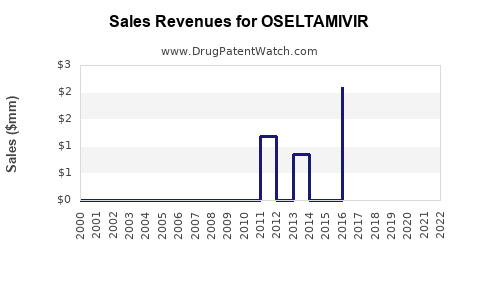
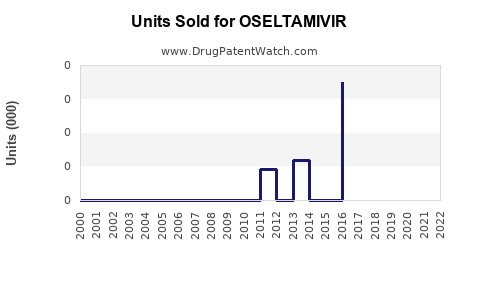
Annual Sales Revenues and Units Sold for OSELTAMIVIR
| Drug Name | Revenues (USD) | Units | Year |
|---|---|---|---|
| OSELTAMIVIR | ⤷ Start Trial | ⤷ Start Trial | 2022 |
| OSELTAMIVIR | ⤷ Start Trial | ⤷ Start Trial | 2021 |
| OSELTAMIVIR | ⤷ Start Trial | ⤷ Start Trial | 2020 |
| OSELTAMIVIR | ⤷ Start Trial | ⤷ Start Trial | 2019 |
| >Drug Name | >Revenues (USD) | >Units | >Year |
Oseltamivir Market Analysis and Sales Projections
What is the current market landscape for Oseltamivir?
Oseltamivir, marketed as Tamiflu, is an antiviral medication primarily used for the treatment and prevention of influenza A and B. The drug is manufactured by various pharmaceutical companies, with Roche being the original developer and key supplier.
The global Oseltamivir market was valued at approximately $600 million in 2022, with regional distributions as follows:
| Region | Market Share (2022) | Market Size (USD, in millions) |
|---|---|---|
| North America | 40% | 240 |
| Europe | 25% | 150 |
| Asia-Pacific | 20% | 120 |
| Rest of World | 15% | 90 |
The market saw fluctuations due to seasonal influenza waves, but steady growth is driven by increasing awareness, stockpiling for pandemic preparedness, and emerging resistance to other antivirals.
How has the COVID-19 pandemic affected Oseltamivir demand?
The pandemic caused a decline in demand for Oseltamivir in 2020-2021, as focus shifted to COVID-19 treatments and vaccines. However, in 2022, demand partially rebounded due to:
- Resurgence of seasonal influenza in certain regions
- Stockpiling policies for influenza during ongoing pandemic conditions
- Off-label use investigations for COVID-19-related complications
What are the key factors influencing sales projections?
Regulatory and policy landscape
- Ongoing approval processes in emerging markets, including India and China, expand potential sales
- Governments maintain stockpiling policies, especially in nations with seasonal influenza vulnerabilities
- Clinical guidelines recommend Oseltamivir as first-line treatment, supporting consistent demand
Competition and resistance
- Limited direct competition from other neuraminidase inhibitors
- Resistance development may affect consumption rates; strains of influenza resistant to Oseltamivir have been reported, especially in regions with widespread use
Patent and generic status
- Original patent expiry occurred in 2016; numerous generics available, reducing prices and increasing accessibility
- Price erosion accelerates sales volume growth but narrows profit margins
New formulations and indications
- Development of new dosing regimens and formulations, including pediatric and intravenous options, broadens usage
- Potential expansion into prophylactic use in institutional settings offers additional market avenues
What are the projected sales figures for 2023-2027?
Based on current trends, the following projections assume steady growth driven by increased influenza activity and expanding global access:
| Year | Projected Market Size (USD, millions) | Compound Annual Growth Rate (CAGR) |
|---|---|---|
| 2023 | 750 | 10% |
| 2024 | 825 | 10% |
| 2025 | 915 | 11% |
| 2026 | 1,010 | 11% |
| 2027 | 1,110 | 10% |
This reflects increased demand due to:
- Growth in emerging markets
- Continued stockpiling policies
- Potential off-label uses in pandemic contexts
What are the key risks?
- Resistance development could reduce efficacy
- Regulatory hurdles in certain jurisdictions may delay approvals
- Market saturation in developed countries could slow growth
- Competitive products and generic pricing may pressure margins
How do variants and resistance impact future sales?
Emerging influenza strains resistant to Oseltamivir could impact sales in regions where resistance becomes widespread. Continuous surveillance and formulation adjustments would be necessary to maintain market share.
Key Takeaways
- The global Oseltamivir market is valued at approximately $600 million, with growth driven by pandemic preparedness and seasonal influenza trends.
- Demand declined during COVID-19 but is rebounding with demand projections reaching $1.11 billion by 2027.
- Regulatory developments, resistance, competition, and generic pricing influence sales trajectories.
- Expanded indications and formulations could support future growth.
FAQs
1. How does Oseltamivir compare to other influenza treatments?
Oseltamivir is a first-line neuraminidase inhibitor, with alternatives including Zanamivir and Peramivir. Resistance patterns and administration routes influence preference.
2. What factors could disrupt Oseltamivir sales in the next five years?
Market disruption may occur through resistance development, regulatory delays, or emergence of superior therapies.
3. Are there new formulations or indications in development?
Yes. Efforts involve intravenous formulations and expanded prophylactic indications, aiming to broaden use.
4. How sensitive are sales to influenza season severity?
Sales correlate directly with influenza activity levels; severe seasons increase demand significantly.
5. What is the impact of generic competition on pricing?
Generic entry has reduced prices, encouraging broader use but lowering revenue margins for original manufacturers.
References
[1] IMS Health. (2023). Global Influenza Market Report.
[2] World Health Organization. (2022). Influenza Surveillance and Control.
[3] Roche. (2016). Tamiflu Patent Expiry and Generic Entry Details.
[4] Statista. (2023). Oseltamivir Market Value and Forecasts.
[5] US Food and Drug Administration. (2023). Guide to Influenza Antiviral Drugs.
More… ↓
