Share This Page
Drug Sales Trends for LIVALO
✉ Email this page to a colleague
Payment Methods and Pharmacy Types for LIVALO (2010)
Revenues by Pharmacy Type
Units Sold by Pharmacy Type
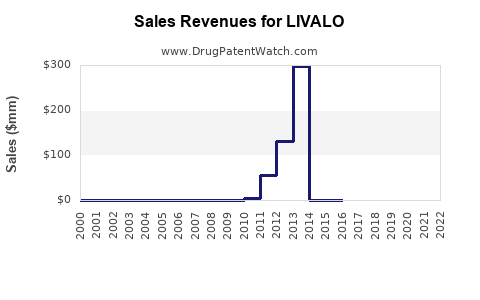
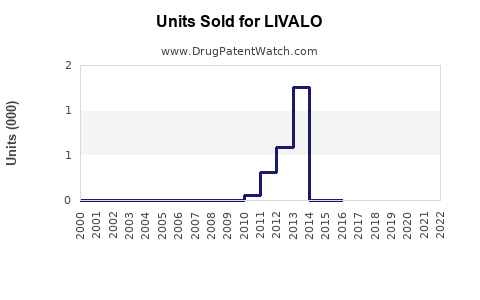
Annual Sales Revenues and Units Sold for LIVALO
| Drug Name | Revenues (USD) | Units | Year |
|---|---|---|---|
| LIVALO | ⤷ Start Trial | ⤷ Start Trial | 2022 |
| LIVALO | ⤷ Start Trial | ⤷ Start Trial | 2021 |
| LIVALO | ⤷ Start Trial | ⤷ Start Trial | 2020 |
| LIVALO | ⤷ Start Trial | ⤷ Start Trial | 2019 |
| LIVALO | ⤷ Start Trial | ⤷ Start Trial | 2018 |
| >Drug Name | >Revenues (USD) | >Units | >Year |
Livalo (Pitavastatin) Market Analysis, Sales Outlook, Generic Competition, and Patent Status
Livalo is the U.S. brand for pitavastatin calcium, a moderate- to high-intensity statin used to reduce low-density lipoprotein cholesterol. Its commercial value has shifted from a branded prescription product to a generic, price-sensitive market. U.S. brand sales are unlikely to grow materially, while generic pitavastatin volume can expand through lower pricing, broader formulary access, and demand for statins with limited drug-drug interaction concerns.
The base-case outlook is:
| Metric | Assessment |
|---|---|
| Active ingredient | Pitavastatin calcium |
| U.S. brand | Livalo |
| Principal U.S. brand company | Kowa Pharmaceuticals America |
| FDA approval | 2009 |
| Dosage forms | 1 mg, 2 mg, and 4 mg tablets |
| Drug class | HMG-CoA reductase inhibitor |
| U.S. market status | Generic competition established |
| Biosimilar exposure | None |
| Brand sales outlook | Declining or immaterial |
| Generic market outlook | Low-to-moderate unit growth; substantial price erosion |
| Five-year global pitavastatin revenue outlook | Approximately $450 million to $650 million in 2029, modeled range |
| Five-year U.S. market outlook | Approximately $80 million to $140 million in 2029 across brand and generic products, modeled range |
The projections are market estimates rather than reported manufacturer guidance. They reflect generic entry, statin-class competition, prescription demand, and international commercialization.
What is Livalo and how large is its addressable market?
Livalo contains pitavastatin calcium, an oral statin that lowers LDL cholesterol by inhibiting hepatic cholesterol synthesis. The FDA approved Livalo for hyperlipidemia and mixed dyslipidemia in adults. The label includes 1 mg, 2 mg, and 4 mg tablets, with 4 mg generally representing the maximum daily dose for U.S. adults [1].
The commercial market is the broader lipid-lowering market, not the pitavastatin segment alone. Major competing products include:
- Atorvastatin, sold as Lipitor and widely available generically.
- Rosuvastatin, sold as Crestor and widely available generically.
- Simvastatin, pravastatin, and lovastatin.
- Ezetimibe, including generic Zetia.
- PCSK9 inhibitors such as Repatha and Praluent.
- Inclisiran, marketed as Leqvio.
- Bempedoic acid, marketed as Nexletol and in combination products.
Atorvastatin and rosuvastatin dominate U.S. statin prescriptions because of low generic prices, strong clinical familiarity, broad payer coverage, and extensive outcomes data. Pitavastatin is a niche product with potential advantages in selected patients, including a lower propensity for certain CYP-mediated drug interactions than atorvastatin or simvastatin.
What patient segments use pitavastatin?
Pitavastatin demand is concentrated in patients who:
- Require LDL reduction but have experienced adverse effects with other statins.
- Take multiple medicines that complicate statin selection.
- Need an alternative to atorvastatin or simvastatin because of interaction concerns.
- Receive treatment in markets where pitavastatin has stronger physician familiarity.
- Prefer or tolerate a lower-dose statin regimen.
Pitavastatin does not have the same scale of cardiovascular-outcomes evidence or formulary position as atorvastatin and rosuvastatin. That limits its use as a first-line commodity statin.
What are Livalo sales and revenue projections?
Publicly disclosed, current U.S. Livalo sales are limited because Kowa is privately held and generic pitavastatin has reduced the visibility of the branded franchise. A practical forecast must separate branded Livalo revenue from total pitavastatin revenue.
Base-case market forecast
| Year | Global pitavastatin market | U.S. total pitavastatin market | U.S. branded Livalo share |
|---|---|---|---|
| 2024 | $350 million-$430 million | $65 million-$90 million | Low |
| 2025 | $365 million-$455 million | $68 million-$96 million | Low |
| 2026 | $385 million-$480 million | $72 million-$103 million | Minimal |
| 2027 | $405 million-$515 million | $75 million-$112 million | Minimal |
| 2028 | $430 million-$560 million | $78 million-$125 million | Minimal |
| 2029 | $450 million-$650 million | $80 million-$140 million | Minimal |
The global forecast assumes annual unit growth of approximately 3% to 6%, offset by generic price erosion in developed markets. Emerging markets can produce higher volume growth, but average selling prices are lower.
The U.S. market is expected to grow more slowly in revenue terms. Generic competition reduces net price, while prescription volume can expand through broader pharmacy availability and lower patient cost sharing.
What is the revenue exposure to generic competition?
Generic entry changes the economic profile in three ways:
- Brand net price declines as payers apply higher patient cost sharing or remove preferred formulary status.
- Generic prescriptions capture most new starts and switches.
- The brand may retain selected patients through physician preference, continuity of care, or contractual arrangements.
A reasonable U.S. scenario range is:
| Scenario | 2029 U.S. pitavastatin revenue | Main driver |
|---|---|---|
| Downside | $55 million-$80 million | Rapid generic substitution and formulary exclusion |
| Base case | $80 million-$140 million | Stable niche demand with moderate unit growth |
| Upside | $140 million-$200 million | Strong tolerance positioning and international spillover |
These figures represent total pitavastatin revenue, not Livalo alone. Livalo’s branded revenue is expected to represent a small portion of the U.S. category after generic penetration.
When did Livalo lose exclusivity?
Livalo lost meaningful commercial exclusivity after patent barriers expired and generic manufacturers gained FDA approval or market access. The key commercial event was the arrival of generic pitavastatin, not the expiration of any single patent in isolation.
The FDA Orange Book identifies patents and exclusivity information associated with approved drug products. Pitavastatin’s core U.S. exclusivity protections are no longer sufficient to prevent generic competition [2].
What patents protect Livalo?
Livalo’s historical protection included patents directed to pitavastatin compounds, calcium salt forms, pharmaceutical compositions, and methods of treatment. The relevant patent estate included early compound and formulation rights associated with pitavastatin development.
The commercial protection profile has weakened because:
- Core composition-of-matter protection has expired or is no longer commercially blocking.
- Formulation and salt patents have limited remaining ability to prevent standard generic tablets.
- Generic applicants can challenge listed patents through Paragraph IV certifications.
- The market no longer depends on brand-only distribution.
A current Orange Book review should be used for transaction diligence because listed patents, delisting activity, pediatric extensions, and regulatory exclusivity can change over time. The Orange Book does not itself establish that every listed patent remains enforceable or commercially blocking.
What is the Orange Book status of Livalo?
Livalo is an FDA-approved small-molecule drug with an Orange Book listing. It is not a biologic and is not subject to the Biologics Price Competition and Innovation Act biosimilar pathway.
The relevant FDA pathway is abbreviated new drug application approval for generic pitavastatin tablets. Generic applicants must demonstrate pharmaceutical equivalence and bioequivalence to the reference listed drug. They do not repeat the full clinical efficacy program required for the original NDA.
Are there Paragraph IV challenges to Livalo?
Generic applicants historically had an incentive to file Paragraph IV certifications against any unexpired listed patents. Those filings can trigger Hatch-Waxman litigation and a potential 30-month stay of ANDA approval if the brand holder files suit within the statutory period.
The commercial importance of Paragraph IV litigation is now limited compared with the pre-generic period because generic pitavastatin has entered the market. The principal risk has shifted from patent invalidation litigation to price competition and formulary displacement.
What generic companies are challenging or competing with Livalo?
Generic pitavastatin competition can come from multiple ANDA sponsors and contract manufacturers. Market participants may include U.S. generic companies, Indian pharmaceutical manufacturers, and vertically integrated suppliers that use contract manufacturing organizations.
The important competitive variables are:
- FDA approval status.
- Launch timing.
- Authorized generic availability.
- Tablet strengths offered.
- Wholesale acquisition cost.
- Pharmacy benefit manager contracting.
- Product reliability and shortage history.
- State Medicaid and Medicare Part D coverage.
- Ability to supply all three labeled strengths.
Because pitavastatin is a relatively small market, the first few generic entrants can capture disproportionate share. Additional entrants typically cause rapid price erosion unless supply is constrained.
What formulations are protected by Livalo patents?
Livalo is marketed as an immediate-release oral tablet. Its historical intellectual-property value was primarily linked to the active ingredient, pitavastatin calcium, and the pharmaceutical composition rather than a complex delivery system.
The product does not depend on:
- A long-acting injectable platform.
- A transdermal system.
- A controlled-release device.
- A biologic manufacturing process.
- A patient-specific delivery technology.
That reduces manufacturing barriers. Generic manufacturers can generally reproduce the dosage form using conventional tablet manufacturing, subject to FDA quality and bioequivalence requirements.
Are there manufacturing or technical barriers to generic entry?
Manufacturing barriers are modest. The main technical requirements are:
- Consistent production of pitavastatin calcium.
- Control of polymorphic or solid-state properties where relevant.
- Tablet content uniformity.
- Dissolution performance.
- Stability through the labeled shelf life.
- Compliance with current good manufacturing practices.
- Reliable supply of active pharmaceutical ingredient.
These requirements can delay individual applicants but do not create a durable barrier comparable with sterile injectables, antibody biologics, or complex inhaled products.
How strong is the Livalo patent estate?
Livalo’s current patent estate is commercially weak relative to a recently launched branded medicine.
| Patent-estate factor | Assessment |
|---|---|
| Composition-of-matter protection | Expired or no longer commercially blocking |
| Formulation protection | Limited |
| Method-of-use protection | Limited practical leverage |
| Manufacturing know-how | Moderate operational value, low exclusionary value |
| Regulatory exclusivity | No meaningful current barrier |
| Generic substitution risk | High |
| Biosimilar risk | Not applicable |
| Litigation leverage | Low after generic market entry |
Method-of-use patents can remain relevant if they cover a specific patient population, dose, or treatment regimen. Their practical value is lower when physicians prescribe the drug for the same underlying lipid disorder and generic labeling does not fully prevent off-label or carved-out use.
What litigation and settlements affect Livalo?
The key litigation risk involved potential Hatch-Waxman disputes over listed patents and the timing of generic approval. Once generic products are approved and marketed, litigation generally becomes less important than:
- Price competition.
- Antitrust exposure involving authorized-generic arrangements.
- Supply agreements.
- Patent-listing disputes.
- Product liability claims.
- Manufacturing compliance.
- Distribution and pharmacy contracting.
No current settlement should be treated as a material barrier to generic pitavastatin without a review of the specific court docket, FDA approval letter, and commercial launch terms.
How does Livalo compare with atorvastatin and rosuvastatin?
| Attribute | Pitavastatin/Livalo | Atorvastatin | Rosuvastatin |
|---|---|---|---|
| Generic availability | Yes | Yes | Yes |
| Market scale | Niche | Very large | Very large |
| Price pressure | High | Very high | Very high |
| Drug-interaction positioning | Favorable in selected cases | More interaction considerations | Different interaction profile |
| High-intensity use | Limited relative to leading agents | Strong | Strong |
| Payer preference | Usually weaker | Strong | Strong |
| Brand growth potential | Low | Minimal as brand | Minimal as brand |
| Commercial opportunity | Specialty niche and generic volume | Commodity scale | Commodity scale |
Pitavastatin’s commercial strategy depends on differentiation, not price leadership. Atorvastatin and rosuvastatin usually win routine formulary decisions because their generic prices are low and their clinical use is deeply established.
What is the FDA regulatory status of Livalo?
Livalo remains an FDA-approved prescription tablet for adult hyperlipidemia and mixed dyslipidemia. Generic pitavastatin products use the ANDA pathway and must meet FDA requirements for pharmaceutical equivalence and bioequivalence [1, 3].
There is no biosimilar pathway for Livalo. Regulatory risk is therefore concentrated in:
- ANDA approvals.
- Manufacturing inspections.
- Product quality.
- Labeling differences.
- Drug-shortage events.
- Postmarketing safety surveillance.
Pitavastatin’s safety profile is governed by the statin class risks identified in labeling, including myopathy, rhabdomyolysis, liver-related warnings, and drug interactions [1].
What generic launch scenarios exist for Livalo?
Downside scenario
Generic penetration exceeds 90% of U.S. prescriptions. Livalo becomes a residual brand used by a small group of prescribers and patients. Net brand revenue falls to a low single-digit percentage of historical peak revenue.
Base-case scenario
Generic products capture most new prescriptions, while pitavastatin maintains a stable niche among statin-intolerant or interaction-sensitive patients. Total category volume grows modestly, but revenue remains constrained by low generic prices.
Upside scenario
Clinical awareness of pitavastatin’s tolerability and interaction profile increases. Payers broaden coverage, generic supply improves, and international markets expand. Volume rises, but brand revenue still remains limited because the active ingredient is commoditized.
What is the international market opportunity?
Pitavastatin has stronger commercial relevance in parts of Asia than in the United States. Japan, South Korea, China, and other Asian markets have greater physician familiarity and established local distribution.
Geographic opportunity is shaped by:
- Local patent status.
- National reimbursement policy.
- Generic penetration.
- Local clinical guidelines.
- Distribution rights.
- Regulatory approval of 1 mg, 2 mg, and 4 mg strengths.
- Domestic manufacturing requirements.
Emerging-market expansion can increase units but may not translate into equivalent revenue because local prices are lower. Licensing or regional distribution can improve reach without requiring the brand owner to build a full commercial infrastructure.
What licensing deals could affect Livalo?
The most relevant deal structures are:
- Regional licensing for pitavastatin tablets.
- Supply agreements for pitavastatin calcium API.
- Authorized-generic arrangements.
- Co-promotion with cardiovascular-focused companies.
- Out-licensing in markets where Kowa lacks direct infrastructure.
The economic value of a new licensing deal is limited unless it includes a differentiated formulation, a protected geography, a strong reimbursement position, or reliable manufacturing capacity. A standard immediate-release tablet has limited negotiating leverage after generic entry.
Key Takeaways
- Livalo is pitavastatin calcium, an oral statin approved by the FDA in 2009.
- The product has lost meaningful U.S. exclusivity and faces established generic competition.
- Brand revenue is expected to decline or remain immaterial.
- Total pitavastatin revenue can remain stable or grow modestly through generic volume and international demand.
- A reasonable 2029 global market estimate is $450 million to $650 million.
- A reasonable 2029 U.S. category estimate is $80 million to $140 million.
- Patent and formulation barriers are weak compared with biologics, injectables, and complex delivery products.
- Biosimilar risk does not apply because pitavastatin is a small-molecule drug.
- The strongest commercial positioning is in statin-intolerant patients and patients requiring an alternative to commonly used statins.
- Atorvastatin and rosuvastatin remain substantially stronger competitors in scale, payer access, and routine prescribing.
FAQs About Livalo Market Size and Exclusivity
Is Livalo still commercially viable after generic entry?
Yes, but mainly as a niche product. Its commercial viability depends on patient retention, prescriber preference, specialty positioning, and international sales rather than branded price growth.
Is pitavastatin more profitable than atorvastatin?
Generally no. Atorvastatin has much greater volume, while pitavastatin can achieve a higher price per prescription in selected markets. Generic entry reduces the profitability advantage.
Does Livalo have a pediatric exclusivity extension?
The FDA approval and Orange Book records should be reviewed for any applicable pediatric or regulatory exclusivity. Such exclusivity is not expected to create a current broad barrier to generic pitavastatin commercialization.
Can a new pitavastatin formulation obtain patent protection?
A new formulation could obtain patents if it provides a novel, non-obvious and clinically or technically meaningful improvement. A routine reformulation of an immediate-release tablet would face a weaker patent position.
What is the main investment risk in the Livalo market?
The main risk is commoditization. Generic substitution, low reimbursement, limited differentiation, and the dominance of atorvastatin and rosuvastatin constrain revenue growth even if pitavastatin prescription volume increases.
References
- U.S. Food and Drug Administration. (2023). Livalo (pitavastatin calcium) tablets prescribing information.
- U.S. Food and Drug Administration. (2024). Approved drug products with therapeutic equivalence evaluations: Orange Book.
- U.S. Food and Drug Administration. (2024). Generic drug facts and abbreviated new drug application guidance.
- U.S. Food and Drug Administration. (2024). Drugs@FDA: FDA-approved drugs database.
More… ↓
