Share This Page
Drug Sales Trends for HYDROXYCHLOROQUINE
✉ Email this page to a colleague
Payment Methods and Pharmacy Types for HYDROXYCHLOROQUINE (2010)
Revenues by Pharmacy Type
Units Sold by Pharmacy Type

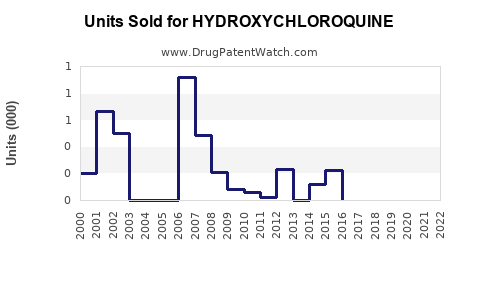
Annual Sales Revenues and Units Sold for HYDROXYCHLOROQUINE
| Drug Name | Revenues (USD) | Units | Year |
|---|---|---|---|
| HYDROXYCHLOROQUINE | ⤷ Start Trial | ⤷ Start Trial | 2022 |
| HYDROXYCHLOROQUINE | ⤷ Start Trial | ⤷ Start Trial | 2021 |
| HYDROXYCHLOROQUINE | ⤷ Start Trial | ⤷ Start Trial | 2020 |
| >Drug Name | >Revenues (USD) | >Units | >Year |
Hydroxychloroquine Market Analysis, Sales Forecast, Patent Status, and Generic Competition
Hydroxychloroquine is a mature, largely generic medicine with stable demand in systemic lupus erythematosus, rheumatoid arthritis, and malaria treatment. The market is driven by chronic autoimmune use, not COVID-19. Global molecule sales are not reported in a single audited database because multiple generic manufacturers sell the product across fragmented national markets. A reasonable 2024 global market estimate is approximately $0.6 billion to $1.0 billion at manufacturer-level revenue, with base-case sales reaching $0.7 billion to $1.2 billion by 2030.
The commercial outlook is defensive rather than high-growth. Demand should rise gradually with autoimmune-disease diagnosis and long-term treatment, while low generic pricing, limited differentiation, and substitution by other disease-modifying antirheumatic drugs constrain revenue expansion.
What is the current hydroxychloroquine market size?
Hydroxychloroquine sulfate is sold primarily as 200 mg tablets. The main indications are:
- Systemic lupus erythematosus
- Rheumatoid arthritis
- Discoid and systemic lupus-related skin disease
- Malaria treatment and prophylaxis in susceptible regions
The global market is fragmented among branded and generic products. Sanofi’s Plaquenil remains the best-known reference brand, but generic hydroxychloroquine accounts for most unit volume in the United States and many international markets.
Estimated 2024 market by segment
| Segment | Estimated share of global revenue | Market characteristics |
|---|---|---|
| Autoimmune disease, chronic use | 75%-85% | Highest-value and most stable demand |
| Malaria treatment and prophylaxis | 10%-20% | Concentrated in selected geographies; resistance limits use |
| Other and institutional demand | 5%-10% | Includes hospital procurement and special access |
| COVID-19-related demand | Negligible | No durable demand after clinical and regulatory setbacks |
The market experienced a sharp but temporary demand surge in 2020. FDA withdrew the emergency-use authorization for chloroquine and hydroxychloroquine for COVID-19 treatment in June 2020 after clinical evidence failed to establish benefit and raised safety concerns.[1] COVID-19 sales should therefore be excluded from forward projections.
How much hydroxychloroquine is sold annually?
No consolidated public source reports global hydroxychloroquine unit sales across all manufacturers. A bottom-up estimate is more reliable than combining commercial market reports with inconsistent definitions.
A reasonable volume framework is:
| Metric | 2024 estimate |
|---|---|
| Global annual tablet demand | 1.0-2.0 billion 200 mg tablets |
| Chronic autoimmune share of volume | 70%-85% |
| Average manufacturer-level price per tablet | $0.15-$0.40 |
| Estimated global manufacturer revenue | $0.6-$1.0 billion |
Retail prices are materially higher than manufacturer revenue because they include wholesaler, pharmacy, dispensing, and reimbursement margins. U.S. cash prices may vary from below $1 to several dollars per tablet depending on supplier, pharmacy, quantity, and insurance status.
The principal commercial limitation is not demand. It is low revenue per prescription. A patient receiving 200 mg twice daily may use approximately 730 tablets annually. At a manufacturer-level price of $0.20 per tablet, annual product revenue is only about $146 per patient before distribution costs.
What are the hydroxychloroquine sales projections through 2030?
The base case assumes continued use in lupus and rheumatoid arthritis, stable malaria demand, no major new indication, and persistent generic price competition.
Global sales forecast
| Year | Low case | Base case | High case |
|---|---|---|---|
| 2024 | $0.6B | $0.8B | $1.0B |
| 2025 | $0.6B | $0.82B | $1.04B |
| 2026 | $0.61B | $0.85B | $1.08B |
| 2027 | $0.62B | $0.88B | $1.12B |
| 2028 | $0.63B | $0.91B | $1.17B |
| 2029 | $0.64B | $0.94B | $1.22B |
| 2030 | $0.65B | $0.98B | $1.27B |
| 2024-2030 CAGR | 1.3% | 3.4% | 4.1% |
The base case implies approximately 3% to 4% annual growth, primarily from patient-volume expansion rather than price increases. Net pricing is likely to remain flat or decline in the United States and other competitive generic markets.
Main forecast drivers
Chronic autoimmune treatment is the primary growth driver. Hydroxychloroquine is included in widely used treatment guidelines for systemic lupus erythematosus unless contraindicated.[2] Long treatment duration supports recurring prescriptions and limits demand volatility.
The main constraints are:
- Generic price erosion
- Retinal toxicity monitoring requirements
- Discontinuation among patients with intolerance or safety concerns
- Substitution with methotrexate, mycophenolate, belimumab, anifrolumab, and other therapies
- Antimalarial resistance in regions where hydroxychloroquine is no longer preferred
- Periodic supply interruptions caused by low manufacturer margins
Which companies manufacture and sell hydroxychloroquine?
Hydroxychloroquine is supplied by a large group of generic manufacturers. The supplier set changes by country and procurement channel.
United States and international manufacturers
Known or historically active suppliers include:
- Sanofi, through Plaquenil and related legacy supply
- Teva Pharmaceuticals
- Zydus Lifesciences
- Hikma Pharmaceuticals
- Rising Pharma Holdings
- Amneal Pharmaceuticals
- Mylan, now part of Viatris
- Sandoz
- Lupin
- Torrent Pharmaceuticals
- Sun Pharmaceutical Industries
- Cipla
- Dr. Reddy’s Laboratories
The exact commercial position of each company depends on active FDA approvals, national registrations, wholesaler contracts, manufacturing status, and periodic discontinuations. FDA’s Drugs@FDA and Orange Book databases should be used for current product-level verification.[3]
Sanofi has limited ability to preserve premium pricing because the active ingredient and conventional tablet formulation are established generic products. The company’s strategic value in this market is linked to brand recognition, supply reliability, and reference-product status rather than exclusivity.
What is the FDA regulatory status of hydroxychloroquine?
Hydroxychloroquine sulfate is FDA-approved for malaria and selected autoimmune indications, including rheumatoid arthritis and lupus-related conditions.[4] The product is generally regulated as an immediate-release oral tablet.
The FDA does not recognize hydroxychloroquine as an authorized COVID-19 treatment. The agency revoked the COVID-19 emergency-use authorization in 2020.[1]
Safety and monitoring requirements
The principal safety issue is retinal toxicity. The American Academy of Ophthalmology recommends baseline assessment and risk-based annual screening, with earlier or more intensive monitoring for patients with elevated risk.[5] Relevant risk factors include:
- High cumulative exposure
- Renal impairment
- Tamoxifen use
- Older age
- Pre-existing retinal disease
Cardiac toxicity, hypoglycemia, neuromuscular effects, and drug interactions also affect prescribing and market access.
What is the Orange Book status of hydroxychloroquine?
Hydroxychloroquine has no meaningful remaining new-drug exclusivity in the United States. The reference product, Plaquenil, is an established product with generic competition.
The relevant commercial position is:
| Regulatory issue | Status |
|---|---|
| Active ingredient | Hydroxychloroquine sulfate |
| Main dosage form | 200 mg immediate-release tablet |
| Reference brand | Plaquenil |
| Generic competition | Established |
| New chemical entity exclusivity | Expired |
| Orphan exclusivity | None identified for the core product |
| Pediatric exclusivity | Not a current market barrier |
| Paragraph IV exposure | Primarily historical and product-specific |
| Current generic entry barrier | Low for standard tablets |
Orange Book listings can change as applications are approved, discontinued, or delisted. Patent and exclusivity information should be checked against the current FDA database rather than relying on legacy product summaries.[3]
What patents protect hydroxychloroquine?
The core hydroxychloroquine molecule and conventional tablet technology are no longer protected by commercially meaningful composition-of-matter patents in the United States. The key patents covering the original product and active ingredient expired decades ago.
Patent-estate assessment
| Patent category | Current commercial strength |
|---|---|
| Composition of matter | None for ordinary hydroxychloroquine |
| Conventional tablet formulation | Very weak or expired |
| Method of treating lupus or rheumatoid arthritis | Limited practical value; potential validity and obviousness issues |
| New dosing regimen | Potentially relevant if narrowly claimed and supported |
| Combination therapy | Possible protection for new combinations, subject to claim scope |
| Extended-release or novel delivery | Potential future differentiation |
| Manufacturing process | Potentially useful if process-specific, but weak against routine suppliers |
| Device or monitoring technology | Separate opportunity from the drug itself |
Method-of-use patents can create limited protection if they claim a specific patient population, dosing schedule, biomarker, or combination. They generally do not prevent routine generic substitution for established labeled indications unless the relevant use is protected and carve-outs are ineffective.
When did hydroxychloroquine lose exclusivity?
Hydroxychloroquine lost practical exclusivity long before the modern Hatch-Waxman framework. The active ingredient is an old antimalarial compound, and Plaquenil has been marketed for decades.
The current market therefore has:
- No branded product exclusivity
- No meaningful composition patent barrier
- No material barrier to ANDA-based generic competition
- No expected biosimilar pathway, because hydroxychloroquine is a small-molecule drug
A generic manufacturer’s principal barriers are regulatory compliance, API sourcing, quality systems, pharmacovigilance, and commercial scale.
Are there Paragraph IV challenges involving hydroxychloroquine?
Historical Paragraph IV activity may have occurred around abbreviated new drug applications referencing branded hydroxychloroquine products, but Paragraph IV litigation is not a current central market issue for the established tablet market.
The remaining opportunity for patent litigation would more likely involve:
- A newly approved formulation
- A narrow dosing regimen
- A combination product
- A reformulated delivery system
- A process patent asserted against a specific manufacturing route
Routine 200 mg hydroxychloroquine tablets have limited litigation value because the core product is old and generic competition is entrenched.
Are biosimilars a risk for hydroxychloroquine?
No. Hydroxychloroquine is a chemically synthesized small molecule, not a biologic. Biosimilar competition does not apply.
The relevant competitive risks are conventional generic substitution and therapeutic substitution. Therapeutic alternatives include methotrexate, azathioprine, mycophenolate mofetil, belimumab, anifrolumab, rituximab, and corticosteroid-sparing regimens. These products may capture clinical spending even when hydroxychloroquine unit demand remains stable.
What generic launch scenarios exist for hydroxychloroquine?
Base scenario: stable generic supply
Multiple manufacturers remain active, prices remain low, and chronic autoimmune demand grows slowly. This is the most likely outcome through 2030.
Upside scenario: supply consolidation
If several suppliers exit because of low margins or manufacturing problems, remaining manufacturers may obtain temporary price increases. The effect would be stronger in hospital and government procurement than in retail channels.
Downside scenario: therapeutic substitution
More patients move to biologics or newer targeted therapies, especially in refractory lupus and rheumatoid arthritis. Hydroxychloroquine remains part of background therapy but loses some incremental treatment volume.
Product innovation scenario
A new formulation with improved adherence, lower retinal exposure, or controlled delivery could create premium pricing. Such a product would require clinical and regulatory differentiation and would face rapid follow-on competition if the technology is easy to reproduce.
What is the commercial value of hydroxychloroquine?
Hydroxychloroquine is a low-price, high-volume maintenance product. Its revenue exposure is most attractive to manufacturers with:
- Low-cost API access
- Established oral-solid-dose facilities
- Efficient regulatory operations
- Government or institutional supply contracts
- Broad geographic distribution
- Ability to manage periodic quality and supply disruptions
It is less attractive as a standalone branded-growth asset. The product does not support substantial price premiums without a differentiated formulation, proprietary delivery system, or new clinical claim.
Revenue exposure by geography
| Geography | Commercial profile |
|---|---|
| United States | High chronic autoimmune value; intense generic pricing |
| Europe | Mature generic market; country-level reimbursement controls |
| India | Large manufacturing base and substantial domestic use |
| Latin America | Fragmented branded-generic markets |
| Africa | Malaria relevance varies by resistance patterns and national policy |
| Asia-Pacific | Mixed profile, with autoimmune demand and regional malaria use |
How strong is the hydroxychloroquine patent estate?
The patent estate is weak for standard hydroxychloroquine sulfate tablets and stronger only for future product-specific innovations.
A practical strength rating is:
| Asset type | Patent strength |
|---|---|
| Core molecule | 0/5 |
| Standard 200 mg tablet | 0-1/5 |
| New formulation | 2-4/5, depending on claims and clinical data |
| New method of use | 2-3/5 |
| Manufacturing process | 1-3/5 |
| Combination therapy | 2-4/5 |
| Brand and regulatory history | Commercial, not patent-based |
Patent value is therefore concentrated in incremental innovation. Any investment thesis based on long-term exclusivity for ordinary hydroxychloroquine tablets is weak.
What licensing deals and partnerships affect the market?
No major current licensing transaction is required to commercialize conventional hydroxychloroquine tablets. Manufacturers typically rely on internal production, contract manufacturing, API suppliers, or regional distribution agreements.
Potentially valuable transactions would involve:
- Exclusive regional distribution
- Government malaria procurement
- Novel formulation rights
- Combination products
- Specialty pharmacy access
- Contract manufacturing and private-label supply
Legacy brand rights and local registrations can still have commercial value, but they do not recreate molecule-level exclusivity.
Key Takeaways
- Global hydroxychloroquine revenue is estimated at $0.6 billion to $1.0 billion in 2024.
- Base-case sales are projected to reach approximately $0.98 billion by 2030.
- Expected growth is approximately 3% to 4% annually, driven by chronic autoimmune use.
- Generic hydroxychloroquine accounts for most unit volume.
- Plaquenil has no meaningful remaining exclusivity barrier for standard tablets.
- The product has no biosimilar risk because it is a small molecule.
- Patent value is weak for conventional tablets and potentially relevant only for new formulations, dosing regimens, combinations, or manufacturing processes.
- COVID-19 demand is not a viable forward market driver.
- The principal commercial risks are price erosion, supplier exits, quality disruptions, and substitution by newer autoimmune therapies.
FAQs
What is the projected hydroxychloroquine market size in 2030?
The base-case estimate is approximately $0.98 billion globally in manufacturer-level revenue, with a range of $0.65 billion to $1.27 billion depending on pricing, supply concentration, and autoimmune treatment volumes.
Is Plaquenil still commercially important?
Plaquenil remains the reference brand and has residual value in physician familiarity and supply reliability. Generic products, however, account for most market volume and substantially limit brand pricing power.
Can a generic manufacturer launch hydroxychloroquine without patent litigation?
For a conventional 200 mg tablet, the practical patent barrier is low. The manufacturer must still obtain regulatory approval, meet current good manufacturing practice requirements, and comply with labeling and pharmacovigilance obligations.
Which disease accounts for most hydroxychloroquine demand?
Systemic lupus erythematosus and related autoimmune conditions account for most chronic demand. Rheumatoid arthritis remains important, while malaria demand is geographically concentrated and constrained by resistance patterns.
Could a new hydroxychloroquine formulation command premium pricing?
Yes, but only if it demonstrates clinically meaningful differentiation, such as improved adherence, lower toxicity exposure, controlled release, or a validated use in a defined patient group. A minor reformulation without outcome evidence would have limited commercial protection.
References
-
U.S. Food and Drug Administration. (2020). FDA revokes emergency use authorization for chloroquine phosphate and hydroxychloroquine sulfate. https://www.fda.gov
-
Fanouriakis, A., Kostopoulou, M., Alunno, A., Aringer, M., Bajema, I., Boletis, J. N., Cervera, R., et al. (2019). 2019 update of the EULAR recommendations for the management of systemic lupus erythematosus. Annals of the Rheumatic Diseases, 78(6), 736-745.
-
U.S. Food and Drug Administration. (2024). Approved drug products with therapeutic equivalence evaluations: Orange Book. https://www.accessdata.fda.gov/scripts/cder/ob/
-
U.S. Food and Drug Administration. (2024). Plaquenil prescribing information. Sanofi-Aventis U.S. LLC.
-
American Academy of Ophthalmology. (2016). Recommendations on screening for chloroquine and hydroxychloroquine retinopathy. Ophthalmology, 123(6), 1386-1394.
More… ↓
