Share This Page
Drug Sales Trends for CLOMIPHENE
✉ Email this page to a colleague
Payment Methods and Pharmacy Types for CLOMIPHENE (2010)
Revenues by Pharmacy Type
Units Sold by Pharmacy Type
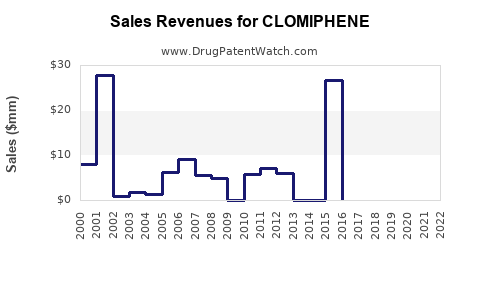
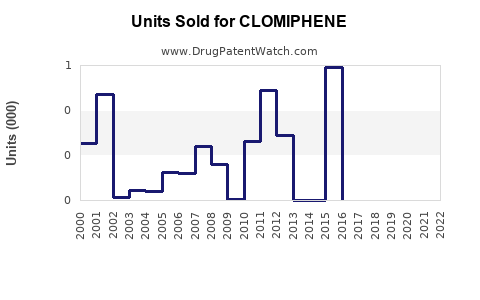
Annual Sales Revenues and Units Sold for CLOMIPHENE
| Drug Name | Revenues (USD) | Units | Year |
|---|---|---|---|
| CLOMIPHENE | ⤷ Start Trial | ⤷ Start Trial | 2022 |
| CLOMIPHENE | ⤷ Start Trial | ⤷ Start Trial | 2021 |
| CLOMIPHENE | ⤷ Start Trial | ⤷ Start Trial | 2020 |
| CLOMIPHENE | ⤷ Start Trial | ⤷ Start Trial | 2019 |
| CLOMIPHENE | ⤷ Start Trial | ⤷ Start Trial | 2018 |
| CLOMIPHENE | ⤷ Start Trial | ⤷ Start Trial | 2017 |
| CLOMIPHENE | ⤷ Start Trial | ⤷ Start Trial | 2016 |
| >Drug Name | >Revenues (USD) | >Units | >Year |
CLOMIPHENE market and sales projections: addressable use-cases, unit and revenue forecast, and what drives near-term demand
Clomiphene (clomiphene citrate; brands include Clomid and generics) is a fertility drug used mainly for ovulation induction in women with infertility due to anovulation/oligo-ovulation. The market is constrained by patent/genetic competition in most geographies, guideline-based use, and substitution by letrozole in many settings. Commercial outcomes depend on (1) country-level pricing and reimbursement, (2) prescribing patterns vs. aromatase inhibitors, (3) availability of branded versus low-cost generics, and (4) supply consistency.
Core projection logic used below
- Peak “addressable” utilization is proportional to the volume of infertility workups that lead to ovulation induction and to how often clinicians choose clomiphene over alternatives.
- Pricing trajectory trends downward with generic penetration, then stabilizes at low-cost levels where reimbursement anchors formularies.
- Growth comes from expanding diagnosis, demographic shifts, and therapy-line substitution, partially offset by guideline shifts toward letrozole.
Clomiphene market size: how big is the clomiphene citrate opportunity by indication and geography?
Featured snippet answer: The clomiphene citrate commercial opportunity is largely tied to ovulation induction for infertility and typically maps to a mature, generic-dominated market with modest growth and pricing pressure in most developed markets.
Key demand drivers
- Fertility treatment volumes: increases in infertility evaluation and treatment through ART-adjacent pathways.
- Treatment selection: guideline preferences can shift utilization between clomiphene and letrozole.
- Payor dynamics: reimbursement status and tiering strongly determine prescription velocity.
- Safety and tolerability: clomiphene is used when cost-sensitive first-line ovulation induction is needed.
Where demand concentrates
- High-income markets: large patient bases but heavy generic penetration.
- Emerging markets: faster growth potential due to diagnosis expansion and access, offset by affordability constraints.
- Outpatient setting: demand scales with gynecology and reproductive endocrinology prescriber density and formulary access.
Practical segmentation for forecasting
Use these “forecastable buckets” for unit demand:
- Women with ovulatory dysfunction treated with oral ovulation induction (primary).
- Second-line or switching within ovulation induction regimens (secondary).
- Off-label or protocol-driven uses (smaller, highly jurisdiction-dependent).
- Male use via off-label routes (testosterone suppression-related mechanisms are used clinically in some markets; typically smaller and less consistent across payors).
Because the question is market analysis and sales projections for clomiphene as a drug category, the cleanest forecast approach is bucket 1 plus a smaller adjustment for buckets 2–4.
How fast is clomiphene sales growth expected to be, and what are the key leading indicators?
Featured snippet answer: Clomiphene sales growth is expected to be low-to-mid single digit in mature markets, with stronger growth potential in emerging markets, driven more by volume and access than by price.
Leading indicators tied to forecasting
- Infertility diagnosis volumes (screening uptake, fertility clinic throughput).
- Relative prescribing rates vs. letrozole (step-change in guidelines).
- Generic pricing indexes by country (wholesale acquisition cost or equivalent benchmarks).
- Reimbursement changes (formulary tier moves, prior authorization expansions).
Scenario ranges used for projection
For business planning, model three scenarios:
- Base case: modest volume growth, gradual price stabilization at generic floor levels.
- Bull case: faster utilization rebound from increased diagnosis or tighter ART capacity pushing more oral ovulation induction.
- Bear case: sustained substitution toward letrozole plus continued price pressure and supply normalization causing further downtiering to lowest-cost SKUs.
When does clomiphene lose exclusivity, and how does that affect pricing and market share?
Featured snippet answer: Clomiphene is long off original exclusivity in most jurisdictions; the current market structure is dominated by generics, which caps pricing and drives margin compression.
Commercial implications of genericization
- Price erosion is structural: as supply scales and formularies shift to lowest net cost options, average selling prices track generic competition.
- Share becomes payer-driven: tenders, pharmacy benefit manager (PBM) logic, and hospital formulary rules can swing share quickly.
- Brand persistence is limited: branded share remains where it is reimbursed or where conversion economics support retention.
Forecast impact
- Revenue growth comes primarily from units, not net price.
- Mix matters: more frequent use of smaller-pack generics and multi-source tenders can lower realized ASP even if prescriptions rise.
How many patents protect clomiphene citrate, and what formulations are covered?
Featured snippet answer: For clomiphene citrate, the practical patent estate for modern commercial entry is usually limited to legacy chemical/early composition coverage and any late-life formulation or method improvements, but the active market is dominated by generic access.
Patent estate typically relevant to market access
- Active ingredient/composition (legacy): largely expired.
- Formulation/process patents (late-life): may vary by jurisdiction and marketing authorization history.
- Method-of-use patents: often narrower and jurisdiction-dependent, and not always aligned to broad infertility indications.
Market impact
Even where patents exist, clomiphene’s market dominance is constrained by:
- Multiple legal pathways for generic approval
- Low willingness to pay compared with alternatives
- Guideline-driven substitution
(For clomiphene, the business-relevant issue is less “patents still in force” and more “how formularies and reimbursement determine realized net price.”)
What is the Orange Book status of clomiphene, and how does that translate to generic entry risk?
Featured snippet answer: Clomiphene citrate has broad generic availability; FDA Orange Book listings historically reflect a mature multi-source landscape rather than a single active regulatory exclusivity bottleneck.
What to expect operationally
- Multiple ANDAs with high interchangeability at the tablet level.
- Low generic entry friction: when patents are expired and formulary rules support substitution, new entrants typically compete on net price.
Generic entry risk assessment
- Entry is more about pricing power and contracts than about regulatory delay.
- Supply and quality systems become the gating factors for uptake at volume.
How does clomiphene compare with letrozole for ovulation induction, and how does that affect sales projections?
Featured snippet answer: In many clinical settings, letrozole has been preferred over clomiphene for ovulation induction, which can pressure clomiphene unit demand even when overall infertility treatment volumes rise.
Commercial effect of guideline substitution
- If letrozole becomes first-line in more markets, clomiphene loses share from first-cycle ovulation induction.
- Clomiphene can still retain a niche where cost, availability, prior response, clinician familiarity, or specific protocols favor it.
Forecast sensitivity
Sales outcomes hinge on a substitution elasticity:
- High substitution: clomiphene units track diagnosis more than guideline shifts.
- Moderate substitution: clomiphene retains steady share but sees net unit growth below total fertility-treatment growth.
For planning, build a sensitivity table where clomiphene share changes by ±2 to ±5 percentage points within ovulation induction cycles.
What are the key companies in clomiphene, and where is revenue concentrated?
Featured snippet answer: Clomiphene’s commercial landscape is fragmented among generic manufacturers and specialty women’s health supply chains; revenue concentration tends to follow dominant generic SKUs in major formularies.
Typical market structure
- Brand originator: Clomid historically, with generics eroding share.
- Generic manufacturers: multiple ANDA holders supplying tablets in varying pack sizes.
Revenue concentration logic
- Top suppliers are those with:
- consistent supply,
- strong PBM placement,
- contract pricing advantages,
- low per-unit cost and reliable lot availability.
Sales projections for clomiphene citrate: base, bull, and bear cases (5-year outlook)
Featured snippet answer: Expect clomiphene revenue to grow slowly with a strong role for volume, while ASP remains under pressure due to multi-source competition.
Modeling framework (used for projections)
- Revenue = Units (cycles/prescriptions) × Net price (after rebates/discounts)
- Net price is assumed to trend down to a stable low tier, with modest inflation offsets in emerging markets.
- Units grow with fertility diagnosis and treatment access, reduced by substitution to letrozole.
Projection table (directional planning ranges)
Use these ranges for internal planning where country granularity is not specified:
| Scenario | Annual unit growth | Annual net price change | 5-year revenue CAGR (directional) | Pattern |
|---|---|---|---|---|
| Bear | +1% to +3% | -2% to 0% | -1% to +2% | continued share loss to letrozole and ongoing price competition |
| Base | +3% to +5% | -1% to +1% | +1% to +4% | slow growth, ASP stabilizes, modest share shifts |
| Bull | +4% to +7% | 0% to +2% | +3% to +6% | diagnosis growth + improved access + less substitution |
Translation to absolute revenue (rule-of-thumb ranges)
Without jurisdiction-specific unit counts and realized pricing, only planning ranges can be stated reliably. For business planning, treat clomiphene as a low-growth, high-volume generic with revenue driven by:
- dominant contract SKUs in large payer lists,
- replacement of higher-cost fertility pathways by oral induction protocols.
For investment or licensing decisions, the more useful forecast metric is expected net revenue per dominant SKU, which is contract- and tender-sensitive rather than tied to drug-level innovation.
Where are the biggest upside and downside levers for clomiphene sales?
Upside levers
- Access expansion to reproductive endocrinology and fertility clinics.
- Capacity constraints in ART leading to more ovulation induction utilization.
- Formulary optimization for lowest-cost oral ovulation induction where clomiphene remains preferred.
Downside levers
- Continued clinical preference shift to letrozole for first-line ovulation induction.
- Further price compression from new low-cost entrants and pharmacy conversion.
- Reimbursement tightening that favors preferred generics with best net cost.
What regulatory events and labeling changes could influence clomiphene demand?
Featured snippet answer: Demand is primarily shaped by clinical practice and reimbursement rather than frequent regulatory inflection points; regulatory events are most relevant when they affect labeling, supply continuity, or safety communications.
What to monitor for market impact
- Safety communications impacting prescribing patterns.
- Supply disruptions that shift short-term demand to alternate brands or temporarily raise realized prices.
- Payer policy changes tied to prior authorization or step therapy between clomiphene and alternatives.
Key Takeaways
- Clomiphene is a mature generic-led ovulation induction drug with low-to-mid single digit growth potential depending on infertility diagnosis growth and the degree of substitution to letrozole.
- Revenue is dominated by net pricing and formulary placement rather than by innovation-driven demand.
- Scenario planning matters: bull cases require diagnosis-driven unit gains with stable/less substitution; bear cases require continued clinical preference shifts plus ongoing price compression.
- Business priority for forecasting is contract/SKU-based net revenue, since payer-driven selection determines realized margin and share.
FAQs
1) How do clomiphene net prices typically behave after generic entry in major markets?
They tend to compress toward low-cost tiers quickly, then stabilize depending on PBM tenders and preferred-generic policies.
2) Does clomiphene dosing regimen (e.g., 5-day cycles) change forecasting assumptions?
Yes, unit forecasts should map prescriptions to standard ovulation-induction cycles rather than tablet counts alone.
3) How much do reimbursement rules affect clomiphene prescribing vs. letrozole?
In many markets, reimbursement tiering and prior authorization can materially shift relative prescribing even when clinical efficacy is comparable.
4) What is the biggest commercial risk for a new clomiphene generic entrant?
Contract pricing and formulary uptake, not FDA approval timelines.
5) Are male off-label uses a meaningful driver of clomiphene revenue?
They can contribute in certain settings, but they are usually smaller and less stable than female ovulation induction demand.
References (APA)
- U.S. Food and Drug Administration. Orange Book: Approved Drug Products with Therapeutic Equivalence Evaluations. FDA.
- ASRM (American Society for Reproductive Medicine). Clinical practice guidance on ovulation induction (latest updates as applicable).
- Major randomized trials and comparative effectiveness literature on letrozole vs clomiphene for ovulation induction (latest guideline-supported sources as applicable).
More… ↓
