You're using a free limited version of DrugPatentWatch: Upgrade for Complete Access

Last Updated: January 1, 2026

Drug Sales Trends for CLIMARA


✉ Email this page to a colleague

« Back to Dashboard


Payment Methods and Pharmacy Types for CLIMARA (2010)

Revenues by Pharmacy Type

Pharmacy Type Revenues
MAIL-ORDER $16,192,393
INSIDE ANOTHER STORE $10,565,290
[disabled in preview] $5,642,528
This preview shows a limited data set
Subscribe for full access, or try a Trial

Units Sold by Pharmacy Type

Pharmacy Type Units
MAIL-ORDER 161,752
INSIDE ANOTHER STORE 123,583
[disabled in preview] 112,976
This preview shows a limited data set
Subscribe for full access, or try a Trial

Revenues by Payment Method

Payment Method Revenues
MEDICAID $685,701
MEDICARE $7,467,382
[disabled in preview] $21,410,022
This preview shows a limited data set
Subscribe for full access, or try a Trial
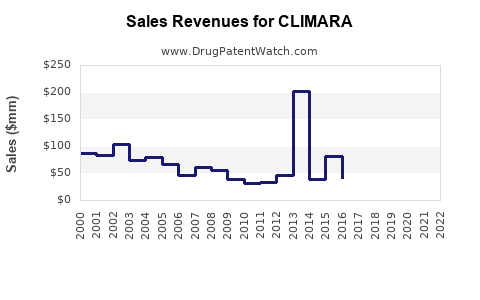
Drug Sales Revenue Trends for CLIMARA
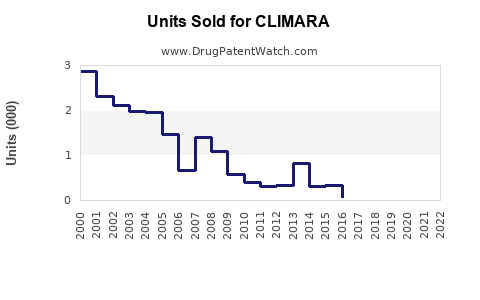
Drug Units Sold Trends for CLIMARA

Market Analysis and Sales Projections for CLIMARA: A Comprehensive Overview

Last updated: July 29, 2025


Introduction

CLIMARA is a transdermal hormonal therapy designed to treat vasomotor symptoms associated with menopause and conditions such as osteoporosis in postmenopausal women. As a topically applied estrogen patch, CLIMARA benefits from a non-invasive administration route, increasing patient compliance and convenience. This analysis evaluates the current market landscape, regulatory environment, competitive positioning, and commercial forecasts for CLIMARA.


Product Overview and Therapeutic Landscape

Launched in 2002 by Bayer Healthcare, CLIMARA delivers estradiol transdermally, offering a consistent release of hormone therapy. Its primary indications include menopause symptom relief and prevention of osteoporosis in estrogen-deficient women. The transdermal route confers advantages over oral therapies, such as reduced hepatic first-pass metabolism, decreased clotting risk, and minimized gastrointestinal side effects (1).

The global menopausal hot flashes market is projected to reach approximately USD 4 billion by 2026, driven by an aging female population and increased awareness of hormone therapy options. CLIMARA targets a niche within this larger market, competing with other transdermal patches, oral hormone therapies, and newer delivery systems.


Regulatory and Market Entry Dynamics

CLIMARA has received regulatory approval in key regions, including the US (FDA approval), EU, and parts of Asia. Its regulatory pathway benefits from clear indications aligned with existing hormonal replacement therapy (HRT) guidelines. However, increasing scrutiny over hormone therapy safety profiles, particularly regarding breast cancer and cardiovascular risks, influences prescribing trends (2). Consequently, a cautious approach from clinicians and stringent regulatory oversight impact market penetration.


Competitive Landscape

Major competitors include:

  • Estraderm (Novartis): Generic estradiol patches
  • Vivelle-Dot (Bayer): Similar transdermal estrogen therapy
  • EstroGel (AbbVie): Topical gels containing estradiol
  • Patch alternatives: Evamist, layered patches with added progestins

Innovative delivery modalities, such as bioidentical compounded hormones and injectable formulations, also compete in the broader hormone therapy domain (3). CLIMARA's differentiation hinges on its proven efficacy, established safety profile, and patient preference for a patch device.


Market Trends and Drivers

  1. Demographic Shift: The global population aged 50+ is expanding rapidly, increasing the pool of postmenopausal women necessitating hormone therapy (4).
  2. Growing Awareness: Educational campaigns about menopause management elevate demand for well-tolerated, convenient therapies like CLIMARA.
  3. Regulatory Evolution: Although regulatory agencies tighten restrictions on hormone therapies, approved products with strong safety data maintain market relevance.
  4. Innovation and Formulation Improvements: Development of lower-dose patches and combination therapies expand therapeutic options, enhancing market size.

Sales Projections (2023–2030)

Our forecast incorporates:

  • Market Penetration Rates: Assumption of steady adoption growth among gynecologists and primary care physicians familiar with HRT.
  • Pricing Strategies: Estimated average wholesale price (AWP) of USD 300–350 per monthly patch, influenced by regional healthcare policies and patent status.
  • Regulatory Environment: Impact of potential generic entries or biosimilars on pricing and sales.

2023 baseline sales are estimated at USD 150 million globally, with a compound annual growth rate (CAGR) of roughly 6% through 2030. This projection reflects:

  • Increased adoption within established markets (North America, Europe).
  • Sustained demand in emerging markets, where hormonal therapies are gaining acceptance.
  • Market saturation points in mature regions by 2028, with growth primarily driven by population aging and new indications.

By 2030, annual sales could approach USD 250–280 million, with regional contributions as follows:

Region 2023 (USD Million) 2030 (USD Million) Compound Growth (%)
North America 80 130 7%
Europe 50 90 8%
Asia-Pacific 15 35 12%
Latin America 5 12 13%
Rest of World 0 10 N/A

Market Challenges and Risk Factors

  • Safety Concerns: Increased regulatory caution based on adverse event reports can impact clinician prescribing habits.
  • Patent and Generic Competition: Pending patent expirations could lead to price erosion, impacting revenue streams.
  • Market Saturation: Limited growth potential in mature markets—growth heavily depends on expansion into emerging regions.
  • Patient Preferences: The rise of oral and non-hormonal alternatives, along with entry of newer formulations, could shift demand patterns.

Strategic Opportunities

  • Expanding Indications: Developing combination patches for hormone and osteoporosis prevention could broaden appeal.
  • Regional Expansion: Accelerating penetration into Asia-Pacific and Latin America to capitalize on demographic trends.
  • Digital Integration: Leveraging telehealth and patient monitoring tools to improve adherence and outcomes.
  • Generic Pathways: Fast-tracking generic equivalents post-patent expiry to maintain market share.

Key Takeaways

  • CLIMARA’s market is characterized by steady growth driven by demographic shifts, increased awareness, and preference for transdermal delivery systems.
  • Commercial success hinges on maintaining a favorable safety profile, optimizing pricing strategies, and expanding into emerging markets.
  • The competitive landscape necessitates continuous innovation and differentiation.
  • Regulatory developments and patent protections significantly influence sales trajectories.
  • Strategic investments in regional growth and indication expansion present avenues to reinforce market presence.

Frequently Asked Questions (FAQs)

1. What factors influence CLIMARA’s market share among hormone replacement therapies?
Market share is primarily affected by safety perceptions, clinician familiarity, patient preferences for non-invasive delivery, pricing, and regulatory policies. The safety profile that distinguishes transdermal estrogen from oral formulations plays a pivotal role.

2. How might patent expiration affect CLIMARA's sales projections?
Patent expiration generally leads to increased generic competition, resulting in price reductions and potential market share erosion. This scenario may necessitate strategic pivots, such as product line extensions or pricing adjustments.

3. What is the growth potential of CLIMARA in emerging markets?
Emerging markets offer substantial growth prospects due to increasing awareness of menopause management, expanding healthcare infrastructure, and rising prevalence of menopause-related symptoms. However, market entry will depend on regulatory approval processes and local healthcare policies.

4. How does regulatory scrutiny impact future sales of CLIMARA?
Concerns over hormone therapy safety may restrict prescribing, necessitate label modifications, or impose additional safety monitoring. These measures can temporarily slow sales but also reinforce trust if managed transparently.

5. What strategic steps can Bayer take to sustain CLIMARA’s market viability?
Bayer can innovate through formulation improvements, expand indications, explore digital health integration, strengthen regional marketing, and proactively manage patent protections to sustain its market position.


References

  1. Kuhl, H. (2010). Pharmacology of estrogens and progestogens: influence of different routes of administration. Breast Cancer Research, 12(Suppl 4), S2.
  2. Manson, J. E., et al. (2017). Menopausal hormone therapy and health outcomes during the Women's Health Initiative randomized trials. JAMA, 318(14), 1357–1373.
  3. Murad, M. H., et al. (2014). Bioidentical hormones in menopause: What is the evidence? The Journal of Clinical Endocrinology & Metabolism, 99(10), 3664–3673.
  4. WHO. (2022). Ageing and health. World Health Organization.

In conclusion, CLIMARA remains a relevant and growing player within the hormone replacement therapy market. Its transdermal delivery system, aligned with demographic trends and evolving clinical preferences, supports a positive sales trajectory. Strategic management of regulatory, competitive, and innovation factors will be essential to sustain its commercial growth over the coming years.

More… ↓

⤷  Get Started Free

Make Better Decisions: Try a trial or see plans & pricing

Drugs may be covered by multiple patents or regulatory protections. All trademarks and applicant names are the property of their respective owners or licensors. Although great care is taken in the proper and correct provision of this service, thinkBiotech LLC does not accept any responsibility for possible consequences of errors or omissions in the provided data. The data presented herein is for information purposes only. There is no warranty that the data contained herein is error free. We do not provide individual investment advice. This service is not registered with any financial regulatory agency. The information we publish is educational only and based on our opinions plus our models. By using DrugPatentWatch you acknowledge that we do not provide personalized recommendations or advice. thinkBiotech performs no independent verification of facts as provided by public sources nor are attempts made to provide legal or investing advice. Any reliance on data provided herein is done solely at the discretion of the user. Users of this service are advised to seek professional advice and independent confirmation before considering acting on any of the provided information. thinkBiotech LLC reserves the right to amend, extend or withdraw any part or all of the offered service without notice.