Share This Page
Drug Sales Trends for ARIPIPRAZOLE
✉ Email this page to a colleague
Payment Methods and Pharmacy Types for ARIPIPRAZOLE (2010)
Revenues by Pharmacy Type
Units Sold by Pharmacy Type
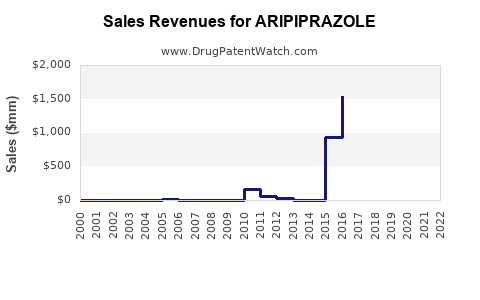
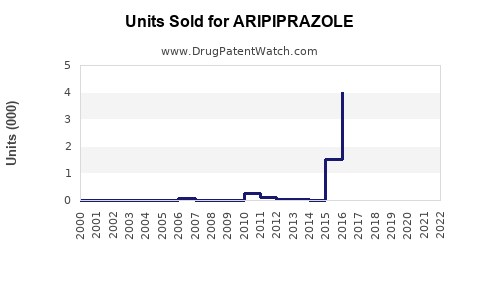
Annual Sales Revenues and Units Sold for ARIPIPRAZOLE
| Drug Name | Revenues (USD) | Units | Year |
|---|---|---|---|
| ARIPIPRAZOLE | ⤷ Start Trial | ⤷ Start Trial | 2022 |
| ARIPIPRAZOLE | ⤷ Start Trial | ⤷ Start Trial | 2021 |
| ARIPIPRAZOLE | ⤷ Start Trial | ⤷ Start Trial | 2020 |
| ARIPIPRAZOLE | ⤷ Start Trial | ⤷ Start Trial | 2019 |
| ARIPIPRAZOLE | ⤷ Start Trial | ⤷ Start Trial | 2018 |
| ARIPIPRAZOLE | ⤷ Start Trial | ⤷ Start Trial | 2017 |
| >Drug Name | >Revenues (USD) | >Units | >Year |

Aripiprazole Market Analysis and Sales Projections
Aripiprazole, a third-generation atypical antipsychotic, has established a significant presence in the treatment of schizophrenia, bipolar disorder, and major depressive disorder. Its mechanism of action, involving partial agonism at dopamine D2 and serotonin 5-HT1A receptors and antagonism at serotonin 5-HT2A receptors, differentiates it from earlier antipsychotics. This profile contributes to a favorable efficacy and tolerability balance. The global market for aripiprazole has experienced substantial growth, driven by increasing prevalence of mental health disorders, patent expirations leading to generic competition, and expanding therapeutic applications. This report analyzes the current market landscape, key drivers, challenges, and provides sales projections for aripiprazole.
What is the Current Global Market Size and Growth Trajectory for Aripiprazole?
The global aripiprazole market was valued at approximately USD 7.5 billion in 2023 [1]. The market is projected to grow at a compound annual growth rate (CAGR) of 3.2% from 2024 to 2030, reaching an estimated USD 9.4 billion by 2030 [1]. This growth is attributed to several factors, including the expanding patient pool requiring treatment for indicated psychiatric conditions and the continued adoption of generic versions following patent expirations.
What are the Key Indications and Therapeutic Applications Driving Aripiprazole Demand?
Aripiprazole's primary therapeutic applications are:
- Schizophrenia: This remains a cornerstone indication, with aripiprazole demonstrating efficacy in treating both positive and negative symptoms [2]. The prevalence of schizophrenia, estimated at 24 million individuals globally, underpins significant demand [3].
- Bipolar Disorder: Aripiprazole is used for the management of manic or mixed episodes in bipolar I disorder and as an adjunctive therapy for major depressive disorder [2]. The global burden of bipolar disorder is substantial, with an estimated 45 million people affected [4].
- Major Depressive Disorder (MDD): Approved as an adjunctive treatment for MDD, aripiprazole offers a therapeutic option for patients who have not responded adequately to antidepressant therapy alone [2]. MDD affects over 280 million people worldwide [5].
- Irritability Associated with Autistic Disorder: Aripiprazole is indicated for the management of irritability in children and adolescents with autistic disorder [2].
- Tourette's Disorder: In some formulations, it is used to treat tics associated with Tourette's disorder [2].
How Have Patent Expirations and Generic Competition Impacted the Aripiprazole Market?
The patent for Abilify, the originator brand of aripiprazole developed by Otsuka Pharmaceutical, expired in the United States in October 2010 and in Europe shortly thereafter. This event triggered a significant influx of generic aripiprazole products.
| Year of Major Patent Expiry | Region | Impact on Market |
|---|---|---|
| 2010 (US) | United States | Introduction of multiple generic versions, leading to price erosion and market share shifts. |
| ~2011 (Europe) | Europe | Similar to the US, generic competition intensified, lowering average selling prices. |
The introduction of generics has led to a substantial decrease in the average selling price (ASP) of aripiprazole products. However, it has also increased accessibility, expanding the total volume of aripiprazole consumed globally. This dynamic has shifted market value from originator sales to generic manufacturers, creating a more fragmented competitive landscape. The market for aripiprazole is now characterized by a large number of generic players, with pricing and market share heavily influenced by manufacturing costs and distribution networks.
What are the Key Market Drivers for Aripiprazole?
Several factors are propelling the demand for aripiprazole:
- Rising Prevalence of Mental Health Disorders: The increasing global awareness, diagnosis, and treatment seeking for mental health conditions, including schizophrenia, bipolar disorder, and depression, directly fuels demand for effective pharmacotherapies like aripiprazole [3, 4, 5].
- Favorable Efficacy and Tolerability Profile: Aripiprazole's unique mechanism of action, offering a balance of efficacy against positive and negative symptoms of psychosis and a generally lower incidence of certain side effects compared to older antipsychotics (e.g., extrapyramidal symptoms, significant weight gain, or prolactin elevation), positions it as a preferred treatment option [6].
- Expansion of Therapeutic Indications: The approval of aripiprazole for adjunctive treatment of MDD and its use in pediatric indications (autistic disorder, Tourette's) have broadened its market reach beyond its primary psychosis indications.
- Availability of Diverse Formulations: The availability of oral tablets, orally disintegrating tablets, oral solutions, and long-acting injectable (LAI) formulations enhances patient adherence and treatment flexibility, catering to a wider range of patient needs and preferences [7]. LAI formulations, in particular, are crucial for improving adherence in chronic conditions like schizophrenia.
- Growing Healthcare Expenditure in Emerging Economies: Increased investment in mental healthcare infrastructure and rising disposable incomes in emerging markets are expanding access to advanced treatments, including aripiprazole generics.
What are the Major Challenges Facing the Aripiprazole Market?
Despite its market strength, aripiprazole faces several challenges:
- Intense Generic Competition and Price Erosion: The highly competitive generic market leads to continuous downward pressure on pricing, limiting revenue growth for individual manufacturers and increasing reliance on volume sales [1].
- Emergence of Newer Antipsychotic Agents: Ongoing research and development yield new antipsychotic drugs with potentially improved efficacy, novel mechanisms of action, or even better tolerability profiles, posing a future threat to aripiprazole's market share.
- Side Effect Profile: While generally well-tolerated, aripiprazole can still cause side effects such as akathisia, nausea, insomnia, and headache, which can impact patient adherence and necessitate treatment modifications [6].
- Regulatory Hurdles and Market Access: Navigating complex regulatory approval processes for new formulations or expanded indications, and securing favorable market access and reimbursement from healthcare payers, remain critical challenges.
- Stigma Associated with Mental Illness: Despite progress, the persistent stigma surrounding mental health disorders can still deter some individuals from seeking treatment, thereby limiting the overall patient pool for aripiprazole.
What are the Key Market Segments within Aripiprazole?
The aripiprazole market can be segmented based on several criteria:
By Formulation:
- Oral Tablets/Orally Disintegrating Tablets: Dominant segment due to ease of administration and cost-effectiveness of generics.
- Oral Solution: Facilitates administration for patients with swallowing difficulties.
- Long-Acting Injectables (LAI): Crucial for improving adherence, particularly in schizophrenia and bipolar disorder management. This segment is experiencing significant growth.
By Indication:
- Schizophrenia: Largest segment, driven by chronic nature of the disease.
- Bipolar Disorder: Significant segment with ongoing treatment needs.
- Major Depressive Disorder (Adjunctive): Growing segment with unmet needs in treatment-resistant depression.
- Pediatric Indications (Autistic Disorder, Tourette's): Niche but growing segments.
By Distribution Channel:
- Hospital Pharmacies: Account for significant sales, particularly for acute treatment settings and LAI formulations.
- Retail Pharmacies: Major channel for chronic outpatient treatment, driven by generic prescriptions.
- Online Pharmacies: Growing channel, offering convenience and potentially lower prices.
What is the Geographic Market Landscape for Aripiprazole?
The aripiprazole market is globally distributed, with regional variations in market size and growth dynamics.
- North America (US & Canada): The largest market, driven by high prevalence of mental disorders, advanced healthcare infrastructure, and robust generic drug penetration. The US market alone accounts for a substantial portion of global sales.
- Europe: A mature market with significant generic competition. Factors like national health systems, pricing regulations, and patient demographics influence regional market performance.
- Asia Pacific: The fastest-growing region, fueled by increasing awareness, improving healthcare access, a large patient population, and rising disposable incomes in countries like China and India.
- Latin America: A developing market with growing opportunities due to increasing healthcare expenditure and greater access to essential medicines.
- Middle East & Africa: A smaller but emerging market with potential for growth as healthcare systems mature and access to mental health services improves.
What are the Key Trends Shaping the Future of the Aripiprazole Market?
Several trends are poised to influence the aripiprazole market:
- Focus on Long-Acting Injectables (LAI): The demand for LAI formulations is expected to rise, driven by their proven efficacy in improving treatment adherence and reducing relapse rates in chronic psychiatric conditions [7]. Manufacturers are likely to invest further in developing and promoting these formulations.
- Combination Therapies: Research into combination therapies involving aripiprazole with other psychotropic agents or novel treatment modalities may emerge, potentially expanding its therapeutic utility or addressing specific treatment-resistant patient subgroups.
- Personalized Medicine Approaches: While currently limited for aripiprazole, future advancements in pharmacogenomics could lead to more personalized treatment selection, optimizing dosage and minimizing adverse effects based on individual genetic profiles.
- Digital Health and Telemedicine Integration: The increasing adoption of telemedicine in mental healthcare can enhance patient monitoring and facilitate timely interventions, potentially improving outcomes for patients on aripiprazole.
- Emphasis on Patient Support Programs: Manufacturers will likely continue to invest in patient education and support programs to improve adherence, manage side effects, and enhance overall quality of life for individuals treated with aripiprazole.
What are the Projected Sales for Aripiprazole?
Based on current market trends, patent expirations, generic penetration, and anticipated growth in key indications, the sales projections for aripiprazole are as follows:
| Year | Global Market Value (USD Billion) | CAGR (2024-2030) | Key Factors Influencing Projection |
|---|---|---|---|
| 2024 | 7.7 | - | Continued generic sales, stable demand from core indications. |
| 2025 | 7.9 | 3.0% | Incremental growth from emerging markets and pediatric indications. |
| 2026 | 8.2 | 3.1% | Increased adoption of LAI formulations in developed markets. |
| 2027 | 8.5 | 3.2% | Maturation of LAI market, steady demand for oral generics. |
| 2028 | 8.9 | 3.3% | Further penetration in Asia Pacific and Latin America. |
| 2029 | 9.2 | 3.3% | Sustained demand across all major indications and formulations. |
| 2030 | 9.4 | 3.2% | Stabilization of growth rate as market maturity is reached. |
Note: Projections are based on current market data and do not account for significant unforeseen events such as major new competitive product launches or significant shifts in regulatory policy.
Key Takeaways
The aripiprazole market remains a substantial and resilient segment within the psychotropic drug landscape. While the era of blockbuster originator sales has passed, the widespread availability of generics has ensured continued high-volume consumption driven by the persistent global burden of mental health disorders. The market's future growth hinges on expanding access in emerging economies, the increasing adoption of long-acting injectable formulations for improved patient adherence, and the continued demand from its established indications. Challenges persist, primarily stemming from intense price competition among generic manufacturers and the ongoing emergence of newer therapeutic agents. Strategic focus on formulation innovation, particularly LAIs, and penetration into underserved geographic markets will be critical for sustained success.
Frequently Asked Questions
What is the primary mechanism of action of aripiprazole?
Aripiprazole is a dopamine- D2 and serotonin 5-HT1A receptor partial agonist and a serotonin 5-HT2A receptor antagonist. This unique partial agonism at D2 receptors distinguishes it from other antipsychotics, allowing it to modulate dopaminergic activity by increasing it in areas of low neurotransmission and decreasing it in areas of high neurotransmission.
How does the availability of generic aripiprazole impact pricing?
The expiry of patents for the originator brand (Abilify) led to the introduction of numerous generic versions. This intense competition significantly drives down the average selling price (ASP) of aripiprazole products, making them more affordable and accessible.
Which formulation of aripiprazole is experiencing the most significant growth?
Long-acting injectable (LAI) formulations of aripiprazole are experiencing significant growth. These formulations improve patient adherence and reduce relapse rates, making them a preferred option for managing chronic conditions like schizophrenia and bipolar disorder.
Are there any significant new therapeutic indications for aripiprazole anticipated in the near future?
While current research is ongoing, there are no major, widely anticipated new therapeutic indications for aripiprazole that are expected to dramatically alter its market trajectory in the immediate future. Its established indications continue to drive demand.
What are the main competitors to aripiprazole in the antipsychotic market?
Key competitors include other atypical antipsychotics such as risperidone, olanzapine, quetiapine, and ziprasidone, as well as newer agents with different mechanisms of action. In the generic space, competition is primarily among multiple manufacturers of aripiprazole itself.
Citations
[1] Global Market Insights. (2023). Aripiprazole Market Size, Share & Trends Analysis Report By Application, By Formulation, By Region, And Segment Forecasts, 2024-2030. [2] U.S. Food and Drug Administration. (n.d.). Prescribing Information for Aripiprazole. Retrieved from FDA website. [3] World Health Organization. (2023). Schizophrenia. Retrieved from WHO website. [4] World Health Organization. (2022). Bipolar disorder. Retrieved from WHO website. [5] World Health Organization. (2023). Depression. Retrieved from WHO website. [6] Leucht, S., & Correll, C. U. (2022). New drugs for the treatment of schizophrenia. The Lancet Psychiatry, 9(10), 817-828. [7] Citrome, L., & McEvoy, J. P. (2018). Long-acting injectable antipsychotics: challenges and opportunities. Journal of Clinical Psychiatry, 79(2), 17lr11719.
More… ↓
