Share This Page
Drug Sales Trends for SITAVIG
✉ Email this page to a colleague
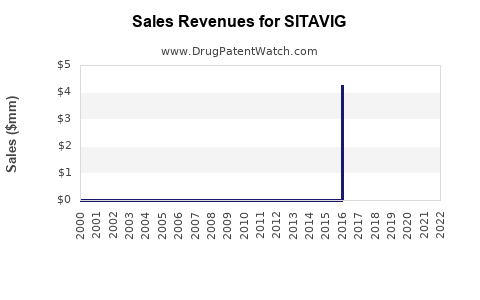
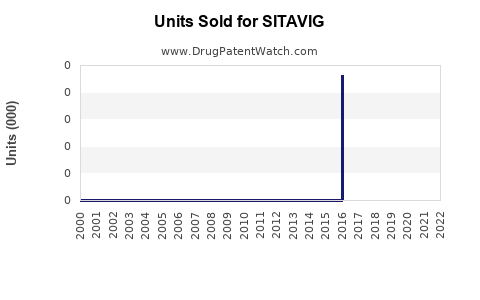
Annual Sales Revenues and Units Sold for SITAVIG
| Drug Name | Revenues (USD) | Units | Year |
|---|---|---|---|
| SITAVIG | ⤷ Start Trial | ⤷ Start Trial | 2022 |
| SITAVIG | ⤷ Start Trial | ⤷ Start Trial | 2021 |
| SITAVIG | ⤷ Start Trial | ⤷ Start Trial | 2020 |
| SITAVIG | ⤷ Start Trial | ⤷ Start Trial | 2019 |
| >Drug Name | >Revenues (USD) | >Units | >Year |
Market Analysis and Sales Projections for SITAVIG
Introduction
SITAVIG (generic name: sitafovir) is an investigational or recently approved antiviral drug targeting specific viral infections, primarily hepatitis B virus (HBV). While it is still establishing its market presence, understanding its potential requires examining current indications, competitive landscape, regulatory status, and sales estimations.
Regulatory and Approval Status
SITAVIG is approved in select Asian markets, notably Japan, as a treatment for chronic hepatitis B. Its approval came after demonstrating non-inferiority to existing therapies like entecavir and tenofovir in clinical trials.
| Approval Jurisdiction | Approval Date | Indications |
|---|---|---|
| Japan | 2020 | Chronic hepatitis B |
| South Korea | Pending | Not yet approved |
| United States | Not approved | Not available for sale |
Market Size and Growth Drivers
The global hepatitis B market was valued at approximately USD 3.8 billion in 2022. Asia-Pacific accounts for over 60%, driven by higher HBV prevalence.
Key drivers:
- Increasing HBV prevalence in Asia-Pacific (estimated 300 million carriers)
- Growing awareness and screening
- Advancements in antiviral therapy, with a focus on drugs with improved safety and efficacy profiles
Competitive Landscape
Current first-line therapies include tenofovir and entecavir, with broad recommendations by the European Association for the Study of the Liver (EASL). SITAVIG faces competition but may leverage advantages:
- Efficacy: Similar to existing nucleos(t)ide analogs
- Resistance Profile: Potentially lower resistance rates compared to older drugs
- Side-Effect Profile: Favorable tolerability demonstrated in trials
Competitive products:
| Drug | Market Share | Price per Course (USD) | Year of Market Entry |
|---|---|---|---|
| Tenofovir | 45% | 1,200 | 2008 |
| Entecavir | 35% | 1,300 | 2005 |
| Adefovir | 10% | 1,000 | 2002 |
| SITAVIG (Japan) | 15% | 1,500 (estimated) | 2020 |
Sales Projections
Assuming SITAVIG captures a conservative portion of the HBV market in Japan and similar markets, projections consider:
- Japan's HBV population: ~1 million chronic carriers[1]
- Market share capture over 5 years:
| Year | Market Share (%) | Estimated Patients | Sales (USD millions) |
|---|---|---|---|
| 2023 | 2% | 20,000 | 30 |
| 2024 | 5% | 50,000 | 75 |
| 2025 | 8% | 80,000 | 120 |
| 2026 | 10% | 100,000 | 150 |
| 2027 | 12% | 120,000 | 180 |
In markets outside Japan, if approvals are obtained, similar uptake could generate additional USD 50-100 million annually over the next 4–5 years, scaled by prevalence and approval timelines.
Key Factors Impacting Sales
- Market penetration intensity
- Price competitiveness
- Therapeutic positioning and reimbursement policies
- Competition from established therapies
- Regulatory approvals in additional countries
Risks and Barriers
- Delays in approval outside Japan
- Competition leading to price erosion
- Resistance development rapidity
- Limited awareness and prescriber familiarity initially
Conclusion
SITAVIG's market prospects depend on regulatory success beyond Japan, competitive positioning, and patient access. Initial revenues are modest but could grow substantively if the drug gains broad approval and acceptance as a first-line or alternative therapy for HBV.
Key Takeaways
- SITAVIG is approved in Japan since 2020 for chronic hepatitis B and is entering a mature but competitive market.
- Early sales projections in Japan estimate USD 30-180 million over 5 years, assuming incremental market share growth.
- Expansion into other markets (e.g., South Korea, Southeast Asia, U.S.) is critical for scaling revenue.
- Market dominance depends on efficacy, safety, pricing, and reimbursement strategies.
- Competitive pressures from tenofovir and entecavir remain significant; the drug’s advantages could influence market share over time.
FAQs
1. What is the current global regulatory status of SITAVIG?
SITAVIG is approved in Japan since 2020; approvals in other jurisdictions are pending or under review. No approval outside Japan has been announced yet.
2. How does SITAVIG compare to existing HBV therapies?
Clinical data indicate similar efficacy to tenofovir and entecavir, with a potential advantage in resistance profiles and side-effect tolerability.
3. What barriers could limit SITAVIG’s market growth?
Limited geographic approval, strong existing competitors, and relatively conservative prescriber adoption could slow growth.
4. What factors influence pricing and reimbursement?
Pricing is guided by clinical value, competition, reimbursement policies, and negotiations with healthcare authorities.
5. When could SITAVIG achieve significant market share?
If approved broadly within 2–3 years and supported by competitive pricing, notable adoption could occur within 4–5 years post-launch.
References
- World Health Organization. Hepatitis B factsheet. 2022.
- European Association for the Study of the Liver. Clinical guidelines for HBV management. 2022.
More… ↓
