Share This Page
Drug Sales Trends for RECTIV
✉ Email this page to a colleague
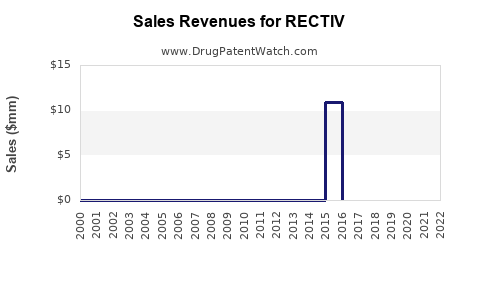
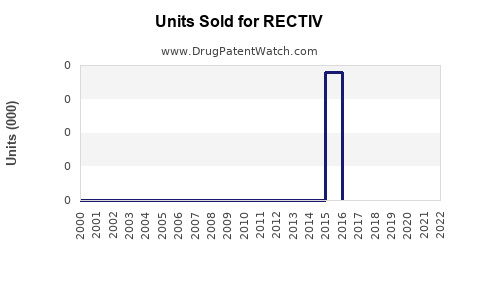
Annual Sales Revenues and Units Sold for RECTIV
| Drug Name | Revenues (USD) | Units | Year |
|---|---|---|---|
| RECTIV | ⤷ Start Trial | ⤷ Start Trial | 2022 |
| RECTIV | ⤷ Start Trial | ⤷ Start Trial | 2021 |
| RECTIV | ⤷ Start Trial | ⤷ Start Trial | 2020 |
| RECTIV | ⤷ Start Trial | ⤷ Start Trial | 2019 |
| >Drug Name | >Revenues (USD) | >Units | >Year |
RECTIV Market Analysis and Sales Projections: Nitroglycerin 0.4% Ointment
RECTIV is a prescription nitroglycerin 0.4% ointment approved in the United States for moderate-to-severe pain associated with chronic anal fissure. Its commercial opportunity is limited by a narrow indication, low treatment duration, physician preference for compounded calcium-channel blockers, and competition from surgery and botulinum toxin. Public sources do not disclose current RECTIV net sales, prescription volume, or a company-issued sales forecast. The most defensible outlook is a scenario-based estimate rather than a reported market forecast.
Under a U.S.-only framework, RECTIV has a low-revenue, niche-pharmaceutical profile. A branded RECTIV relaunch could support annual gross sales of approximately $5 million to $20 million under moderate adoption assumptions. A broader market-access strategy involving payer coverage, gastroenterology promotion, and international distribution could produce higher revenue, but the product’s limited treatment duration and generic-compounding alternatives constrain the ceiling.
What is RECTIV and what is it approved to treat?
RECTIV contains nitroglycerin 0.4% in an ointment formulation for topical intra-anal use. The FDA indication is treatment of moderate-to-severe pain associated with chronic anal fissure in adults. The labeled dose is a 1-inch strip of ointment applied intra-anally every 12 hours for up to three weeks or until pain resolves, whichever occurs first.[1]
| Attribute | RECTIV |
|---|---|
| Active ingredient | Nitroglycerin |
| Strength | 0.4% ointment |
| Dosage form | Topical intra-anal ointment |
| FDA indication | Pain associated with chronic anal fissure |
| Typical labeled course | Up to three weeks |
| FDA regulatory pathway | 505(b)(2) new drug application |
| U.S. NDA | NDA 022351 |
| Primary commercial use | Medical treatment before procedural intervention |
| Principal adverse-effect concern | Headache, including treatment-limiting headache |
| Key contraindications | Concomitant PDE-5 inhibitors and riociguat, among others |
RECTIV does not cure every underlying fissure. Its commercial value depends on its ability to reduce pain and support fissure healing while avoiding lateral internal sphincterotomy or other procedural treatment.
What is the current FDA and Orange Book status of RECTIV?
FDA records identify RECTIV as an approved prescription product under NDA 022351. The product’s commercial status must be distinguished from its regulatory approval status. FDA approval does not establish that the branded product is actively marketed, continuously supplied, or supported by a current commercial organization.
The FDA labeling record is the controlling source for indication, strength, dosing, warnings, and contraindications.[1] The Orange Book is the relevant source for listed patents, exclusivity, therapeutic-equivalence evaluations, and reference-product information.[2]
| Regulatory issue | Commercial implication |
|---|---|
| Approved NDA | Supports lawful prescription marketing if the product is commercially supplied |
| Narrow indication | Limits addressable patient volume |
| Short treatment course | Restricts annual prescription frequency per patient |
| No broad chronic-use indication | Reduces recurring revenue potential |
| Orange Book listing status | Determines whether listed patents create ANDA litigation exposure |
| Reference product status | Influences generic substitution and Abbreviated New Drug Application strategy |
There is no basis for treating RECTIV as a high-value protected specialty product without a current Orange Book review and evidence of active commercial distribution. Nitroglycerin is an old active ingredient, and the competitive value lies mainly in formulation, labeling, manufacturing, distribution, and physician adoption.
How large is the U.S. RECTIV market?
The addressable market is the subset of chronic anal-fissure patients who have clinically significant pain, seek medical treatment, receive a diagnosis, and are treated with a prescription topical product.
Anal fissure is commonly managed first with conservative measures and topical therapies. Guidelines from the American Society of Colon and Rectal Surgeons identify topical nitrates and topical calcium-channel blockers as medical treatment options. Botulinum toxin and surgery are used when medical therapy fails or when clinical severity warrants escalation.[3]
A practical U.S. market model is:
| Market layer | Estimated commercial relevance |
|---|---|
| All patients with anal fissure symptoms | Large but poorly monetized |
| Diagnosed chronic anal fissure patients | Smaller specialist-managed population |
| Patients with moderate-to-severe pain | Core RECTIV population |
| Patients receiving prescription topical therapy | Primary addressable market |
| Patients receiving branded RECTIV | Narrowest segment |
RECTIV competes against:
- Compounded topical diltiazem.
- Compounded topical nifedipine.
- Compounded nitroglycerin preparations.
- Botulinum toxin injection.
- Lateral internal sphincterotomy.
- Fissurectomy and related colorectal procedures.
- Supportive care, including stool softeners, fiber, and sitz baths.
Compounded calcium-channel blockers are the most important commercial substitute because they generally avoid the headache burden associated with nitroglycerin and are often viewed by colorectal specialists as effective medical therapy. Compounding pharmacies can also compete on price, although product quality, consistency, insurance coverage, and pharmacy access vary.
What are the key sales drivers for RECTIV?
RECTIV sales would depend on five variables.
Physician specialty adoption
The primary prescribers are colorectal surgeons, gastroenterologists, general surgeons, and selected primary-care physicians. A focused specialist strategy is more economically rational than broad primary-care promotion because chronic anal fissure is a relatively narrow diagnosis.
Payer coverage and patient out-of-pocket cost
A branded product can lose share rapidly when a compounded alternative is available at a materially lower price. Prior authorization, non-preferred formulary status, and high copay exposure would reduce prescription conversion.
Headache tolerability
Headache is a known limitation of topical nitroglycerin. Patients who discontinue because of headache may shift to diltiazem, nifedipine, botulinum toxin, or surgery. A commercial strategy would need clear patient-selection criteria and management guidance.
Product availability
A product with intermittent supply, limited pharmacy distribution, or uncertain wholesale availability cannot sustain prescription demand. For RECTIV, supply continuity is as important as clinical positioning because physicians can substitute compounded products.
Reimbursement and coding
The product’s commercial performance would benefit from predictable pharmacy-benefit coverage. If payers treat the product as non-preferred or require failed treatment with compounded therapy, the branded market would remain small.
What are RECTIV sales projections through 2030?
Public company filings and FDA records do not provide a verified current RECTIV sales base. The following projection is therefore an analyst scenario based on a potential U.S. relaunch or sustained commercial program, not reported historical revenue.
| Scenario | 2025 | 2026 | 2027 | 2028 | 2029 | 2030 |
|---|---|---|---|---|---|---|
| Low adoption | $1.5M | $2.0M | $2.5M | $3.0M | $3.5M | $4.0M |
| Base case | $3.0M | $4.5M | $6.5M | $8.5M | $10.5M | $12.0M |
| High adoption | $5.0M | $8.0M | $12.0M | $16.0M | $19.0M | $22.0M |
The base case assumes:
- U.S. commercial availability.
- Stable manufacturing and wholesale supply.
- Specialist-focused promotion.
- Moderate payer access.
- No major label expansion.
- Continued competition from compounded diltiazem and nifedipine.
- Average treatment duration of approximately two to three weeks.
- Limited repeat use because anal fissure treatment is episodic rather than chronic.
The high case would require a stronger reimbursement profile, reliable retail pharmacy fulfillment, evidence supporting faster pain reduction or healing, and limited generic or compounded substitution. The low case reflects continued product-access problems, weak payer coverage, or a commercial decision to leave the market supplied mainly by compounding pharmacies.
These projections should be interpreted as gross product sales rather than net sales. Net revenue would depend on rebates, specialty-pharmacy discounts, wholesaler deductions, patient assistance, and payer concessions.
How does RECTIV compare with compounded nitroglycerin and calcium-channel blockers?
| Treatment | Main commercial advantage | Main limitation | Impact on RECTIV |
|---|---|---|---|
| RECTIV | FDA-approved labeled product with standardized formulation | Cost and headache risk | Supports premium positioning if covered |
| Compounded nitroglycerin | Lower potential cost and local pharmacy access | Variable formulation and limited standardized evidence | Direct price competition |
| Compounded diltiazem | Lower headache burden and common specialist use | Compounding dependence and variable access | Major substitute |
| Compounded nifedipine | Alternative calcium-channel blocker approach | Compounding dependence | Major substitute |
| Botulinum toxin | Option after failed topical therapy | Procedure, cost, and repeat treatment | Escalation competitor |
| Surgery | High definitive-treatment potential | Operative risk and irreversible sphincter concerns | Limits long-term medical-treatment demand |
Guideline positioning favors a stepwise market. Medical treatment generally precedes invasive therapy, giving RECTIV a role in the initial prescription market. The product does not control the full anal-fissure treatment pathway because patients can move quickly to compounded therapy, botulinum toxin, or surgery.[3]
What patent and regulatory exclusivity protect RECTIV?
RECTIV’s active ingredient is not commercially differentiated by molecular novelty. Any meaningful intellectual-property value would be associated with the specific 0.4% ointment formulation, manufacturing process, delivery characteristics, or approved method of use.
The key legal questions are:
- Whether the Orange Book lists unexpired patents for NDA 022351.
- Whether any listed patents cover the formulation rather than nitroglycerin itself.
- Whether an ANDA applicant would need to certify under Paragraph IV.
- Whether any patent litigation or settlement restricts generic entry.
- Whether the reference product remains commercially available for substitution and ANDA development.
Because FDA approval and patent protection are separate systems, an approved RECTIV product may have little or no remaining market exclusivity. FDA Orange Book data should be used for the current patent listing and expiration analysis.[2]
Paragraph IV and generic entry risk
A Paragraph IV certification would assert that a listed patent is invalid, unenforceable, or not infringed. If a qualifying Paragraph IV notice were filed, the NDA holder could bring litigation within the statutory period, potentially triggering a 30-month stay of approval under the Hatch-Waxman framework.[4]
The practical generic-entry risk appears structurally high for an old active ingredient and a narrow topical indication, particularly if the product has no current unexpired formulation patent listed in the Orange Book. Even without an approved generic, compounding pharmacies can create an economically similar substitute.
What patent litigation or settlement agreements affect RECTIV?
No high-value, widely reported patent litigation or settlement agreement should be assumed to protect RECTIV’s market without a current docket and Orange Book review. Public commercial analysis should separate:
- Patent litigation involving nitroglycerin generally.
- Litigation involving other nitroglycerin dosage forms.
- Litigation involving unrelated anal-fissure products.
- Litigation involving the specific RECTIV NDA.
A settlement involving another nitroglycerin product would not automatically restrict RECTIV competition. The relevant legal record is the NDA-specific patent listing, ANDA litigation, court docket, and any enforceable settlement terms.
What manufacturing and intellectual-property barriers affect RECTIV?
Manufacturing barriers are moderate rather than high. Nitroglycerin is an established active ingredient, but topical products require controlled handling, uniform potency, packaging compatibility, stability testing, and manufacturing controls for a potentially hazardous explosive compound.
A prospective manufacturer would need to address:
- Nitroglycerin containment and occupational safety.
- Homogeneous distribution in the ointment base.
- Dose uniformity across the tube.
- Stability and packaging compatibility.
- Microbial and preservative controls.
- Scale-up under current good manufacturing practice.
- Bioequivalence or alternative approval requirements.
- Product-specific labeling and risk management.
These requirements can deter small generic manufacturers, but they do not create the same barrier as a complex biologic, inhaled product, long-acting injectable, or device-based delivery system.
What is the competitive outlook for RECTIV?
RECTIV has a defensible clinical role but a weak-to-moderate commercial moat.
| Factor | Assessment |
|---|---|
| Clinical need | Moderate |
| Patient population | Narrow |
| Active-ingredient differentiation | Low |
| Formulation differentiation | Moderate |
| Reimbursement leverage | Low to moderate |
| Generic risk | Moderate to high |
| Compounding substitution | High |
| Manufacturing complexity | Moderate |
| Pricing power | Low |
| Long-term revenue visibility | Low |
The most credible commercial strategy is a focused, low-overhead model aimed at colorectal surgeons and gastroenterologists. A high-priced specialty-pharmacy strategy would face resistance unless supported by superior coverage, strong patient services, or clinical evidence showing an advantage over compounded calcium-channel blockers.
What generic launch scenarios exist for RECTIV?
Scenario 1: No approved generic, continued compounding competition
This scenario produces the strongest potential branded position but still limits pricing power. RECTIV would retain value as the standardized, FDA-approved product while competing against lower-cost compounded alternatives.
Scenario 2: First approved generic topical nitroglycerin
A generic could rapidly reduce branded prescriptions if it receives substitutable status and obtains broad pharmacy distribution. Brand revenue could decline by 50% to 80% within two to three years, depending on payer substitution and price discounting.
Scenario 3: Multiple generic entrants
Multiple entrants would likely convert the market into a low-margin product category. Brand retention would depend on physician loyalty, insurance restrictions, supply reliability, and any meaningful formulation or packaging advantage.
Key Takeaways
- RECTIV is an FDA-approved nitroglycerin 0.4% ointment for pain associated with chronic anal fissure.
- Its commercial market is narrow and treatment is generally short term.
- Compounded diltiazem and nifedipine are major substitutes and can limit branded pricing.
- Public sources do not disclose a reliable current RECTIV revenue base.
- A U.S. relaunch or sustained commercial program supports an estimated base-case gross-sales range of $3 million in 2025 rising to approximately $12 million by 2030.
- The high case reaches about $22 million in 2030 but requires strong payer access, stable supply, and specialist adoption.
- Nitroglycerin is an old active ingredient, so formulation and regulatory execution are more important than molecule-level exclusivity.
- Generic and compounding risk is structurally high.
- Patent value depends on the current Orange Book listing for NDA 022351 and any unexpired formulation or method-of-use claims.
- RECTIV is better characterized as a niche specialty prescription product than as a scalable growth asset.
FAQs
Is RECTIV still available by prescription?
RECTIV has an FDA approval record, but regulatory approval does not establish continuous commercial availability. Pharmacy-level availability and current marketing status determine whether physicians can obtain the branded product.
Is RECTIV more effective than compounded diltiazem?
Both are used as medical treatments for chronic anal fissure. Comparative selection depends on healing response, headache tolerability, physician preference, patient access, and cost. Compounded diltiazem is often commercially attractive because it may have lower headache risk.
Can pharmacies automatically substitute a generic for RECTIV?
Automatic substitution depends on FDA therapeutic-equivalence status, state pharmacy law, and the specific approved generic product. A compounded preparation is not automatically equivalent to an FDA-approved product.
Does RECTIV have orphan-drug exclusivity?
Anal fissure is not generally treated as an orphan indication for RECTIV, and the product’s commercial protection should be evaluated through its NDA, Orange Book listings, and any applicable regulatory exclusivity rather than assumed orphan status.
What would make RECTIV commercially valuable to a specialty-pharma buyer?
The strongest value drivers would be confirmed commercial availability, a clean and durable Orange Book position, reliable manufacturing, favorable payer coverage, physician demand, and evidence that the standardized product improves adherence or outcomes relative to compounded alternatives.
References
-
U.S. Food and Drug Administration. (2007). RECTIV (nitroglycerin) ointment 0.4% prescribing information. FDA.
-
U.S. Food and Drug Administration. (2024). Approved drug products with therapeutic equivalence evaluations: Orange Book. FDA.
-
The American Society of Colon and Rectal Surgeons. (2023). Clinical practice guidelines for the management of anal fissures. Diseases of the Colon & Rectum.
-
U.S. Congress. (1984). Drug Price Competition and Patent Term Restoration Act of 1984, Pub. L. No. 98-417.
More… ↓
