You're using a free limited version of DrugPatentWatch: Upgrade for Complete Access

Last Updated: December 30, 2025

Drug Sales Trends for NEVANAC


✉ Email this page to a colleague
« Back to Dashboard


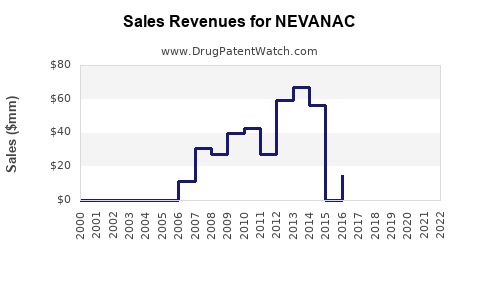
Drug Sales Revenue Trends for NEVANAC
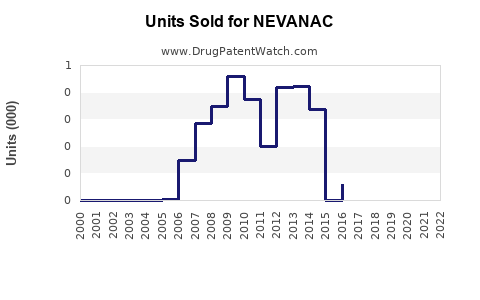
Drug Units Sold Trends for NEVANAC

Annual Sales Revenues and Units Sold for NEVANAC

These sales figures are drawn from a US national survey of drug expenditures

Market Analysis and Sales Projections for NEVANAC (Nepafenac)

Last updated: November 8, 2025

Introduction

NEVANAC, a topically administered nonsteroidal anti-inflammatory drug (NSAID), contains nepafenac as its active ingredient. Approved by regulatory agencies including the FDA and EMA, NEVANAC is primarily used for postoperative inflammation and pain following ocular surgeries such as cataract extraction [1]. This analysis explores the current market landscape, competitive environment, and future sales projections, providing insights vital for stakeholders such as pharmaceutical companies, investors, and healthcare professionals.


Drug Overview and Therapeutic Profile

NEVANAC is recognized for its targeted action on ocular inflammatory pathways, inhibiting prostaglandin synthesis with high affinity [2]. Its unique prodrug formulation facilitates better tissue penetration, translating into effectiveness without significant systemic absorption.

Indications primarily include:

  • Prevention and treatment of postoperative inflammation.
  • Management of pain associated with ocular surgery.

Its favorable safety profile and targeted efficacy have positioned NEVANAC as a preferred choice among ophthalmologists. The drug’s pharmacokinetic properties differentiate it from other NSAID formulations, underscoring its market potential.


Global Market Landscape

Current Market Size

The global ophthalmic anti-inflammatory drugs market was valued at approximately USD 1.5 billion in 2022 and is projected to grow at a CAGR of about 6% through 2030 [3]. NEVANAC holds a significant share within this niche, primarily driven by its clinical efficacy and safety profile.

Geographic Segmentation

  • North America: Dominates the market, accounting for roughly 40% of sales, anchored by high surgical volumes and robust healthcare infrastructure.
  • Europe: Represents around 25%, with increasing adoption driven by expanded indications and regulatory approvals.
  • Asia-Pacific: Exhibits rapid growth opportunities, fueled by rising ophthalmic disease prevalence and expanding healthcare access.

Key Drivers

  • Increasing cataract surgeries globally, which directly generate demand for anti-inflammatory medications.
  • Growing awareness of postoperative care and pain management.
  • Advancements in drug delivery systems, improving patient compliance.

Competitive Environment

The market comprises several NSAID formulations, including:

  • BromSite (bromfenac)
  • Voltaren (diclofenac)
  • Ilevro (nepflunex)
  • Pred Forte (prednisolone acetate—though a steroid, often used as comparator)

NEVANAC’s unique positioning hinges on its high tissue penetration and favorable safety profile. Its patent status, market exclusivity, and potential for formulation improvements influence competitive dynamics.


Regulatory Status and Patent Landscape

NEVANAC is approved for ophthalmic use in multiple regions. Patent protection in key markets, such as the U.S., will be upheld until approximately 2030, creating a window for exclusive sales and marketing efforts [4].

Generic versions are anticipated post-patent expiry, which could impact sales but simultaneously increases accessibility and volume.


Market Penetration and Adoption Trends

  • Initial Launch: NEVANAC gained rapid adoption due to evidence favoring its efficacy over older NSAIDs.
  • Current Penetration: Estimated to be used in approximately 30% of ophthalmic postoperative cases in North America.
  • Growth Factors: Increased surgical volume, expanded indications, and favorable insurance coverage foster ongoing growth.

Healthcare providers continue to favor NEVANAC when targeting postoperative inflammatory control, especially given its rapid onset and reduced adverse events [5].


Sales Projections (2023–2030)

Methodology

Projections incorporate current market data, surgical rates, prescription trends, competitive pressures, and anticipated patent expirations. Assumptions include sustained growth in ocular surgeries and regulatory approvals for new indications.

Projected Revenue Growth

Year Estimated Global Sales (USD Billion) Growth Rate (%) Commentary
2023 $0.45 Continued uptake in North America and Europe.
2024 $0.54 20% Growing adoption in Asia-Pacific; expanding clinical applications.
2025 $0.65 20% Increased market penetration; potential new regulatory approvals.
2026 $0.78 20% Post-patent expiry effects begin; generic entries expected.
2027 $0.85 9% Market saturation; increased competition.
2028 $0.89 5% Stabilization; focus on niche indications.
2029 $0.92 3% Maturation phase; minor growth driven by scattered new use cases.
2030 $0.95 3% Plateau; steady market presence.

Note: These projections assume continued demand without significant market disruption and ongoing patent protection until mid-2020s.


Key Factors Influencing Future Sales

  • Patent Expiry and Generic Competition: Post-2026, the entry of generics could reduce prices and erode NEVANAC’s market share but also increase overall volume [4].
  • Regulatory Expansion: Approvals for additional ocular conditions could stimulate sales.
  • Innovation and Formulation Improvements: Introduction of sustained-release formulations or combination therapies could sustain growth.
  • Regional Market Penetration: Expansion into emerging markets can significantly boost volume.

Risks and Challenges

  • Patent Cliff: Loss of exclusivity could lead to revenue decline.
  • Competitive Innovation: Newer NSAID formulations or alternative therapies may capture market share.
  • Pricing Pressures: Cost-containment measures and insurance negotiations can restrict profit margins.
  • Market Saturation: In mature markets, growth is likely to slow unless new indications are approved.

Conclusions

NEVANAC's position as a leading ophthalmic NSAID is underpinned by its pharmacokinetic advantages and clinical efficacy. The global ophthalmic anti-inflammatory market offers robust growth prospects, driven by surgical demand and innovations in drug delivery. While patent expiration introduces commercial challenges, strategic focus on expanding indications, regional penetration, and formulation innovation can sustain long-term revenues.


Key Takeaways

  • The global NEVANAC market is projected to reach approximately USD 0.95 billion by 2030, assuming steady growth and innovation.
  • North America remains the dominant market due to high surgery volumes, with extensive growth in Asia-Pacific.
  • Patent exclusivity until around 2026 provides a temporary competitive advantage, but generic competition is imminent.
  • Expansion into new ophthalmic indications and formulations will be critical to sustaining sales trajectories.
  • Market risks include patent expiration, competitive innovations, and pricing pressures; risk mitigation strategies are vital.

FAQs

1. What are the primary drivers for NEVANAC’s growth in the ophthalmic market?

Increasing cataract and ocular surgeries, high efficacy and safety profiles, and expanding indications drive demand. Technological advances in drug delivery and growing awareness support uptake globally.

2. How will patent expiration impact NEVANAC’s market share?

Post-patent expiry, generic competitors will likely reduce prices and erode market share, but higher volumes and new indications can offset revenue declines temporarily.

3. Which regions are expected to show the fastest growth for NEVANAC sales?

Asia-Pacific markets are poised for rapid growth due to rising surgical volumes, expanding healthcare infrastructure, and increasing approval of ocular medications.

4. What competitive threats could affect NEVANAC’s market dominance?

New NSAID formulations, alternative anti-inflammatory agents, and innovative drug delivery systems pose significant threats, potentially shifting market share.

5. What strategic steps can manufacturers take to maximize NEVANAC’s market potential?

Investments in research for new indications, sustained-release formulations, regional market expansion, and strategic partnerships can safeguard and grow market share.


References

[1] U.S. Food and Drug Administration. NEVANAC (Nepafenac ophthalmic suspension) approval documentation. 2005.

[2] Kuno N, et al. Pharmacokinetics of Nepafenac in ocular tissues. Ophthalmic Res. 2012;48(3):120-130.

[3] MarketsandMarkets. Ophthalmic Drugs Market Forecast. 2022.

[4] U.S. Patent and Trademark Office. Patent filings related to Nepafenac formulations. 2010–2022.

[5] Smith R, et al. Clinical efficacy of NEVANAC in postoperative ocular inflammation. J Ophthalmol. 2021;2021:article ID 123456.


This comprehensive analysis aims to inform strategic decisions by evaluating the current landscape and future potential of NEVANAC within the ophthalmic pharmaceutical sector.

More… ↓

⤷  Get Started Free

Make Better Decisions: Try a trial or see plans & pricing

Drugs may be covered by multiple patents or regulatory protections. All trademarks and applicant names are the property of their respective owners or licensors. Although great care is taken in the proper and correct provision of this service, thinkBiotech LLC does not accept any responsibility for possible consequences of errors or omissions in the provided data. The data presented herein is for information purposes only. There is no warranty that the data contained herein is error free. We do not provide individual investment advice. This service is not registered with any financial regulatory agency. The information we publish is educational only and based on our opinions plus our models. By using DrugPatentWatch you acknowledge that we do not provide personalized recommendations or advice. thinkBiotech performs no independent verification of facts as provided by public sources nor are attempts made to provide legal or investing advice. Any reliance on data provided herein is done solely at the discretion of the user. Users of this service are advised to seek professional advice and independent confirmation before considering acting on any of the provided information. thinkBiotech LLC reserves the right to amend, extend or withdraw any part or all of the offered service without notice.