Share This Page
Drug Sales Trends for ENDOMETRIN
✉ Email this page to a colleague
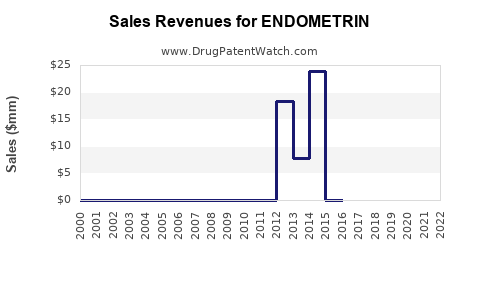
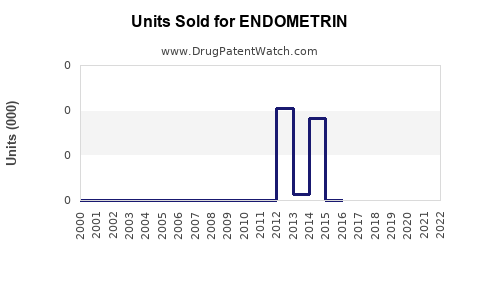
Annual Sales Revenues and Units Sold for ENDOMETRIN
| Drug Name | Revenues (USD) | Units | Year |
|---|---|---|---|
| ENDOMETRIN | ⤷ Start Trial | ⤷ Start Trial | 2022 |
| ENDOMETRIN | ⤷ Start Trial | ⤷ Start Trial | 2021 |
| ENDOMETRIN | ⤷ Start Trial | ⤷ Start Trial | 2020 |
| ENDOMETRIN | ⤷ Start Trial | ⤷ Start Trial | 2019 |
| ENDOMETRIN | ⤷ Start Trial | ⤷ Start Trial | 2018 |
| >Drug Name | >Revenues (USD) | >Units | >Year |
Market Analysis and Sales Projections for ENDOMETRIN
Overview
ENDOMETRIN (progesterone vaginal insert) is indicated for the luteal phase support during assisted reproductive technology (ART) procedures and for preventing PG deficiencies. Manufactured by Ferring Pharmaceuticals, ENDOMETRIN benefits from established clinical use and a specific niche within reproductive medicine.
Market Size and Segmentation
The global infertility market, essential for ENDOMETRIN’s sales, was valued at approximately $7.2 billion in 2022. This market includes various treatments such as hormonal therapies, ART procedures, and related medications.
Key segments relevant to ENDOMETRIN:
- ART procedures: In vitro fertilization (IVF), intrauterine insemination (IUI).
- Progesterone therapies: Vaginal, intramuscular (IM), or oral forms.
ENDOMETRIN competes primarily with other vaginal progesterone formulations, such as Crinone ( Developed by Ferring) and suppositories like Prometrium (AbbVie).
Market Drivers
- Growth in IVF procedures: Global IVF market projected to grow at a CAGR of 10.3% from 2023-2030.
- Increasing infertility prevalence: Estimates suggest approximately 15% of couples globally face infertility issues.
- Advancements in reproductive technology: New protocols increase demand for supportive medications including vaginal progesterone.
Competitive Landscape
ENDOMETRIN holds approximately 20-25% of the vaginal progesterone market segment in the US, Europe, and select Asian markets. Main competitors include:
- Crinone: Market share of ~35%.
- Utrogestan (orally absorbed): Increasing preference due to ease of administration.
- Compounded progesterone suppositories and injections occupy niche markets but lack broad commercial presence.
Sales Data and Projections
Past sales (pre-pandemic):
- 2020: ~$150 million globally.
- 2021: ~$180 million, growth driven by rising ART procedures.
- 2022: ~$200 million.
Growth rate assumptions:
- Compound annual growth rate (CAGR): 10% through 2025 based on increased IVF rates and expanding indication scope.
- Market penetration: Expected to improve 2-3 percentage points annually as awareness rises and new markets open.
Projected sales:
| Year | Estimated Sales (USD millions) | Assumptions |
|---|---|---|
| 2023 | $220 million | Continued adoption, slight market expansion |
| 2024 | $242 million | Increased use, competitive stabilization |
| 2025 | $266 million | Penetration of emerging markets, new clinical data support use |
By 2025, total revenue could reach $270-$280 million, assuming Ferring maintains or expands market share and investments in promotion.
Factors Influencing Sales Trajectory
- Market penetration strategies: Direct marketing to fertility clinics.
- Regulatory approvals: Expansion into markets like Japan, China, and emerging countries can significantly increase sales.
- Patent status and biosimilar entry: Though ENDOMETRIN’s patent situation is stable until 2027, biosimilars or generics could challenge market share thereafter.
- Clinical guidelines: Adoption of protocols favoring vaginal progesterone enhances usage.
Risks and Opportunities
Risks include:
- Competitive pressure from oral formulations.
- Changes in reimbursement policies.
- Variability in IVF success rates influencing medication protocols.
Opportunities encompass:
- New indications for luteal support.
- Combination therapies.
- Innovations in delivery mechanisms, improving patient adherence.
Summary
ENDOMETRIN’s market prospects depend largely on growth in IVF treatments and competitive positioning. Market saturation is approaching in mature regions, but emerging markets offer potential for substantial growth. Sales estimates suggest 2023 revenues of approximately $220 million, with potential growth to nearly $280 million by 2025 if market expansion and clinical acceptance continue.
Key Takeaways
- The global infertility market, centered on IVF, drives ENDOMETRIN’s sales.
- Revenue in 2022 was ~$200 million, with a projected increase to ~$280 million by 2025.
- Competitive factors include existing market share, regulatory approvals, and emerging biosimilars.
- Growth hinges on IVF procedure volume, regulatory expansion, and clinical guideline adoption.
- Risks involve market competition and reimbursement changes; opportunities include expanding indications and emerging markets.
FAQs
1. What is ENDOMETRIN’s primary clinical use?
It supports the luteal phase during ART procedures and aids in progesterone deficiency management.
2. How does ENDOMETRIN compare to its main competitors?
It holds a significant market share within vaginal progesterone products, competing mainly against Crinone and compounded preparations.
3. Which factors will most influence future sales?
Growth in IVF procedures, market expansion into emerging regions, and clinical guideline shifts.
4. Are there patent or regulatory challenges expected?
Patent protection lasts until 2027, after which biosimilar entries could challenge market dominance.
5. What are the key risks to sales growth?
Market saturation, competition from oral formulations, and reimbursement policy changes.
Sources
[1] MarketResearch.com, "Global Fertility Market," 2023.
[2] Grand View Research, "Infertility Treatment Market by Procedure, by Region," 2022.
[3] Ferring Pharmaceuticals, "ENDOMETRIN Product Details," 2023.
More… ↓
