Share This Page
Drug Sales Trends for clarithromycin
✉ Email this page to a colleague
Payment Methods and Pharmacy Types for clarithromycin (2007)
Revenues by Pharmacy Type
Units Sold by Pharmacy Type
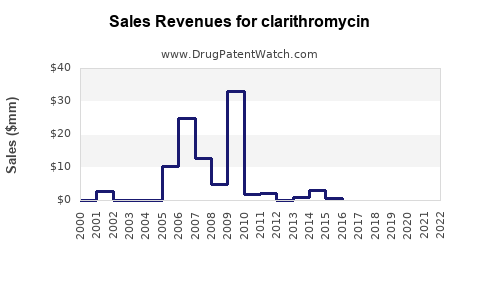
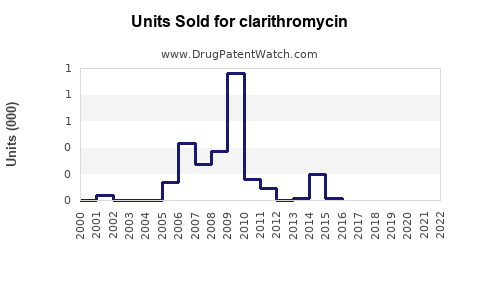
Annual Sales Revenues and Units Sold for clarithromycin
| Drug Name | Revenues (USD) | Units | Year |
|---|---|---|---|
| CLARITHROMYCIN | ⤷ Start Trial | ⤷ Start Trial | 2022 |
| CLARITHROMYCIN | ⤷ Start Trial | ⤷ Start Trial | 2021 |
| CLARITHROMYCIN | ⤷ Start Trial | ⤷ Start Trial | 2020 |
| >Drug Name | >Revenues (USD) | >Units | >Year |
Clarithromycin Market Analysis and Sales Projections Through 2030
Clarithromycin is a mature macrolide antibiotic with broad generic availability, limited patent protection, and declining long-term revenue potential in high-income markets. Global demand remains supported by respiratory infections, Helicobacter pylori eradication, atypical mycobacterial disease, pediatric formulations, and hospital procurement in emerging markets. The commercial outlook is volume-stable but price-sensitive.
A base-case market model estimates global clarithromycin product revenue at approximately $850 million in 2024, declining to about $730 million by 2030. The implied compound annual growth rate is approximately negative 2.5%. Growth in Asia-Pacific, Latin America, and selected Middle Eastern markets is expected to offset continued price erosion and substitution by azithromycin, amoxicillin-based regimens, doxycycline, and newer respiratory antibiotics.
What is the current market position of clarithromycin?
Clarithromycin is a semisynthetic macrolide antibiotic marketed in immediate-release tablets, extended-release tablets, oral suspension, and intravenous formulations. The original branded product, Biaxin, was developed by Abbott Laboratories. Generic clarithromycin is now supplied by multiple manufacturers, including major generic companies and regional pharmaceutical producers.
Its principal approved or established uses include:
- Community-acquired pneumonia
- Acute bacterial exacerbations of chronic bronchitis
- Acute maxillary sinusitis
- Pharyngitis and tonsillitis
- Uncomplicated skin and skin-structure infections
- Disseminated or localized Mycobacterium avium complex infection
- Helicobacter pylori eradication in combination regimens
- Certain pediatric respiratory infections
The FDA label identifies clarithromycin as a macrolide antibacterial and describes immediate-release, extended-release, and oral suspension dosage forms.[1]
The drug has a weaker commercial position than azithromycin in routine outpatient respiratory care because azithromycin offers more convenient dosing, fewer daily administrations, and broader physician familiarity. Clarithromycin retains value where drug-drug interaction profiles, H. pylori treatment protocols, or atypical mycobacterial indications influence prescribing.
How large is the clarithromycin market?
Public market reports do not use a consistent definition of the clarithromycin market. Some count active pharmaceutical ingredient sales, while others count finished-dose products, hospital tenders, branded combinations, or broader macrolide revenue. Reported estimates therefore vary materially.
A practical market definition includes finished-dose clarithromycin products sold through retail, hospital, tender, and institutional channels. Under that definition, the estimated global market is:
| Metric | 2024 estimate | 2030 base case | 2024-2030 trend |
|---|---|---|---|
| Global finished-dose revenue | $850 million | $730 million | -2.5% CAGR |
| Global unit demand | 100 index | 105 index | Approximately 0.8% CAGR |
| Average realized price | 100 index | 82 index | Approximately -3.2% CAGR |
| Generic share of units | 90%-95% | 94%-97% | Rising |
| Branded share of revenue | 10%-15% | 5%-8% | Declining |
These figures are an analytical market model rather than reported manufacturer sales. The model assumes stable global treatment volumes, continuing generic price erosion, modest growth in emerging markets, and gradual substitution in developed markets.
Regional market split
| Region | Estimated 2024 share | Market direction through 2030 | Commercial drivers |
|---|---|---|---|
| Asia-Pacific | 40%-45% | Low growth to moderate growth | Population, generic manufacturing, respiratory demand |
| Europe | 20%-25% | Declining | Stewardship controls, tender pricing, macrolide resistance |
| North America | 15%-20% | Declining | Generic substitution and lower outpatient use |
| Latin America | 8%-12% | Stable to low growth | Retail pharmacy access and branded generics |
| Middle East and Africa | 8%-10% | Stable to moderate growth | Institutional procurement and infectious-disease demand |
Asia-Pacific is the largest commercial region because of manufacturing capacity, broad generic availability, and continued use in retail and hospital markets. China and India are important both as consuming markets and as sources of active pharmaceutical ingredient and finished-dose supply.
What are the clarithromycin sales projections through 2030?
The base-case forecast assumes that the market remains a high-volume, low-margin generic category. Revenue declines despite modest unit growth because price reductions exceed demand expansion.
| Year | Base-case revenue | Low case | High case |
|---|---|---|---|
| 2024 | $850 million | $750 million | $950 million |
| 2025 | $830 million | $715 million | $970 million |
| 2026 | $810 million | $680 million | $990 million |
| 2027 | $790 million | $650 million | $1.01 billion |
| 2028 | $770 million | $620 million | $1.03 billion |
| 2029 | $750 million | $590 million | $1.05 billion |
| 2030 | $730 million | $560 million | $1.07 billion |
What drives the base-case projection?
The base case uses four principal assumptions:
- Global unit demand grows by less than 1% annually.
- Generic price erosion averages 3% to 4% annually in competitive markets.
- Emerging-market demand offsets part of the decline in North America and Europe.
- H. pylori treatment remains an important use, but clarithromycin resistance limits first-line prescribing in many regions.
The high case requires stronger volume growth in Asia-Pacific, continuing use of clarithromycin in H. pylori regimens, and less rapid substitution by azithromycin and doxycycline. The low case reflects tighter antimicrobial-stewardship policies, increased resistance, lower hospital procurement, and aggressive tender pricing.
Which therapeutic uses contribute the most clarithromycin revenue?
H. pylori eradication and respiratory infections account for the largest commercial demand pools, but their value profiles differ.
| Indication | Commercial importance | Market outlook |
|---|---|---|
| H. pylori eradication | High | Stable in volume, pressured by resistance |
| Community-acquired pneumonia | High | Mature and price-sensitive |
| Bronchitis and sinusitis | Moderate | Declining in stewardship-focused markets |
| Pediatric respiratory infections | Moderate | Stable in liquid formulations |
| Mycobacterium avium complex | Smaller volume, higher value | Niche and relatively durable |
| Hospital intravenous use | Smaller volume | Dependent on institutional protocols |
Clarithromycin remains relevant in H. pylori therapy, but treatment guidelines increasingly condition clarithromycin-containing regimens on local or patient-specific susceptibility. The American College of Gastroenterology's 2024 guideline recommends avoiding empiric clarithromycin-containing triple therapy when susceptibility is unknown or when prior macrolide exposure is present.[2]
This shift creates a structural ceiling on clarithromycin demand in gastrointestinal medicine. It does not eliminate demand because susceptibility-guided therapy and regions with lower resistance continue to support use.
How does clarithromycin compare with competing antibiotics?
Clarithromycin versus azithromycin
Azithromycin is the strongest direct commercial substitute in outpatient respiratory infections. Its once-daily dosing and shorter treatment courses support stronger physician preference. Clarithromycin remains competitive in selected H. pylori protocols and certain atypical mycobacterial regimens.
Clarithromycin versus amoxicillin
Amoxicillin is less exposed to macrolide resistance and remains a core component of H. pylori therapy and many respiratory treatment protocols. It is usually lower priced and has a wider generic manufacturing base.
Clarithromycin versus doxycycline
Doxycycline is increasingly used in adult respiratory infections and has become a cost-effective alternative in several stewardship settings. It does not fully replace clarithromycin in pediatric patients or all atypical pathogen indications.
Clarithromycin versus newer agents
Newer respiratory antibiotics, including lefamulin and omadacycline, address selected resistant or complicated infections but carry substantially higher prices. They are unlikely to displace generic clarithromycin broadly because of cost and restricted use.
What patents protect clarithromycin?
The original clarithromycin composition and core use patents have expired. Clarithromycin is not a patent-protected innovative product in the United States or major European markets.
| IP category | Current status |
|---|---|
| Original active ingredient protection | Expired |
| Original Biaxin product protection | Expired |
| Basic oral tablet protection | Expired |
| Extended-release formulation patents | Expired or commercially immaterial in most markets |
| Method-of-use patents | No material blocking estate identified for routine current use |
| Manufacturing process patents | Potentially relevant to individual suppliers, but not a broad market barrier |
| Combination-product patents | May exist in specific jurisdictions, but do not broadly protect clarithromycin |
The relevant commercial question is therefore not whether a single patent blocks generic entry. It is whether a supplier can meet regulatory, quality, manufacturing, and tender requirements at a competitive cost.
What is the FDA regulatory and Orange Book status of clarithromycin?
FDA-approved clarithromycin products are primarily generic products rather than new branded products. The Orange Book lists approved abbreviated new drug applications for clarithromycin dosage forms, including tablets, extended-release tablets, and oral suspension.[3]
Key regulatory characteristics include:
- ANDA-based generic competition
- Multiple approved strengths and dosage forms
- No current U.S. new-drug exclusivity period for the active ingredient
- No meaningful biosimilar pathway because clarithromycin is a small-molecule drug
- Bioequivalence requirements for oral products
- Additional manufacturing and stability requirements for extended-release products
- Pediatric formulation requirements for oral suspension products
Biosimilar risk is not applicable. Competitive risk comes from conventional generic manufacturers, authorized generics, branded generics, and therapeutic substitutes.
When did clarithromycin lose exclusivity?
The commercial exclusivity period for the original Biaxin product ended years ago. Generic entry occurred after expiration of the relevant compound and product protections, and clarithromycin is now a mature multisource product.
The original product's loss of exclusivity produced the standard pattern for a mature oral antibiotic:
- Rapid generic entry.
- Sharp reduction in average selling price.
- Migration from branded prescriptions to generic prescriptions.
- Consolidation among distributors and large buyers.
- Continued demand in institutional and emerging markets.
- Greater revenue dependence on manufacturing scale and supply reliability.
No current patent expiry date is expected to create a major new generic-entry event because the market is already genericized.
Are Paragraph IV challenges still relevant for clarithromycin?
Paragraph IV litigation is not a material current market issue for the core clarithromycin product. The original generic-entry disputes are historical, and the drug has multiple approved generic suppliers.
Paragraph IV risk could still arise for:
- A newly developed extended-release formulation
- A novel fixed-dose combination
- A proprietary delivery system
- A new pediatric or abuse-deterrent formulation
- A newly patented method of use
Those products would require separate patent and regulatory analysis. They would not restore broad exclusivity to ordinary clarithromycin tablets, capsules, or suspension.
What formulations are commercially protected?
No broadly enforceable formulation estate appears to protect standard clarithromycin products in the current market. Commercial differentiation is more likely to arise from regulatory approvals, supply contracts, packaging, taste-masking, manufacturing yield, and distribution reach.
The most commercially relevant dosage forms are:
- 250 mg and 500 mg immediate-release tablets
- Extended-release tablets
- Granules or powder for oral suspension
- Intravenous formulations
- Fixed-dose H. pylori combinations
Extended-release products may have historically supported greater differentiation because of formulation complexity. That advantage has diminished as generic manufacturers developed competing products and as physicians continued to use lower-cost immediate-release formulations.
What manufacturing and intellectual-property barriers affect clarithromycin?
Clarithromycin is not difficult to sell because of patent barriers. It can be difficult to manufacture consistently at low cost.
Key barriers include:
- Control of impurity profiles
- Consistent polymorph and solid-state characteristics
- Macrolide-related degradation products
- Taste masking for pediatric suspension
- Extended-release dissolution performance
- API supply qualification
- Compliance with FDA, European Medicines Agency, and local GMP requirements
- Reliable cold-chain or controlled distribution where required by product specifications
- Tender qualification and pharmacovigilance infrastructure
Manufacturers with vertically integrated API and finished-dose operations have a cost advantage. Contract manufacturers can compete in low-regulation markets but face greater exposure to inspections, recalls, and procurement exclusions.
Which companies compete in the clarithromycin market?
The competitive landscape includes:
- Large generic manufacturers with FDA-approved ANDAs
- Indian and Chinese API suppliers
- European generic companies
- Regional branded-generic companies
- Hospital-focused injectable manufacturers
- Contract manufacturers supplying private-label products
The leading commercial differentiator is not ownership of a blocking patent. It is the ability to maintain supply, pass regulatory inspections, win tenders, and offer multiple strengths and dosage forms.
Supplier concentration can increase temporarily when manufacturing deviations, API shortages, regulatory actions, or plant closures remove low-cost capacity. Those events can lift prices, but the effect is usually temporary because other generic manufacturers can enter or expand supply.
What litigation and settlement agreements affect clarithromycin?
No current high-value patent litigation or settlement agreement is expected to materially affect the ordinary clarithromycin market. Historic litigation related to Biaxin and generic entry has limited present-day commercial relevance.
Future disputes are more likely to involve:
- Product liability
- Antitrust claims relating to generic contracting
- GMP enforcement
- Labeling and safety issues
- Formulation-specific patents
- H. pylori combination products
- Distribution or supply agreements
The absence of a major active patent dispute reduces legal uncertainty for generic suppliers but also limits opportunities for premium pricing.
What revenue exposure do pharmaceutical companies have?
For most diversified manufacturers, clarithromycin is a minor product. It rarely represents a material share of corporate revenue unless the company has a concentrated portfolio of antibiotics or operates primarily in emerging-market branded generics.
Revenue exposure is highest for:
- Regional antibiotic companies
- API producers
- Hospital injectable suppliers
- Pediatric suspension manufacturers
- Companies with H. pylori combination brands
- Distributors serving markets with limited antibiotic substitution
A reasonable commercial classification is:
| Supplier type | Revenue exposure | Main risk |
|---|---|---|
| Diversified multinational | Low | Portfolio rationalization |
| Large generic company | Low to moderate | Price erosion |
| Regional branded-generic company | Moderate | Prescriber substitution |
| API manufacturer | Moderate | Customer concentration and inspections |
| Small antibiotic specialist | High | Tender loss or supply disruption |
What generic launch scenarios exist for clarithromycin?
A new entrant would face low legal barriers but high economic competition. The most viable launch strategies are:
Immediate-release tablets
This is the lowest-risk regulatory route but also the most commoditized. Success depends on manufacturing cost, distribution, and contract access.
Oral suspension
Pediatric suspension can support better margins than standard tablets if the product has favorable taste, stable reconstitution characteristics, and reliable pharmacy distribution.
Extended-release tablets
This route offers greater product differentiation but requires more complex bioequivalence and formulation development. The addressable market is smaller than for immediate-release products.
H. pylori combination products
A combination product may improve adherence and commercial positioning, but it faces resistance-driven limitations and requires careful alignment with treatment guidelines.
Intravenous clarithromycin
The hospital market is smaller and procurement-driven. Entry is viable where local suppliers are limited, but pricing depends heavily on tenders and institutional contracts.
How strong is the clarithromycin patent estate?
The patent estate is weak as a source of exclusivity and moderate as a source of manufacturing know-how.
| Patent-strength factor | Assessment |
|---|---|
| Core composition patent | No current protection |
| Basic therapeutic use | No material blocking protection |
| Standard formulations | Weak |
| Specialized delivery systems | Potentially moderate |
| Manufacturing process know-how | Moderate for individual suppliers |
| Regulatory barriers | Low to moderate |
| Supply-chain barriers | Moderate |
| Pricing power | Low |
The commercial moat is operational rather than legal. A supplier with dependable API access, compliant plants, multiple dosage forms, and established procurement relationships can remain competitive despite the absence of patent protection.
Key Takeaways
- Clarithromycin is a mature, genericized macrolide antibiotic with no meaningful broad patent barrier.
- Estimated global finished-dose revenue is approximately $850 million in 2024 under a practical market definition.
- Base-case revenue is projected to decline to approximately $730 million by 2030.
- Unit demand may remain stable or rise modestly, but price erosion is expected to reduce total revenue.
- Asia-Pacific is the largest regional market and the main source of volume growth.
- North America and Europe face declining use because of stewardship policies, macrolide resistance, and substitution.
- H. pylori treatment remains commercially relevant but is increasingly dependent on susceptibility testing and local resistance patterns.
- Generic competition, tender pricing, API supply, and GMP compliance matter more than patents.
- Biosimilar risk does not apply because clarithromycin is a small-molecule drug.
- The strongest commercial opportunities are in pediatric suspension, selected combination products, institutional supply, and emerging markets.
FAQs
Is clarithromycin still a profitable generic antibiotic?
It can be profitable at scale, but ordinary tablets are low-margin products. Profitability depends on manufacturing efficiency, API integration, procurement access, and supply reliability.
Does clarithromycin have a future in H. pylori treatment?
Yes, but its role is narrowing. Current guidance limits empiric clarithromycin-containing therapy where resistance is high, prior macrolide exposure exists, or susceptibility is unknown.[2]
Can a new company obtain exclusivity for a clarithromycin product?
A company could seek protection for a novel formulation, delivery system, combination, or method of use. It cannot obtain new broad exclusivity over the old clarithromycin molecule itself.
Which clarithromycin dosage form has the best commercial opportunity?
Oral suspension and differentiated combination products generally offer more commercial flexibility than immediate-release tablets. Extended-release products may provide formulation differentiation but require greater development investment.
Will clarithromycin sales increase if respiratory infections rise?
Higher infection volumes can increase units sold, but the revenue effect may remain limited because generic prices are low and physicians may choose azithromycin, doxycycline, amoxicillin, or other antibiotics.
References
-
U.S. Food and Drug Administration. (2023). Biaxin XL prescribing information: Clarithromycin extended-release tablets. FDA. https://www.accessdata.fda.gov/drugsatfda_docs/label/
-
American College of Gastroenterology. (2024). ACG clinical guideline: Treatment of Helicobacter pylori infection. The American Journal of Gastroenterology, 119(10), 1730-1753. https://gi.org/journals-publications/ebgi/schoenfeld_sep2024/
-
U.S. Food and Drug Administration. (2024). Approved drug products with therapeutic equivalence evaluations: Orange Book. FDA. https://www.accessdata.fda.gov/scripts/cder/ob/
More… ↓
