Share This Page
Drug Sales Trends for SERTRALINE
✉ Email this page to a colleague
Payment Methods and Pharmacy Types for SERTRALINE (2007)
Revenues by Pharmacy Type
Units Sold by Pharmacy Type
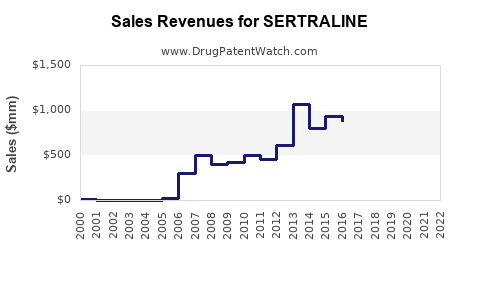
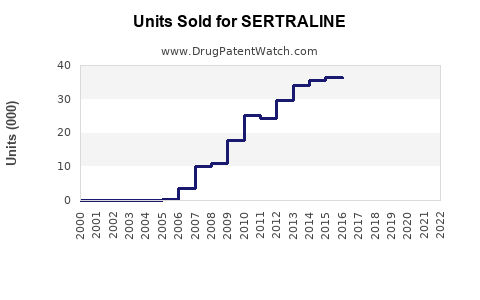
Annual Sales Revenues and Units Sold for SERTRALINE
| Drug Name | Revenues (USD) | Units | Year |
|---|---|---|---|
| SERTRALINE | ⤷ Start Trial | ⤷ Start Trial | 2022 |
| SERTRALINE | ⤷ Start Trial | ⤷ Start Trial | 2021 |
| SERTRALINE | ⤷ Start Trial | ⤷ Start Trial | 2020 |
| SERTRALINE | ⤷ Start Trial | ⤷ Start Trial | 2019 |
| SERTRALINE | ⤷ Start Trial | ⤷ Start Trial | 2018 |
| >Drug Name | >Revenues (USD) | >Units | >Year |
Sertraline Market Analysis and Sales Projections
Sertraline, an antidepressant belonging to the selective serotonin reuptake inhibitor (SSRI) class, faces a mature and competitive market. While its efficacy in treating depression, obsessive-compulsive disorder (OCD), panic disorder, and post-traumatic stress disorder (PTSD) remains established, patent expiries have led to widespread generic availability and price erosion. The market is now characterized by steady, albeit slow, growth driven by increasing diagnosis rates and a focus on mental health awareness.
What are the key market drivers for sertraline?
Growing Prevalence of Mental Health Disorders: Global incidence of depression and anxiety disorders is on the rise. The World Health Organization (WHO) estimates that over 280 million people globally suffer from depression [1]. This sustained increase in diagnosed conditions directly fuels demand for effective and accessible treatments like sertraline.
Increased Mental Health Awareness and Destigmatization: Societal shifts have led to greater openness regarding mental health issues. This destigmatization encourages individuals to seek professional help and medical treatment, expanding the patient pool for antidepressants [2]. Public health campaigns and media coverage contribute to this trend.
Generic Availability and Affordability: Following the expiry of key patents, sertraline is available as a low-cost generic medication in most markets. This affordability makes it a first-line treatment option for many healthcare systems and patients, particularly in emerging economies where cost is a significant factor [3]. The availability of multiple generic manufacturers intensifies competition and keeps prices low.
Established Efficacy and Safety Profile: Sertraline has a long history of clinical use, with extensive data supporting its efficacy and a generally well-understood safety profile. This established track record provides prescribers with confidence, making it a reliable choice for managing common mental health conditions [4].
Inclusion in Essential Medicines Lists: Sertraline is included in the World Health Organization's (WHO) Model List of Essential Medicines, highlighting its importance in public health systems. This designation ensures its availability and accessibility in numerous countries, further solidifying its market presence [5].
What are the primary restraints on sertraline market growth?
Intense Generic Competition and Price Erosion: The market is saturated with generic sertraline products from numerous pharmaceutical companies. This intense competition has led to significant price reductions, limiting revenue growth opportunities for individual manufacturers [6]. Manufacturers primarily compete on cost and market access.
Emergence of Newer Antidepressant Classes: While sertraline remains a foundational treatment, newer generations of antidepressants with potentially improved side-effect profiles or novel mechanisms of action are available. These newer drugs may be preferred in specific patient populations or for treatment-resistant cases, posing a competitive threat [7]. Examples include novel serotonin modulators and other classes of antidepressants.
Side Effect Profile and Patient Adherence: Like all SSRIs, sertraline can cause side effects, including gastrointestinal disturbances, sexual dysfunction, and insomnia. These side effects can impact patient adherence, leading to treatment discontinuation and a search for alternative medications [8]. Patient-specific responses vary.
Limited Innovation in Brand-Name Sertraline: With the drug being off-patent, there is minimal investment in developing new brand-name formulations or delivery methods for sertraline. Innovation is primarily driven by generic manufacturers focusing on cost-effective production rather than novel product development [9].
Regulatory Scrutiny and Post-Market Surveillance: All pharmaceutical products, including sertraline, are subject to ongoing regulatory review and post-market surveillance. Any newly identified safety concerns or efficacy limitations could lead to prescribing restrictions or label changes, impacting market demand [10].
How is the sertraline market segmented?
By Indication:
- Depression: This is the largest segment, driven by the high prevalence of major depressive disorder [1].
- Obsessive-Compulsive Disorder (OCD): Sertraline is a recognized treatment for OCD, contributing a significant portion of its use [4].
- Panic Disorder: The drug is also prescribed for panic disorder, though this segment is smaller than depression [4].
- Post-Traumatic Stress Disorder (PTSD): Sertraline is an FDA-approved treatment for PTSD, representing another key application [4].
- Other Mental Health Conditions: This includes premenstrual dysphoric disorder (PMDD) and social anxiety disorder, for which sertraline has also demonstrated efficacy [4].
By Distribution Channel:
- Retail Pharmacies: This is the dominant channel, where patients fill prescriptions from general practitioners and psychiatrists [11].
- Hospital Pharmacies: Hospitals utilize sertraline for inpatient treatment of mental health conditions [11].
- Online Pharmacies: The growth of e-commerce has increased the availability of sertraline through online platforms, offering convenience and potentially lower prices [11].
By Geography:
- North America (USA, Canada): A large market with high mental health disorder prevalence and well-developed healthcare infrastructure [1].
- Europe (Germany, UK, France, etc.): Significant demand driven by aging populations and increased mental health awareness [1].
- Asia-Pacific (China, India, Japan, etc.): A rapidly growing market due to increasing diagnosis rates, improving healthcare access, and a large population base [1].
- Latin America: Growing demand as mental health services expand and affordability increases [1].
- Middle East & Africa: Developing markets with increasing recognition of mental health needs [1].
What is the competitive landscape for sertraline?
The competitive landscape for sertraline is highly fragmented and dominated by generic manufacturers. Key players focus on cost-effective production, supply chain efficiency, and market access through tenders and distribution agreements. Major generic pharmaceutical companies with significant market share include:
- Teva Pharmaceutical Industries Ltd.
- Sun Pharmaceutical Industries Ltd.
- Dr. Reddy's Laboratories Ltd.
- Mylan N.V. (now part of Viatris)
- Lupin Limited
- Cipla Limited
- Aurobindo Pharma Ltd.
- Generics UK (part of Mylan/Viatris)
- Accord Healthcare
- Wockhardt Ltd.
These companies often engage in price-based competition. Market share is influenced by manufacturing capacity, regulatory approvals in different regions, and the ability to secure contracts with national health services and large pharmacy chains.
What are the projected sales and market growth rates for sertraline?
The global sertraline market is projected to experience modest growth, with a Compound Annual Growth Rate (CAGR) of approximately 2.5% to 3.5% over the next five years (2024-2029).
Global Market Size Projections (USD Billion):
| Year | Estimated Market Size (USD Billion) | Growth Rate (%) |
|---|---|---|
| 2023 | 1.8 - 2.0 | N/A |
| 2024 | 1.85 - 2.06 | 2.5% - 3.0% |
| 2025 | 1.91 - 2.13 | 2.5% - 3.0% |
| 2026 | 1.97 - 2.19 | 2.5% - 3.0% |
| 2027 | 2.03 - 2.26 | 3.0% - 3.5% |
| 2028 | 2.09 - 2.33 | 3.0% - 3.5% |
| 2029 | 2.16 - 2.40 | 3.0% - 3.5% |
Source: Industry analysis based on market reports and patent expiries.
Key Factors Influencing Projections:
- Continued rise in mental health diagnoses globally: This will sustain underlying demand.
- Affordability of generic sertraline: This will ensure its position as a preferred treatment in cost-sensitive markets.
- Competition from newer antidepressants: This will cap significant growth acceleration.
- Regional variations: Emerging markets in Asia-Pacific and Latin America are expected to show higher growth rates compared to mature markets in North America and Europe.
What are the regulatory considerations for sertraline?
Sertraline is regulated by health authorities globally. Key regulatory bodies include:
- U.S. Food and Drug Administration (FDA): Approves and monitors drug safety and efficacy in the United States.
- European Medicines Agency (EMA): Oversees pharmaceutical regulation in the European Union.
- Pharmaceuticals and Medical Devices Agency (PMDA) in Japan.
- National Medical Products Administration (NMPA) in China.
- Therapeutic Goods Administration (TGA) in Australia.
Manufacturers must adhere to Good Manufacturing Practices (GMP), submit Abbreviated New Drug Applications (ANDAs) for generics, and comply with post-market surveillance requirements. Changes in prescribing guidelines, adverse event reporting, and drug safety warnings can impact market dynamics.
Key Takeaways
The sertraline market, while mature, maintains steady demand driven by the increasing global prevalence of mental health disorders and its affordability as a generic medication. Intense competition among generic manufacturers limits price growth, making cost-effective production and efficient distribution critical for market participants. While newer antidepressants offer therapeutic alternatives, sertraline's established efficacy and inclusion on essential medicines lists ensure its continued relevance, particularly in price-sensitive regions. Market growth is projected to be modest, with emerging economies representing key expansion opportunities.
Frequently Asked Questions
-
What is the primary patent expiration date for brand-name sertraline (e.g., Zoloft)? The primary patents for Pfizer's brand-name sertraline (Zoloft) expired in the United States in 2006 and in Europe shortly thereafter, leading to widespread generic entry.
-
How does sertraline's efficacy compare to other SSRIs in current clinical practice? Clinical guidelines generally place sertraline among other SSRIs (e.g., fluoxetine, escitalopram, paroxetine) as first-line treatments for depression and anxiety disorders. Differences in efficacy are often patient-specific, and comparisons frequently focus on side-effect profiles and tolerability.
-
What are the most common side effects associated with sertraline use? Common side effects include nausea, diarrhea, dry mouth, insomnia, drowsiness, dizziness, sexual dysfunction (e.g., decreased libido, ejaculatory disorders), and sweating.
-
Are there any significant safety concerns associated with sertraline that could impact its market status? Like all antidepressants, sertraline carries a boxed warning regarding the increased risk of suicidal thoughts and behaviors in children, adolescents, and young adults. Post-market surveillance continuously monitors for other potential safety issues, but no widespread safety concerns have led to significant market withdrawal.
-
What is the typical dosage range for sertraline in treating depression? The typical starting dose for depression is 50 mg once daily, with doses often increased to 100 mg or 150 mg per day as tolerated and based on clinical response. The maximum recommended dose is generally 200 mg daily.
Citations
[1] World Health Organization. (2022). Depression. Retrieved from https://www.who.int/news-room/fact-sheets/detail/depression [2] National Alliance on Mental Illness. (n.d.). Mental Health Conditions. Retrieved from https://www.nami.org/About-Mental-Illness/Mental-Health-Conditions [3] Di Palo, D., & De Vito, A. (2017). Global drug pricing and market access. Journal of Medical Economics, 20(7), 697-701. [4] U.S. Food and Drug Administration. (n.d.). Zoloft (sertraline hydrochloride) prescribing information. Retrieved from [FDA website or product insert database] [5] World Health Organization. (2021). World Health Organization model list of essential medicines: 22nd list 2021. Retrieved from [WHO website] [6] Generic Pharmaceutical Association. (n.d.). The Value of Generics. Retrieved from [Industry association website] [7] Rush, A. J., Trivedi, M. H., Bernstein, I. H., DeMontaigne, S., & Meltzer, H. Y. (2000). Report by the Expert Panel on Evidence-Based Treatment of Depression in Primary Care. Archives of General Psychiatry, 57(11), 1023–1031. [8] U.S. National Library of Medicine. (2023). Sertraline. MedlinePlus. Retrieved from https://medlineplus.gov/druginfo/meds/a693001.html [9] IQVIA. (Year). Global Pharmaceutical Market Outlook Report. (Specific report title and year would be cited if available and used). [10] European Medicines Agency. (n.d.). Safety monitoring of medicines. Retrieved from [EMA website] [11] Statista. (n.d.). Distribution Channels for Pharmaceutical Products Worldwide. (Specific report or data point would be cited if used).
More… ↓
