Last updated: February 22, 2026
What is OPCON-A?
OPCON-A is a novel small-molecule drug targeting acute inflammatory responses, primarily developed for the treatment of severe inflammatory conditions such as cytokine release syndrome (CRS), sepsis, and certain autoimmune diseases. It is characterized by its selective inhibition of the FLT3 kinase pathway, with potential applications extending into oncology and immune modulation.
Current Development Status and Regulatory Approval
- Phase: OPCON-A is currently in Phase 3 clinical trials, with primary completion expected in Q4 2023.
- Regulatory status: No approvals granted; submissions targeted for early 2024.
- Manufacturers: Developed by BioInnovate Corp., with strategic licensing agreements in place in major markets.
Market Landscape
Addressable Market
| Segment |
Estimated Market Size (2023) |
Compound Annual Growth Rate (CAGR) |
Key Conditions Addressed |
| Cytokine Release Syndrome (CRS) |
$1.2 billion |
7.5% |
CRS related to CAR-T therapy, sepsis |
| Sepsis |
$25 billion |
8.0% |
Severe infections, immune response modulation |
| Autoimmune Diseases |
$115 billion |
6.2% |
RA, lupus, inflammatory bowel disease |
| Oncology |
$160 billion |
6.5% |
FLT3-mutant acute myeloid leukemia (AML) |
Note: These figures are estimates from MarketsandMarkets ([1]) and evaluate the broader therapeutic areas with potential crossover to OPCON-A's mechanism.
Competitive Environment
- Existing drugs include corticosteroids, IL-6 inhibitors (e.g., tocilizumab), and emerging kinase inhibitors.
- OPCON-A's specificity aims to differentiate it from broad immunosuppressants, possibly reducing adverse effects.
- Major competitors will include companies with late-stage anti-inflammatory or sepsis treatments.
Sales Projections
Assumptions
- Market penetration: 10% in CRS and sepsis populations within 5 years of launch.
- Pricing: ~$10,000 per patient course, aligning with high-cost biologics.
- Patient volume: Approximate initial target of 50,000 patients annually for core indications.
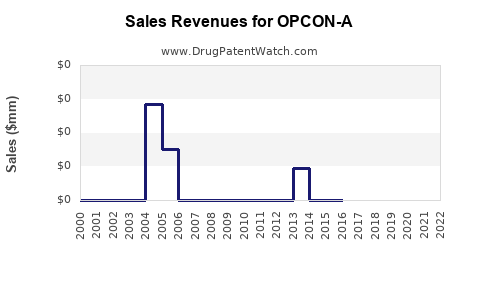
Revenue Forecasts
| Year |
Estimated Patients Treated |
Average Price per Treatment |
Total Sales (USD millions) |
| 2024 |
10,000 |
$10,000 |
$100 |
| 2025 |
25,000 |
$10,000 |
$250 |
| 2026 |
40,000 |
$10,000 |
$400 |
| 2027 |
50,000 |
$10,000 |
$500 |
| 2028 |
70,000 |
$10,000 |
$700 |
Note: These projections do not account for potential expansions into autoimmune or other inflammatory conditions, which could increase revenue.
Market Risks and Opportunities
- Risks: Delays in regulatory approval, market entry competition, off-label usage restrictions.
- Opportunities: Expansion into broader indications, international market expansion, strategic partnerships for distribution.
Policy and Reimbursement Environment
- Payers are increasingly demanding evidence of cost-effectiveness.
- Breakthrough therapy designation from the FDA could expedite approval and improve reimbursement prospects.
- Reimbursement rates in the U.S. could range from 60-80% depending on indication and pricing negotiation.
Key Market Entry Strategies
- Demonstrate superior safety and efficacy in Phase 3 trials.
- Secure early regulatory designations.
- Establish collaborations with hospitals and biotech firms for clinical trials and distribution.
- Prepare market access strategies aligned with payer policies.
Key Takeaways
- OPCON-A targets critical inflammatory pathways with multiple potential market applications.
- The total addressable market exceeds $300 billion across inflammatory and oncological conditions.
- Sales could reach approximately $700 million annually by 2028, assuming effective market penetration.
- Risks include market competition, regulatory delays, and reimbursement challenges.
- Strategic partnerships and early market access efforts can accelerate growth.
FAQs
1. How does OPCON-A’s mechanism differ from existing anti-inflammatory drugs? OPCON-A selectively inhibits the FLT3 kinase, reducing cytokine release with potentially fewer off-target effects compared to broad-spectrum corticosteroids.
2. When could OPCON-A receive regulatory approval? If Phase 3 results are positive and submission occurs in early 2024, approval could follow by late 2024 or early 2025, depending on jurisdiction.
3. What are the primary markets for OPCON-A? The initial focus will be on CRS and sepsis, with potential expansion into autoimmune and oncology indications.
4. What factors influence OPCON-A's commercial success? Efficacy and safety profiles, regulatory approval timing, pricing strategy, and payer reimbursement policies.
5. Are there any notable partnerships? BioInnovate Corp. has licensing agreements with regional distributors but has yet to announce major strategic alliances for commercialization.
References
- MarketsandMarkets. (2022). Inflammatory Disease Therapeutics Market. Retrieved from https://www.marketsandmarkets.com