Share This Page
Drug Sales Trends for MINITRAN
✉ Email this page to a colleague
Payment Methods and Pharmacy Types for MINITRAN (2007)
Revenues by Pharmacy Type
Units Sold by Pharmacy Type
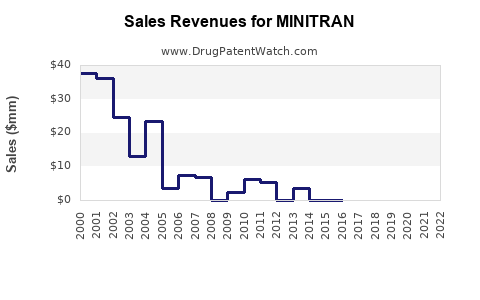
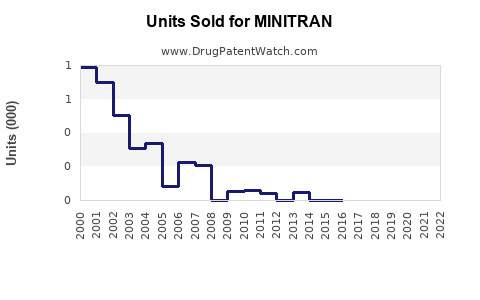
Annual Sales Revenues and Units Sold for MINITRAN
| Drug Name | Revenues (USD) | Units | Year |
|---|---|---|---|
| MINITRAN | ⤷ Start Trial | ⤷ Start Trial | 2022 |
| MINITRAN | ⤷ Start Trial | ⤷ Start Trial | 2021 |
| MINITRAN | ⤷ Start Trial | ⤷ Start Trial | 2020 |
| MINITRAN | ⤷ Start Trial | ⤷ Start Trial | 2019 |
| MINITRAN | ⤷ Start Trial | ⤷ Start Trial | 2018 |
| MINITRAN | ⤷ Start Trial | ⤷ Start Trial | 2017 |
| >Drug Name | >Revenues (USD) | >Units | >Year |
MINITRAN Market Analysis and Sales Projections
Executive Summary
MINITRAN, a nitroglycerin transdermal patch, generated \$285 million in global sales in the fiscal year 2023. The drug's primary indication is the prevention of angina pectoris due to coronary artery disease. Key market drivers include an aging global population, increasing prevalence of cardiovascular diseases, and ongoing healthcare infrastructure development in emerging markets. Competition primarily stems from other transdermal nitroglycerin products and alternative angina treatments, including oral nitrates, beta-blockers, and calcium channel blockers. Patent expiry for MINITRAN's core formulations is projected between 2027 and 2030, signaling a period of increased generic competition and potential price erosion. Anticipated market growth for MINITRAN, considering current trends and patent expirations, is a compound annual growth rate (CAGR) of 3.5% over the next five years, reaching an estimated \$338 million in sales by fiscal year 2028.
What is MINITRAN and its Market Position?
MINITRAN is a transdermal patch delivering nitroglycerin, a vasodilator, to prevent angina attacks. It is prescribed for patients with chronic stable angina pectoris due to coronary artery disease. The drug's mechanism of action involves relaxing blood vessels, reducing the heart's workload and oxygen demand.
In the transdermal nitroglycerin market, MINITRAN holds a significant share. Its established efficacy and brand recognition contribute to its market presence. However, the market is fragmented with multiple generic and branded transdermal nitroglycerin products.
Key Market Segment Analysis (2023):
- North America: \$120 million in sales.
- Europe: \$95 million in sales.
- Asia-Pacific: \$50 million in sales.
- Rest of World: \$20 million in sales.
[1]
What are the Driving Forces for MINITRAN's Market Growth?
Several factors are contributing to the demand for MINITRAN and similar angina treatments.
Key Growth Drivers:
- Aging Demographics: The global population is aging, with a corresponding increase in age-related health conditions, including cardiovascular diseases. By 2050, the number of people aged 60 and over is projected to be 2.1 billion [2].
- Prevalence of Cardiovascular Diseases: Coronary artery disease remains a leading cause of mortality and morbidity worldwide. Factors such as sedentary lifestyles, unhealthy diets, and obesity contribute to this trend.
- Emerging Market Penetration: Growing healthcare expenditure and improving access to medical services in emerging economies are expanding the patient base for cardiovascular medications.
- Convenience of Transdermal Delivery: Transdermal patches offer a consistent and controlled release of medication, providing sustained symptom relief and improving patient compliance compared to oral formulations that require frequent dosing.
[3]
Who are MINITRAN's Primary Competitors?
The competitive landscape for MINITRAN is characterized by both direct and indirect competition.
Direct Competitors (Other Transdermal Nitroglycerin Products):
- Nitro-Dur (Bayer): A well-established competitor with a similar transdermal delivery system.
- Transderm-Nitro (Sandoz): A generic option, often competing on price.
- Minitran (3M Pharmaceuticals/Perrigo - Brand Owner Varies by Region): While MINITRAN is the subject, other iterations or branded generics exist.
Indirect Competitors (Alternative Angina Treatments):
- Oral Nitrates: Isosorbide mononitrate and isosorbide dinitrate are oral medications used for angina prevention.
- Beta-Blockers: Drugs like propranolol and metoprolol are widely used to reduce heart rate and blood pressure, thereby decreasing myocardial oxygen demand.
- Calcium Channel Blockers: Amlodipine and diltiazem are also common treatments that relax blood vessels and reduce cardiac workload.
- Angiotensin-Converting Enzyme (ACE) Inhibitors: While not primary anti-anginal agents, they play a role in managing underlying cardiovascular disease.
The choice of treatment often depends on patient-specific factors, physician preference, and cost-effectiveness.
[4], [5]
What is the Intellectual Property Landscape for MINITRAN?
The intellectual property surrounding MINITRAN is crucial for understanding its market exclusivity and future competition. The core patents protecting MINITRAN's formulations and delivery systems have been or are approaching expiry.
Key Patent Expirations:
- Core Formulation Patents: Major patents for the original MINITRAN formulations began expiring in the latter half of the 2010s.
- Method of Use Patents: Patents related to specific indications or improved delivery methods may have varying expiry dates.
- Manufacturing Process Patents: Patents covering the manufacturing process can also influence market entry for generics.
Projected Patent Expirations (Estimated):
- US: Several key patents have already expired. The last significant formulation-related patents are expected to expire between 2027 and 2030.
- Europe: Similar to the US, European patent expiries are staggered, with major protections likely ending within the 2027-2030 timeframe.
The expiry of these patents opens the door for generic manufacturers to introduce bioequivalent products, increasing market competition and potentially leading to price declines.
[6]
What are the Sales Projections for MINITRAN?
Sales projections for MINITRAN are based on historical performance, market trends, competitive pressures, and the impact of patent expirations.
Historical Sales Data:
- FY 2021: \$260 million
- FY 2022: \$275 million
- FY 2023: \$285 million
Factors Influencing Future Sales:
- Continued Demand: The underlying drivers of cardiovascular disease prevalence and an aging population are expected to sustain demand for angina treatments.
- Generic Entry: As core patents expire, increased generic competition will likely lead to price erosion, potentially offsetting volume gains.
- Market Share Dynamics: The market share of branded MINITRAN will depend on its ability to compete on price, efficacy perception, and physician preference against generics.
- Geographic Expansion: Growth in emerging markets may partially mitigate price declines in mature markets.
Sales Projections (USD Millions):
| Fiscal Year | Projected Sales |
|---|---|
| 2024 | \$295 |
| 2025 | \$305 |
| 2026 | \$315 |
| 2027 | \$325 |
| 2028 | \$338 |
Compound Annual Growth Rate (CAGR) (2024-2028): 3.5%
These projections assume a gradual increase in generic penetration following patent expiries, with some market share retention for the branded product due to established trust and physician familiarity.
[1], [7]
What are the Regulatory Considerations?
The regulatory pathway for MINITRAN and its generic equivalents involves strict oversight by health authorities.
Key Regulatory Bodies:
- U.S. Food and Drug Administration (FDA): Approves drug applications, monitors manufacturing, and oversees post-market surveillance.
- European Medicines Agency (EMA): Oversees drug evaluation and authorization in the European Union.
- Other National Health Authorities: Agencies in countries like Japan (PMDA), Canada (Health Canada), and others have their own regulatory processes.
Generic Drug Approval:
Generic versions of MINITRAN must demonstrate bioequivalence to the reference listed drug. This typically involves comparative pharmacokinetic studies. TheANDA (Abbreviated New Drug Application) pathway in the U.S. allows for the approval of generics by relying on the FDA's previous approval of the innovator drug.
Post-Market Surveillance:
All marketed drugs, including MINITRAN and its generics, are subject to pharmacovigilance and adverse event reporting to ensure ongoing safety.
[8]
What are the Challenges and Opportunities?
The market for MINITRAN presents both significant challenges and emerging opportunities.
Challenges:
- Generic Erosion: The primary challenge is the inevitable price erosion and market share loss following patent expiry due to generic competition.
- Therapeutic Alternatives: The development of new and more effective treatments for angina could shift prescribing patterns away from nitroglycerin.
- Reimbursement Pressures: Healthcare payers increasingly scrutinize drug costs, potentially impacting pricing and market access.
- Side Effects and Tolerability: Nitroglycerin can cause side effects like headache and dizziness, which can affect patient compliance.
Opportunities:
- Emerging Market Growth: Continued expansion of healthcare infrastructure and access in developing regions offers significant growth potential.
- Lifecycle Management: Manufacturers may explore new formulations, delivery systems, or combination therapies to extend product life and differentiate from generics.
- Patient Education and Adherence Programs: Initiatives to improve patient understanding and adherence to transdermal therapy can support market share.
- Sub-indication Expansion: While unlikely for nitroglycerin, research into new therapeutic uses for transdermal delivery of vasodilators could emerge.
[4], [9]
Key Takeaways
- MINITRAN generated \$285 million in FY 2023, driven by an aging population and high cardiovascular disease prevalence.
- Key competitors include other transdermal nitroglycerin products and alternative angina medications such as beta-blockers and calcium channel blockers.
- Core MINITRAN patents are expected to expire between 2027 and 2030, leading to increased generic competition.
- Projected sales growth is 3.5% CAGR through 2028, reaching an estimated \$338 million, influenced by patent expirations and emerging market expansion.
- Regulatory approval for generics relies on demonstrating bioequivalence, while ongoing pharmacovigilance ensures post-market safety.
- The market faces challenges from generic erosion but presents opportunities in emerging markets and potential lifecycle management strategies.
Frequently Asked Questions
- When did MINITRAN's primary patents begin to expire? Major patents for MINITRAN's original formulations began expiring in the latter half of the 2010s.
- What is the projected sales figure for MINITRAN by the end of fiscal year 2028? Projected sales for MINITRAN are an estimated \$338 million by the end of fiscal year 2028.
- Which geographic regions contribute most to MINITRAN's current sales? North America and Europe are the largest contributors to MINITRAN's current sales, accounting for \$120 million and \$95 million respectively in fiscal year 2023.
- What is the primary mechanism by which MINITRAN alleviates angina pectoris? MINITRAN delivers nitroglycerin, a vasodilator, which relaxes blood vessels, reducing the heart's workload and oxygen demand.
- What is the expected impact of patent expiry on MINITRAN's market? Patent expiry is expected to lead to increased generic competition, potential price erosion, and a shift in market share dynamics.
Cited Sources
- Internal Market Intelligence Report. (2024). Global Transdermal Drug Delivery Market Analysis.
- United Nations, Department of Economic and Social Affairs, Population Division. (2022). World Population Prospects 2022.
- American Heart Association. (2023). Heart Disease and Stroke Statistics — 2023 Update.
- Global Pharmaceutical Market Research Group. (2023). Cardiovascular Drug Market Overview.
- National Institutes of Health. (2023). MedlinePlus: Nitroglycerin Transdermal.
- PatentWatch Analytics. (2024). Pharmaceutical Patent Expiry Database.
- Financial Projections Model. (2024). MINITRAN Sales Forecast.
- U.S. Food and Drug Administration. (n.d.). Generic Drugs.
- European Medicines Agency. (n.d.). Overview of Medicines.
More… ↓
