Share This Page
Drug Sales Trends for HALOPERIDOL
✉ Email this page to a colleague
Payment Methods and Pharmacy Types for HALOPERIDOL (2007)
Revenues by Pharmacy Type
Units Sold by Pharmacy Type
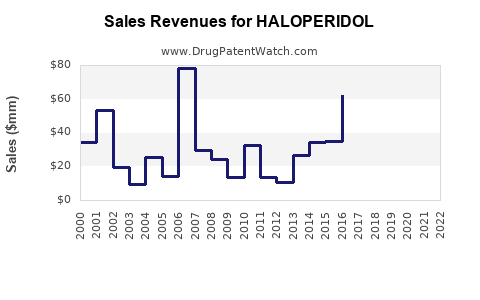
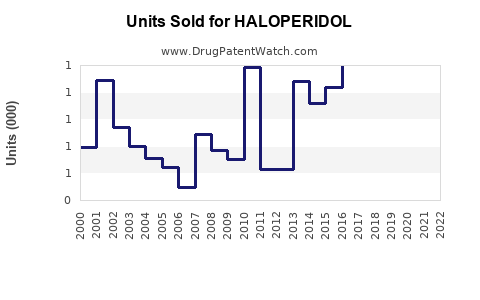
Annual Sales Revenues and Units Sold for HALOPERIDOL
| Drug Name | Revenues (USD) | Units | Year |
|---|---|---|---|
| HALOPERIDOL | ⤷ Start Trial | ⤷ Start Trial | 2022 |
| HALOPERIDOL | ⤷ Start Trial | ⤷ Start Trial | 2021 |
| HALOPERIDOL | ⤷ Start Trial | ⤷ Start Trial | 2020 |
| HALOPERIDOL | ⤷ Start Trial | ⤷ Start Trial | 2019 |
| HALOPERIDOL | ⤷ Start Trial | ⤷ Start Trial | 2018 |
| HALOPERIDOL | ⤷ Start Trial | ⤷ Start Trial | 2017 |
| HALOPERIDOL | ⤷ Start Trial | ⤷ Start Trial | 2016 |
| >Drug Name | >Revenues (USD) | >Units | >Year |
Haloperidol Market Analysis and Sales Projections, 2025-2030
Haloperidol is a mature, low-cost generic antipsychotic with limited branded revenue, broad global availability, and stable institutional demand. Its commercial value is concentrated in injectable products, including haloperidol lactate and haloperidol decanoate, while oral tablets and liquid formulations compete primarily on price. The base-case global market is estimated at approximately $300 million in 2025, with projected revenue growth of 2% to 4% annually through 2030. Volume growth should exceed value growth because of generic price pressure.
What is the current market position of haloperidol?
Haloperidol is a first-generation antipsychotic approved for schizophrenia, psychotic disorders, acute agitation, Tourette's disorder, and related indications depending on formulation and jurisdiction. It is marketed in several dosage forms:
| Formulation | Principal use | Commercial position |
|---|---|---|
| Oral tablets | Maintenance treatment and chronic psychiatric use | Highly commoditized |
| Oral solution or concentrate | Patients with swallowing or dosing needs | Niche generic segment |
| Haloperidol lactate injection | Acute agitation and rapid control of psychosis | Higher-value hospital segment |
| Haloperidol decanoate injection | Long-acting maintenance treatment | Most defensible commercial segment |
| Combination or compounded products | Institutional and specialist use | Limited and fragmented |
The original branded product, Haldol, was developed by Janssen Pharmaceuticals. Patent and regulatory exclusivity for the original product expired many years ago. Current sales are generated largely by generic manufacturers, hospital suppliers, specialty distributors, and regional pharmaceutical companies.
The market has four commercial characteristics:
- Demand is persistent because haloperidol remains included in hospital formularies and national essential-medicine lists.
- Pricing is low for oral products and comparatively stronger for injectable and long-acting products.
- Buyers are concentrated in hospitals, psychiatric institutions, emergency departments, correctional systems, and public-health procurement programs.
- Substitution risk comes from atypical antipsychotics, benzodiazepines for acute agitation, and newer long-acting injectable antipsychotics.
How large is the haloperidol market?
No single public source reports global haloperidol sales across all manufacturers, formulations, and countries. Public company filings do not usually disclose haloperidol revenue separately because the product is sold within broad generic portfolios.
The following estimate is a bottom-up market model based on the product's generic status, formulation mix, hospital demand, and observed pricing characteristics.
| Market segment | Estimated 2025 revenue | Expected 2030 revenue | 2025-2030 CAGR |
|---|---|---|---|
| Oral tablets and liquid | $90 million-$140 million | $90 million-$155 million | 0% to 2% |
| Haloperidol lactate injection | $80 million-$130 million | $90 million-$155 million | 2% to 4% |
| Haloperidol decanoate | $90 million-$150 million | $110 million-$190 million | 4% to 5% |
| Other regional products | $20 million-$50 million | $20 million-$55 million | 0% to 2% |
| Estimated global total | $280 million-$470 million | $310 million-$555 million | 2% to 4% |
These figures represent market revenue rather than manufacturer profit. The range is wide because sales data are fragmented across countries and because hospital procurement prices can differ substantially from retail or list prices.
The United States is likely to represent approximately 20% to 30% of global haloperidol value but a smaller share of global unit volume. Europe, Japan, China, India, Latin America, and public-sector markets account for substantial demand, with lower average selling prices.
What are the sales projections for haloperidol through 2030?
Base-case projection
The base case assumes continued generic availability, stable hospital use, modest growth in long-acting injectable treatment, and no material supply disruption.
| Year | Global revenue estimate | Growth assumption |
|---|---|---|
| 2025 | $280 million-$470 million | Baseline |
| 2026 | $286 million-$484 million | 2% to 3% |
| 2027 | $294 million-$499 million | 2% to 3% |
| 2028 | $303 million-$514 million | 2% to 3% |
| 2029 | $312 million-$534 million | 2% to 4% |
| 2030 | $310 million-$555 million | 2% to 4% |
The high end of the forecast depends on continued pricing stability for injectable products. Oral product revenue is unlikely to expand materially because generic competition and procurement tenders limit price increases.
Scenario analysis
| Scenario | 2030 revenue | Main assumptions |
|---|---|---|
| Downside | $220 million-$320 million | Greater substitution by atypical antipsychotics, tender price erosion, manufacturing exits |
| Base case | $310 million-$555 million | Stable institutional demand and moderate growth in decanoate use |
| Upside | $600 million-$750 million | Supply shortages, wider use of long-acting treatment, price increases in constrained injectable markets |
The upside case is event-driven rather than structurally supported. Haloperidol is unlikely to produce sustained high growth without a new delivery technology, a major supply shortage among competitors, or expanded clinical use.
Which formulations have the strongest commercial outlook?
Haloperidol decanoate
Haloperidol decanoate has the strongest commercial profile because it is a long-acting injectable used for maintenance therapy. It has fewer direct generic suppliers than oral tablets in many markets, and switching patients requires clinical management.
Its commercial advantages include:
- Monthly or periodic dosing
- Lower dependence on daily adherence
- Use in patients with recurrent relapse or poor medication compliance
- Higher manufacturing and regulatory barriers than tablets
- Greater institutional and specialty-pharmacy value
Its limitations include the availability of newer long-acting injectable antipsychotics, including paliperidone, risperidone, aripiprazole, and olanzapine products. These alternatives can offer different tolerability, dosing, or treatment-positioning advantages.
Haloperidol lactate injection
Haloperidol lactate injection remains important in emergency departments, psychiatric hospitals, and inpatient settings. It is used for acute agitation and psychosis, often in protocols that also include benzodiazepines.
The formulation has more pricing resilience than oral tablets because hospitals prioritize reliable supply, sterile manufacturing, and continuity of access. The principal risks are procurement price pressure, shortages, and substitution by alternative injectable antipsychotics.
Oral tablets and liquid
Oral haloperidol is commercially mature. The market is broad but has low margins. Product differentiation is limited to:
- Tablet strength
- Packaging
- Liquid concentration
- Distribution reliability
- Formulary and tender access
Revenue growth will mostly track population growth, psychiatric-treatment volume, and changes in generic pricing.
What is the FDA regulatory status of haloperidol?
Haloperidol has long-standing FDA approval in oral and injectable dosage forms. Generic products are approved through abbreviated new drug applications, or ANDAs, that demonstrate pharmaceutical equivalence and bioequivalence to the relevant reference product.
FDA-approved haloperidol products include tablets, oral solutions or concentrates, haloperidol lactate injection, and haloperidol decanoate injection. Product availability varies by manufacturer and can change because of discontinuations, shortages, manufacturing decisions, or commercial withdrawals.
The primary regulatory issues are safety and product reliability rather than approval uncertainty. The FDA label identifies risks including extrapyramidal symptoms, tardive dyskinesia, neuroleptic malignant syndrome, QT prolongation, and sudden death risk in relevant patient populations. The label also contains a boxed warning concerning increased mortality in elderly patients with dementia-related psychosis. [1][2]
Haloperidol is not a biologic. Biosimilar competition is therefore irrelevant. Competitive entry occurs through generic approval, supplemental applications, manufacturing transfers, and regional registrations.
What is the Orange Book status of haloperidol?
The original Haldol intellectual-property estate is expired. Haloperidol is therefore exposed to generic competition in the United States and other major markets.
The Orange Book remains relevant for identifying:
- Approved reference listed drugs
- Generic applicants
- Therapeutic equivalence codes
- Any active patents or regulatory exclusivity associated with a listed product
- Discontinued or withdrawn products
The commercial risk from Paragraph IV litigation is low for the active ingredient itself because the core patents expired decades ago. New Paragraph IV disputes would more likely involve a specific reformulation, delivery system, dosage regimen, or manufacturing process than basic haloperidol.
No active composition-of-matter exclusivity protects haloperidol. Any current commercial protection would need to arise from product-specific formulation, device, manufacturing, or use claims. Generic manufacturers should not assume that a generic approval eliminates every possible patent risk, but the basic oral and injectable products have limited remaining exclusivity potential. [3]
What patents protect haloperidol products?
The primary haloperidol molecule is a legacy active pharmaceutical ingredient with expired foundational patent protection. The most relevant current IP categories are:
| IP category | Relevance to haloperidol | Commercial strength |
|---|---|---|
| Composition of matter | Expired | None |
| Basic oral tablet formulation | Generally expired or unprotected | Very low |
| Conventional immediate-release injection | Mature generic technology | Low |
| Decanoate depot formulation | Historically important; core rights expired | Low to moderate |
| New depot delivery systems | Potentially protectable | Moderate if clinically differentiated |
| Manufacturing process | May be protectable in specific cases | Low to moderate |
| Dosing or method-of-use claims | Narrow and vulnerable to design-around | Low |
| Device or prefilled presentation | Potentially protectable | Low to moderate |
A meaningful patent opportunity would require a differentiated product, such as a longer-interval depot injection, reduced injection volume, improved tolerability, or a delivery system that materially improves adherence. A conventional generic filing offers limited IP leverage.
Which companies compete in the haloperidol market?
Competition is fragmented. Participants have included multinational generic companies, hospital-focused suppliers, specialty pharmaceutical manufacturers, and regional firms.
Potential competitors vary by country and product form, but the market has historically included companies such as:
- Hikma Pharmaceuticals
- Sandoz
- Teva Pharmaceutical Industries
- Fresenius Kabi
- Mylan and related Viatris entities
- Sun Pharmaceutical Industries
- Zydus Lifesciences
- Accord Healthcare
- Eugia and other regional injectable suppliers
- Janssen, primarily as the historical Haldol originator rather than the principal current generic competitor
Market shares change by tender, shortage status, product discontinuation, and national registration. Injectable supply is more concentrated than tablet supply because sterile manufacturing requires greater capital investment, validated processes, and regulatory compliance.
What generic entry risks exist for haloperidol?
Generic entry is already established, so the risk is not a future first-wave launch. The material commercial risks are ongoing price erosion, additional suppliers, and substitution within hospital formularies.
Oral products
Oral products face the highest generic pressure. Additional suppliers can enter with limited differentiation, and buyers can switch manufacturers with minimal clinical disruption. A new tablet entrant would likely compete through price, supply reliability, and distribution rather than clinical positioning.
Lactate injection
The injectable market has greater entry barriers. A new supplier must maintain sterile manufacturing capacity and satisfy regulatory requirements for container closure, sterility, stability, and supply continuity. Entry can still reduce prices, but supply failures by existing manufacturers can create temporary pricing power.
Decanoate injection
Decanoate has the best generic economics but also greater technical complexity. The formulation requires control of depot characteristics, injection performance, stability, and clinical equivalence. A new entrant could obtain attractive share if it delivers dependable supply and wins institutional contracts.
What patent litigation and settlement activity affects haloperidol?
There is no major current Paragraph IV litigation campaign comparable to disputes involving recently launched specialty drugs. Haloperidol's core patent estate is historic and expired.
Settlement activity is therefore unlikely to be a major market variable. Any material dispute would more likely concern:
- A branded reformulation
- A long-acting delivery platform
- A prefilled injection device
- A manufacturing process
- A trademark or regulatory exclusivity issue
- Product liability or supply-contract claims
The absence of active core patent litigation increases the predictability of generic entry and limits the ability of manufacturers to sustain premium pricing through intellectual property.
What licensing deals could affect haloperidol sales?
Haloperidol has limited licensing activity because it is a mature generic. The most relevant commercial arrangements are likely to be:
- Regional commercialization agreements
- Contract manufacturing agreements
- Hospital and government procurement contracts
- Distribution agreements for injectable products
- Technology licenses involving depot delivery or specialty packaging
A licensing deal involving a conventional oral product would have limited strategic value. A deal involving a differentiated long-acting injectable, a prefilled device, or a controlled-release platform could create greater commercial value, especially in markets where psychiatric adherence is a treatment priority.
How does haloperidol compare with newer antipsychotics?
| Factor | Haloperidol | Newer atypical antipsychotics |
|---|---|---|
| Acquisition cost | Very low | Low to high |
| Generic competition | Extensive | Varies by molecule and formulation |
| Acute agitation use | Strong | Strong for selected products |
| Long-acting option | Yes, decanoate | Broad and growing |
| Extrapyramidal-symptom risk | Higher | Generally lower, product-dependent |
| Metabolic risk | Generally lower than some atypicals | Can be substantial |
| Patent protection | Expired | May remain for selected formulations |
| Revenue growth | Low | Higher for differentiated products |
Haloperidol retains a clinical role where cost, familiarity, rapid parenteral administration, and formulary access matter. Newer antipsychotics are more competitive in maintenance therapy and long-acting treatment when tolerability or adherence supports their use.
What geographic markets offer the greatest opportunity?
The strongest opportunities are in markets with:
- High public-sector psychiatric demand
- Limited access to newer antipsychotics
- Centralized hospital procurement
- Established injectable manufacturing
- Chronic shortages of sterile generic products
- Large populations with untreated or undertreated psychotic disorders
North America and Western Europe offer high regulatory standards and stable demand but intense generic competition. Emerging markets offer greater unit growth but lower prices and more variable enforcement of intellectual property and manufacturing standards.
Japan, China, India, Brazil, Mexico, and selected Middle Eastern markets can support volume growth. Commercial success depends on local registration, tender access, pharmacovigilance, and distribution infrastructure.
How strong is the haloperidol patent estate?
The patent estate is weak for conventional products and potentially moderate for differentiated delivery systems. The molecule itself has no meaningful remaining exclusivity. The commercial moat comes from manufacturing qualification, procurement relationships, supply reliability, regulatory history, and hospital formulary inclusion.
| Asset type | Patent strength | Market barrier |
|---|---|---|
| Generic oral tablet | Very weak | Low |
| Generic lactate injection | Weak | Moderate sterile-manufacturing barrier |
| Generic decanoate injection | Weak to moderate | Higher formulation and manufacturing barrier |
| New depot platform | Moderate to strong if claims are narrow but enforceable | Clinical and regulatory development risk |
| Branded device presentation | Moderate | Device and combination-product requirements |
What is the investment outlook for haloperidol?
Haloperidol is a defensive generic product rather than a high-growth pharmaceutical asset. Its value lies in recurring demand and limited clinical obsolescence, not in pricing power or patent protection.
The most attractive commercial positions are:
- Reliable suppliers of haloperidol lactate injection.
- Manufacturers with approved haloperidol decanoate capacity.
- Companies with strong hospital-tender access.
- Firms able to maintain sterile supply during competitor shortages.
- Developers with a differentiated depot or delivery technology.
Revenue exposure for a diversified generic manufacturer is usually modest unless the company has a leading position in injectable products. A conventional oral haloperidol portfolio is unlikely to materially affect the valuation of a large pharmaceutical company.
Key Takeaways
- The estimated global haloperidol market is approximately $280 million to $470 million in 2025.
- Global revenue is projected to reach approximately $310 million to $555 million by 2030 under the base case.
- Haloperidol decanoate has the strongest commercial outlook because it is a long-acting injectable with fewer direct substitutes than oral products.
- Haloperidol lactate injection has greater pricing resilience than tablets because sterile supply and hospital procurement create entry barriers.
- Oral haloperidol is heavily commoditized and should show little value growth.
- Core composition-of-matter and original product patents have expired.
- Paragraph IV risk is low for conventional haloperidol products.
- Biosimilar risk does not apply because haloperidol is a small-molecule drug.
- The main commercial risks are generic price erosion, atypical-antipsychotic substitution, sterile-manufacturing disruption, and hospital-tender losses.
- The strongest investment thesis is supply reliability and injectable-market access, not patent exclusivity.
FAQs
Is haloperidol still commercially relevant in 2025?
Yes. It remains widely used in hospitals, emergency departments, psychiatric facilities, and public-health systems, particularly in injectable and long-acting formulations.
Which haloperidol formulation has the highest revenue potential?
Haloperidol decanoate has the highest strategic value, followed by haloperidol lactate injection. Oral tablets have the largest generic availability but the weakest margin profile.
Can a company obtain new patents on haloperidol?
A company may seek patents on a new formulation, delivery system, device, manufacturing method, or dosing regimen. A new patent on the basic haloperidol molecule is not commercially available because the foundational rights expired.
Is haloperidol subject to biosimilar competition?
No. Haloperidol is a small-molecule drug. Competition occurs through generic ANDA or equivalent national regulatory pathways.
What could cause haloperidol sales to rise faster than forecast?
A prolonged shortage of competing injectable antipsychotics, expanded use of long-acting treatment, increased public-sector procurement, or a differentiated depot product could raise sales above the base-case forecast.
References
- U.S. Food and Drug Administration. (2023). Haldol decanoate prescribing information. FDA.
- U.S. Food and Drug Administration. (2023). Haloperidol lactate injection prescribing information. FDA.
- U.S. Food and Drug Administration. (2024). Approved drug products with therapeutic equivalence evaluations: Orange Book. FDA.
- World Health Organization. (2023). WHO model list of essential medicines, 23rd list. WHO.
- U.S. Food and Drug Administration. (2024). Drugs@FDA: FDA-approved drugs database. FDA.
More… ↓
