Share This Page
Drug Sales Trends for RISEDRONATE
✉ Email this page to a colleague
Payment Methods and Pharmacy Types for RISEDRONATE (2006)
Revenues by Pharmacy Type
Units Sold by Pharmacy Type
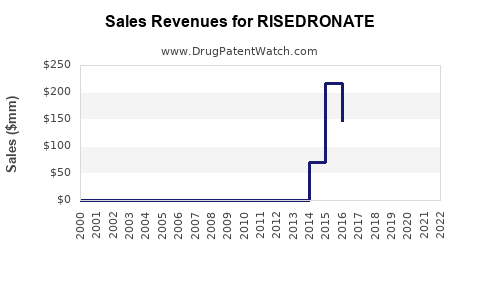
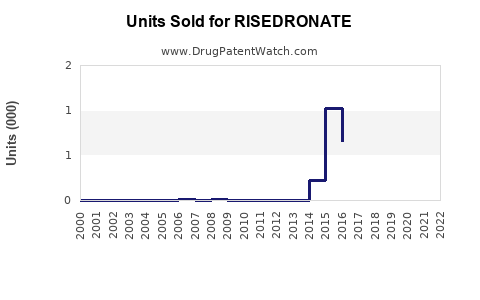
Annual Sales Revenues and Units Sold for RISEDRONATE
| Drug Name | Revenues (USD) | Units | Year |
|---|---|---|---|
| RISEDRONATE | ⤷ Start Trial | ⤷ Start Trial | 2022 |
| RISEDRONATE | ⤷ Start Trial | ⤷ Start Trial | 2021 |
| RISEDRONATE | ⤷ Start Trial | ⤷ Start Trial | 2020 |
| RISEDRONATE | ⤷ Start Trial | ⤷ Start Trial | 2019 |
| RISEDRONATE | ⤷ Start Trial | ⤷ Start Trial | 2018 |
| RISEDRONATE | ⤷ Start Trial | ⤷ Start Trial | 2017 |
| RISEDRONATE | ⤷ Start Trial | ⤷ Start Trial | 2016 |
| >Drug Name | >Revenues (USD) | >Units | >Year |
Risedronate Market Analysis, Patent Status, Competitive Landscape, and Sales Projections
Risedronate is a mature, genericized oral bisphosphonate used mainly for osteoporosis and Paget’s disease of bone. Its commercial market is driven by low-cost generic tablets, institutional purchasing, post-fracture treatment, and patients who cannot tolerate or access injectable osteoporosis therapies. The branded market has largely disappeared, and patent protection does not create a meaningful barrier to generic entry.
The base-case market model projects global risedronate sales of approximately $250 million in 2024, declining to about $210 million by 2030. The decline reflects price erosion and continued substitution by alendronate, denosumab, zoledronic acid and newer osteoporosis therapies. Volume should remain relatively stable because of aging populations and continued treatment of postmenopausal osteoporosis.
What is risedronate and how is it used?
Risedronate sodium is an oral nitrogen-containing bisphosphonate. It inhibits osteoclast-mediated bone resorption by disrupting the mevalonate pathway in bone-resorbing cells.
The FDA-approved uses include:
- Treatment and prevention of postmenopausal osteoporosis
- Treatment of osteoporosis in men
- Treatment of glucocorticoid-induced osteoporosis
- Treatment of Paget’s disease of bone
Common dosage forms include:
| Product type | Typical strength | Commercial status |
|---|---|---|
| Immediate-release tablet | 5 mg | Generic |
| Immediate-release tablet | 30 mg | Generic; commonly used for Paget’s disease |
| Immediate-release tablet | 35 mg | Generic; commonly dosed once weekly |
| Immediate-release tablet | 75 mg | Generic; commonly dosed on two consecutive days monthly |
| Immediate-release tablet | 150 mg | Generic; commonly dosed monthly |
| Delayed-release tablet | 35 mg | Limited generic and branded relevance |
Actonel was the principal branded risedronate product. Atelvia was introduced as a delayed-release formulation intended to reduce administration restrictions associated with fasting and water intake. FDA labeling continues to emphasize administration requirements, including remaining upright and avoiding food or mineral-containing products around immediate-release dosing.[1]
How large is the risedronate market?
The market is mature, fragmented and price-sensitive. Revenue is concentrated in generic products, while branded sales are limited.
Estimated 2024 market by geography
| Geography | Estimated 2024 sales | Market characteristics |
|---|---|---|
| United States | $70 million-$100 million | Generic-dominated; low unit prices |
| Europe | $80 million-$110 million | Broad generic availability; country-level reimbursement pressure |
| Japan | $45 million-$65 million | Greater use of branded or locally marketed products |
| China and other Asia-Pacific markets | $35 million-$55 million | Growth from diagnosis expansion and aging populations |
| Latin America, Middle East and Africa | $15 million-$25 million | Lower access and variable reimbursement |
| Total | $245 million-$355 million | Analyst range |
The midpoint estimate is approximately $250 million to $275 million, depending on whether hospital and retail channels are counted consistently. These figures represent a market model rather than reported manufacturer revenue. Public company filings generally do not disclose risedronate sales separately after generic erosion.
What drives demand for risedronate?
Demand is supported by four factors:
- Population aging. Osteoporosis prevalence rises sharply with age, particularly among postmenopausal women.
- Low acquisition cost. Generic risedronate is cheaper than many injectable and branded osteoporosis therapies.
- Established clinical evidence. Risedronate has long-term data in vertebral, nonvertebral and hip-fracture risk reduction.
- Use in treatment gaps. Some patients receive oral bisphosphonates after diagnosis but before escalation to injectable therapy.
Demand is constrained by administration complexity, gastrointestinal tolerability, adherence problems and competition from less frequent injectable medicines.
What are the risedronate sales projections through 2030?
The forecast assumes continued generic price erosion, stable to modestly growing treated volume, and no major re-entry by a premium branded formulation.
Global risedronate sales forecast
| Year | Low case | Base case | High case |
|---|---|---|---|
| 2024 | $220 million | $265 million | $320 million |
| 2025 | $215 million | $260 million | $315 million |
| 2026 | $205 million | $252 million | $310 million |
| 2027 | $198 million | $245 million | $305 million |
| 2028 | $190 million | $237 million | $300 million |
| 2029 | $183 million | $229 million | $294 million |
| 2030 | $175 million | $221 million | $288 million |
The base case implies a compound annual decline of approximately 3% from 2024 to 2030. Unit demand is expected to remain comparatively resilient, with revenue declining primarily through lower average selling prices.
Scenario assumptions
The low case assumes faster migration to denosumab, zoledronic acid and anabolic or sclerostin-targeted agents, combined with additional generic competition.
The base case assumes:
- Annual unit volume growth of 0% to 1%
- Net price erosion of 3% to 5% annually
- Continued generic substitution
- Stable treatment demand in the United States, Europe and Japan
- Moderate volume growth in China and other emerging markets
The high case assumes greater osteoporosis diagnosis, improved treatment persistence and slower substitution away from oral bisphosphonates.
When did risedronate lose exclusivity?
Risedronate lost meaningful United States market exclusivity more than a decade ago. The original Actonel patent estate no longer provides a practical barrier to generic competition.
The commercial sequence was:
| Period | Event |
|---|---|
| 1998 | Actonel launched in the United States |
| 2000s | Sales expanded across postmenopausal osteoporosis and other indications |
| 2010-2012 | Generic entry litigation and settlement activity surrounded major bisphosphonate products |
| 2013 onward | Core risedronate exclusivity expired and generic competition expanded |
| Current market | Generic immediate-release and selected delayed-release products dominate |
Exact commercial protection depended on dosage form, formulation and jurisdiction. Core composition and use protection has expired in the major markets. Any remaining rights are more likely to concern formulation, manufacturing or specific combinations than the basic risedronate molecule.
What patents protect risedronate?
Risedronate’s original patent estate covered the active ingredient, pharmaceutical compositions and therapeutic uses. Those rights are no longer commercially significant in the United States.
Patent categories
| Patent category | Current commercial relevance |
|---|---|
| Active pharmaceutical ingredient | Expired |
| Basic oral tablet composition | Expired or no longer blocking generic entry |
| Osteoporosis treatment methods | Expired or difficult to enforce as a commercial barrier |
| Delayed-release formulation | Potentially relevant in limited jurisdictions or products |
| Manufacturing process | May remain confidential or separately protected, but does not block ordinary generic tablets |
| Packaging and dosing regimen | Limited commercial value |
The FDA Orange Book is the principal source for checking current listed patents and exclusivity associated with approved drug products.[2] For a mature product such as risedronate, an Orange Book listing does not necessarily indicate that a patent blocks all generic products. Patents may apply only to a particular formulation, strength or labeled use.
How strong is the risedronate patent estate?
The patent estate is weak from a market-exclusion perspective.
| Factor | Assessment |
|---|---|
| Core molecule protection | Expired |
| Generic substitution risk | Very high |
| Formulation protection | Limited and product-specific |
| Method-of-use protection | Low practical value |
| Manufacturing barriers | Moderate only for complex or specialized products |
| Litigation leverage | Low |
| Ability to support premium pricing | Minimal |
A company developing a new risedronate product would need differentiation through adherence, administration, combination therapy, delivery technology or evidence rather than reliance on legacy molecule patents.
Are there Paragraph IV challenges to risedronate?
Paragraph IV litigation was relevant during the historical generic-entry period, particularly for branded Actonel and related formulations. It is not a major current market issue for standard risedronate tablets.
A Paragraph IV certification asserts that a listed patent is invalid, unenforceable or not infringed. Generic applicants use the certification to seek FDA approval before listed patent expiry. For a mature drug with expired core patents, current ANDA filings are more likely to rely on Paragraph III certifications, ordinary patent certifications or products with no meaningful Orange Book obstacle.
The commercial impact of any new Paragraph IV case would depend on the specific product:
- Immediate-release tablet
- Delayed-release tablet
- Monthly dosing regimen
- Combination product
- New delivery or adherence technology
A challenge involving a narrow delayed-release formulation would not necessarily threaten the broader generic risedronate market.
What is the FDA regulatory status of risedronate?
Risedronate is FDA-approved and marketed primarily through abbreviated new drug applications for generic products. The FDA’s Drugs@FDA database identifies the historical reference products and associated approval records.[3]
The key regulatory characteristics are:
- Small-molecule drug
- Oral solid dosage form
- ANDA pathway available
- No biologic license application
- No biosimilar pathway
- Bioequivalence and pharmaceutical equivalence are central approval requirements
- Labeling must reflect the relevant approved dosage and administration instructions
The drug’s regulatory burden is lower than that of injectable osteoporosis products, but delayed-release products can create greater formulation and bioequivalence complexity.
Which drugs compete with risedronate?
Risedronate competes within two groups: oral bisphosphonates and non-oral osteoporosis therapies.
Oral bisphosphonate comparison
| Drug | Main advantage | Main weakness relative to risedronate |
|---|---|---|
| Alendronate | Lowest cost and extensive use | Administration burden and gastrointestinal concerns |
| Risedronate | Established efficacy and multiple dosing schedules | Less dominant formulary position than alendronate |
| Ibandronate | Monthly oral dosing | Less broad fracture-prevention positioning |
| Risedronate delayed release | Potential dosing convenience | Limited market presence and formulation complexity |
Non-oral competitors
| Drug | Commercial impact |
|---|---|
| Denosumab | Strong competitor where adherence to oral therapy is poor |
| Zoledronic acid | Annual intravenous dosing supports persistence |
| Teriparatide and abaloparatide | Used in high-risk patients; higher cost |
| Romosozumab | Used for selected patients at very high fracture risk |
| Calcitonin and raloxifene | Narrower roles and lower overall competitive pressure |
Clinical guidelines generally place oral bisphosphonates among first-line options for many patients at elevated fracture risk, while injectable or anabolic agents are used when fracture risk is very high, oral therapy is unsuitable or adherence is inadequate.[4]
What generic entry risks exist for risedronate?
Generic entry risk is already realized rather than prospective. The main commercial risks are continued price compression, supplier consolidation and substitution by other osteoporosis medicines.
Generic risk matrix
| Risk | Probability | Impact |
|---|---|---|
| Additional low-cost generic suppliers | High | Moderate price erosion |
| Retail formulary displacement | High | Moderate volume loss |
| Switch to alendronate | High | High in price-sensitive channels |
| Switch to denosumab or zoledronic acid | Moderate | High in adherence-sensitive patients |
| Supply disruption | Moderate | Short-term price and share volatility |
| New branded risedronate formulation | Low | Moderate if clinically differentiated |
The most valuable remaining opportunity is not a conventional generic tablet. It is a differentiated product that improves persistence, simplifies administration or targets patients who discontinue standard oral bisphosphonates.
Are there licensing deals involving risedronate?
Risedronate had significant historical commercialization arrangements involving the originator and regional marketing partners. Actonel commercialization included Procter & Gamble and regional or successor pharmaceutical partners, with rights changing through corporate transactions and portfolio transfers.
Those historical arrangements no longer define market power because generic manufacturers control most supply. Current opportunities are more likely to involve:
- Regional generic commercialization
- Contract manufacturing
- Authorized-generic arrangements
- Combination products
- Reformulated oral delivery systems
- Licensing of osteoporosis adherence technologies
No broad, high-value licensing structure comparable to a protected specialty pharmaceutical is required to commercialize standard generic risedronate.
What patent litigation affects risedronate?
Historical litigation centered on generic entry, patent validity and the timing of Actonel competition. The litigation value of the product has declined with the expiration of core rights.
The current legal assessment is:
- No core-molecule patent barrier remains.
- Any active patent issue is likely product-specific.
- Delayed-release or combination products require separate Orange Book review.
- Settlement agreements from the historical branded period have limited relevance to current generic economics.
- Antitrust and authorized-generic issues may matter more than patent validity in a new commercial dispute.
A buyer or licensee should evaluate each approved strength and dosage form separately. A settlement covering one formulation does not automatically protect other risedronate products.
How does risedronate compare with alendronate?
Alendronate is generally the stronger generic competitor because it has broader prescribing familiarity, lower cost and extensive guideline use. Risedronate retains value where physicians prefer its tolerability profile, dosing options or prior patient response.
| Metric | Risedronate | Alendronate |
|---|---|---|
| Market maturity | Mature generic | Mature generic |
| Price position | Low | Usually lower |
| Dosing options | Daily, weekly, monthly in selected products | Daily and weekly |
| Prescriber familiarity | High | Very high |
| Generic competition | High | Very high |
| Premium potential | Low | Low |
| Commercial outlook | Stable-to-declining | Stable, with stronger volume base |
Risedronate is more defensible as part of a broader osteoporosis portfolio than as a standalone growth asset.
What is the revenue exposure for manufacturers?
Revenue exposure is concentrated in manufacturers with broad generic portfolios, established retail contracts and reliable active pharmaceutical ingredient supply.
A standard generic risedronate product is unlikely to generate high margins. Profitability depends on:
- Manufacturing scale
- API sourcing
- Regulatory approvals across multiple markets
- Contract pricing
- Supply reliability
- Product breadth across strengths
- Ability to bundle the drug with other osteoporosis products
A differentiated delayed-release product could command better pricing, but it would face formulation, bioequivalence and market-adoption risk.
Key Takeaways
- Risedronate is a mature generic osteoporosis drug with no meaningful remaining core patent barrier.
- Global sales are estimated at roughly $245 million to $355 million in 2024.
- Base-case sales are projected to decline from approximately $265 million in 2024 to $221 million in 2030.
- Generic price erosion, alendronate competition and injectable therapies are the main commercial pressures.
- Risedronate has no biosimilar risk because it is a small-molecule drug; its principal risk is conventional generic substitution.
- Standard immediate-release tablets have limited investment appeal as standalone products.
- Delayed-release formulations, adherence technologies and combination products offer the clearest routes to differentiation.
- Patent strength is low, while manufacturing and supply-chain execution remain the principal commercial barriers.
FAQs
Is risedronate still profitable for generic manufacturers?
Yes, but profitability is generally volume-driven and dependent on manufacturing efficiency. Standard tablets have limited pricing power.
Can a new company obtain exclusivity for a risedronate formulation?
Potentially. A company may obtain protection for a novel formulation, delivery system or combination, but ordinary risedronate tablets cannot generally support meaningful new molecule exclusivity.
Is risedronate safer than alendronate?
Neither drug is universally safer. Treatment selection depends on gastrointestinal history, renal function, fracture risk, adherence and administration requirements. FDA labeling should guide product-specific use.[1]
Will injectable osteoporosis drugs eliminate oral risedronate?
No. Injectable therapies will continue to take share from oral bisphosphonates, but low cost, clinical familiarity and broad access should preserve a residual risedronate market.
What is the best commercial strategy for risedronate?
The strongest strategy is a low-cost, multi-market generic platform or a differentiated formulation that improves adherence. A conventional premium branded tablet has limited commercial potential.
References
- U.S. Food and Drug Administration. (2023). Risedronate sodium prescribing information.
- U.S. Food and Drug Administration. (2024). Approved drug products with therapeutic equivalence evaluations: Orange Book.
- U.S. Food and Drug Administration. (2024). Drugs@FDA: FDA-approved drugs.
- Bone Health and Osteoporosis Foundation. (2022). Clinician’s guide to prevention and treatment of osteoporosis. Osteoporosis International, 33, 2049-2102.
More… ↓
