Drug Sales Trends for NORCO
Payment Methods and Pharmacy Types for NORCO (2006)
Revenues by Pharmacy Type
Units Sold by Pharmacy Type
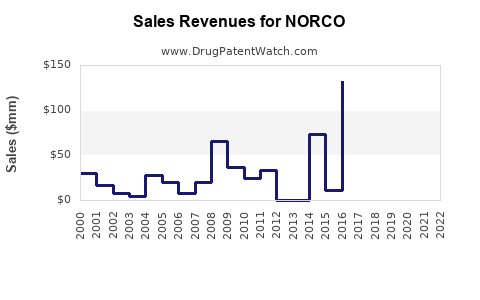
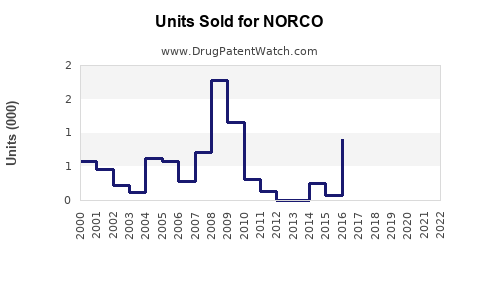
Annual Sales Revenues and Units Sold for NORCO
| Drug Name | Revenues (USD) | Units | Year |
|---|---|---|---|
| NORCO | ⤷ Start Trial | ⤷ Start Trial | 2022 |
| NORCO | ⤷ Start Trial | ⤷ Start Trial | 2021 |
| NORCO | ⤷ Start Trial | ⤷ Start Trial | 2020 |
| NORCO | ⤷ Start Trial | ⤷ Start Trial | 2019 |
| NORCO | ⤷ Start Trial | ⤷ Start Trial | 2018 |
| >Drug Name | >Revenues (USD) | >Units | >Year |
# Norco Market Analysis and Sales Projections: Hydrocodone-Acetaminophen Demand, Competition, and Exclusivity
Norco is a mature U.S. opioid analgesic brand containing hydrocodone bitartrate and acetaminophen. Its commercial value is limited by generic substitution, declining opioid prescribing, acetaminophen safety restrictions, controlled-substance regulation, and the absence of meaningful current patent exclusivity. The broader hydrocodone-acetaminophen market remains commercially significant, but most revenue accrues to generic manufacturers rather than the Norco brand.
A reasonable base case places the U.S. hydrocodone-acetaminophen market in the range of $300 million to $600 million in annual manufacturer revenue during 2025, with low-single-digit annual prescription erosion. Norco-branded revenue is likely a small fraction of that market because generic versions are therapeutically substitutable and widely available.
What is Norco and who manufactures it?
Norco is an immediate-release combination of hydrocodone bitartrate and acetaminophen. The product is marketed in several strengths, including:
| Product strength | Hydrocodone bitartrate | Acetaminophen |
|---|---|---|
| Norco 5/325 | 5 mg | 325 mg |
| Norco 7.5/325 | 7.5 mg | 325 mg |
| Norco 10/325 | 10 mg | 325 mg |
Hydrocodone is a Schedule II controlled substance in the United States. Norco is indicated for the management of pain severe enough to require an opioid analgesic when alternative treatments are inadequate.[1]
The Norco brand has historically been associated with Watson Laboratories, later part of Actavis and Allergan. The U.S. market now includes numerous generic hydrocodone-acetaminophen products from manufacturers such as Amneal Pharmaceuticals, Hikma Pharmaceuticals, Mallinckrodt, Rhodes Pharmaceuticals, Sun Pharmaceutical Industries, Teva Pharmaceuticals, and others.
The commercial product is therefore better analyzed as a mature molecule market than as an actively protected branded drug.
How large is the Norco and hydrocodone-acetaminophen market?
Public company filings generally do not report Norco revenue as a separate line item. Manufacturers usually combine hydrocodone-acetaminophen sales with broader generic pharmaceutical revenue. A precise brand-only market share is therefore unavailable from public disclosures.
The relevant market has three layers:
- Norco-branded tablets.
- Authorized or branded-generic hydrocodone-acetaminophen products.
- Commodity generic hydrocodone-acetaminophen tablets.
The third category accounts for most unit volume. Pharmacies and payers usually dispense the lowest-cost therapeutically equivalent product unless a prescriber or patient specifically requests the Norco brand.
Estimated U.S. market structure
| Segment | Estimated share of U.S. units | Commercial position |
|---|---|---|
| Commodity generics | 85% to 95% | Primary dispensing channel |
| Branded generics and authorized products | 4% to 12% | Selective pharmacy and institutional demand |
| Norco brand | Less than 5% | Limited brand-loyalty and cash-pay demand |
These percentages are analytical estimates based on generic substitution and the maturity of the product category, not reported Norco-specific figures.
Hydrocodone combination products remain among the most commonly prescribed opioid analgesics in the U.S., but prescription volume has declined from the high levels recorded before the implementation of tighter opioid controls. CDC data show sustained reductions in opioid prescribing rates from their peak in 2011 through the early 2020s.[2]
What are Norco sales projections through 2029?
The most defensible forecast separates the total hydrocodone-acetaminophen market from Norco-branded revenue.
Base-case forecast
| Year | U.S. category revenue | Estimated Norco-brand revenue | Category growth |
|---|---|---|---|
| 2025 | $300 million to $600 million | $10 million to $30 million | Baseline |
| 2026 | $285 million to $580 million | $9 million to $29 million | -3% to -5% |
| 2027 | $270 million to $565 million | $8 million to $28 million | -2% to -5% |
| 2028 | $260 million to $550 million | $8 million to $27 million | -2% to -4% |
| 2029 | $250 million to $540 million | $7 million to $26 million | -2% to -4% |
The forecast assumes declining prescription volume, continued generic price competition, stable access for severe acute pain, and no major regulatory event that removes hydrocodone combination products from the market.
The brand forecast is especially sensitive to distribution strategy. Norco could retain a higher price per prescription in cash-pay, specialty-pharmacy, or prescriber-directed channels, but unit share would remain constrained by generic substitution.
Bull case
A higher-value scenario would require a combination of stable opioid prescription volume, supply shortages among competing generics, increased demand for recognizable branded products, and favorable contracting. Under that scenario, total category revenue could remain near $600 million annually, while Norco revenue could approach $30 million to $40 million.
Bear case
The downside scenario includes further opioid volume reductions, lower reimbursement, additional acetaminophen safety restrictions, and generic entrants with aggressive pricing. Category revenue could fall below $250 million by 2029, with Norco-branded revenue below $10 million.
What factors drive Norco demand?
Norco demand is driven by acute and short-duration pain treatment, especially after dental procedures, surgery, trauma, and musculoskeletal injuries. Long-term chronic-pain use is less favorable because of prescribing controls and the availability of non-opioid alternatives.
Key demand drivers
- Acute postoperative and dental pain.
- Emergency-department prescriptions.
- Orthopedic and musculoskeletal injuries.
- Prescriber familiarity with hydrocodone-acetaminophen.
- Broad pharmacy distribution.
- Low-cost generic availability.
Key demand constraints
- State and federal opioid-prescribing limits.
- Prescription drug monitoring programs.
- Prior authorization and quantity limits.
- Institutional opioid stewardship programs.
- Competition from ibuprofen, naproxen, acetaminophen, tramadol, and oxycodone products.
- The risk of hepatotoxicity from excessive acetaminophen exposure.
- Pharmacy-level reluctance to stock controlled substances.
- Manufacturer quota and supply-chain restrictions.
The acetaminophen component is commercially important. Although the 325 mg strength reduces acetaminophen exposure compared with older 500 mg formulations, patients may still receive acetaminophen from multiple products. FDA has urged manufacturers to limit prescription combination products to no more than 325 mg of acetaminophen per dosage unit.[3]
What is the FDA regulatory status of Norco?
Norco is an FDA-approved prescription drug and a Schedule II controlled substance. It is not an over-the-counter product, and it does not have an FDA-approved abuse-deterrent formulation comparable to certain extended-release opioid products.
Important regulatory characteristics include:
| Regulatory issue | Norco status |
|---|---|
| FDA pathway | New Drug Application and generic ANDA pathways |
| Controlled substance | Schedule II |
| Dosage form | Immediate-release oral tablet |
| Active ingredients | Hydrocodone bitartrate and acetaminophen |
| Abuse-deterrent labeling | No established Norco-specific abuse-deterrent claim |
| Generic substitution | Broadly available |
| Opioid REMS | Covered by class-wide opioid safety requirements |
The FDA’s opioid analgesic REMS program requires manufacturers to support prescriber education and risk-management measures for outpatient opioid products.[4]
What patents protect Norco?
Norco does not have a commercially meaningful composition-of-matter patent estate. Hydrocodone and acetaminophen are long-established active ingredients, and the immediate-release combination is a mature dosage form.
The relevant intellectual-property position is principally regulatory and manufacturing based rather than patent based.
Patent estate assessment
| IP category | Norco position |
|---|---|
| Active-ingredient patent | Expired or not commercially relevant |
| Basic combination patent | No meaningful current exclusivity |
| Immediate-release tablet patent | No material barrier to generic entry |
| Formulation patents | Limited commercial relevance |
| Method-of-use patents | No broad exclusivity expected for ordinary pain treatment |
| Manufacturing patents | Potentially relevant to individual suppliers, not market-wide |
| Trademark | Norco brand remains commercially relevant only if maintained and used |
The FDA Orange Book lists approved drug products and patent information submitted by sponsors. For a mature hydrocodone-acetaminophen product, the practical competitive issue is generic approval and supply economics rather than patent protection.[5]
When did Norco lose exclusivity?
Norco lost effective commercial exclusivity many years ago. Generic hydrocodone-acetaminophen products are approved through abbreviated new drug applications, allowing applicants to rely on the reference product’s safety and efficacy findings.
Because no current Norco patent is expected to block generic entry, the product has no meaningful future patent cliff. Revenue erosion is gradual and structural rather than concentrated around a single expiration date.
Norco also does not have biosimilar exposure. Biosimilars apply to biological products, while Norco is a chemically synthesized small-molecule tablet. Its competitive risk comes from generic drugs, not biosimilars.
Are Paragraph IV challenges relevant to Norco?
Paragraph IV litigation is unlikely to be a material current issue for Norco. A Paragraph IV certification is used when a generic applicant asserts that a listed patent is invalid, unenforceable, or will not be infringed. That mechanism is most important during an active patent term.
For a mature hydrocodone-acetaminophen product with no meaningful blocking patents, generic manufacturers can generally pursue approval without creating a major patent dispute. Any litigation would more likely involve:
- Manufacturing-process patents.
- Formulation differences.
- Labeling disputes.
- Trademark or trade-dress claims.
- Controlled-substance distribution issues.
- Commercial contracts and supply arrangements.
What formulation patents protect hydrocodone-acetaminophen products?
The main Norco dosage form is an immediate-release tablet. Its technical barrier to entry is low compared with extended-release opioids, transdermal systems, injectable products, or complex drug-delivery technologies.
Potential formulation protections could cover:
- Tablet hardness and dissolution.
- Impurity control.
- Stability improvements.
- Manufacturing processes.
- Coating systems.
- Abuse-deterrent technology.
These rights would generally protect a particular product or manufacturing process, not the basic hydrocodone-acetaminophen market. A competitor could often design around the claim by using a different excipient system or process.
What patent litigation affects Norco?
No major active patent litigation is central to the current Norco market outlook. The more important legal exposure comes from opioid-related enforcement, controlled-substance distribution, and product-liability litigation.
Opioid manufacturers and distributors have faced extensive civil and governmental claims involving marketing, distribution controls, and alleged contribution to opioid misuse. Those proceedings have affected industry reputation, compliance costs, insurance exposure, and distribution practices, even when they do not directly challenge Norco’s patent validity.
Which companies are challenging or competing with Norco?
Norco faces competition from both generic hydrocodone-acetaminophen products and alternative analgesics.
Direct generic competitors
- Amneal Pharmaceuticals.
- Hikma Pharmaceuticals.
- Mallinckrodt.
- Rhodes Pharmaceuticals.
- Sun Pharmaceutical Industries.
- Teva Pharmaceuticals.
- Endo and related generic operations.
- Regional and contract manufacturers.
Therapeutic competitors
- Oxycodone-acetaminophen.
- Tramadol.
- Ibuprofen.
- Naproxen.
- Acetaminophen alone.
- Buprenorphine products in selected pain settings.
- Nonpharmacological and procedural pain-management approaches.
Generic hydrocodone-acetaminophen is the strongest competitive threat because it offers the same active ingredients, dosage form, and general clinical use at lower cost.
How strong is the Norco patent estate?
Norco’s patent estate is weak from a commercial defense perspective. Its value depends on brand recognition, distribution, prescriber familiarity, and supply reliability rather than exclusionary intellectual property.
| Strength factor | Assessment |
|---|---|
| Composition-of-matter protection | None of practical value |
| Patent life | Expired or immaterial |
| Generic barriers | Low |
| Formulation complexity | Low |
| Manufacturing complexity | Low to moderate |
| Regulatory barriers | Moderate because of Schedule II controls |
| Brand value | Limited but potentially defensible in selected channels |
| Litigation leverage | Low for patent disputes |
The strongest barriers are operational. Manufacturers must comply with DEA controls, quota rules, serialization, quality systems, controlled-substance security requirements, and pharmacy distribution restrictions.[6]
What generic launch risks exist for Norco?
Generic launch risk is already realized rather than prospective. The commercial risks are continued price compression and supplier substitution.
A new generic entrant could reduce average selling prices if it secures preferred wholesaler, Medicaid, managed-care, or retail-pharmacy contracts. However, shortages or manufacturing exits could temporarily improve pricing for remaining suppliers.
The market has a two-sided risk profile:
- In normal supply conditions, generic competition reduces price and brand share.
- During shortages, supply reliability can create temporary pricing power.
Norco’s brand would need a differentiated channel strategy to offset generic substitution. Potential approaches include direct relationships with hospitals, specialty pharmacies, selected prescriber networks, and cash-pay patients. These channels would not eliminate the underlying substitution risk.
What is the competitive outlook for Norco through 2029?
The market outlook is mature to declining. The central forecast is:
- U.S. prescription volume declines at approximately 2% to 5% annually.
- Generic products retain more than 90% of unit volume.
- Average generic pricing remains under pressure.
- Norco brand revenue remains below 5% of category revenue.
- No biosimilar threat exists.
- No major patent-expiration event changes the market.
- Supply disruptions can produce short-term volatility.
Norco is therefore better characterized as a low-growth maintenance brand than as a platform for substantial pharmaceutical expansion.
Key Takeaways
- Norco contains hydrocodone bitartrate and acetaminophen and is a Schedule II prescription opioid.
- The U.S. market is dominated by generic hydrocodone-acetaminophen products.
- Estimated 2025 category revenue is $300 million to $600 million, while Norco-branded revenue is likely $10 million to $30 million.
- The market is expected to decline at a low-single-digit annual rate through 2029.
- Norco has no meaningful current patent exclusivity.
- Paragraph IV litigation and biosimilar risk are not material to the present outlook.
- The main commercial risks are generic price competition, opioid prescribing restrictions, acetaminophen safety concerns, and supply-chain controls.
- Manufacturing compliance and controlled-substance distribution rules are more important barriers than patents.
FAQs
Is Norco still commercially available?
Norco and Norco-equivalent products may be available through selected pharmacies and distributors, but availability varies by strength, manufacturer, state requirements, and controlled-substance inventory.
Is Norco more profitable than generic hydrocodone-acetaminophen?
The branded product can command a higher unit price, but generic products generally have greater volume. Norco’s overall profitability is constrained by low brand share and controlled-substance distribution costs.
Does Norco have an Orange Book patent?
The Orange Book is relevant to the approved reference product and any listed patents, but Norco has no widely recognized active patent barrier that prevents generic hydrocodone-acetaminophen competition.
Can a generic manufacturer launch without a Norco patent settlement?
Yes. Generic manufacturers can enter without a settlement when no enforceable patent blocks approval or commercial launch. The market’s broad generic availability confirms that Norco is not protected by effective current exclusivity.
Is Norco exposed to opioid settlement liabilities?
Entities involved in manufacturing, marketing, distribution, or sale of prescription opioids may face litigation and settlement exposure depending on their role and conduct. The risk is separate from Norco’s product patents and FDA approval status.
References
- U.S. Food and Drug Administration. (2014). Norco hydrocodone bitartrate and acetaminophen tablets: Prescribing information.
- Centers for Disease Control and Prevention. (2024). U.S. opioid prescribing rate maps and data.
- U.S. Food and Drug Administration. (2011). FDA recommends limiting acetaminophen in prescription combination products to 325 mg.
- U.S. Food and Drug Administration. (2022). Opioid analgesic risk evaluation and mitigation strategy.
- U.S. Food and Drug Administration. (2024). Approved drug products with therapeutic equivalence evaluations: Orange Book.
- U.S. Drug Enforcement Administration. (2024). Controlled substances and federal requirements for registrants.
More… ↓
