Share This Page
Drug Sales Trends for MEMANTINE
✉ Email this page to a colleague
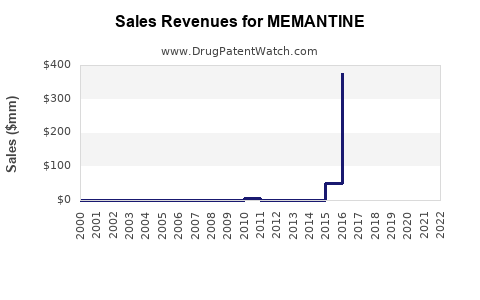
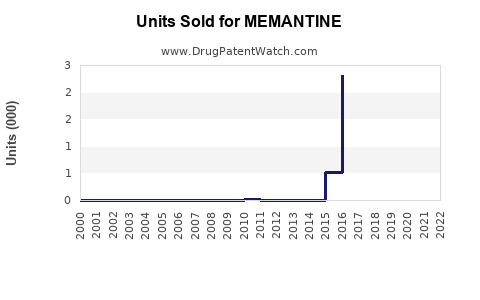
Annual Sales Revenues and Units Sold for MEMANTINE
| Drug Name | Revenues (USD) | Units | Year |
|---|---|---|---|
| MEMANTINE | ⤷ Start Trial | ⤷ Start Trial | 2022 |
| MEMANTINE | ⤷ Start Trial | ⤷ Start Trial | 2021 |
| MEMANTINE | ⤷ Start Trial | ⤷ Start Trial | 2020 |
| MEMANTINE | ⤷ Start Trial | ⤷ Start Trial | 2019 |
| MEMANTINE | ⤷ Start Trial | ⤷ Start Trial | 2018 |
| >Drug Name | >Revenues (USD) | >Units | >Year |
Memantine Market Analysis, Sales Projections, Patent Status, and Generic Competition
Memantine is a mature Alzheimer’s disease drug with broad generic availability, limited remaining branded value, and low regulatory barriers to substitution. The U.S. market is dominated by low-cost immediate-release tablets and oral solution. Extended-release memantine remains commercially differentiated by once-daily dosing, but its market is also exposed to generic competition.
The most defensible market view is:
- Branded Namenda and Namenda XR are no longer the primary value drivers.
- Generic memantine controls most prescription volume in the United States.
- Revenue growth will depend on patient prevalence, diagnosis rates, adherence, and combination use with donepezil rather than price increases.
- A reasonable base case is low-single-digit annual volume growth and flat-to-declining nominal market revenue through 2030.
- The principal commercial risks are generic price erosion, Medicare reimbursement pressure, and the absence of a disease-modifying clinical benefit.
What is memantine and how is it used?
Memantine hydrochloride is an N-methyl-D-aspartate, or NMDA, receptor antagonist approved for moderate-to-severe Alzheimer’s disease. The immediate-release product is generally titrated to 10 mg twice daily. Extended-release memantine is administered once daily at doses up to 28 mg. The FDA approved Namenda immediate-release tablets and oral solution in 2003 and Namenda XR in 2010. [1,2]
| Product | Active ingredient | Typical dosage form | FDA indication | Commercial status |
|---|---|---|---|---|
| Namenda | Memantine hydrochloride | 5 mg and 10 mg tablets; oral solution | Moderate-to-severe Alzheimer’s disease | Generic competition |
| Namenda XR | Memantine hydrochloride | Extended-release capsules | Moderate-to-severe Alzheimer’s disease | Generic competition |
| Generic memantine IR | Memantine hydrochloride | Tablets; oral solution | Same reference indication | Broad availability |
| Generic memantine ER | Memantine hydrochloride | Extended-release capsules | Same reference indication | Available from multiple manufacturers |
Memantine is also prescribed with acetylcholinesterase inhibitors, especially donepezil. The combination is marketed as Namzaric, which contains memantine extended release and donepezil. Namzaric adds a fixed-dose combination and adherence proposition, but it does not create a new mechanism of action.
How large is the memantine market?
Public companies generally report Namenda revenue rather than a complete memantine market total. After generic entry, branded revenue declined sharply, while prescription volume shifted to lower-priced products.
The market should be divided into three segments:
- Immediate-release generic memantine.
- Extended-release memantine, including generic Namenda XR.
- Fixed-dose memantine-donepezil combinations, principally Namzaric and generic equivalents where available.
Historical commercial trajectory
Forest Laboratories commercialized Namenda before its acquisition by Actavis, later part of Allergan and AbbVie. Namenda generated more than $1 billion in annual U.S. sales before generic competition materially reduced revenue. Forest disclosed approximately $1.4 billion in fiscal 2013 Namenda sales, reflecting the product’s pre-generic scale. [3]
Namenda immediate-release faced generic competition in the early 2010s. The commercial transition accelerated as payers moved patients to generic tablets and as physicians responded to formulary restrictions. Namenda XR retained some branded demand through once-daily dosing, but its revenue base was smaller than that of immediate-release Namenda.
Current market structure
| Segment | Volume outlook | Pricing outlook | Competitive intensity |
|---|---|---|---|
| Generic immediate-release tablets | Stable to modest growth | Continued decline or low stable pricing | Very high |
| Generic oral solution | Modest growth | Higher price per unit than tablets but reimbursement pressure | High |
| Extended-release capsules | Stable to modest growth | Moderate erosion | High |
| Namzaric and generic combination products | Depends on adherence and prescribing | Moderate-to-high pressure | Medium to high |
| Branded Namenda | Minimal growth | Limited pricing power | Very high |
The underlying disease population is expanding because the number of people living with Alzheimer’s disease is rising. The Alzheimer’s Association estimates that 7.2 million Americans aged 65 and older were living with Alzheimer’s dementia in 2024. [4] That demographic growth supports prescription demand, but memantine penetration is limited by diagnosis gaps, treatment discontinuation, tolerability, and the shift toward newer disease-modifying therapies in eligible early-stage patients.
What are the memantine sales projections through 2030?
A precise market-revenue forecast requires proprietary prescription and net-price data. A scenario model is more reliable than a single point estimate because memantine has several dosage forms and payer channels.
The following projection uses 2024 as an index year with total U.S. memantine-related revenue set at 100. It is a market model, not reported manufacturer revenue.
| Year | Bear case index | Base case index | Bull case index | Base-case interpretation |
|---|---|---|---|---|
| 2024 | 100 | 100 | 100 | Reference year |
| 2025 | 96 | 99 | 102 | Volume growth offset by price erosion |
| 2026 | 92 | 98 | 104 | Generic substitution continues |
| 2027 | 88 | 97 | 106 | Prevalence supports volume |
| 2028 | 84 | 96 | 108 | Low-cost products dominate |
| 2029 | 80 | 95 | 110 | Combination products provide limited support |
| 2030 | 76 | 94 | 112 | Market remains mature and price-sensitive |
Base-case assumptions
The base case assumes:
- U.S. prescription volume grows approximately 1% to 3% annually.
- Average net price declines approximately 2% to 4% annually.
- Generic immediate-release products account for most prescriptions.
- Extended-release products retain a minority share based on convenience and adherence.
- No major new indication is approved.
- New Alzheimer’s disease therapies do not eliminate symptomatic-treatment use.
- Medicare and Medicaid remain the dominant reimbursement channels for older patients.
Under these assumptions, memantine-related revenue declines modestly despite stable or growing prescription volume. The market is therefore a volume market, not a price-expansion market.
Bull-case drivers
The bull case requires a combination of:
- Higher diagnosis and treatment rates.
- Greater use in moderate-to-severe disease.
- Continued prescribing alongside disease-modifying therapies.
- Improved adherence from extended-release or fixed-dose products.
- Limited disruption from additional generic entrants.
Bear-case drivers
The bear case is more likely if:
- Generic manufacturers increase price competition.
- Payers impose tighter step edits or preferred-product policies.
- Physicians increasingly discontinue symptomatic drugs in advanced disease.
- New Alzheimer’s therapies reduce use of memantine in earlier stages.
- Generic combination products expand rapidly.
Which companies compete in the memantine market?
The competitive field includes branded rights holders, large generic manufacturers, specialty generics companies, and contract manufacturers.
Branded and specialty products
The historical Namenda franchise was associated with Forest Laboratories and later Actavis/Allergan. AbbVie became the ultimate corporate successor to Allergan’s commercial portfolio through its 2020 acquisition. Namzaric has been associated with Allergan and its successor businesses.
Generic manufacturers
Generic memantine has been marketed by multiple manufacturers over time, including large U.S. and international generic companies. The relevant competitive set can change by dosage form, strength, supplier, and pharmacy benefit manager contract. Competition is strongest for 5 mg and 10 mg immediate-release tablets.
For investors and licensing teams, manufacturer count matters less than:
- FDA-approved abbreviated new drug applications.
- Supply reliability.
- API sourcing.
- Medicare and Medicaid formulary position.
- Ability to maintain low-cost production.
- Pharmacy benefit manager relationships.
What is the FDA regulatory status of memantine?
Memantine immediate-release tablets, oral solution, and extended-release capsules are FDA-approved prescription products. The products are approved under the New Drug Application and abbreviated new drug application pathways. Generic applicants must demonstrate pharmaceutical equivalence and bioequivalence to the applicable reference product. [1,2,5]
Memantine does not have biologic-product biosimilar exposure. The relevant competitors are small-molecule generics, not biosimilars.
Regulatory barriers
The regulatory barriers are low for immediate-release tablets but higher for:
- Extended-release capsules.
- Oral solutions requiring stability and dosing accuracy.
- Fixed-dose memantine-donepezil products.
- Manufacturing processes involving complex release characteristics.
The highest remaining technical barrier is extended-release formulation performance. Once multiple equivalent products are approved, that barrier becomes primarily commercial rather than regulatory.
What patents protect memantine products?
The original memantine active-ingredient patent estate is no longer a meaningful U.S. exclusivity barrier. Commercial protection historically relied on formulation, dosage-form, and product-specific patents rather than a current composition-of-matter monopoly.
| Protection category | Commercial relevance |
|---|---|
| Original memantine compound patents | Expired or commercially obsolete |
| Immediate-release tablet patents | No meaningful barrier to generic competition |
| Oral-solution protection | Limited; manufacturing and regulatory execution matter more |
| Extended-release formulation patents | Historically important; exposure depends on listed patent status and litigation |
| Fixed-dose memantine-donepezil patents | Can support product differentiation but face generic and formulation challenges |
| Method-of-use patents | Narrow relevance because Alzheimer’s use is established and broad substitution is common |
Current Orange Book listings should be assessed by product and NDA because patents can differ between Namenda, Namenda XR, and Namzaric. The FDA Orange Book identifies listed patents and regulatory exclusivity for approved products. [6]
When did memantine lose exclusivity?
Immediate-release memantine lost practical U.S. exclusivity when generic products entered the market in the early 2010s. Namenda XR retained a later branded window because its extended-release formulation was approved in 2010. That window has also been eroded by generic extended-release competition.
The commercial conclusion is clear: memantine is past its principal exclusivity period. Any remaining patent value is product-specific and unlikely to support a broad branded monopoly.
What paragraph IV challenges and patent litigation affect memantine?
Generic manufacturers seeking approval before patent expiration can file paragraph IV certifications under the Hatch-Waxman Act. Memantine-related disputes have centered on generic entry, extended-release formulations, and branded efforts to preserve product switching.
Namenda faced significant commercial and legal scrutiny when Forest attempted to transition patients from immediate-release Namenda to Namenda XR before generic competition. The Federal Trade Commission challenged aspects of the strategy, and the Second Circuit allowed the FTC’s antitrust case to proceed at an important stage. [7]
The principal litigation risks are:
- Product hopping from immediate release to extended release.
- Allegations that branded manufacturers impeded generic substitution.
- Paragraph IV challenges to extended-release patents.
- Antitrust claims tied to distribution, formulary, or product-switching strategies.
- Settlement agreements that delay or define generic entry.
A generic challenger’s strongest path is usually an ordinary abbreviated new drug application supported by bioequivalence, combined with a non-infringement or invalidity position against any remaining listed patents.
What formulation patents and manufacturing barriers remain?
Immediate-release memantine tablets are relatively simple to manufacture. The product has a long history of generic production and does not require a complex delivery platform.
Extended-release products have more defensible technical characteristics:
- Controlled release over a 24-hour period.
- Capsule or multiparticulate design.
- Dissolution-profile matching.
- Stability under different storage conditions.
- Dose proportionality across strengths.
These factors can delay entry or increase development cost, but they do not create a durable barrier once several generic products have demonstrated bioequivalence.
Manufacturing risk is concentrated in API sourcing, quality-system compliance, dissolution control, and supply continuity. Price competition can make production economically unattractive for smaller manufacturers even when regulatory entry is technically straightforward.
How does memantine compare with competing Alzheimer’s drugs?
| Drug | Mechanism | Disease stage | Patent and market profile | Commercial outlook |
|---|---|---|---|---|
| Memantine | NMDA receptor antagonist | Moderate to severe | Mature generic market | Stable volume, declining price |
| Donepezil | Acetylcholinesterase inhibitor | Mild to severe | Mature generic market | Broad, low-cost use |
| Rivastigmine | Acetylcholinesterase inhibitor | Mild to severe | Generic oral and patch products | Patch retains some differentiation |
| Galantamine | Acetylcholinesterase inhibitor | Mild to moderate | Generic market | Limited growth |
| Lecanemab | Anti-amyloid antibody | Early Alzheimer’s disease | Biologic and administration barriers | Higher revenue per patient, narrower eligibility |
| Donanemab | Anti-amyloid antibody | Early Alzheimer’s disease | Biologic, monitoring, and reimbursement constraints | Competes for earlier-stage patients |
Memantine remains relevant because anti-amyloid antibodies are not substitutes for all symptomatic treatment. Their use is restricted by disease stage, biomarker requirements, safety monitoring, infusion infrastructure, and reimbursement criteria. [8,9]
What generic launch scenarios exist for memantine?
Scenario 1: Continued generic price erosion
This is the most likely scenario for immediate-release tablets. Prescription volume remains stable, but net revenue falls as more suppliers compete and payers favor the lowest-cost products.
Scenario 2: Extended-release stabilization
Extended-release memantine could retain a modest premium if physicians value adherence, reduced dosing frequency, or lower pill burden. This would support revenue stability but not a return to pre-generic branded sales.
Scenario 3: Combination-product growth
Namzaric and generic fixed-dose combinations could gain share among patients already receiving both agents. Growth depends on whether the convenience benefit offsets higher cost and formulary restrictions.
Scenario 4: New therapeutic displacement
New disease-modifying agents may reduce memantine initiation in early disease. The effect on total memantine volume should be gradual because memantine is used primarily in moderate-to-severe disease, while currently approved anti-amyloid therapies target earlier stages.
What is the revenue exposure for manufacturers and investors?
Memantine offers limited upside from price expansion. The investment case is based on operational efficiency, product breadth, and channel access.
Attractive characteristics
- Large and aging target population.
- Established diagnosis and treatment pathway.
- Simple immediate-release manufacturing.
- Stable chronic prescription demand.
- Potential for combination-product sales.
Negative characteristics
- Extensive generic competition.
- Low average selling prices.
- Limited switching costs.
- Weak brand loyalty after generic substitution.
- Reimbursement concentration in government programs.
- No meaningful current composition-of-matter exclusivity.
For a generic manufacturer, memantine can be useful as part of a broad CNS portfolio but is unlikely to justify standalone investment. For a branded company, the asset has limited strategic value unless paired with an adherence platform, combination product, or differentiated delivery system.
Key Takeaways
- Memantine is a mature, genericized Alzheimer’s disease medicine.
- Immediate-release tablets account for the core market and face intense price competition.
- Extended-release memantine retains some adherence-based differentiation but is also exposed to generic entry.
- Historical Namenda sales exceeded $1 billion annually before generic erosion, but that revenue base is no longer recoverable through ordinary branded pricing.
- The base-case U.S. market outlook through 2030 is stable-to-declining revenue with modest prescription-volume growth.
- The most relevant legal issues involve extended-release patents, paragraph IV challenges, product hopping, and antitrust claims.
- Memantine has no biosimilar risk because it is a small-molecule drug.
- New anti-amyloid therapies are more likely to affect early-stage treatment patterns than to eliminate moderate-to-severe memantine use.
- Commercial value is concentrated in manufacturing scale, supply reliability, formulary access, and fixed-dose or extended-release formulations.
FAQs
Is memantine still a profitable drug?
Memantine can be profitable for efficient generic manufacturers with scale and reliable supply, but it has limited pricing power and low standalone strategic value.
Does memantine have patent protection in the United States?
The original active-ingredient exclusivity is no longer commercially relevant. Any remaining protection is product-specific and may relate to extended-release or fixed-dose formulations.
Will lecanemab and donanemab replace memantine?
They are unlikely to replace memantine across the full patient population because they target earlier-stage disease and require biomarker selection, monitoring, and specialized administration.
Is Namenda XR more valuable than generic memantine?
Namenda XR can support higher value per prescription through once-daily dosing, but generic extended-release products limit the duration and scale of that premium.
What is the strongest commercial opportunity in the memantine market?
The strongest opportunities are low-cost generic supply, extended-release manufacturing, oral-solution production, and fixed-dose memantine-donepezil products with favorable payer access.
References
- U.S. Food and Drug Administration. (2003). Namenda prescribing information.
- U.S. Food and Drug Administration. (2010). Namenda XR prescribing information.
- Forest Laboratories, Inc. (2013). Annual report for fiscal year 2013.
- Alzheimer’s Association. (2024). 2024 Alzheimer’s disease facts and figures.
- U.S. Food and Drug Administration. (2024). Generic drug facts and information.
- U.S. Food and Drug Administration. (2024). Approved drug products with therapeutic equivalence evaluations, Orange Book.
- Federal Trade Commission v. Actavis, Inc., 570 U.S. 136 (2013); Federal Trade Commission v. Actavis, Inc., 868 F.3d 66 (2d Cir. 2017).
- U.S. Food and Drug Administration. (2023). Leqembi prescribing information.
- U.S. Food and Drug Administration. (2024). Kisunla prescribing information.
More… ↓