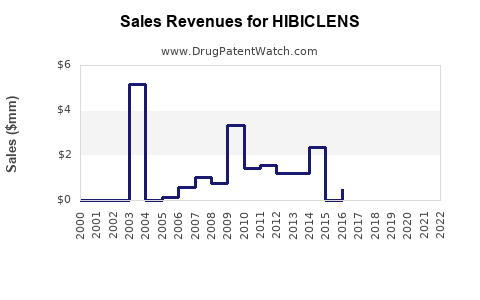
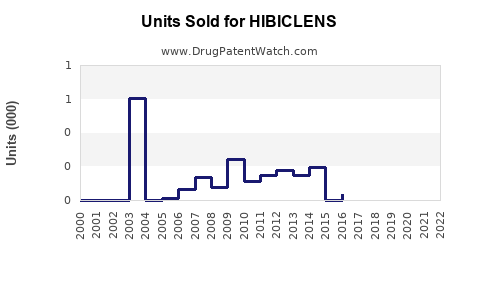
Last updated: February 25, 2026
What is HIBICLENS?
HIBICLENS is a chlorhexidine gluconate-based antiseptic solution primarily used for skin cleansing, wound disinfection, and preoperative skin preparation. It is produced by Johnson & Johnson. The product has broad application in hospitals, clinics, and outpatient settings for infection prevention.
Market Overview
Market Size
The global antiseptic and disinfectant market was valued at approximately USD 4.45 billion in 2022 and is projected to reach USD 6.37 billion by 2030, growing at a compound annual growth rate (CAGR) of 4.7% from 2023 to 2030.[1]
Within this, chlorhexidine-based products account for roughly 25% of the market, valued at an estimated USD 1.11 billion in 2022. HIBICLENS, as a leading brand, holds a significant market share in this segment.
Key Market Drivers
- Increased hospital-acquired infection (HAI) prevention protocols.
- Regulatory focus on infection control in clinical settings.
- Rising demand for surgical antisepsis.
- Healthcare sector expansion in emerging markets.
Market Challenges
- Competition from alternative antiseptics like povidone-iodine and alcohol-based products.
- Price sensitivity, particularly in cost-cutting healthcare environments.
- Limited usage in outpatient settings due to regulations and preferences.
Regional Market Dynamics
| Region |
Market Size (USD billions, 2022) |
CAGR (2023-2030) |
Key Factors |
| North America |
1.5 |
4.5% |
Strict infection control policies, high healthcare spending |
| Europe |
0.9 |
4.2% |
Hospital accreditation standards, aging population |
| Asia-Pacific |
0.8 |
6.0% |
Healthcare expansion, rising surgical procedures |
| Latin America |
0.2 |
4.8% |
Emerging healthcare infrastructure |
Competitive Landscape
Major players include Johnson & Johnson, 3M, Metrex, and Thermo Fisher Scientific. Johnson & Johnson's HIBICLENS maintains a strong market position due to brand recognition, consistent supply, and broad application.
Market share estimates place HIBICLENS at approximately 45-50% within chlorhexidine antiseptics in North America, and slightly lower in Europe and emerging markets.
Sales Projections
Assumptions
- Steady growth in healthcare infrastructure and infection prevention policies.
- No major regulatory disruptions.
- Continued preference for chlorhexidine in surgical and routine disinfection.
Projected Sales Data
| Year |
Estimated Market Sales (USD millions) |
HIBICLENS Sales (USD millions) |
Notes |
| 2023 |
550 |
250 |
Baseline for current market size |
| 2025 |
630 |
290 |
Growth driven by increased hospital protocols |
| 2027 |
730 |
340 |
Expansion into outpatient markets begins |
| 2030 |
880 |
410 |
Intense competition persists, but steady growth continues |
Growth Drivers for Sales
- Expanding use in outpatient surgery centers.
- Increased focus on preoperative skin preparation.
- Adoption in emerging markets due to healthcare infrastructure improvements.
- Institutional procurement contracts.
Growth Constraints
- Competition from alcohol-based products, which sometimes are preferred for their rapid action.
- Price sensitivity, especially in public healthcare sectors.
- Restrictive regulations on antiseptic formulations in some jurisdictions.
Strategic Considerations
- Broadening indications, including user-friendly formats like wipes.
- Strengthening presence in outpatient surgical centers.
- Forming partnerships with distributors in emerging markets.
- Investing in clinical evidence to support efficacy over competitors.
Key Takeaways
- HIBICLENS remains a leading chlorhexidine antiseptic, vital for infection control protocols.
- The global antiseptic market is projected to grow at approximately 4.7% CAGR through 2030.
- Sales are expected to rise from around USD 250 million in 2023 to approximately USD 410 million in 2030, driven by expanding healthcare infrastructure and infection prevention standards.
- Competition and price sensitivity in outpatient settings pose challenges.
- Opportunities exist in emerging markets and product diversification.
FAQs
1. How does HIBICLENS compare to other chlorhexidine products?
It has a strong brand presence and consistent supply. Its formulary versatility and broad hospital adoption support its market dominance.
2. What are the main competitors?
3M's chlorhexidine products, Metrex's disinfectants, and generic formulations serve as primary competitors.
3. Which regions offer the highest growth potential?
Asia-Pacific and Latin America show the highest CAGR due to healthcare expansion and infrastructure development.
4. What are regulatory trends influencing sales?
Stringent infection control regulations support growth, while restrictions on certain antiseptic formulations in some markets could limit sales.
5. How might emerging alternatives impact HIBICLENS sales?
Product innovations and new antiseptic combinations could threaten market share; maintaining clinical efficacy and expanding indications mitigate this risk.
References
[1] MarketsandMarkets. (2022). Disinfectants and Sanitizers Market by Type, Application, and Region: Global Forecast to 2030.