Last updated: February 13, 2026
Market Overview and Sales Projections for Acyclovir
Acyclovir is an antiviral medication primarily used to treat herpes simplex virus (HSV) infections, varicella-zoster virus (VZV) infections, and other herpes-related conditions. It has been marketed since 1982 and remains a key drug within antiviral therapy. The market for acyclovir is influenced by factors such as prevalence rates of herpes infections, generic competition, emerging formulations, and regional healthcare policies.
Global Market Size and Regional Distribution
Current Market Size
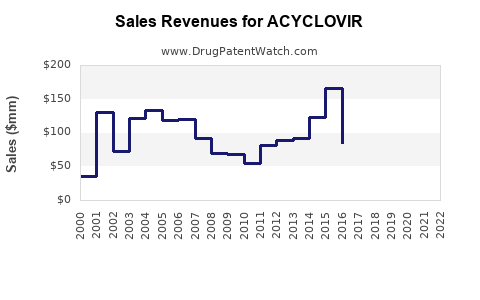
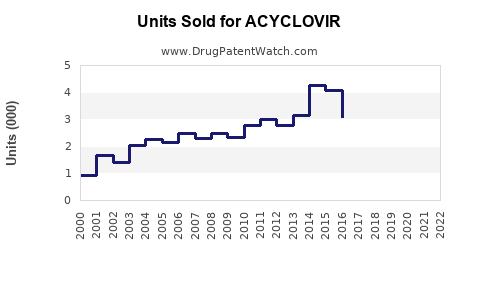
In 2022, the global acyclovir market was valued at approximately $500 million. The market has grown at a compound annual growth rate (CAGR) of 3.2% since 2017. This growth is attributed to increased awareness, improved diagnostic capabilities, and expanding treatment indications.
Regional Breakdown
| Region |
Market Share (2022) |
Key Drivers |
| North America |
45% |
High herpes prevalence, advanced healthcare infrastructure, strong prescription base |
| Europe |
25% |
Robust healthcare systems, aging population, herpes prevalence |
| Asia-Pacific |
20% |
Large population, increasing healthcare access, rising herpes awareness |
| Rest of World |
10% |
Emerging markets, increasing stable supply chains |
Market Drivers
- High Prevalence of Herpes Infections: HSV-1 affects 67% of the global population under age 50; HSV-2 affects over 500 million people worldwide.
- Chronic and Recurring Nature of Herpes: Patients often require long-term suppression therapy, adding to sustained demand.
- Development of Generic Acyclovir: Patent expires led to increased availability of lower-cost formulations, expanding access in lower-income regions.
- Expanding Use in Immunocompromised Patients: HIV/AIDS, transplant recipients, cancer patients increasingly receive acyclovir as prophylaxis.
- Emerging Formulations: Creams, tablets, IV forms, and topical gels meet different clinical needs and expand market reach.
Key Market Trends
- Generic Competition: The patent expiration significantly reduced prices, increasing prescriptions in developing countries.
- New Formulations: Development of extends-release tablets and topical applications improves patient compliance.
- Market Entry of Combination Drugs: Combining acyclovir with other antivirals for broader antiviral coverage.
Sales Projections (2023-2028)
| Year |
Projected Market Size |
CAGR |
| 2023 |
$525 million |
3.2% |
| 2024 |
$542 million |
3.2% |
| 2025 |
$560 million |
3.2% |
| 2026 |
$578 million |
3.2% |
| 2027 |
$597 million |
3.2% |
| 2028 |
$616 million |
3.2% |
Projections assume stable regulatory environments and sustained demand driven by herpes prevalence. The growth rate remains around 3.2%, consistent with historical trends.
Competitive Landscape
- Generic Manufacturers: Major players include Sandoz, Teva, and Mylan, which produce large volumes at low cost.
- Original Brand: GlaxoSmithKline holds patents for newer formulations but faces competition from generics.
- Emerging Players: Companies developing topical and injectable variants aim to diversify offerings.
Pricing Dynamics
Pricing for acyclovir varies by formulation and region. In the U.S., oral tablets cost approximately $0.10 to $0.20 per dose for generics. Topical formulations are priced between $15 to $40 per tube, depending on concentration and packaging.
Regulatory Environment
- FDA: Provides expedited review pathways for new formulations.
- EMA (Europe): Follows similar approval protocols, with variations in clinical trial requirements.
- Emerging Markets: Regulatory timelines are variable; approvals accelerate market entry.
Key Takeaways
- The acyclovir market remains stable with modest growth driven by herpes infection prevalence.
- Generics dominate due to patent expirations, intensifying price competition.
- Innovative formulations and combination therapies are future growth avenues.
- Regional disparities stem from healthcare access, prevalence, and reimbursement policies.
- Sales are projected to grow at 3.2% annually through 2028, reaching approximately $616 million globally.
Frequently Asked Questions
1. What factors most influence acyclovir sales growth?
Prevalence rates of herpes infections, generic competition, approval of new formulations, and healthcare access levels.
2. How does patent expiration impact the acyclovir market?
It allows generic manufacturers to enter markets, reducing prices and increasing accessibility, especially in developing regions.
3. Are there new formulations of acyclovir in development?
Yes; extends-release tablets, topical gels, and injectable formulations aim to improve efficacy and patient compliance.
4. Which regions present the greatest growth potential?
Asia-Pacific exhibits significant potential due to population size and improving healthcare infrastructure.
5. How might emerging rival antivirals affect acyclovir?
Introduction of new drugs with better efficacy or safety profiles could diminish acyclovir market share in specific indications.
References
- MarketWatch. "Acyclovir Market Size, Share & Trends Analysis Report," 2022.
- Grand View Research. "Antiviral Drugs Market Analysis," 2023.
- World Health Organization. "Herpes Simplex Virus Prevalence," 2021.
- U.S. Food and Drug Administration. "Approved Drug Products," 2023.
- European Medicines Agency. "European Market Data on Antiviral Agents," 2022.