Share This Page
Drug Sales Trends for TESTOSTERONE
✉ Email this page to a colleague
Payment Methods and Pharmacy Types for TESTOSTERONE (2005)
Revenues by Pharmacy Type
Units Sold by Pharmacy Type
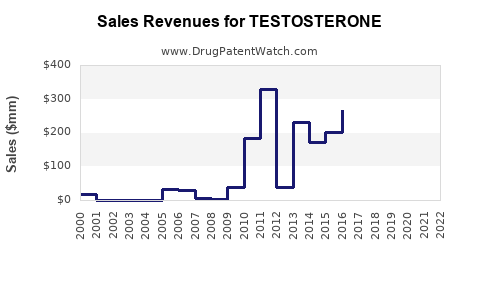
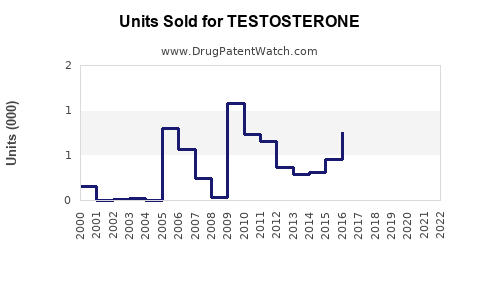
Annual Sales Revenues and Units Sold for TESTOSTERONE
| Drug Name | Revenues (USD) | Units | Year |
|---|---|---|---|
| TESTOSTERONE | ⤷ Start Trial | ⤷ Start Trial | 2022 |
| TESTOSTERONE | ⤷ Start Trial | ⤷ Start Trial | 2021 |
| TESTOSTERONE | ⤷ Start Trial | ⤷ Start Trial | 2020 |
| >Drug Name | >Revenues (USD) | >Units | >Year |
Testosterone Market Analysis, Sales Forecasts, Patent Expirations, and Competitive Landscape
The global prescription testosterone replacement therapy market is estimated at approximately $2.8 billion to $3.4 billion in 2024, with the United States accounting for roughly 70% to 80% of branded and prescription revenue. A base-case model projects the market to reach $4.0 billion to $4.8 billion by 2030, equivalent to an annual growth rate of approximately 6% to 7%. Growth is driven by expanded diagnosis of hypogonadism, aging male populations, long-acting injectable products, oral testosterone undecanoate, and increased patient preference for self-administered therapies.
The market remains fragmented. Generic testosterone gels and injections hold the largest volume share, while branded products capture a disproportionate share of revenue through differentiated delivery systems, convenience, and physician support programs.
What is the current testosterone market size?
The market has no single authoritative sales total because testosterone is sold under multiple brands, generic labels, compounded formulations, and delivery systems. Commercial market reports also use different definitions, with some including anabolic-use products, veterinary testosterone, or nonprescription supplements.
For prescription testosterone replacement therapy, a practical 2024 estimate is:
| Segment | Estimated 2024 global revenue | Market characteristics |
|---|---|---|
| Testosterone gels and topical products | $1.0B-$1.3B | Large installed base; generic price pressure |
| Injectable testosterone esters | $900M-$1.2B | High volume; low unit cost; clinic and self-injection channels |
| Oral testosterone undecanoate | $250M-$450M | Premium pricing; convenience and absorption differentiation |
| Long-acting injectable products | $200M-$350M | Lower dosing frequency; administration burden |
| Patches, pellets, buccal and other forms | $250M-$400M | Smaller, specialized segments |
| Total prescription TRT market | $2.8B-$3.4B | Excludes supplements, illicit use and most compounded sales |
The United States is the principal commercial market because of higher diagnosis rates, broad insurance coverage, specialty pharmacy distribution, and extensive direct-to-consumer marketing. Europe has a lower treatment rate but meaningful growth potential. Latin America and parts of Asia have lower formal diagnosis and greater reliance on low-cost injectable products.
Grand View Research and Fortune Business Insights have published broader testosterone market estimates with projected mid-single-digit growth rates, although the definitions and market boundaries differ materially between reports (Fortune Business Insights, 2024; Grand View Research, 2024).
What are the projected testosterone sales through 2030?
A base-case forecast assumes a 6.4% compound annual growth rate from 2024 through 2030. The forecast includes branded and generic prescription TRT products but excludes nutritional supplements and unregulated anabolic use.
| Year | Base-case market revenue | Low case | High case |
|---|---|---|---|
| 2024 | $3.1B | $2.8B | $3.4B |
| 2025 | $3.3B | $3.0B | $3.6B |
| 2026 | $3.5B | $3.2B | $3.9B |
| 2027 | $3.7B | $3.4B | $4.2B |
| 2028 | $4.0B | $3.6B | $4.5B |
| 2029 | $4.2B | $3.8B | $4.8B |
| 2030 | $4.5B | $4.1B | $5.1B |
The base case implies approximately $1.4 billion of incremental annual revenue between 2024 and 2030. Most of the increase should come from patient volume rather than price expansion because generic testosterone will continue to limit pricing power.
What factors could change the testosterone sales forecast?
The most important upside factors are higher diagnosis of testosterone deficiency, expanded use among older men, improved persistence with long-acting or oral products, and wider acceptance of self-administered injections. Direct-to-consumer telehealth platforms may also increase prescription starts.
The main downside risks are cardiovascular and fertility concerns, tighter prescribing controls, payer restrictions, generic erosion, and regulatory action against misleading disease-awareness advertising. Testosterone therapy is approved for men with medical conditions associated with testosterone deficiency, not for routine anti-aging use.
Which testosterone products lead the market?
The principal products are divided by delivery system rather than by active ingredient. Most products use testosterone, testosterone cypionate, testosterone enanthate, or testosterone undecanoate.
| Product | Active ingredient | Company or commercial sponsor | Delivery | Commercial position |
|---|---|---|---|---|
| AndroGel | Testosterone | AbbVie originator; generic manufacturers | Daily topical gel | Historically the leading branded gel; exposed to generic competition |
| Testim | Testosterone | Auxilium historically; generics available | Daily topical gel | Smaller branded and generic segment |
| Depo-Testosterone | Testosterone cypionate | Pfizer historically; generic manufacturers | Intramuscular injection | Established low-cost standard |
| Xyosted | Testosterone enanthate | Halozyme | Weekly subcutaneous autoinjector | Differentiated convenience and home administration |
| Jatenzo | Testosterone undecanoate | Tolmar | Oral capsule | Premium oral product |
| Aveed | Testosterone undecanoate | Endo | Long-acting intramuscular injection | Infrequent dosing but requires supervised administration |
| Natesto | Testosterone | Acerus historically | Nasal gel | Alternative route with limited market penetration |
| Testopel | Testosterone pellets | Endo historically | Subcutaneous pellets | Long duration; procedural delivery |
| Generic testosterone | Multiple forms | Numerous manufacturers | Gel, injection, capsule and other forms | Largest volume segment |
Product-level revenue disclosure is limited. Public-company reporting typically aggregates testosterone products within broader pharmaceutical portfolios. Branded testosterone products are therefore best evaluated through prescription volume, net pricing, payer coverage, physician adoption, and delivery-system differentiation rather than reported sales alone.
How does testosterone compare with competing delivery systems?
Injectables dominate prescription volume because they are inexpensive and familiar to clinicians. Gels maintain a substantial share because they avoid needles, although daily application and transfer risk reduce adherence for some patients.
| Attribute | Generic injection | Daily gel | Weekly autoinjector | Oral undecanoate | Long-acting injection |
|---|---|---|---|---|---|
| Retail cost | Low | Low to moderate | High | High | High |
| Dosing frequency | Every 1-4 weeks | Daily | Weekly | Daily, product-specific | Every 10-14 weeks |
| Administration | Clinic or self-injection | Patient-applied | Patient-administered | Oral | Clinic-administered |
| Generic exposure | High | High | Limited | Limited | Limited |
| Key commercial advantage | Price | Needle-free use | Convenience | Oral route | Low frequency |
| Key commercial constraint | Peak-trough variability | Transfer risk and adherence | Premium price | Food and absorption requirements | Administration and monitoring burden |
The strongest commercial differentiation is in products that improve persistence without creating a large administration burden. Weekly subcutaneous delivery and oral testosterone are positioned against low-cost injections, while gels compete on needle avoidance.
What is the FDA regulatory status of testosterone products?
Testosterone replacement products are FDA-approved for men with confirmed testosterone deficiency associated with a medical condition. The FDA has required class-wide labeling changes regarding blood-pressure effects and cardiovascular monitoring.
In 2015, the FDA required manufacturers to revise labeling and restrict approved use to men with hypogonadism caused by specific medical conditions. The agency also required a warning about possible increased blood pressure (U.S. Food and Drug Administration, 2015). In 2025, the FDA announced labeling changes removing the boxed warning concerning increased risk of major adverse cardiovascular outcomes after review of a large clinical trial, while requiring class-wide blood-pressure warnings (U.S. Food and Drug Administration, 2025).
FDA approval does not establish testosterone as a general anti-aging treatment. Physicians prescribing outside the labeled population may expose manufacturers and telehealth providers to promotional, reimbursement, and enforcement risk.
Is testosterone a controlled substance?
In the United States, testosterone is a Schedule III controlled substance under the Controlled Substances Act. This status affects prescribing, dispensing, refills, distribution, and compliance obligations. Controlled-substance regulation raises operational costs for manufacturers and telehealth providers but does not prevent substantial market growth.
What patents protect branded testosterone products?
Patent protection is product-specific because the active ingredient testosterone is old and broadly off-patent. Commercial protection instead focuses on formulations, dosing regimens, delivery devices, manufacturing processes, and pharmacokinetic profiles.
What formulation patents protect testosterone gels?
AndroGel and related topical products were protected through patents covering hydroalcoholic gels, testosterone concentrations, absorption characteristics, and methods of use. Core AndroGel patents have expired or become commercially ineffective, allowing FDA-approved generic versions to enter the market.
Generic testosterone gels have materially reduced pricing for topical products. Remaining protection may apply to specific concentrations, applicators, packaging configurations, or narrow formulation claims, but those rights generally do not recreate originator-level exclusivity across the entire gel market.
What patents protect oral testosterone undecanoate?
Jatenzo relies on formulation and administration patents directed to oral delivery of testosterone undecanoate and methods that improve absorption. The product was approved in 2019. Its commercial protection is stronger than that of conventional injectable testosterone because the relevant patent claims are tied to the oral formulation and dosing method rather than testosterone itself.
Food-dependent absorption and blood-pressure monitoring remain commercial constraints. Oral testosterone also competes with inexpensive injections and creates a higher payer hurdle.
What patents protect testosterone autoinjectors?
Xyosted’s intellectual-property position is based on testosterone enanthate delivered through a subcutaneous autoinjector and related dosing technology. The device and formulation combination creates a higher barrier than conventional testosterone injection, although competing products may avoid infringement by using different devices, concentrations, or administration schedules.
Are there biosimilar risks for testosterone?
There is no conventional biosimilar risk because testosterone is a small-molecule hormone, not a biologic. The relevant competitive risk is generic substitution, 505(b)(2) development, authorized generic competition, and noninfringing reformulation.
When does testosterone lose market exclusivity?
The underlying testosterone molecule has no meaningful composition-of-matter exclusivity. Most generic competition is therefore governed by formulation-specific patents, regulatory exclusivity, and market-entry timing.
| Product category | Exclusivity position | Generic or competitive risk |
|---|---|---|
| Testosterone cypionate injection | Mature generic market | Very high |
| Testosterone enanthate injection | Mature or developing generic market | High |
| Testosterone gel 1% and 1.62% | Core protection largely eroded | High |
| Oral testosterone undecanoate | Formulation and method patents remain commercially relevant | Moderate |
| Weekly autoinjector | Device and formulation rights provide differentiation | Moderate |
| Long-acting testosterone undecanoate injection | Product-specific formulation and administration rights | Moderate |
| Pellets and nasal products | Narrower markets with route-specific protection | Moderate to high |
Patent expiration dates must be reviewed in the current FDA Orange Book and relevant patent litigation records because listed patents, pediatric extensions, terminal disclaimers, settlements, and authorized generic agreements can alter practical entry dates. The Orange Book lists approved drug products and certain patent information but does not provide a complete freedom-to-operate analysis (U.S. Food and Drug Administration, 2024).
Which companies are challenging testosterone products?
Competition is primarily from generic manufacturers rather than branded challengers. Major generic and specialty pharmaceutical companies have participated in testosterone markets through injectable and topical products, including Hikma, Teva, Perrigo, Padagis, Amneal, Upsher-Smith and other suppliers, depending on product and period.
The principal challenge mechanisms are:
- Abbreviated New Drug Applications for generic gels, injections and capsules.
- 505(b)(2) applications for modified formulations or delivery systems.
- Device-based competition against autoinjectors.
- Compounded testosterone from pharmacies, particularly through telehealth channels.
- Formulary substitution and authorized generic strategies.
Paragraph IV litigation risk is highest for products with remaining formulation or device patents, particularly oral testosterone undecanoate and differentiated injection systems. Conventional testosterone cypionate and many gel products have lower litigation value because generic competition is already established.
What is the Orange Book status of testosterone products?
FDA Orange Book listings are product-specific. Testosterone products with approved drug applications may list formulation, method-of-use, device, or manufacturing patents. Generic applicants can file Paragraph IV certifications against listed patents, triggering potential litigation and a 30-month stay under the Hatch-Waxman framework if the brand sponsor sues within the statutory period.
The commercial relevance of an Orange Book patent depends on claim scope. A patent covering a specific dosage regimen may not block a generic with a different regimen. A device patent may not prevent a capsule or vial product from entering. A complete entry analysis requires comparison of the approved label, listed patents, claim language, prosecution history and any settlement terms.
What testosterone patent litigation and settlements affect the market?
Testosterone litigation has generally focused on:
- Topical gel formulations and generic entry.
- Oral testosterone undecanoate formulations.
- Autoinjector devices.
- Patent listing practices and patent-term disputes.
- Product liability claims involving cardiovascular events and fertility.
The most important commercial outcome of litigation is usually not an injunction extending the entire testosterone market. It is an agreed generic launch date for a particular product, often coupled with a license, authorized generic arrangement, or covenant not to sue.
What generic launch scenarios exist for testosterone?
Base-case scenario
Generic injectable products remain dominant by volume. Branded gels decline in net sales as payers favor generic alternatives. Oral and autoinjector products grow faster but remain premium products.
Downside scenario for branded products
A successful Paragraph IV challenge or early settlement accelerates entry of generic oral or device-based products. Net prices decline by 40% to 80% depending on the number of entrants and the level of payer substitution.
Upside scenario for branded products
Manufacturers maintain premium pricing by demonstrating adherence, stable testosterone exposure, simpler administration, and lower treatment discontinuation. Commercial growth remains concentrated in weekly autoinjectors, oral products, and long-acting injections.
What manufacturing and intellectual-property barriers affect testosterone?
Manufacturing testosterone is technically mature, so active-ingredient production is not a major barrier. The greater obstacles are:
- Controlled-substance handling and security requirements.
- Sterile manufacturing for injectable products.
- Consistent dose delivery through transdermal formulations.
- Device reliability and human-factors validation.
- Stability and packaging requirements for gels and capsules.
- Pharmacokinetic evidence for modified formulations.
- Supply reliability for testosterone esters and excipients.
- Compliance with FDA current good manufacturing practice requirements.
These barriers favor companies with established sterile facilities, specialty distribution and regulatory infrastructure. They are less significant for basic injectable testosterone, where multiple suppliers can compete on price.
What revenue exposure do companies have to testosterone?
Revenue exposure is uneven. A company selling generic injections may generate high prescription volume but low margins. A company selling oral or device-enabled testosterone may generate lower volume with greater revenue per patient.
The largest financial risks are:
- Generic price compression for gels and conventional injections.
- Dependence on one branded delivery platform.
- Reimbursement rejection for premium products.
- Manufacturing interruptions involving controlled substances.
- Regulatory restrictions on anti-aging or non-indicated promotion.
- Product liability and cardiovascular-label changes.
- Patent invalidation or early generic settlement.
A differentiated product with a 5% share of a $3.1 billion global TRT market would represent approximately $155 million in annual sales before channel discounts. A 10% share would represent approximately $310 million. These figures are market-share benchmarks, not company guidance.
How strong is the testosterone patent estate?
The estate is weak for the active ingredient and mature injectable forms, moderate for topical formulations and pellets, and stronger for newer delivery systems.
| Patent category | Relative strength | Commercial durability |
|---|---|---|
| Testosterone molecule | Very weak | Off-patent |
| Conventional injectable esters | Weak | Mature generic competition |
| Topical gels | Weak to moderate | Core patents largely eroded |
| Oral testosterone undecanoate | Moderate to strong | Formulation-specific protection |
| Autoinjector systems | Moderate to strong | Device and formulation claims |
| Long-acting injections | Moderate | Administration and pharmacokinetic differentiation |
| Manufacturing processes | Variable | Depends on claim breadth and design-around options |
Patent strength does not automatically produce market protection. Payer coverage, physician adoption, controlled-substance compliance, and manufacturing capacity often determine commercial performance more directly than nominal patent duration.
Key Takeaways
- The prescription testosterone replacement market is estimated at $2.8 billion to $3.4 billion in 2024.
- A base-case model projects approximately $4.5 billion in global sales by 2030.
- Generic injections and gels represent the largest volume segments.
- Oral testosterone undecanoate, weekly autoinjectors and long-acting injections have the strongest differentiation.
- Testosterone itself is off-patent; commercial protection depends on formulations, devices, dosing regimens and manufacturing methods.
- There is no biosimilar threat. Generic and 505(b)(2) competition are the main risks.
- FDA regulation limits approved use to men with testosterone deficiency associated with a medical condition.
- Premium products face payer pressure, while low-cost injections remain the market benchmark.
- Patent litigation and Paragraph IV risk are concentrated in newer formulations and device-enabled products.
- Revenue growth through 2030 should come primarily from diagnosis, patient starts and differentiated delivery systems rather than broad price increases.
FAQs About Testosterone Market Sales and Exclusivity
What is the largest testosterone product segment?
Injectable testosterone is the largest segment by prescription volume because testosterone cypionate and testosterone enanthate are inexpensive, familiar and widely available as generics.
Is testosterone replacement therapy market growth driven by aging men?
Aging demographics contribute to growth, but diagnosis rates, physician screening, telehealth access, treatment persistence and regulatory limits on appropriate prescribing are equally important.
Can a new testosterone product obtain FDA exclusivity without a new active ingredient?
Yes. A new formulation, delivery system or route of administration may qualify for regulatory exclusivity or patent protection if it satisfies FDA requirements and has defensible intellectual-property claims.
What is the main commercial threat to branded testosterone gels?
The main threat is generic substitution. Generic gels can enter after relevant formulation and method patents expire or are successfully challenged, producing rapid net-price erosion.
Does compounded testosterone compete with FDA-approved products?
Yes. Compounded testosterone is used through specialty clinics and telehealth providers, although it does not have the same FDA approval, premarket review or standardized manufacturing requirements as approved products.
References
Fortune Business Insights. (2024). Testosterone replacement therapy market size, share and industry analysis. Fortune Business Insights.
Grand View Research. (2024). Testosterone replacement therapy market size, share and trends analysis report. Grand View Research.
U.S. Food and Drug Administration. (2015). FDA drug safety communication: FDA cautions about using testosterone products for low testosterone due to aging; requires labeling change to inform of possible increased risk of heart attack and stroke. https://www.fda.gov
U.S. Food and Drug Administration. (2024). Approved drug products with therapeutic equivalence evaluations: Orange Book. https://www.fda.gov
U.S. Food and Drug Administration. (2025). FDA issues class-wide labeling changes for testosterone products. https://www.fda.gov
More… ↓
