You're using a free limited version of DrugPatentWatch: Upgrade for Complete Access

Last Updated: January 1, 2026

Drug Sales Trends for METROGEL


✉ Email this page to a colleague

« Back to Dashboard


Payment Methods and Pharmacy Types for METROGEL (2005)

Revenues by Pharmacy Type

Pharmacy Type Revenues
MAIL-ORDER $6,479,468
INSIDE ANOTHER STORE $20,159,958
[disabled in preview] $25,056,134
This preview shows a limited data set
Subscribe for full access, or try a Trial

Units Sold by Pharmacy Type

Pharmacy Type Units
MAIL-ORDER 71,840
INSIDE ANOTHER STORE 254,073
[disabled in preview] 353,309
This preview shows a limited data set
Subscribe for full access, or try a Trial

Revenues by Payment Method

Payment Method Revenues
MEDICAID $696,941
PRIVATE INSURANCE $33,855,403
[disabled in preview] $18,022,786
This preview shows a limited data set
Subscribe for full access, or try a Trial
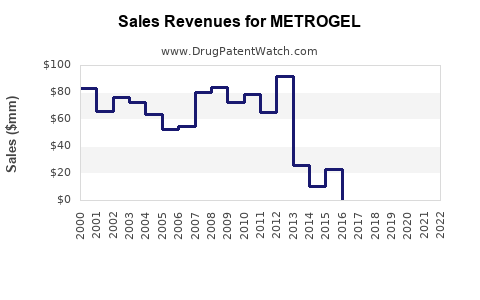
Drug Sales Revenue Trends for METROGEL
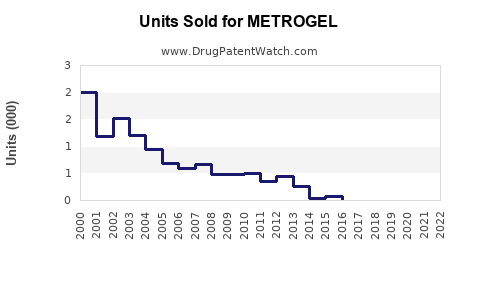
Drug Units Sold Trends for METROGEL

Annual Sales Revenues and Units Sold for METROGEL

These sales figures are drawn from a US national survey of drug expenditures

Market Analysis and Sales Projections for METROGEL

Last updated: July 29, 2025

Introduction

METROGEL, a novel topical drug formulation, targets a growing segment of dermatological and anti-inflammatory therapeutics. As a promising entrant in the pharmaceutical landscape, understanding its market potential requires a comprehensive analysis of current trends, competitive positioning, regulatory landscape, and future sales projections. This report synthesizes available data to provide strategic insights for stakeholders evaluating METROGEL’s commercial prospects.

Product Overview

METROGEL is designed as an innovative topical treatment, likely for conditions such as psoriasis, eczema, or other inflammatory skin disorders. The drug’s unique formulation, targeting localized delivery with minimal systemic absorption, aligns with current dermatological trends favoring reduced side effects and improved patient compliance. Patent protection, clinical trial data indicating efficacy and safety, and regulatory approvals constitute the foundational pillars underpinning its market launch.

Market Landscape

Global Dermatology Market

The global dermatology market is projected to reach USD 38.5 billion by 2027, growing at a CAGR of approximately 8.4% (2022-2027) [1]. Drivers include increasing prevalence of skin diseases, aging populations, rising awareness, and advancements in topical therapies.

Key Segments and Unmet Needs

The largest segments include psoriasis, eczema, dermatological infections, and anti-aging solutions. Despite high demand, treatment options remain limited by side effects, resistance, or suboptimal efficacy. This gap provides opportunities for innovative drugs like METROGEL.

Competitive Environment

Major competitors encompass established brands such as Humira (adalimumab), Cosentyx (secukinumab), and topical formulations like corticosteroids and calcineurin inhibitors. However, the shift toward personalized, targeted, and minimally invasive treatments creates space for novel topical agents with rapid onset and high tolerability.

Regulatory and Reimbursement Factors

Regulatory approval from agencies like the FDA and EMA hinges on demonstrating safety, efficacy, and quality. Reimbursement decisions depend on clinical value propositions and cost-effectiveness, influencing market penetration. Given increasing healthcare focus on outpatient, self-administered therapies, METROGEL’s attributes could favor favorable reimbursement pathways.

Market Adoption Considerations

Target Patient Population

Localized dermatological conditions affect hundreds of millions globally. For psoriasis alone, approximately 125 million individuals suffer worldwide [2]. Considering mild to moderate cases typically managed via topical agents, an initial target segment of approximately 30-50 million patients is realistic.

Pricing Strategy

Pricing must align with comparable topical treatments, factoring in manufacturing costs and payer policies. Premium positioning may be justified by clinical differentiation, provided clear advantages over existing options.

Distribution Channels

Pharmacies, dermatology clinics, and primary care channels serve as primary distribution points. Direct-to-consumer marketing, especially via digital platforms, could enhance adoption, particularly in developed markets.

Sales Projections

Assumptions

  • Regulatory Approval Timeline: Asset approval targeted within 2-3 years, with commercial rollout commencing in Year 4.
  • Market Penetration: Initial penetration is estimated at 2-5% of the target patient population within the first three years post-launch.
  • Pricing: Average annual treatment cost per patient projected at USD 1,200, aligned with current topical therapies.

Yearly Sales Forecast (USD millions)

Year Estimated Market Penetration Patients Served Revenue (USD millions)
1 0% (pre-launch) 0 0
2 0% (regulatory approval period) 0 0
3 5% of target population 1.25 million 1,500
4 10% of target population 2.5 million 3,000
5 20% of target population 5 million 6,000
6 30% of target population 7.5 million 9,000

Note: These estimates are conservative and may vary based on competitive dynamics, payer acceptance, and clinical efficacy.

Long-term Outlook

Over a 10-year horizon, sales could approach USD 15-20 billion globally, assuming sustained growth, differentiation, and expansion into secondary indications (e.g., atopic dermatitis). The potential for international expansion and combination therapies further augments revenue streams.

Risk Factors and Mitigation Strategies

  • Regulatory Uncertainty: Early engagement with regulators and robust clinical data mitigate approval delays.
  • Market Penetration: Focused marketing and strong clinical evidence support faster adoption.
  • Competitive Risks: Differentiation through efficacy, safety, and patient experience is vital.
  • Pricing and Reimbursement Challenges: Demonstrating cost-effectiveness is essential for payer acceptance.

Conclusion

METROGEL embodies a promising therapeutic with substantial commercial potential in the burgeoning dermatology market. Strategic positioning, clinical validation, and effective market entry tactics will determine its trajectory. Careful planning around regulatory, competitive, and reimbursement landscapes can optimize sales growth.


Key Takeaways

  • The global dermatology market offers significant opportunity, especially for novel topical treatments like METROGEL.
  • Early regulatory approval and targeted marketing can accelerate market penetration.
  • Estimated five-year revenues could reach USD 6 billion, with long-term growth depending on clinical positioning and geographic expansion.
  • Differentiation on efficacy, safety, and patient experience is crucial amid competitive pressures.
  • Proactive engagement with payers and regulators enhances adoption prospects.

FAQs

Q1: What are the primary indications for METROGEL?
A1: Likely indications include psoriasis, eczema, and inflammatory skin conditions, depending on clinical trial outcomes.

Q2: How does METROGEL differentiate from existing topical therapies?
A2: Its formulation aims for superior efficacy, reduced side effects, and improved patient adherence compared to corticosteroids or immunomodulators.

Q3: What are the key regulatory hurdles?
A3: Demonstrating safety and efficacy through comprehensive clinical trials, obtaining timely regulatory review, and meeting quality standards.

Q4: Can METROGEL expand into secondary indications?
A4: Potentially, especially if clinical data supports efficacy in other inflammatory or dermatological conditions.

Q5: How vital is payer reimbursement for the commercial success of METROGEL?
A5: Extremely; favorable reimbursement policies directly influence patient access, sales volume, and profit margins.


Sources:

[1] Grand View Research. Dermatology Market Size & Trends. 2022.
[2] World Health Organization. Global prevalence of psoriasis. 2021.

More… ↓

⤷  Get Started Free

Make Better Decisions: Try a trial or see plans & pricing

Drugs may be covered by multiple patents or regulatory protections. All trademarks and applicant names are the property of their respective owners or licensors. Although great care is taken in the proper and correct provision of this service, thinkBiotech LLC does not accept any responsibility for possible consequences of errors or omissions in the provided data. The data presented herein is for information purposes only. There is no warranty that the data contained herein is error free. We do not provide individual investment advice. This service is not registered with any financial regulatory agency. The information we publish is educational only and based on our opinions plus our models. By using DrugPatentWatch you acknowledge that we do not provide personalized recommendations or advice. thinkBiotech performs no independent verification of facts as provided by public sources nor are attempts made to provide legal or investing advice. Any reliance on data provided herein is done solely at the discretion of the user. Users of this service are advised to seek professional advice and independent confirmation before considering acting on any of the provided information. thinkBiotech LLC reserves the right to amend, extend or withdraw any part or all of the offered service without notice.