Share This Page
Drug Sales Trends for LEVOFLOXACIN
✉ Email this page to a colleague
Payment Methods and Pharmacy Types for LEVOFLOXACIN (2005)
Revenues by Pharmacy Type
Units Sold by Pharmacy Type
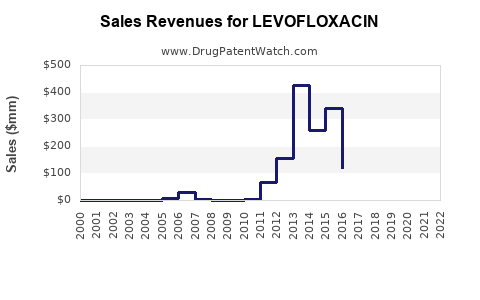
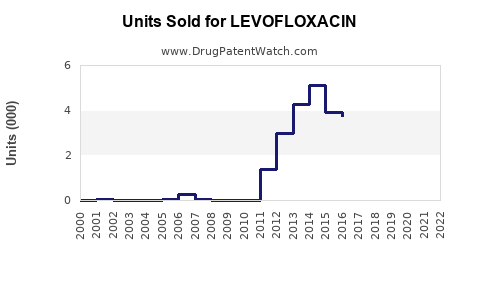
Annual Sales Revenues and Units Sold for LEVOFLOXACIN
| Drug Name | Revenues (USD) | Units | Year |
|---|---|---|---|
| LEVOFLOXACIN | ⤷ Start Trial | ⤷ Start Trial | 2022 |
| LEVOFLOXACIN | ⤷ Start Trial | ⤷ Start Trial | 2021 |
| LEVOFLOXACIN | ⤷ Start Trial | ⤷ Start Trial | 2020 |
| LEVOFLOXACIN | ⤷ Start Trial | ⤷ Start Trial | 2019 |
| LEVOFLOXACIN | ⤷ Start Trial | ⤷ Start Trial | 2018 |
| LEVOFLOXACIN | ⤷ Start Trial | ⤷ Start Trial | 2017 |
| >Drug Name | >Revenues (USD) | >Units | >Year |
Levofloxacin Market Analysis and Sales Projections
This report analyzes the current market position and future sales projections for levofloxacin, a broad-spectrum fluoroquinolone antibiotic. The analysis considers patent expiry, generic competition, therapeutic indications, and global market trends.
What is Levofloxacin?
Levofloxacin is a synthetic chemotherapeutic antibiotic of the fluoroquinolone class. It is the levorotatory isomer of ofloxacin. Levofloxacin is active against a wide range of Gram-positive and Gram-negative bacteria. Its mechanism of action involves inhibiting bacterial DNA gyrase and topoisomerase IV, enzymes essential for DNA replication, transcription, repair, and recombination.
Levofloxacin is approved for treating various bacterial infections, including:
- Pneumonia (community-acquired, hospital-acquired)
- Acute bacterial sinusitis
- Acute bacterial exacerbations of chronic bronchitis
- Urinary tract infections (complicated and uncomplicated)
- Chronic bacterial prostatitis
- Skin and skin structure infections (complicated and uncomplicated)
- Anthrax (inhalational)
- Plague
The drug is available in oral, intravenous, and ophthalmic formulations.
Patent Landscape and Generic Entry
The original patents for levofloxacin have long expired. The primary patent for levofloxacin hemihydrate was granted to Daiichi Pharmaceutical Co., Ltd. (now Daiichi Sankyo) in 1985 and expired in 2008 in the United States. Similar patent expiries occurred globally, paving the way for generic manufacturers to enter the market.
- Original Patent Holder: Daiichi Pharmaceutical Co., Ltd. (now Daiichi Sankyo)
- Key Patent Expiry (US): 2008
- Impact: Widespread generic availability led to significant price erosion.
The availability of numerous generic versions has intensified price competition. This has shifted the market dynamic from brand-name dominance to a volume-driven market where cost-effectiveness is paramount for both healthcare providers and patients.
Current Market Size and Key Drivers
The global levofloxacin market size was estimated to be approximately USD 1.5 billion in 2023 [1]. The market is driven by:
- Prevalence of Bacterial Infections: The continued incidence of respiratory tract infections, urinary tract infections, and skin infections necessitates the use of effective antibiotics like levofloxacin.
- Broad-Spectrum Activity: Its efficacy against a wide range of pathogens makes it a preferred choice for empiric treatment.
- Availability of Generic Formulations: Lower prices of generics expand accessibility in both developed and emerging markets.
- Intravenous Formulation: The availability of IV levofloxacin is crucial for treating severe infections and in hospital settings where oral administration is not feasible.
However, the market also faces challenges:
- Antibiotic Resistance: Growing concerns about fluoroquinolone resistance can limit its empirical use and necessitate stewardship programs.
- Adverse Event Profile: Black box warnings regarding tendonitis, tendon rupture, peripheral neuropathy, and central nervous system effects have led to more cautious prescribing.
- Competition from Newer Antibiotics: Development of novel antibiotics with improved safety profiles or activity against resistant strains poses a long-term threat.
Regional Market Analysis
The levofloxacin market exhibits distinct regional characteristics:
- North America (US & Canada): This region represents a significant portion of the global market due to high healthcare spending and established treatment guidelines. The prevalence of community-acquired pneumonia and complicated UTIs are major drivers. Generic penetration is nearly complete, leading to intense price competition. The market is mature, with growth largely tied to population size and infection rates.
- Europe: Similar to North America, Europe has a well-developed healthcare system and a high demand for levofloxacin. Stringent regulatory frameworks and increasing emphasis on antibiotic stewardship influence prescribing patterns. The market is largely genericized.
- Asia Pacific: This region is expected to witness the highest growth rate. Factors contributing to this growth include a rising population, increasing incidence of infectious diseases, improving healthcare infrastructure, and greater access to generic medications. Countries like China and India are significant contributors.
- Latin America: The market in Latin America is growing due to expanding healthcare access and a rising burden of bacterial infections. Generic levofloxacin plays a crucial role in affordability.
- Middle East & Africa: This region presents a smaller but growing market. Improving healthcare infrastructure, increasing awareness of infectious diseases, and the availability of cost-effective generics are driving demand.
Sales Projections
The global levofloxacin market is projected to experience moderate growth over the next five years. The compounded annual growth rate (CAGR) is estimated to be between 2.5% and 3.5% from 2024 to 2029.
Projected Global Sales (USD Billion):
| Year | Estimated Sales |
|---|---|
| 2024 | 1.53 |
| 2025 | 1.57 |
| 2026 | 1.61 |
| 2027 | 1.66 |
| 2028 | 1.70 |
| 2029 | 1.75 |
- Assumptions:
- Continued demand for broad-spectrum antibiotics for common infections.
- Sustained generic competition leading to price stability or slight declines in average selling price (ASP).
- Limited introduction of new, significantly superior therapeutic alternatives for its primary indications in the short term.
- Moderate impact from antibiotic resistance concerns and stewardship programs.
- Growth in emerging markets offsetting potential stagnation in highly developed markets.
Key Factors Influencing Projections:
- Generic Market Dominance: The market will remain dominated by generic manufacturers. Profitability for these companies will be driven by manufacturing efficiency and market penetration.
- Therapeutic Substitution: The risk of therapeutic substitution by newer antibiotic classes or alternative treatments for specific indications exists. However, for many common infections, levofloxacin's efficacy and cost-effectiveness will maintain its position.
- Regulatory Environment: Changes in drug pricing regulations, antibiotic approval pathways, and post-market surveillance requirements could impact sales.
- Antibiotic Stewardship: Increased focus on antibiotic stewardship programs, particularly in developed nations, may lead to more judicious use of fluoroquinolones, potentially moderating volume growth in certain segments.
- Emerging Markets Growth: Significant growth opportunities lie in the Asia Pacific and Latin America regions, driven by increasing healthcare expenditure and a higher burden of infectious diseases.
Competitive Landscape
The levofloxacin market is highly fragmented and intensely competitive, characterized by numerous generic manufacturers. Key players include:
- Teva Pharmaceutical Industries Ltd.
- Mylan N.V. (now Viatris Inc.)
- Sun Pharmaceutical Industries Ltd.
- Dr. Reddy's Laboratories Ltd.
- Cipla Ltd.
- Lupin Ltd.
- Zydus Cadila
- Aurobindo Pharma Ltd.
- Hikma Pharmaceuticals PLC
- Fresenius Kabi AG
Competition is primarily based on price, product quality, and distribution network. Manufacturing capabilities for both oral and intravenous formulations are critical. The ophthalmic segment also has specialized players.
Key Takeaways
The levofloxacin market is characterized by established generic competition post-patent expiry, driving a mature and price-sensitive global landscape. The market size, estimated at USD 1.5 billion in 2023, is projected for moderate growth of 2.5% to 3.5% CAGR through 2029. Growth is primarily fueled by the persistent prevalence of bacterial infections, levofloxacin's broad-spectrum efficacy, and the accessibility of generic formulations, particularly in emerging markets.
Challenges include rising antibiotic resistance, an adverse event profile leading to cautious prescribing, and competition from newer drug classes. North America and Europe represent mature, genericized markets, while the Asia Pacific region is poised for the highest growth. The competitive landscape is highly fragmented with numerous generic players focusing on price and market penetration.
Frequently Asked Questions
-
What is the primary therapeutic advantage of levofloxacin compared to other fluoroquinolones? Levofloxacin is the levorotatory isomer of ofloxacin, offering enhanced potency against many bacteria with a reduced dose requirement compared to ofloxacin [2]. It also exhibits improved pharmacokinetic properties, including better oral bioavailability and tissue penetration.
-
What are the major safety concerns associated with levofloxacin prescribing? Major safety concerns include serious adverse reactions such as tendonitis and tendon rupture, peripheral neuropathy, central nervous system effects (e.g., dizziness, confusion, seizures), and exacerbation of myasthenia gravis [3]. These risks led to the FDA issuing a black box warning for fluoroquinolones.
-
How does the growth of antibiotic resistance impact the levofloxacin market? Increasing resistance to fluoroquinolones, including levofloxacin, can limit its use as an empiric therapy for certain infections, particularly in regions with high resistance rates. This necessitates careful antibiotic stewardship and may lead to shifts towards alternative agents where appropriate, potentially moderating market growth.
-
Which geographical regions are expected to drive future growth for levofloxacin sales? The Asia Pacific region is projected to be the primary growth driver due to factors such as a large and growing population, increasing incidence of infectious diseases, improving healthcare infrastructure, and greater adoption of cost-effective generic medications.
-
What is the expected impact of new antibiotic development on the long-term levofloxacin market? The development of novel antibiotics with improved efficacy against resistant strains, enhanced safety profiles, or different mechanisms of action could pose a threat to the long-term market share of levofloxacin. However, for many established indications, levofloxacin's proven efficacy and cost-effectiveness will likely maintain its relevance for the foreseeable future.
Citations
[1] Global Market Insights. (2023). Antibiotics Market Size, Share & Trends Analysis Report By Product (Penicillins, Macrolides, Cephalosporins, Fluoroquinolones, Tetracyclines, Aminoglycosides, Sulfonamides, Others), By Type (Branded, Generic), By Route of Administration (Oral, Intravenous, Topical), By Distribution Channel (Hospital Pharmacies, Retail Pharmacies, Online Pharmacies), By Region, And Segment Forecasts, 2024 - 2032. (Accessed February 2024). [2] Van Caenegem, N. L. (2003). Levofloxacin. Journal of Antimicrobial Chemotherapy, 51(4), 779-783. [3] U.S. Food and Drug Administration. (2018). FDA Drug Safety Communication: FDA advises restricting fluoroquinolone antibiotic use for uncomplicated infections and warns about mental health side effects and lowering of blood sugar. Retrieved from https://www.fda.gov/drugs/drug-safety-and-availability/fda-drug-safety-communication-fda-advises-restricting-fluoroquinolone-antibiotic-use-uncomplicated
More… ↓
