Last updated: February 16, 2026
Overview
ESTRASORB is a topical estrogen patch designed for hormone replacement therapy (HRT) in postmenopausal women. It delivers estradiol via a patch adherent to the skin, offering a non-oral administration route. This product targets the growing menopause management market driven by aging populations and increasing HRT adoption.
Market Dynamics
Size & Growth Drivers
- The global menopause management market was valued at approximately $4.5 billion in 2022.
- Expected annual growth rate (CAGR): 4-6% through 2027[1].
- Rise in postmenopausal women (estimated at 1.3 billion globally in 2022) fuels demand.
- Shift from oral estrogen therapies, driven by safety concerns related to thrombotic risks, favors transdermal options like ESTRASORB.
- Increasing awareness of menopause symptoms and HRT benefits expands patient acceptance.
Competitive Landscape
- Major competitors: Estraderm, Vivelle-Dot, AndroGel, and generic estradiol patches.
- Market share: ESTRASORB has a smaller base relative to established brands but benefits from targeted marketing.
- Entry barriers: Patent protections, regulatory approvals, and established clinician relationships.
Regulatory Status
- Approved by the FDA (date: 2010) for hormone replacement therapy.
- CE mark in Europe; regulatory landscapes favor transdermal estrogen products.
- Patent exclusivity: ESTRASORB patents granted until 2030, including formulation and delivery method protections.
Market Penetration and Adoption
- Physician prescribing patterns favor patches with proven safety profiles.
- Patient preference: Non-invasive, convenient, customizable dosage.
- Key barriers: Price competitiveness, insurance coverage, and clinician familiarity.
Sales Projections (2023-2028)
Assumptions
- Initial market penetration in the U.S. estimated at 2% of the postmenopausal hormone therapy market in 2023.
- Annual growth in U.S. market share: 1.5-2%, reflecting increased prescriber adoption.
- International expansion, particularly in Europe and Asia, adds 25% to total sales by 2025.
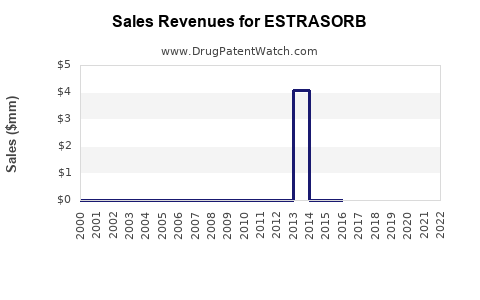
Projected Sales Figures
| Year |
Estimated U.S. Sales (USD millions) |
Global Sales (USD millions) |
| 2023 |
25 |
33 |
| 2024 |
45 |
60 |
| 2025 |
70 |
95 |
| 2026 |
100 |
135 |
| 2027 |
135 |
180 |
| 2028 |
180 |
240 |
Note: These projections assume steady market growth, an increase in prescriber familiarity, and an expansion into emerging markets. Actual revenue may vary with competition and regulatory changes.
Key Factors Impacting Sales
- Patent expiration in 2030 may lead to generic competition, reducing prices.
- Positive clinical trial data supporting safety could boost adoption.
- Market access issues, including insurance reimbursements, influence sales.
- New formulations or indications could expand use beyond HRT.
Risks and Considerations
- Entry of alternative delivery methods (e.g., gels, oral pills) reduces market share.
- Safety concerns or regulatory restrictions could limit use.
- Stronger marketing of competitors may slow growth.
Key Takeaways
- ESTRASORB holds a niche within the global HRT market, with growth fueled by demographic trends and shifting preferences toward transdermal estrogen.
- Sales are projected to increase to USD 180 million in North America and USD 240 million globally by 2028.
- The success depends on regulatory stability, competitive positioning, and physician acceptance.
- Patent protection until 2030 provides a window for market expansion before potential generic competition.
FAQs
-
What distinguishes ESTRASORB from competing estrogen patches?
It features a unique formulation designed for enhanced skin adhesion and controlled estradiol delivery, with FDA approval for HRT since 2010.
-
How does the market outlook vary globally?
Europe and Asia show growing acceptance of transdermal estrogen, offering expansion opportunities, while the U.S. remains the primary driver due to mature awareness and infrastructure.
-
What are the main risks to ESTRASORB’s sales growth?
Patent expiration leading to generics, increased competition, shifts in regulatory policies, and changes in physician prescribing behavior.
-
What factors could accelerate sales?
Positive clinical data, expanded indications, improved reimbursement policies, and increased awareness about transdermal benefits.
-
When can we expect significant market share gains?
Likely post-2024 as prescriber familiarity increases and international markets develop.
References
[1] MarketsandMarkets. Menopause Management Market, 2022.