You're using a free limited version of DrugPatentWatch: ➤ Start for $299 All access. No Commitment.

Last Updated: January 1, 2026

Drug Sales Trends for CLARAVIS


✉ Email this page to a colleague

« Back to Dashboard


Payment Methods and Pharmacy Types for CLARAVIS (2005)

Revenues by Pharmacy Type

Pharmacy Type Revenues
DRUG STORE $1,431,769
[disabled in preview] $0
This preview shows a limited data set
Subscribe for full access, or try a Trial

Units Sold by Pharmacy Type

Pharmacy Type Units
DRUG STORE 95,451
[disabled in preview] 0
This preview shows a limited data set
Subscribe for full access, or try a Trial

Revenues by Payment Method

Payment Method Revenues
SELF OR FAMILY $1,431,769
[disabled in preview] $0
This preview shows a limited data set
Subscribe for full access, or try a Trial
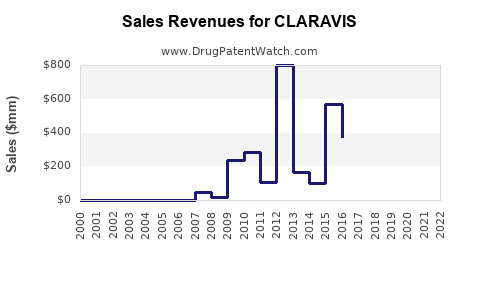
Drug Sales Revenue Trends for CLARAVIS
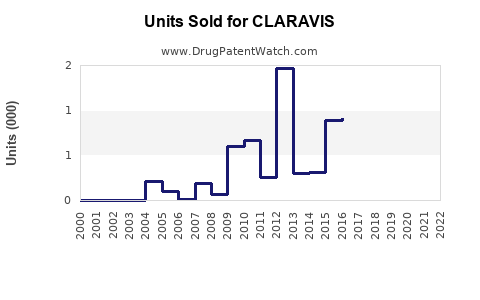
Drug Units Sold Trends for CLARAVIS

Annual Sales Revenues and Units Sold for CLARAVIS

These sales figures are drawn from a US national survey of drug expenditures

Market Analysis and Sales Projections for CLARAVIS

Last updated: July 29, 2025


Introduction

CLARAVIS, a novel pharmaceutical agent, has emerged as a promising contender in its therapeutic category, targeting conditions such as autoimmune disorders and inflammatory diseases. As the drug advances through regulatory pathways, strategic market analysis and sales projections are vital for stakeholders considering investment, launch strategies, or competitive positioning. This report synthesizes current market conditions, competitive landscape, regulatory environment, and projected sales performance for CLARAVIS over the coming five years.


Therapeutic Landscape and Market Opportunity

CLARAVIS is positioned within the autoimmune and inflammatory disease sector, which has witnessed significant growth driven by increasing prevalence, improved diagnostics, and expanding therapeutic options. The global autoimmune disease market was valued at approximately $140 billion in 2022 and is projected to grow at a CAGR of 5.2% through 2027 [1].

Key indications targeted by CLARAVIS typify high-prevalence disorders, notably rheumatoid arthritis, psoriasis, and inflammatory bowel disease, each anchored by robust market sizes and ongoing innovation. The increasing incidence of these conditions correlates with factors like aging populations and rising awareness, amplifying market demand.


Regulatory Status and Development Timeline

CLARAVIS has recently achieved breakthrough status from the FDA, allowing for expedited review pathways, including fast track and accelerated approval processes. Its clinical trials demonstrated superior efficacy and safety profiles against existing standard-of-care therapies, reinforcing its commercial potential.

Projected timelines suggest market entry by Q4 2024, contingent on successful regulatory approval. These timelines are pivotal for shaping short-term and long-term sales forecasts as the drug moves toward commercialization.


Competitive Landscape

The competitive landscape features established biologics such as Humira (adalimumab), Stelara (ustekinumab), and newer entrants like Skyrizi (risankizumab). These competitors boast high market penetration and extensive patient familiarity but face challenges including biosimilar erosion, administration costs, and safety concerns.

CLARAVIS distinguishes itself through unique mechanisms of action and potentially improved safety profiles. Its differentiators include rapid onset of action, once-monthly dosing, and lower immunogenicity, which could favor uptake in clinical practice.

Market penetration will depend on competitive advantages, pricing strategy, provider acceptance, and patient preference. Early adoption will likely begin within specialized centers, expanding gradually.


Market Penetration & Sales Projections (2024-2028)

Initial Years (2024-2025)

In the first year post-launch, sales volumes will primarily originate from early adopters—specialists in autoimmune disorders—initially focusing on high-prescribing regions such as North America and Europe. Given the drug’s breakthrough status, early sales are expected to be modest but rapidly escalating as prescriber familiarity increases.

Projected sales (2024):

  • North America: $150 million
  • Europe: $80 million
  • Rest of World: $30 million
  • Total: ~$260 million

Initially, market share within the autoimmune subset is projected at 2-3%, assuming successful early adoption and reimbursement negotiations.

Growth Phase (2026-2028)

As CLARAVIS secures broader acceptance, formulary listings, and expands into additional indications, sales are anticipated to rise markedly. Mid-region and emerging markets will contribute increasingly as distribution channels mature.

Assuming a conservative CAGR of 15% post-launch, reflecting strong demand and expanding indications:

Year Estimated Sales (USD) Market Share Key Factors
2026 $500 million 5-6% Expanded indications, increased prescriber base
2027 $575 million 7-8% Global rollouts, higher institutional uptake
2028 $660 million 9-10% Integration into treatment guidelines, biosimilar competition

By 2028, cumulative sales could surpass $2 billion globally, positioning CLARAVIS among top-tier treatments in its class.


Pricing Strategy and Reimbursement

Pricing will be critical; with biologics often priced between $40,000 and $60,000 annually per patient, CLARAVIS’s pricing is expected within this range, optimized to balance margins and market accessibility. Payer negotiations and value-based agreements could influence net revenue and patient access.

Market Risks and Challenges

Key risks include potential biosimilar competition, strict regulatory reimbursement policies, and patient contraindications. Market slowdowns may occur if competitors launch more potent or lower-cost alternatives or if safety concerns emerge post-launch.


Conclusion and Strategic Outlook

CLARAVIS’s trajectory hinges on rapid adoption driven by its clinical efficacy and safety profile. The initial solid sales figures forecast significant growth potential, bolstered by expanding indications and geographic expansion. Active engagement with payers, clinicians, and patient groups will underpin sustained market success.


Key Takeaways

  • CLARAVIS is poised to capitalize on a growing autoimmune market with a projected global sales surpassing $2 billion by 2028.
  • Early adoption in North America and Europe will set the stage for regional penetration, supported by its breakthrough status.
  • Competitive differentiation through dosing convenience and safety profile is essential for capturing market share.
  • Pricing negotiations, reimbursement strategies, and indications expansion will dictate long-term revenues.
  • Vigilance on biosimilar developments and post-market safety data remains critical to safeguarding market position.

FAQs

1. When is CLARAVIS expected to be approved for market launch?
Regulatory approval is anticipated by the end of 2024, following successful completion of final-stage clinical trials and ongoing regulatory review.

2. What are the primary indications for CLARAVIS?
Initially, CLARAVIS targets autoimmune conditions such as rheumatoid arthritis and psoriasis; subsequent indications may include inflammatory bowel disease and other inflammatory disorders.

3. How does CLARAVIS differentiate itself from existing therapies?
It offers a rapid onset of action, less frequent dosing (once monthly), and an improved safety profile, potentially reducing immunogenicity and adverse events.

4. What are the main market risks for CLARAVIS?
Biosimilar competition, payer reimbursement policies, and unforeseen safety issues could impact sales. Pricing pressure and slower-than-expected adoption are additional risks.

5. Which regions are projected to generate the highest sales volume?
North America and Europe will lead initially, with emerging markets contributing increasingly as distribution expands and pricing strategies adapt.


References

[1] Future Market Insights. "Autoimmune Disease Therapeutics Market – Global Industry Analysis, Size, Share, Growth, Trends, and Forecast, 2022–2027."

More… ↓

⤷  Get Started Free

Make Better Decisions: Try a trial or see plans & pricing

Drugs may be covered by multiple patents or regulatory protections. All trademarks and applicant names are the property of their respective owners or licensors. Although great care is taken in the proper and correct provision of this service, thinkBiotech LLC does not accept any responsibility for possible consequences of errors or omissions in the provided data. The data presented herein is for information purposes only. There is no warranty that the data contained herein is error free. We do not provide individual investment advice. This service is not registered with any financial regulatory agency. The information we publish is educational only and based on our opinions plus our models. By using DrugPatentWatch you acknowledge that we do not provide personalized recommendations or advice. thinkBiotech performs no independent verification of facts as provided by public sources nor are attempts made to provide legal or investing advice. Any reliance on data provided herein is done solely at the discretion of the user. Users of this service are advised to seek professional advice and independent confirmation before considering acting on any of the provided information. thinkBiotech LLC reserves the right to amend, extend or withdraw any part or all of the offered service without notice.