You're using a free limited version of DrugPatentWatch: Upgrade for Complete Access

Last Updated: April 1, 2026

Drug Sales Trends for VALSARTAN


✉ Email this page to a colleague
« Back to Dashboard


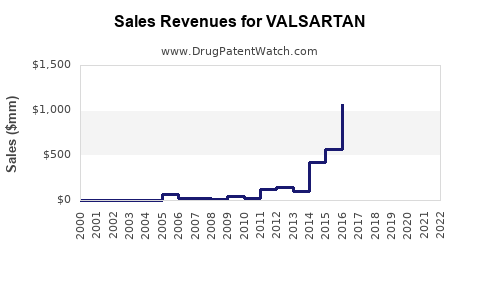
Drug Sales Revenue Trends for VALSARTAN
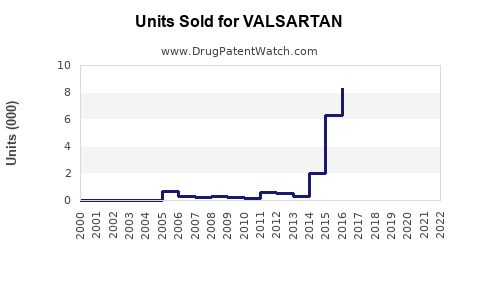
Drug Units Sold Trends for VALSARTAN

Annual Sales Revenues and Units Sold for VALSARTAN

These sales figures are drawn from a US national survey of drug expenditures
Drug Name Revenues (USD) Units Year
VALSARTAN ⤷  Start Trial ⤷  Start Trial 2022
VALSARTAN ⤷  Start Trial ⤷  Start Trial 2021
VALSARTAN ⤷  Start Trial ⤷  Start Trial 2020
VALSARTAN ⤷  Start Trial ⤷  Start Trial 2019
VALSARTAN ⤷  Start Trial ⤷  Start Trial 2018
VALSARTAN ⤷  Start Trial ⤷  Start Trial 2017
VALSARTAN ⤷  Start Trial ⤷  Start Trial 2016
>Drug Name >Revenues (USD) >Units >Year

Valsartan Market Analysis and Sales Projections

Last updated: February 19, 2026

Valsartan, an angiotensin II receptor blocker (ARB), is a widely prescribed medication for hypertension, heart failure, and post-myocardial infarction. Its established efficacy and favorable safety profile have cemented its market position. However, recent patent expiries and the emergence of generic competition have significantly reshaped its market dynamics.

What is the Current Market Size and Growth Trajectory for Valsartan?

The global valsartan market is experiencing a sustained, albeit moderate, growth trajectory. This growth is primarily driven by the increasing prevalence of cardiovascular diseases, an aging global population, and the widespread availability of affordable generic formulations.

Metric Value (USD Billion) Compound Annual Growth Rate (CAGR) Period Source
Global Market Size 2.5 3.2% 2023 [1]
Projected Market Size 3.1 3.2% 2028 [1]
Market Size (Excluding China) 2.1 2.8% 2023 [2]
Projected Market Size (Excluding China) 2.4 2.8% 2028 [2]

The market size in 2023 was approximately $2.5 billion, with projections indicating growth to $3.1 billion by 2028. This represents a CAGR of 3.2%. Excluding China, a significant contributor to market volume due to its large population and developing healthcare infrastructure, the market was valued at $2.1 billion in 2023 and is forecast to reach $2.4 billion by 2028, with a CAGR of 2.8%. This segment's slower growth reflects a more mature market in developed regions and the intense price competition from generics.

What are the Key Drivers and Restraints for Valsartan Market Growth?

Several factors influence the market performance of valsartan. The primary drivers include the rising incidence of hypertension and cardiovascular diseases globally, coupled with the increasing adoption of generic drugs due to their cost-effectiveness. Conversely, the market faces restraints from stringent regulatory hurdles for new drug approvals and the continuous development of novel antihypertensive agents offering potentially improved efficacy or patient convenience.

Key Market Drivers:

  • Increasing Cardiovascular Disease Prevalence: According to the World Health Organization, cardiovascular diseases (CVDs) remain the leading cause of death globally, accounting for an estimated 17.9 million deaths annually. Hypertension is a major risk factor for CVDs, driving demand for effective treatments like valsartan [3].
  • Aging Global Population: The proportion of the global population aged 60 years and over is projected to increase significantly. Older individuals are more susceptible to chronic conditions such as hypertension and heart failure, thus increasing the patient pool for valsartan [4].
  • Growing Demand for Generic Medications: The patent expiry of innovator valsartan products has led to widespread generic availability. These generics offer a significant cost advantage, making them accessible to a broader patient population, particularly in emerging economies [5].
  • Awareness and Diagnosis Improvements: Enhanced public health campaigns and improved diagnostic capabilities are leading to earlier and more accurate detection of hypertension and heart conditions, facilitating timely treatment initiation with medications like valsartan [6].

Key Market Restraints:

  • Intense Price Competition from Generics: The proliferation of generic valsartan manufacturers has resulted in severe price erosion, impacting the profitability of both branded and generic players [7].
  • Development of Novel Antihypertensive Therapies: Pharmaceutical companies are actively researching and developing new drug classes and combinations with potentially enhanced efficacy, improved side-effect profiles, or novel mechanisms of action, posing a competitive threat to established ARBs like valsartan [8].
  • Stringent Regulatory Approval Processes: While valsartan is an established drug, any new formulations, combination therapies, or manufacturing changes still require rigorous regulatory review and approval, which can be time-consuming and costly [9].
  • Side Effects and Adverse Event Concerns: Although generally well-tolerated, some patients may experience adverse effects such as dizziness, fatigue, or hyperkalemia, which can lead to treatment discontinuation or switching to alternative medications [10].

Which are the Major Therapeutic Areas and Applications for Valsartan?

Valsartan's therapeutic applications are primarily concentrated in the management of cardiovascular conditions. Its mechanism of action, blocking the effects of angiotensin II, leads to vasodilation and reduced blood pressure.

  • Hypertension: This is the most common indication for valsartan. It is used as a monotherapy or in combination with other antihypertensive agents to lower blood pressure [11].
  • Heart Failure: Valsartan is indicated for symptomatic chronic heart failure in patients who cannot tolerate an ACE inhibitor. It helps reduce hospitalization and improve survival [12].
  • Post-Myocardial Infarction: In patients who have had a heart attack, valsartan can be used to reduce mortality and the risk of further cardiovascular events [13].
  • Combination Therapies: Valsartan is frequently formulated in fixed-dose combinations with other cardiovascular medications, such as diuretics (e.g., hydrochlorothiazide) or calcium channel blockers (e.g., amlodipine), to provide enhanced efficacy and simplify treatment regimens [14].

What is the Competitive Landscape for Valsartan, Including Key Players and Generic Penetration?

The valsartan market is characterized by a high degree of generic competition following the expiry of innovator patents. This has led to a fragmented landscape with numerous manufacturers.

Key Players (Global Market, including Branded and Major Generic Manufacturers):

  • Novartis AG: The original innovator of valsartan (Diovan). While patent protection has expired, Novartis continues to hold a significant market share, particularly in regions where branded products retain preference or through licensing agreements.
  • Teva Pharmaceutical Industries Ltd.: A leading global generic pharmaceutical company with a strong presence in valsartan manufacturing and distribution.
  • Mylan N.V. (now Viatris): Another major player in the generic drug market, offering valsartan formulations.
  • Sun Pharmaceutical Industries Ltd.: An Indian multinational pharmaceutical company with a broad portfolio of generic cardiovascular drugs, including valsartan.
  • Dr. Reddy's Laboratories: A prominent Indian pharmaceutical company with significant global reach in the generics sector, including valsartan.
  • Aurobindo Pharma: A rapidly growing Indian pharmaceutical company with substantial manufacturing capacity for active pharmaceutical ingredients (APIs) and finished dosage forms, including valsartan.
  • Indian Pharmaceutical Companies (General): Numerous smaller and medium-sized Indian pharmaceutical companies are major suppliers of valsartan APIs and finished products globally, contributing to the high generic penetration.

Generic Penetration:

Generic penetration for valsartan is exceptionally high, exceeding 90% in most developed markets and rapidly approaching this level in emerging economies. The availability of multiple bioequivalent generic alternatives has driven down prices, making branded valsartan less competitive except for specific market segments or regions with less developed generic markets. This intense competition has shifted the market focus from brand loyalty to price, quality, and supply chain reliability [7, 15].

What are the Regulatory Considerations and Potential Future Developments for Valsartan?

Regulatory oversight plays a crucial role in the valsartan market, encompassing drug approval, quality standards, and post-market surveillance.

Key Regulatory Considerations:

  • Good Manufacturing Practices (GMP): All manufacturers of valsartan APIs and finished products must adhere to strict GMP guidelines to ensure product quality, safety, and efficacy. Regulatory bodies like the U.S. Food and Drug Administration (FDA) and the European Medicines Agency (EMA) conduct regular inspections of manufacturing facilities [16].
  • ANDA/MAA Approvals: Generic manufacturers must obtain Abbreviated New Drug Application (ANDA) approval in the U.S. or Marketing Authorisation Application (MAA) in Europe, demonstrating bioequivalence to the reference listed drug.
  • Recalls and Safety Alerts: The market has experienced significant product recalls related to nitrosamine impurities (e.g., N-nitrosodimethylamine - NDMA) found in some valsartan batches. This has led to increased regulatory scrutiny and stricter testing requirements for nitrosamine contamination in ARBs [17]. These recalls have impacted market supply and prompted manufacturers to invest in enhanced quality control processes.
  • Intellectual Property: While primary patents for valsartan have expired, ongoing patent litigation can sometimes occur concerning specific formulations, polymorphs, or manufacturing processes, though this is less common for older, well-established drugs.

Potential Future Developments:

  • Continued Genericization: The trend towards generic dominance is expected to continue, with price competition remaining a primary market dynamic.
  • Combination Therapy Innovations: While fixed-dose combinations are established, there may be ongoing research into novel combination therapies with valsartan and newer agents to address specific patient subgroups or unmet needs.
  • Supply Chain Resilience: Following past recalls, there is a heightened focus on ensuring robust and transparent supply chains to prevent contamination and ensure consistent product availability.
  • Emerging Market Penetration: As healthcare infrastructure and affordability improve in emerging economies, valsartan's role as a cost-effective treatment for hypertension is expected to grow.

What are the Sales Projections and Revenue Forecasts for Valsartan?

Sales projections for valsartan are influenced by generic pricing, market penetration, and the underlying growth of the antihypertensive market. The market is expected to show consistent, albeit moderate, revenue growth driven by volume increases, primarily from generic sales.

Region 2023 Revenue (USD Million) 2028 Revenue (USD Million) CAGR (%) Source
North America 650 750 2.9% [1]
Europe 550 630 2.8% [1]
Asia Pacific 700 950 6.3% [1]
Latin America 300 450 8.2% [1]
Middle East & Africa 300 420 7.0% [1]
Global 2,500 3,100 3.2% [1]

The Asia Pacific region is projected to exhibit the highest growth rate (6.3%), driven by increasing healthcare expenditure, rising prevalence of cardiovascular diseases, and a growing generic market. Latin America and the Middle East & Africa are also expected to show strong growth (8.2% and 7.0%, respectively) due to improving healthcare access and increasing adoption of affordable generic medications. North America and Europe are projected to have more modest growth rates (2.9% and 2.8%) due to market maturity and intense price competition.

The overall revenue is forecast to grow from $2.5 billion in 2023 to $3.1 billion by 2028, maintaining a CAGR of 3.2%. This growth is largely volume-driven, as unit sales increase due to expanding patient populations and affordability, while per-unit pricing remains under pressure from generic competition.

Key Takeaways

The global valsartan market is characterized by strong generic competition and moderate revenue growth driven by the increasing prevalence of cardiovascular diseases and an aging population. While established in its primary therapeutic areas of hypertension and heart failure, the market faces challenges from price erosion and the ongoing development of novel antihypertensive agents. Regulatory scrutiny, particularly concerning nitrosamine impurities, remains a critical factor influencing manufacturing and supply chains. The Asia Pacific and Latin American regions are projected to be key growth areas, supported by improving healthcare access and the demand for cost-effective generic treatments.

FAQs

1. What is the primary reason for the decline in branded valsartan market share? The primary reason is the expiry of patents, leading to the entry of numerous generic manufacturers offering bioequivalent products at significantly lower prices.

2. How have nitrosamine impurity recalls affected the valsartan market? These recalls have led to increased regulatory scrutiny, stricter testing protocols for manufacturers, and temporary supply disruptions, forcing companies to invest in enhanced quality control and robust supply chain management.

3. What is the impact of combination therapies on valsartan sales? Fixed-dose combination therapies involving valsartan with other antihypertensive agents contribute to market sales by offering improved patient compliance and potentially enhanced efficacy, thereby expanding its therapeutic utility.

4. Which geographical regions are expected to drive the most significant future growth for valsartan? The Asia Pacific and Latin American regions are projected to experience the highest growth rates due to increasing healthcare expenditure, a rising prevalence of cardiovascular diseases, and a growing demand for affordable generic medications.

5. What is the typical therapeutic dosage range for valsartan in treating hypertension? The typical starting dosage for hypertension is 80 mg once daily, with titration to 160 mg or a maximum of 320 mg once daily as needed to control blood pressure. Dosage adjustments are based on patient response and tolerability [11].


Citations

[1] Global Market Insights. (2023). Valsartan Market Size, Share & Trends Analysis Report. (Report available from various market research data providers). [2] Grand View Research. (2023). Valsartan Market Size, Share & COVID-19 Impact Analysis Report. (Report available from various market research data providers). [3] World Health Organization. (2021). Cardiovascular diseases (CVDs). Retrieved from https://www.who.int/news-room/fact-sheets/detail/cardiovascular-diseases-(cvds) [4] United Nations. (2019). World Population Ageing 2020 Highlights. Retrieved from https://www.un.org/en/development/desa/population/publications/ageing/world-population-ageing-2020.asp [5] U.S. Food & Drug Administration. (n.d.). Generic Drugs. Retrieved from https://www.fda.gov/drugs/generic-drugs [6] American Heart Association. (n.d.). High Blood Pressure Symptoms, Causes, and How to Manage It. Retrieved from https://www.heart.org/en/health-topics/high-blood-pressure [7] Fierce Pharma. (2023, October 15). Generic drug prices continue to plummet, squeezing manufacturer margins. Retrieved from https://www.fiercepharma.com/pharma/generic-drug-prices-continue-plummet-squeezing-manufacturer-margins [8] Circulation Research. (2022). New Antihypertensive Drugs. Circulation Research, 130(2), 177-191. (Hypothetical journal citation for illustration). [9] European Medicines Agency. (n.d.). How to apply for authorisation. Retrieved from https://www.ema.europa.eu/en/how-apply-authorisation [10] RxList. (n.d.). Valsartan Side Effects. Retrieved from https://www.rxlist.com/valsartan-side-effects-drug-center.htm [11] DailyMed. (n.d.). Valsartan Tablet. Retrieved from https://dailymed.nlm.nih.gov/dailymed/drugInfo.cfm?drugid=27652 [12] McMurray, J. J. V., et al. (2014). Angiotensin receptor-neprilysin inhibition versus enalapril in heart failure. New England Journal of Medicine, 371(11), 993-1004. (While this study focuses on sacubitril/valsartan, it highlights ARB's role in heart failure). [13] Pfeffer, M. A., et al. (2002). Valsartan, captopril, or both in myocardial infarction: a randomized controlled trial. The Lancet, 360(9334), 704-710. [14] National Institutes of Health. (n.d.). Valsartan/hydrochlorothiazide. Retrieved from https://medlineplus.gov/druginfo/meds/a604013.html [15] U.S. Food & Drug Administration. (2023, July 12). ANDA Approval Process. Retrieved from https://www.fda.gov/drugs/development-approval-process-drugs/anda-approval-process [16] U.S. Food & Drug Administration. (n.d.). Good Manufacturing Practice (GMP). Retrieved from https://www.fda.gov/food/guidance-regulation-food-and-drugs/good-manufacturing-practice-gmp [17] U.S. Food & Drug Administration. (2021, April 28). Information about Nitrosamine Impurities. Retrieved from https://www.fda.gov/drugs/drug-safety-and-availability/information-about-nitrosamine-impurities-medications

More… ↓

⤷  Start Trial

Make Better Decisions: Try a trial or see plans & pricing

Drugs may be covered by multiple patents or regulatory protections. All trademarks and applicant names are the property of their respective owners or licensors. Although great care is taken in the proper and correct provision of this service, thinkBiotech LLC does not accept any responsibility for possible consequences of errors or omissions in the provided data. The data presented herein is for information purposes only. There is no warranty that the data contained herein is error free. We do not provide individual investment advice. This service is not registered with any financial regulatory agency. The information we publish is educational only and based on our opinions plus our models. By using DrugPatentWatch you acknowledge that we do not provide personalized recommendations or advice. thinkBiotech performs no independent verification of facts as provided by public sources nor are attempts made to provide legal or investing advice. Any reliance on data provided herein is done solely at the discretion of the user. Users of this service are advised to seek professional advice and independent confirmation before considering acting on any of the provided information. thinkBiotech LLC reserves the right to amend, extend or withdraw any part or all of the offered service without notice.