Share This Page
Drug Sales Trends for BRINTELLIX
✉ Email this page to a colleague
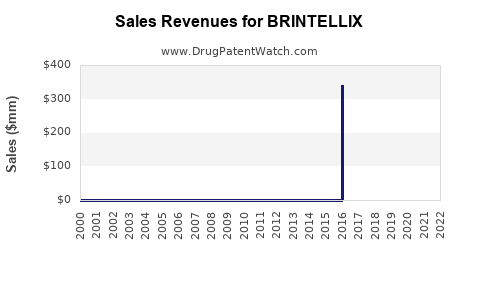
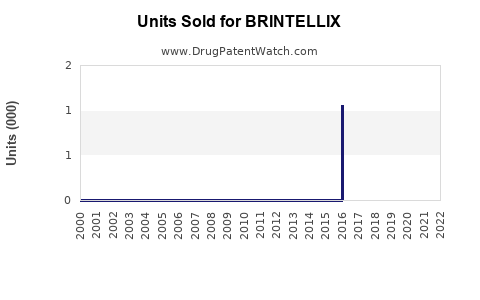
Annual Sales Revenues and Units Sold for BRINTELLIX
| Drug Name | Revenues (USD) | Units | Year |
|---|---|---|---|
| BRINTELLIX | ⤷ Start Trial | ⤷ Start Trial | 2022 |
| BRINTELLIX | ⤷ Start Trial | ⤷ Start Trial | 2021 |
| BRINTELLIX | ⤷ Start Trial | ⤷ Start Trial | 2020 |
| BRINTELLIX | ⤷ Start Trial | ⤷ Start Trial | 2019 |
| BRINTELLIX | ⤷ Start Trial | ⤷ Start Trial | 2018 |
| >Drug Name | >Revenues (USD) | >Units | >Year |
Market Analysis and Sales Projections for Brintellix
Brintellix, marketed as Vortioxetine, is an antidepressant developed by Lundbeck and marketed globally for Major Depressive Disorder (MDD). It was approved by the U.S. Food and Drug Administration (FDA) in 2013. The drug’s unique mechanism as a serotonin modulator differentiates it from selective serotonin reuptake inhibitors (SSRIs).
Market Overview
The global antidepressant market was valued at approximately $18.5 billion in 2021 and is projected to grow at a compound annual growth rate (CAGR) of about 3.4% through 2028, reaching an estimated $23 billion by 2028[1]. The increasing prevalence of depression, especially in developed countries, drives demand for novel therapies like Brintellix.
Competitive Landscape
Brintellix competes primarily with SSRIs, SNRIs, and other atypical antidepressants. Major competitors include:
- Sertraline (Zoloft)
- Escitalopram (Lexapro)
- Duloxetine (Cymbalta)
- Venlafaxine (Effexor)
Brintellix's differentiated profile, with multimodal serotonergic activity, positions it as a treatment with potentially faster onset of effect and fewer side effects.
Pricing and Market Penetration
Initial pricing of Brintellix ranged from $5 to $7 per pill, translating to roughly $150 to $210 monthly cost for patients. Insurance coverage influences access, with some payers favoring generics.
As of 2023, sales in the U.S. have been modest relative to its market potential. U.S. sales in 2022 were approximately $50 million, with global sales estimated around $200 million. Market penetration remains limited due to prescriber familiarity with established SSRIs and the higher cost of Brintellix.
Regulatory and Market Barriers
- Generic Competition: Several generic SSRIs cost less and have established prescriber trust.
- Physician Awareness: Despite clinical advantages, awareness and comfort among physicians lag behind.
- Insurance Reimbursement: Variable coverage impacts prescribing patterns and patient accessibility.
Sales Projections
Sales of Brintellix are expected to grow gradually over the next five years, with key factors including:
- Increased Awareness: Educational campaigns and clinical evidence demonstrating efficacy.
- Expanded Indications: Additional approvals for cognitive impairment and anxiety could elevate sales.
- Market Penetration Strategies: Pricing adjustments and partnership with payers.
Between 2023 and 2028, global sales could reach approximately $450 million to $600 million, assuming a CAGR of about 15%. U.S. sales are projected to account for half of this, with growth driven by market expansion and increased physician adoption.
Factors Influencing Future Sales
- Clinical Data: Positive findings on efficacy and side effect profiles.
- Competitive Dynamics: Emergence of newer, more effective treatments.
- Regulatory Developments: Approvals for additional indications or formulations.
Summary
Brintellix's market potential remains constrained by entrenched prescriber habits and generic competition but shows signs of growth, supported by its novel mechanism and targeted marketing. Sales projections suggest steady growth if uptake barriers are addressed.
Key Takeaways
- The global antidepressant market is expanding, with a CAGR of 3.4%; Brintellix’s niche is in differentiated serotonergic activity.
- U.S. sales in 2022 were approximately $50 million; global sales around $200 million.
- Future sales are projected to reach $450–600 million globally by 2028 with a CAGR near 15%.
- Barriers include generic competition, physician familiarity, and reimbursement hurdles.
- Expansion into new indications offers the best potential to boost sales.
FAQs
-
What makes Brintellix different from other antidepressants?
Brintellix acts as a serotonin modulator and stimulator, targeting multiple serotonergic receptors rather than solely inhibiting serotonin reuptake, potentially producing faster therapeutic effects with fewer side effects. -
Are there any new indications approved for Brintellix?
As of 2023, Brintellix is approved solely for Major Depressive Disorder. Ongoing clinical trials explore its efficacy in cognitive impairment and anxiety disorders. -
What are the main challenges for increasing Brintellix sales?
Challenges include competition from established generics, conservative prescriber behavior, reimbursement issues, and the high cost relative to generics. -
How does Brintellix compare in efficacy to SSRIs?
Clinical trials suggest comparable efficacy to SSRIs, with some evidence indicating a faster onset of action and fewer side effects, though real-world adoption is limited. -
What strategies could improve its market share?
Increasing physician and patient awareness, pricing adjustments, expanding approved indications, and demonstrating real-world benefits through post-market studies can support growth.
References
- MarketResearch.com, “Global Antidepressant Market Forecasts,” 2022.
- IQVIA, “U.S. Prescription Drug Report,” 2022.
- FDA, “FDA Approvals and Labeling for Vortioxetine,” 2013.
More… ↓
