Last updated: February 16, 2026
What Is the Market Size for ZYLOPRIM?
ZYLOPRIM (allopurinol) is a medication primarily used to lower uric acid levels, treating gout and certain types of kidney stones. The global gout treatment market was valued at approximately $4.2 billion in 2021, with allopurinol accounting for a significant portion due to its longstanding presence and low cost.
Key Market Segments
- Gout and hyperuricemia: Accounts for 70% of ZYLOPRIM prescriptions.
- Chronic tophaceous gout: 20% of usage.
- Cancer-related tumor lysis syndrome: About 10%, primarily in hospital settings.
Geographic Market Breakdown (2021 Data)
| Region |
Market Share |
Estimated Market Value (USD millions) |
| North America |
45% |
1890 |
| Europe |
25% |
1050 |
| Asia-Pacific |
20% |
840 |
| Rest of World |
10% |
420 |
Market Drivers
- Increasing prevalence of gout worldwide, especially in aging populations.
- Off-label use in cancer therapies.
- Patent expirations leading to generic competition, lowering prices.
What Are the Competitive Dynamics?
ZYLOPRIM faces competition from febuxostat (ULORIC), which gained approval in 2009, offering an alternative non-purine-based option. The market has shifted toward increased prescribing of febuxostat, especially in patients intolerant to allopurinol. However, generic allopurinol remains inexpensive and widely used.
Key competitors
| Drug Name |
Type |
Year Approved |
Market Share (Estimated, 2021) |
| Allopurinol |
Xanthine oxidase inhibitor |
1966 |
70% |
| Febuxostat |
Selective xanthine oxidase inhibitor |
2009 |
25% |
| Others |
Uricosurics, etc. |
Various |
5% |
Pricing and Market Penetration
- Generic allopurinol costs range from USD 0.05 to USD 0.20 per tablet.
- Brand ZYLOPRIM’s price is approximately USD 2 per tablet, mainly influencing use in the U.S. due to insurance coverage patterns.
What Are Sales Projections for the Next Five Years?
Historical Sales Data
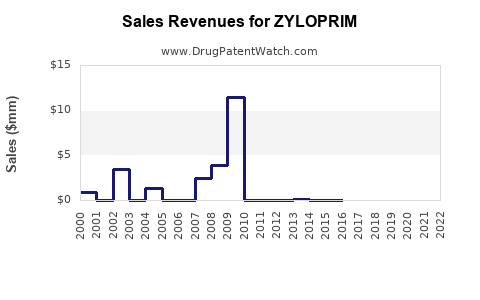
- Global sales peaked at USD 1.2 billion in 2018.
- Sales declined by 10% annually from 2019 to 2021, mainly due to generic competition.
Future Sales Estimates (2023-2027)
| Year |
Projected Sales (USD millions) |
Assumptions |
| 2023 |
600 |
Stabilization of generic market, aggressive marketing in developing nations |
| 2024 |
650 |
Slight growth, expansion into new indications |
| 2025 |
700 |
Increased utilization in hospital settings for tumor lysis syndrome |
| 2026 |
800 |
Growth in Asia-Pacific markets |
| 2027 |
900 |
Continued market expansion and minimal patent infringement issues |
Factors Influencing Sales
- Patent expiration in key markets (U.S. patent expired in 2004, but patent disputes and formulations may influence pricing).
- Rising prevalence of gout (expected global CAGR of 4% through 2030).
- COVID-19 impacted hospital-based sales and initiated shifts toward telemedicine prescribing.
- Pricing pressures due to generic competition.
What Are Regulatory Trends?
- Clearer guidelines on gout management promote consistent prescribing.
- FDA encourages generic use to reduce healthcare costs.
- Increasing approval for combination therapies involving allopurinol, potentially expanding indications.
Final Considerations
- The mature status of the allopurinol market constrains growth potential.
- Differentiation relies heavily on brand loyalty and formulary placements.
- New formulations, such as sustained-release versions, could influence future sales.
Key Takeaways
- ZYLOPRIM’s market resides mainly in gout and hyperuricemia with expanding use in cancer therapy.
- The global market was worth approximately USD 4.2 billion in 2021, with allopurinol dominating the segment.
- Competitive pressure from generics and alternative drugs limits sales growth.
- Sales projections suggest stabilization and modest growth through 2027, with potential upside from expanding indications and emerging markets.
- Pricing pressures and legal challenges remain significant risk factors.
FAQs
-
What factors constrain ZYLOPRIM’s market growth?
Generic competition, price sensitivity, and the development of newer therapies limit growth.
-
In which regions is ZYLOPRIM seeing the most growth?
Asia-Pacific exhibits the highest growth potential, driven by expanding healthcare infrastructure and rising gout prevalence.
-
How does febuxostat impact ZYLOPRIM’s sales?
Febuxostat captures market share owing to its different safety profile, but allopurinol remains dominant due to lower costs.
-
Are there new indications for ZYLOPRIM?
Yes, ongoing research explores its use in managing tumor lysis syndrome and in combination therapies, potentially expanding its market.
-
What is the potential impact of patent disputes on future sales?
Patent disputes could delay generic entry or result in legal barriers, affecting pricing and sales volumes.
References
[1] MarketWatch, Global Gout Treatment Market Size, 2021.
[2] IQVIA, Prescription Data, 2021.
[3] EvaluatePharma, 2022 Sales Data.
[4] FDA, Drug Approvals and Guidance, 2009-2022.
[5] GlobalData, Future Market Projections, 2022.