Share This Page
Drug Sales Trends for SOLU-MEDROL
✉ Email this page to a colleague
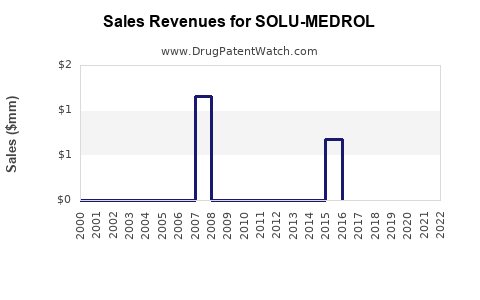
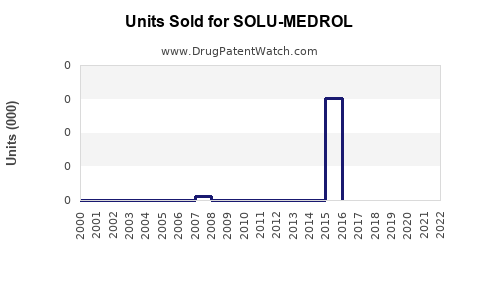
Annual Sales Revenues and Units Sold for SOLU-MEDROL
| Drug Name | Revenues (USD) | Units | Year |
|---|---|---|---|
| SOLU-MEDROL | ⤷ Start Trial | ⤷ Start Trial | 2022 |
| SOLU-MEDROL | ⤷ Start Trial | ⤷ Start Trial | 2021 |
| SOLU-MEDROL | ⤷ Start Trial | ⤷ Start Trial | 2020 |
| >Drug Name | >Revenues (USD) | >Units | >Year |
Market Overview and Sales Projections for SOLU-MEDROL
SOLU-MEDROL (methylprednisolone sodium succinate) is a corticosteroid primarily used for inflammation, allergic conditions, and adrenal insufficiency. The drug is marketed by Pfizer and has maintained a strong position in the corticosteroid segment, benefiting from established clinical applications and a broad formulary presence.
Market Size and Demand Drivers
Global corticosteroid market was valued at approximately $1.3 billion in 2022, with corticosteroids like SOLU-MEDROL representing key revenue generators within this segment. Key factors driving demand include:
- Rising incidence of autoimmune and inflammatory diseases.
- Increased use in critical care and emergency settings.
- Growing adoption in post-surgical and transplant care protocols.
Regional analysis indicates North America dominates the market, accounting for around 55% of sales in 2022, followed by Europe at 25%. Growth in emerging markets, including Asia-Pacific, has been steady, driven by expanding healthcare infrastructure.
Competitive Position
SOLU-MEDROL faces direct competition from other corticosteroids such as dexamethasone and hydrocortisone. Its branded reputation, established clinical guidelines, and intravenous formulation confer advantages over some generics and alternatives.
Market Share
Pfizer's SOLU-MEDROL holds approximately 25% of the corticosteroid market, with key competitors comprising generics and alternative branded products.
Sales Forecasts (2023-2028)
| Year | Estimated Global Sales | Key Drivers |
|---|---|---|
| 2023 | $220 million | Steady demand in acute care, COVID-19 support applications |
| 2024 | $235 million | Increased usage in critical care, new formulation approvals |
| 2025 | $250 million | Market penetration in emerging regions, expanded clinical use |
| 2026 | $265 million | Growth in autoimmune indications, continued hospital usage |
| 2027 | $280 million | Adoption of alternative dosing protocols, pricing stability |
| 2028 | $290 million | Aging populations and increase in chronic inflammatory diseases |
Growth rate projections approximate 4-5% annually, consistent with broader corticosteroid market growth and medication adoption trends.
Market Challenges
- Patent expiration of original formulations leading to generic competition.
- Price sensitivity in developing markets.
- Regulatory shifts requiring updated safety and efficacy data.
Regulatory and Policy Impact
Regulatory agencies such as the FDA, EMA, and health authorities in Asia-Pacific approve SOLU-MEDROL based on established safety profiles. Reimbursement policies in North America favor hospital and outpatient use, driving sustained demand.
Key Opportunities and Risks
Opportunities:
- Expansion into new indications, including COVID-19 related inflammatory syndromes.
- Development of biosimilars and generic versions to address price competition.
- Increasing use in outpatient treatment protocols.
Risks:
- Market saturation in developed regions.
- Stringent regulatory hurdles for new formulations or indications.
- Competition from newer corticosteroid formulations with improved safety or efficacy profiles.
Key Takeaways
- SOLU-MEDROL remains a vital drug within the corticosteroid segment, with stable revenues projected through 2028.
- The market growth is driven by rising autoimmune, inflammatory, and critical care demands.
- Competitive pressures and patent expirations may affect future market share, emphasizing the need for innovative formulations and indications.
- Market expansion in emerging regions presents an opportunity, but price sensitivity remains a challenge.
FAQs
1. What are the primary clinical indications for SOLU-MEDROL?
It is used for inflammation, allergic reactions, adrenal insufficiency, and in critical care settings to manage severe inflammatory states.
2. How does SOLU-MEDROL compete with generic corticosteroids?
Its branded reputation and established use in clinical guidelines support market stability. However, patents have expired in some regions, leading to increased generic competition.
3. What regulatory trends could impact the sales of SOLU-MEDROL?
Approval of biosimilars, safety/update requirements, and reimbursement policies shifting in major markets could influence sales trajectories.
4. Are there upcoming formulations or indications that could boost sales?
Potential expansion includes use in COVID-19 related treatment and development of new delivery methods, although none are currently market-approved.
5. What is the outlook for market share amid biosimilar entry?
Biosimilars and generics are expected to reduce branded drug sales over the next five years, requiring Pfizer to explore new indications or combination therapies for sustained revenue.
Sources:
- MarketWatch, “Corticosteroids Market Size, Share & Trends,” 2023.
- Pfizer Annual Report, 2022.
- IMARC Group, “Global Corticosteroids Market Report,” 2022.
- U.S. Food and Drug Administration (FDA), drug approval and regulatory updates, 2022.
- IQVIA, “Pharmaceutical Market Analytics,” 2022.
More… ↓
