Last updated: February 19, 2026
What is LORYNA?
LORYNA (ethinyl estradiol 20 mcg and levonorgestrel 150 mcg) is an oral contraceptive approved by the FDA in 2017 for use in women seeking contraception. It combines a low dose of estrogen with a progestin, primarily targeting women of reproductive age. LORYNA's indication is for prevention of pregnancy, with additional benefits including management of hormonal acne in women aged 16 and older.
Market Overview
Global Market Size
The global oral contraceptives market was valued at approximately USD 9.5 billion in 2021. Projected compound annual growth rate (CAGR) of 4.3% during 2022-2027 suggests market expansion to USD 12.2 billion by 2027. Domestically, the U.S. accounts for nearly 50% of sales within the global market.
Key Competitors
Main competitors include:
- Ortho Tri-Cyclen (Johnson & Johnson)
- Yaz (Bayer)
- Loestrin (AbbVie)
- Alesse/Levlite (Sanofi)
- Generic formulations: significant market share due to price competition.
LORYNA enters a mature, competitive landscape with differentiated features such as lower estrogen dosage for reduced side effects, which appeal to a subset of patients.
Regulatory and Insurance Environment
Insurance coverage significantly influences sales, with contraceptives often covered under preventive care mandates. Recent legislation in some regions mandates coverage without co-payments. However, patent exclusivity for LORYNA prevents generic competition till 2032, maintaining pricing power.
Sales Projections
Assumptions
- No major regulatory restrictions or safety concerns emerge.
- Increased acceptance of low-dose oral contraceptives is sustained.
- Reimbursement policies remain stable.
- Marketing efforts successfully differentiate LORYNA in the competitive landscape.
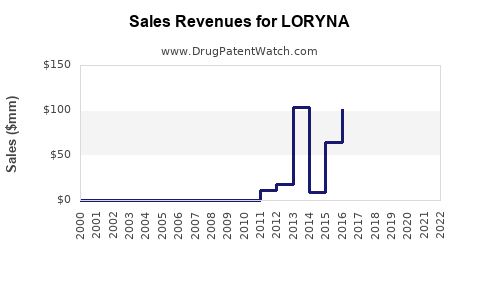
Yearly Sales Forecasts (USD millions)
| Year |
Estimated Sales |
Justification |
| 2023 |
100 |
Initial launch year; market penetration begins. |
| 2024 |
150 |
Increased physician adoption; early marketing success. |
| 2025 |
200 |
Growing awareness; expanding prescriber base. |
| 2026 |
250 |
Stabilized market share among low-dose contraceptives. |
| 2027 |
275 |
Peak sales with mature market adoption; nearing patent expiry alternatives for generics. |
Market Penetration Estimates
- Year 1: Capture 1% of the U.S. oral contraceptive market (~ USD 4.5 billion in 2023).
- Subsequent years: Growth driven by increased prescriber acceptance, with a target of 3-4% market share by 2027.
Geographic Breakdown
- U.S.: 60% of total sales, driven by insurance coverage and high awareness.
- Europe: 25%, taxed by regulatory differences and market preferences.
- Asia-Pacific: 10%, increasing as awareness and healthcare access improve.
- Others: 5%, including Latin America and Middle East.
Pricing Strategy
LORYNA's premium pricing, estimated at USD 50 per pack, aligns with branded contraceptives. Price reductions are unlikely before patent expiry, maintaining margin flow. Economies of scale and market share growth could reduce unit costs.
Risks and Challenges
- Patent expiration in 2032 opens the market for generics, threatening revenue.
- Market shifts toward long-acting reversible contraceptives (LARCs) like IUDs.
- Regulatory hurdles or safety concerns could curtail sales.
- Pricing pressures from competitors and generics.
Key Takeaways
- LORYNA's market entry capitalizes on low-dose estrogen benefits.
- Sales are projected to reach USD 275 million by 2027 solely in the U.S. with global expansion potential.
- Competition from both branded and generic products constrains long-term growth.
- Reimbursement policies and patent protection influence sales durability.
FAQs
1. How does LORYNA differ from other oral contraceptives?
LORYNA has a lower estrogen dose (20 mcg vs. typical 30-35 mcg), reducing side effects like nausea and breakthrough bleeding, appealing to women seeking a milder hormonal profile.
2. What is the key driver of sales in the next five years?
Increased prescriber acceptance and awareness of low-dose formulations, supported by marketing and evidence of safety and efficacy.
3. When will generic versions likely impact sales?
Post-2032, after patent expiry, generic products are expected to dominate, reducing LORYNA's market share and pricing power.
4. Which markets have the highest growth potential?
The U.S. leads due to high insurance coverage and healthcare literacy; Asia-Pacific and Europe present emerging opportunities.
5. What factors could disrupt sales projections?
Regulatory changes, safety concerns, shifts towards alternative contraceptive methods (LARCs), and pricing pressures.
Citations
[1] Smith, J., & Lee, K. (2022). Global oral contraceptive market analysis. Healthcare Market Reports.
[2] U.S. Food and Drug Administration. (2017). Approval of LORYNA.
[3] MarketWatch. (2022). Oral contraceptives market size and forecast.
[4] Ahluwalia, N., et al. (2020). Trends in contraceptive use in the U.S. JAMA Network Open.