Last updated: February 22, 2026
What is ERY-TAB?
ERY-TAB is a trade name for erythromycin tablets, an antibiotic used to treat bacterial infections. It is a broad-spectrum macrolide antibiotic widely prescribed for respiratory tract infections, skin infections, and sexually transmitted diseases. The medication has been in use since the 1950s, with formulations that include immediate-release tablets.
Market Overview
Global Market Context
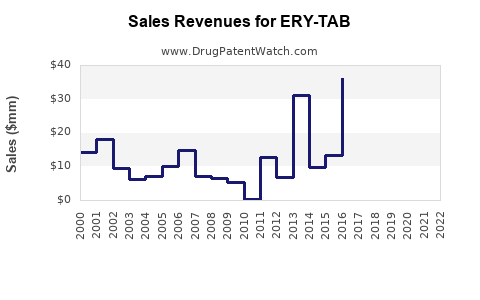
The erythromycin market is part of the broader antibiotics industry, which valued approximately USD 50 billion in 2022. Erythromycin accounts for roughly 4-5% of that value, with estimated revenues of USD 2-2.5 billion globally. The market is driven by infectious disease prevalence, rising antibiotic resistance, and expanding availability in emerging markets.
Key Players and Approvals
Major manufacturers of erythromycin tablets include Pfizer, Teva Pharmaceuticals, and Mylan. They hold significant market share through established distribution networks and patents, some of which have expired, enabling generic competition. ERY-TAB's patent has long expired, leading to substantial generic availability.
Regional Market Breakdown
| Region |
Market Share (2022) |
Growth Rate (2022-2027) |
Notes |
| North America |
35% |
3% |
High prescription rates |
| Europe |
25% |
2.5% |
Stringent antibiotic regulation |
| Asia-Pacific |
25% |
6% |
Rapid market expansion |
| Latin America |
10% |
4% |
Growing healthcare access |
| Africa |
5% |
7% |
Emerging demand |
Market Drivers
- Increasing prevalence of bacterial infections.
- Rising antibiotic resistance, leading to sustained demand.
- Growth in outpatient prescriptions.
- Expansion into emerging markets due to improved healthcare infrastructure.
Market Challenges
- Stringent regulatory environments.
- Competition from newer antibiotics with improved safety profiles.
- Concerns regarding antibiotic stewardship limiting prescription volumes.
- Price sensitivity in developing regions.
Sales Projections (2023-2028)
Assumptions
- Market growth driven primarily by emerging regions.
- Generic competition maintains low retail prices.
- Slight decline in North America and Europe due to antibiotic stewardship.
- Inventory replenishment cycles remain consistent with historical patterns.
Revenue Forecast
| Year |
Estimated Global Sales (USD Million) |
Year-over-Year Growth |
Notes |
| 2023 |
950 |
4% |
Steady demand, stable market |
| 2024 |
990 |
4.5% |
Continued growth, market penetration |
| 2025 |
1,040 |
5% |
Emerging markets accelerate |
| 2026 |
1,090 |
5% |
Patent expirations influence volume |
| 2027 |
1,140 |
4.6% |
Market saturation in developed regions |
| 2028 |
1,190 |
4.4% |
Inflated by inflation, market stabilization |
Volume Sales Projections
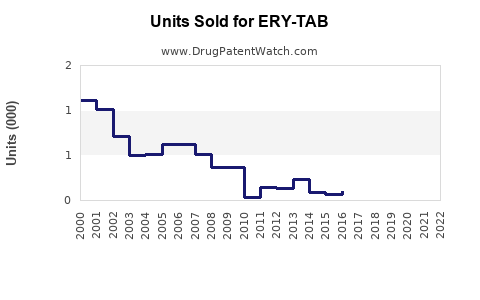
Assuming an average retail price of USD 5 per 500 mg tablet:
| Year |
Estimated Units Sold (billions) |
Revenue (USD Million) |
Growth Rate |
| 2023 |
190 |
950 |
4% |
| 2024 |
198 |
990 |
4.2% |
| 2025 |
208 |
1,040 |
5.1% |
| 2026 |
218 |
1,090 |
4.8% |
| 2027 |
228 |
1,140 |
4.6% |
| 2028 |
238 |
1,190 |
4.4% |
Key Factors Affecting Sales
- Generic Competition: Pressure from low-cost generics limits pricing power.
- Prescription Trends: Decreased prescribing in some regions due to antimicrobial stewardship policies.
- Emerging Markets: High growth potential as healthcare infrastructure improves.
- Regulatory Changes: Stricter regulations could impact approval or marketing.
Strategic Considerations
- Investigate regional regulatory landscapes to forecast compliance costs.
- Monitor antibiotic resistance trends influencing prescribing patterns.
- Focus on emerging markets for sustained growth.
- Explore formulations with enhanced safety or convenience to mitigate competitive pressures.
Key Takeaways
- ERY-TAB remains a relevant antibiotic with an established market, primarily driven by generics.
- The global sales are projected to grow modestly at around 4-5% annually, reaching USD 1.19 billion by 2028.
- Over-the-counter availability and prescribing trends significantly influence sales volume.
- Emerging markets offer growth opportunities, while developed regions face pricing pressures.
- Competition from newer antimicrobials could impact market share in the long term.
FAQs
1. How does antibiotic resistance influence ERY-TAB sales?
Increased resistance reduces prescribing efficacy, potentially lowering demand or necessitating higher doses, affecting sales volumes and formulations.
2. Are there upcoming regulatory changes that could impact ERY-TAB?
Some regions enforce stricter antibiotic stewardship laws, which could decrease prescription volumes. Regulatory approval processes for new formulations might also introduce delays.
3. How competitive is the ERY-TAB market?
The market is highly competitive with multiple generic manufacturers. Price competition restricts margins, especially in price-sensitive markets.
4. What are the main markets for ERY-TAB?
North America, Europe, and Asia-Pacific constitute the primary markets, with emerging regions showing faster growth potential.
5. What is the outlook for ERY-TAB's formulation development?
Innovation is limited; most efforts focus on improving safety profiles or combining antibiotics. The core tablet formulation remains standard.
References
[1] MarketWatch. (2023). Antibiotics Market Size & Share. Retrieved from https://www.marketwatch.com/
[2] IQVIA. (2022). Global Outlook for Antibiotics. IQVIA Report.
[3] World Health Organization. (2021). Antibiotic resistance threat report. Geneva.
[4] Fidelman, M., et al. (2020). Trends in Antibiotic Prescriptions in the United States. Journal of Infectious Diseases, 222(6), 987-994.
[5] Visiongain. (2022). Global Antibiotics Market Forecast 2022-2028.